


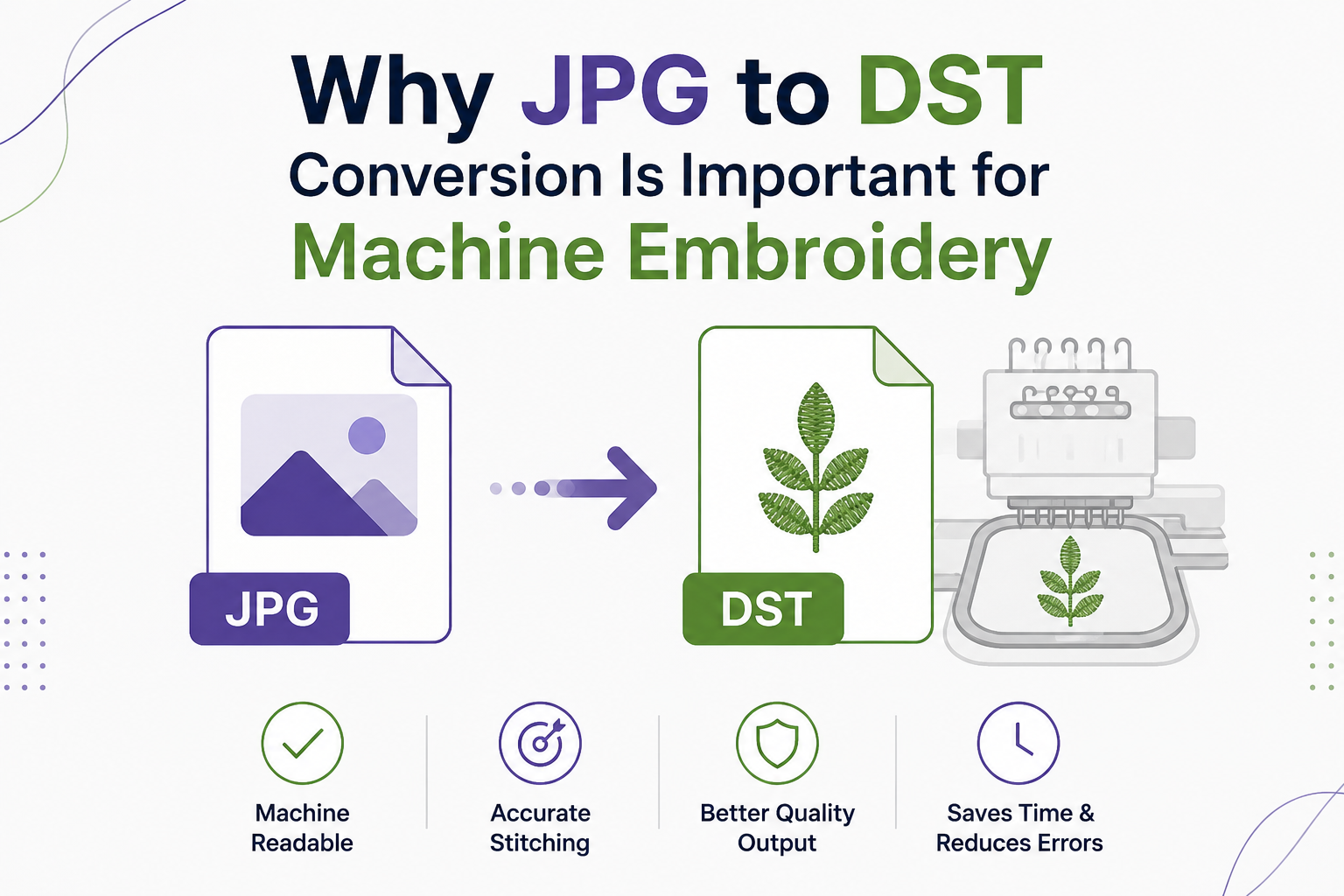
Machine embroidery depends heavily on file preparation. While many designs begin as standard image files such as JPG, embroidery machines cannot read these formats directly. Instead, they require machine-readable embroidery files like DST to stitch designs accurately. This is why many embroidery professionals need to convert JPG to DST before production begins.
JPG files are raster images made up of pixels, while DST files contain stitch instructions for embroidery machines. Without proper conversion, embroidery machines cannot understand how the design should be stitched onto fabric. This makes embroidery file conversion an essential part of the embroidery digitizing workflow.
Why JPG Files Cannot Be Used Directly
A JPG image may look visually complete, but it does not contain embroidery information such as stitch direction, stitch density, or thread sequencing. Embroidery machines rely on this technical data to create accurate stitch patterns.
Simply uploading a JPG file into an embroidery machine will not produce usable embroidery results. The image must first be converted into a stitch-based embroidery format that machines can interpret correctly.
This process allows embroidery professionals to transform logos, artwork, and graphics into machine-ready embroidery designs.
The Role of DST Files in Embroidery
DST is one of the most widely used embroidery machine file formats in commercial embroidery production. It stores stitch coordinates that guide the embroidery machine during stitching.
Because DST files are compatible with many embroidery machines, they are commonly used for apparel branding, uniforms, promotional products, and custom embroidery projects.
Properly prepared DST files also improve stitching consistency across different garments and production setups.
Why Proper Conversion Matters
Converting JPG files into DST format involves more than changing the file extension. The artwork must be digitized correctly to ensure smooth stitching and balanced embroidery quality.
Poor conversion can lead to issues such as thread breaks, uneven stitching, distorted shapes, or excessive stitch density. This is why professional embroidery digitizing remains important when preparing embroidery files for production.
High-quality conversion helps embroidery machines follow clean stitch paths while maintaining design accuracy on fabric.
How Conversion Supports Better Embroidery Results
Accurate embroidery file preparation improves both efficiency and final stitch quality. Clean DST files reduce production errors and help maintain consistent embroidery results across multiple items.
This becomes especially important for businesses that use embroidered logos and branding elements regularly. Well-prepared embroidery files improve durability, visual appearance, and production performance.
As embroidery technology continues evolving, understanding the importance of embroidery file conversion helps businesses and designers maintain professional-quality embroidery workflows.
Conclusion
JPG to DST conversion plays an essential role in machine embroidery because embroidery machines require stitch-based files instead of standard image formats. Proper conversion helps transform artwork into machine-readable embroidery designs that stitch cleanly and accurately.
For embroidery professionals and businesses focused on quality production, using properly prepared DST files remains an important part of achieving reliable and professional embroidery results.

DST Properties - Search the marketplace properties for your ideal investment.
Give us a call and allow us to handle all aspects of your 1031 DST Properties.