

In modern industrial and commercial environments, control panels act as the operational backbone of machinery and automation systems. They regulate electrical distribution, ensure safe operations, and enable seamless control over complex processes. However, not all control panels are built the same.
Businesses often face a critical decision: whether to opt for standard control panels or invest in custom control panels. While standard panels offer convenience and cost efficiency, custom panels provide tailored solutions that align with specific operational requirements.
Understanding the difference between these two options is essential for making an informed investment that supports efficiency, safety, and scalability.
What Are Standard Control Panels?
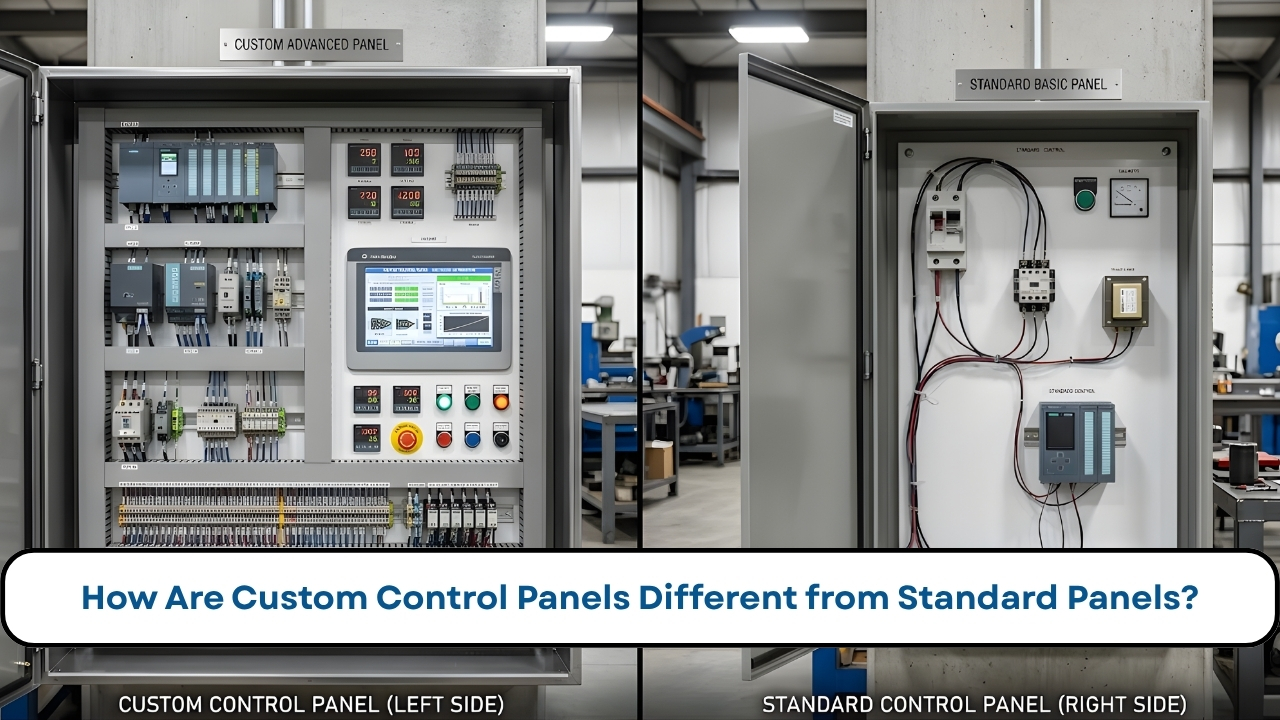
Standard control panels are pre-designed, mass-produced electrical enclosures that come with fixed configurations. These panels are built to serve general applications and are readily available in the market.
Key Characteristics:
Pre-engineered design
Limited customization options
Faster availability
Lower upfront cost
Suitable for common industrial applications
Standard panels are ideal for businesses with straightforward operational needs that don’t require specialized configurations.
What Are Custom Control Panels?
Custom control panels are specifically engineered to meet the unique requirements of a particular application, industry, or facility. Every component, layout, and function is designed according to the client’s specifications.
Key Characteristics:
Tailor-made design
Application-specific configuration
Integration with existing systems
Scalable and future-ready
Optimized for performance and safety
Companies like Covenants Panelworks specialize in designing and manufacturing custom control panels that align precisely with operational demands, ensuring optimal functionality and long-term reliability.
Core Differences Between Custom and Standard Control Panels
1. Design Flexibility
Standard Panels:
Fixed design with minimal modification options
Limited adaptability to unique workflows
Custom Panels:
Fully customizable layout and architecture
Designed to fit exact operational requirements
Custom panels allow engineers to optimize component placement, wiring paths, and enclosure size, leading to improved efficiency and usability.
2. Application Suitability
Standard Panels:
Suitable for generic applications
May require workarounds for specialized tasks
Custom Panels:
Built for specific industries such as manufacturing, pharmaceuticals, energy, or automation
Designed to meet precise operational demands
For example, a food processing unit may require hygiene-compliant panels, while a manufacturing plant may need heavy-duty control systems something only custom solutions can deliver effectively.
3. Integration with Existing Systems
Standard Panels:
Limited compatibility with existing machinery
May require additional components or modifications
Custom Panels:
Seamless integration with current systems
Designed to match existing infrastructure and communication protocols
This ensures smoother operations and eliminates compatibility issues that can disrupt workflows.
4. Performance Optimization
Standard Panels:
General performance suitable for basic operations
Not optimized for specific workloads
Custom Panels:
Engineered for peak efficiency
Optimized for load management, energy efficiency, and process control
With custom panels, businesses can reduce energy consumption, improve response times, and enhance overall system performance.
5. Safety and Compliance
Standard Panels:
Meet basic industry standards
May not address specific safety risks
Custom Panels:
Designed with advanced safety features
Built to comply with industry-specific regulations
Custom control panels can include features like advanced circuit protection, emergency shutdown systems, and enhanced insulation—ensuring maximum safety for both equipment and personnel.
6. Scalability and Future Expansion
Standard Panels:
Limited scalability
Difficult to upgrade or expand
Custom Panels:
Designed with future growth in mind
Easy to upgrade and modify
This is especially important for growing businesses that anticipate expansion or technological upgrades.
7. Cost Considerations
Standard Panels:
Lower initial investment
May incur higher long-term costs due to inefficiencies or modifications
Custom Panels:
Higher upfront cost
Lower long-term operational and maintenance costs
While custom panels require a larger initial investment, they often provide better ROI through improved efficiency, reduced downtime, and lower maintenance expenses.
8. Installation and Space Efficiency
Standard Panels:
May not fit perfectly within available space
Can lead to inefficient layouts
Custom Panels:
Designed to fit specific space constraints
Optimized for compact and efficient installation
This is particularly beneficial in facilities where space is limited or where layout optimization is critical.
9. Maintenance and Troubleshooting
Standard Panels:
Generic layout can make troubleshooting complex
Lack of detailed documentation
Custom Panels:
Designed with clarity and accessibility in mind
Easier maintenance and faster troubleshooting
Custom panels often come with detailed schematics and labeling, reducing downtime during repairs.
Advantages of Custom Control Panels
Choosing custom control panels offers several strategic benefits:
Enhanced Efficiency
Tailored configurations ensure that systems operate at maximum efficiency without unnecessary energy loss.
Improved Reliability
Custom-built systems are less prone to failure because they are designed specifically for their intended use.
Better Control and Automation
Custom panels allow integration with advanced automation technologies, enabling precise control over operations.
Industry-Specific Compliance
They are designed to meet regulatory standards relevant to specific industries, ensuring compliance and safety.
Long-Term Cost Savings
Reduced downtime, lower maintenance costs, and improved performance contribute to long-term financial benefits.
When Should You Choose Custom Control Panels?
Custom control panels are the right choice when:
Your operations involve complex or specialized processes
You require integration with existing systems
Safety and compliance are critical
You plan for future expansion
Efficiency and performance optimization are top priorities
Organizations working with experts like Covenants Panelworks can ensure that their control panels are engineered to deliver precise performance tailored to their operational goals.
When Are Standard Panels a Better Option?
Standard control panels may be suitable when:
Your requirements are simple and straightforward
Budget constraints are significant
You need a quick, ready-to-use solution
Customization is not a priority
For small-scale operations or temporary setups, standard panels can be a practical choice.
Role of Covenants Panelworks in Custom Control Panel Solutions
When it comes to designing high-performance custom control panels, Covenants Panelworks stands out as a trusted partner. Their expertise lies in delivering solutions that are:
Precisely engineered for specific applications
Built with high-quality components
Designed for safety, durability, and efficiency
Scalable for future industrial needs
By focusing on innovation and customer-centric design, Covenants Panelworks helps businesses achieve operational excellence through advanced control panel solutions.
Future Trends in Control Panel Design
The evolution of industrial automation is shaping the future of control panels. Key trends include:
Smart Panels
Integration with IoT for real-time monitoring and control.
Energy Efficiency
Designs focused on reducing power consumption and improving sustainability.
Compact Designs
Smaller, more efficient panels with higher functionality.
Advanced Automation Integration
Seamless compatibility with AI-driven systems and smart manufacturing technologies.
Custom control panels are better positioned to adapt to these advancements compared to standard panels.
Conclusion
The choice between custom and standard control panels ultimately depends on your operational needs, budget, and long-term goals.
Standard panels offer simplicity and cost-effectiveness for basic applications, but they often fall short in terms of flexibility, performance, and scalability. On the other hand, custom control panels provide tailored solutions that enhance efficiency, safety, and reliability.
For businesses aiming to optimize their operations and stay competitive in an evolving industrial landscape, investing in custom control panels is a strategic decision. Partnering with experienced providers like Covenants Panelworks ensures that you receive a solution designed specifically for your requirements, delivering both immediate and long-term value.
FAQ
1. What is the main difference between custom and standard control panels?
Custom control panels are designed specifically for a particular application, while standard panels are pre-built with fixed configurations. Custom panels offer better flexibility, performance, and integration compared to standard solutions.
2. Are custom control panels worth the investment?
Yes, custom control panels provide long-term value by improving efficiency, reducing downtime, and lowering maintenance costs. Although the upfront cost is higher, they deliver better ROI over time.
3. When should a business choose custom control panels?
Businesses should choose custom panels when they have complex processes, require system integration, need industry-specific compliance, or plan future expansion.
4. Can standard control panels be modified later?
Standard panels can be modified to some extent, but extensive customization is often difficult and costly. This is why custom panels are preferred for specialized applications.
5. How do custom control panels improve safety?
Custom panels include application-specific safety features such as advanced circuit protection, emergency shutdown systems, and compliance with industry standards, ensuring safer operations.