





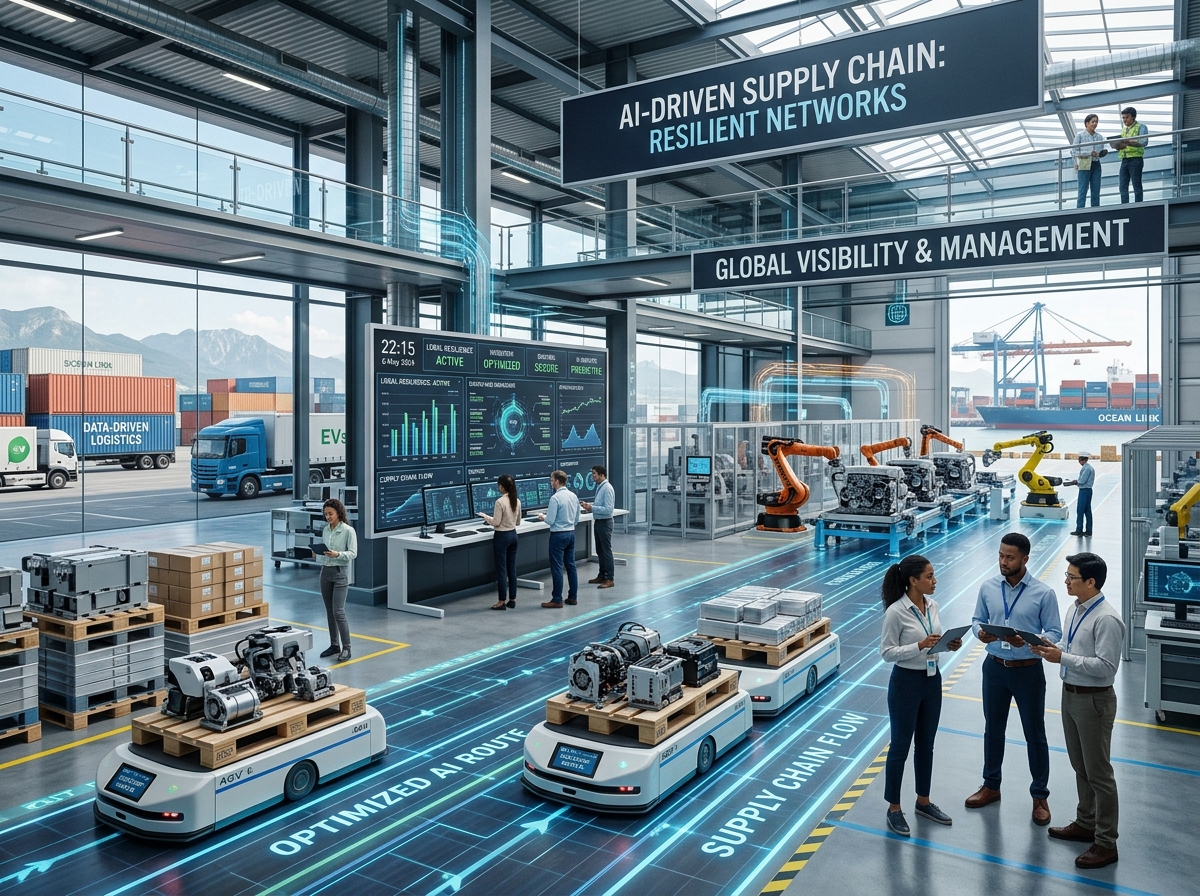
In the era of intelligent manufacturing, the AI supply chain stands as both the backbone and the catalyst of modern production. It is no longer sufficient to have isolated pockets of predictive analytics or isolated supplier networks; the true value emerges when data, partners, and processes weave into a resilient, end-to-end system. AI-enabled supply chains must sense, adapt, and endure in the face of volatility, demand shifts, and disruptive events. This article explores why AI-enabled supply chains fail, and it outlines practical strategies to build resilience through data integration, supplier collaboration, and robust risk controls. It also offers concrete steps to ensure continuity, quality, and speed from supplier to customer, all through the lens of an AI-driven manufacturing environment.
Supply chain integration: Building interconnected AI-enabled networks from supplier to customer
Supply chain integration in the AI industry means more than connecting systems; it means orchestrating data, processes, and decisions across the entire value chain so that intelligence can flow freely and action can be taken promptly. In modern manufacturing, AI models flourish when they have access to diverse, high-quality data sources, and when those sources are harmonized into a coherent, operating picture. This requires a deliberate approach to data interoperability, standardization, and governance that acknowledges the unique demands of AI workloads, including training data provenance, versioning, and model lifecycle management.
First, data integration in an AI-driven supply chain hinges on building a semantic layer that translates disparate data schemas into a common language. The semantic layer acts as a bridge between ERP systems, manufacturing execution systems, supplier portals, quality management software, and external data streams such as logistics feeds, weather data, and market signals. Rather than relying on rigid file exchanges, modern integration employs APIs and event-driven architectures to enable real-time or near-real-time data sharing. This reduces latency and enables reactive decision making, a crucial capability when AI systems detect anomalies, forecast disruptions, or identify optimization opportunities.
Second, integration must address data quality with the same rigor as model performance. AI models are only as trustworthy as the data they consume. This means implementing data quality gates, lineage tracking to understand where data originates and how it transforms as it moves through the pipeline, and continuous monitoring to detect data drift that could erode model accuracy. A resilient integration strategy includes automated data validation, cleansing routines, and synthetic data generation in cases where real data is sparse or sensitive. By embedding data quality into the pipeline, manufacturers can maintain reliable inputs for predictive maintenance, demand forecasting, and supplier capability assessments.
Third, supply chain integration requires robust identity and access management to protect sensitive information while enabling collaboration. Role-based access, least-privilege principles, and strong encryption of data in transit and at rest are not optional add-ons; they are prerequisites for trusted collaboration among suppliers, contract manufacturers, and logistics providers. The goal is to create an ecosystem where partners can participate meaningfully in data-sharing arrangements without compromising security or compliance. This involves clear data sharing agreements, pricing or capacity transparency, and governance structures that spell out ownership, usage rights, and accountability in case of incidents.
Fourth, the integration strategy must support the concept of a digital thread—a traceable, end-to-end record of product data and decisions from concept to delivery. A robust digital thread enables rapid root-cause analysis when issues arise, enhances traceability for quality audits, and supports continuous improvement by linking outcomes back to specific data inputs and model predictions. Achieving this requires harmonized data models, consistent metadata, and a lineage-enabled data platform that can track provenance across the supply chain. The digital thread is particularly important for AI in manufacturing where model updates, sensor data, and process changes must be auditable and explainable to stakeholders and customers alike.
Fifth, governance and collaboration are essential to sustaining integration over time. An effective integration program aligns strategic objectives with practical capabilities, defines performance metrics, and establishes cross-functional governance committees that include IT, operations, procurement, quality, and product teams. This governance ensures that data policies reflect evolving business needs and regulatory requirements, that partner agreements remain aligned with risk tolerance, and that the organization can adapt to new sources of data, emerging AI techniques, and changing supply chain structures. The result is a nimble, transparent, and trustworthy network that can scale globally while preserving local relevance and compliance.
Finally, supply chain integration is not a one-off project but an ongoing capability that matures through phased investments. Early wins may focus on data harmonization for a core product family, followed by expansion to supplier performance dashboards, real-time logistics visibility, and AI-assisted contract optimization. As integration deepens, the organization gains the ability to simulate end-to-end scenarios, stress-test capacity in silos and across the network, and orchestrate supply chain responses with confidence. In this sense, integration creates the fertile ground where AI can thrive, enabling faster time-to-insight, faster time-to-action, and a more resilient pathway from supplier to customer.
Supply chain digital transformation: Accelerating data-driven decisions in modern manufacturing
Digital transformation in the AI supply chain is the strategic, organizational, and technical shift that enables data-driven decision making at every link of the network. It is not simply about adopting the latest AI tools; it is about embedding analytics into the fabric of operations, from supplier qualification to final delivery. A successful transformation combines data architecture, advanced analytics, model management, and cultural change to create a predictable, repeatable, and scalable system that can respond to volatility while preserving quality and speed.
At the core of this transformation is a layered data architecture that supports access to structured and unstructured data, from sensor streams and machine logs to supplier contracts and market signals. A modern AI supply chain uses a data fabric or data lakehouse approach that unifies storage with processing capabilities, enabling flexible analytics and rapid experimentation. This architecture should be designed with AI workloads in mind, ensuring that data pipelines can handle high velocity data for real-time anomaly detection, batch data for model training, and synthetic data generation for augmenting scarce datasets. The result is a data-enabled backbone that sustains AI initiatives across product families and geographies.
Complementing the data architecture is a portfolio of AI-enabled capabilities that empower procurement, manufacturing, logistics, and quality teams to act with speed and confidence. Demand sensing, inventory optimization, and supplier capacity planning are not isolated modules; they become integrated decision engines whose outputs feed procurement plans, production schedules, and logistics routing. By combining predictive insights with prescriptive actions, the organization can reduce stockouts, minimize excess inventory, and optimize capital utilization, all while maintaining high service levels and quality standards.
Digital transformation also hinges on the disciplined deployment and governance of AI models. This includes establishing MLOps practices that cover data versioning, feature governance, model versioning, performance monitoring, and automated retraining. In a manufacturing context, models must be robust to concept drift caused by process changes, supply disruptions, or seasonal demand shifts. Automated monitoring alerts stakeholders when model performance deteriorates, enabling timely retraining, recalibration, or rollback. This lifecycle discipline ensures that AI systems remain aligned with operational realities and regulatory expectations, keeping decision-making consistent and auditable.
Another critical aspect is the digital thread for product and process information. By maintaining a continuous record of design decisions, material properties, process parameters, and sensor readings, manufacturers can trace issues to their source, evaluate alternative process scenarios, and demonstrate quality to customers and regulators. The digital thread also unlocks feedback loops where post-market performance data informs redesigns, material substitutions, or new supplier engagements, fostering a culture of continuous improvement that extends beyond a single product line.
Culture and change management are the invisible engines of transformation. Data literacy becomes a prerequisite for broader participation, and cross-functional teams learn to interpret analytics in the context of manufacturing realities. Leaders must articulate a clear transformation roadmap, communicate the business value of data-driven decisions, and invest in the skills and tools that unlock this potential. As teams gain confidence in data-driven processes, silos begin to dissolve and collaboration across suppliers, internal functions, and customers strengthens, reinforcing the resilience and responsiveness of the entire supply chain.
Strategic investments in digital transformation should also emphasize resilience not as a side effect but as a core capability. This means prioritizing redundant data sources, secure cloud and edge computing architectures, and scalable analytics platforms that can absorb shocks without collapsing. It means designing processes that can continue operating under partial system outages, with critical decision rules embedded in resilient workflows. It also means cultivating a network of trusted partners who share data and insights in a way that preserves competitive advantages while promoting collective strength. In this light, digital transformation becomes not only a modernization initiative but a strategic posture that sustains performance through uncertainty and change.
Ultimately, supply chain digital transformation is about translating data into reliable action. It is about turning streams of information into decisions that improve throughput, quality, and customer satisfaction. It is about building confidence among suppliers and customers that the network can weather disruptions and continue to deliver value. When done well, digital transformation creates a virtuous cycle: better data begets better predictions, better decisions reduce risk, and improved reliability creates trust that invites greater collaboration and better commercial terms. This is the essence of a modern, AI-enabled supply chain that can compete in a fast-moving manufacturing landscape.
Supplier risk assessment: Proactive measures to identify, quantify, and mitigate threats
Supplier risk assessment in the AI supply chain is about knowing who is behind every component of the network, what vulnerabilities they bring, and how their performance could impact the entire product lifecycle. In AI-driven manufacturing, supplier risk is multi-faceted and dynamic, ranging from data quality and cyber security to geopolitical disruptions and financial stability. A rigorous risk assessment framework helps organizations anticipate problems before they become costly failures, enabling proactive mitigation and faster recovery when disruptions occur. It also supports informed decision making about supplier diversification, contingency planning, and partnership depth, which are crucial for maintaining continuity and quality through changing conditions.
The foundation of effective supplier risk assessment is a structured, ongoing process that evaluates suppliers across a broad spectrum of criteria. This includes operational capability, process maturity, and capacity to meet quality and delivery commitments. It also includes data governance practices, the reliability of data feeds, and the supplier's ability to share and protect sensitive information. In the AI context, data integrity is as critical as physical reliability; a supplier who provides corrupted or biased data can derail an entire AI program, leading to faulty predictions, misinformed decisions, and wasted capital. Therefore, the risk framework must explicitly address data security, data provenance, and the ability to audit data supply chains for traceability and accountability.
Financial stability and continuity planning are essential domains within supplier risk assessment. AI-enabled manufacturing relies on long-term relationships, predictable pricing, and the ability to scale supply as demand grows or shifts. A robust risk assessment includes financial due diligence, stress testing of supplier business models, and contingency arrangements such as dual sourcing or strategic stockpiling for critical components. Beyond financials, operational resilience requires evaluating how suppliers manage their own risk exposures, including cyber security postures, disaster recovery capabilities, and the resilience of their own suppliers. A single weak link in the chain can propagate through the network, amplifying risk and undermining confidence in the entire supply chain.
Geopolitical and regulatory considerations increasingly shape supplier risk. Trade restrictions, export controls, and data privacy laws can affect both the availability of critical materials and the ease with which data can be shared across borders. A forward-looking risk assessment maps regulatory trajectories and regional dependencies, enabling preemptive diversification of suppliers and supply routes. It also emphasizes ESG considerations, recognizing that sustainability practices and social governance contribute to long-term resilience, brand reputation, and regulatory compliance. Integrating these factors into the supplier risk profile helps organizations avoid surprises and maintain alignment with corporate values and stakeholder expectations.
To translate risk assessments into actionable resilience, organizations deploy a tiered supplier strategy that aligns risk tolerance with supplier roles. Critical suppliers, especially those providing AI training data, key machine components, or essential software platforms, may warrant higher levels of monitoring, more frequent audits, and formal contingency plans. Less critical suppliers can be managed with standardized performance reviews and shared improvement plans, ensuring that the entire network maintains minimum viable risk. This tiered approach enables resource optimization while maintaining overall resilience. It also supports collaboration and transparency, as suppliers understand how their performance and risk will influence their standing within the network and their opportunities for future work.
Proactive risk management further benefits from continuous monitoring and early warning systems. Real-time dashboards that track supplier performance metrics, data delivery latency, quality incidence rates, and security alerts enable rapid detection of deviations and swift corrective actions. A proactive stance includes scenario planning and tabletop exercises where teams rehearse responses to disruptions, such as supplier outages, cyber incidents, or sudden demand spikes. By rehearsing responses, organizations can shorten recovery times, preserve product quality, and maintain delivery commitments to customers even under duress. Transparency in communications with suppliers during crises strengthens trust and fosters collaborative problem solving, turning potential failures into opportunities for mutual improvement and strengthened partnerships.
Finally, supplier risk assessment must be integrated into the broader governance framework of the AI supply chain. Risk data should feed into strategic procurement decisions, supplier development programs, and performance incentives. The organizational culture should value risk-aware decision making as a core competency, not a compliance checkbox. When risk assessment is embedded into daily operations, it becomes a living discipline that informs supplier selection, contract design, and investment in resilience initiatives. This holistic approach ensures that resilience is not an afterthought but a continuous, measurable capability that sustains value across the product lifecycle and keeps the AI supply chain competitive in a dynamic manufacturing landscape.
In the AI industry, the supply chain is a living system that requires deliberate design, disciplined execution, and ongoing adaptation. By focusing on supply chain integration, digital transformation, and supplier risk assessment, manufacturers can build resilient networks that not only survive disruptions but also capitalize on opportunities that disruption creates. The path to resilience is paved with data, collaboration, and robust controls that align technology with human judgment, enabling modern manufacturing to deliver consistent quality, speed, and value from supplier to customer.


Make confident Procurement and Supply Chain Intelligence sourcing decisions with Aranca.
To ensure the safety of the supplier sourcing with the pre-market analysishttps://www.aranca.com/procurement-research/overviewsupply chain risk assessment
Wipro's supply chain digital transformation services leverage intelligent automation, real-time insights, analytics, blockchain to create smarter, more connected supply chains