


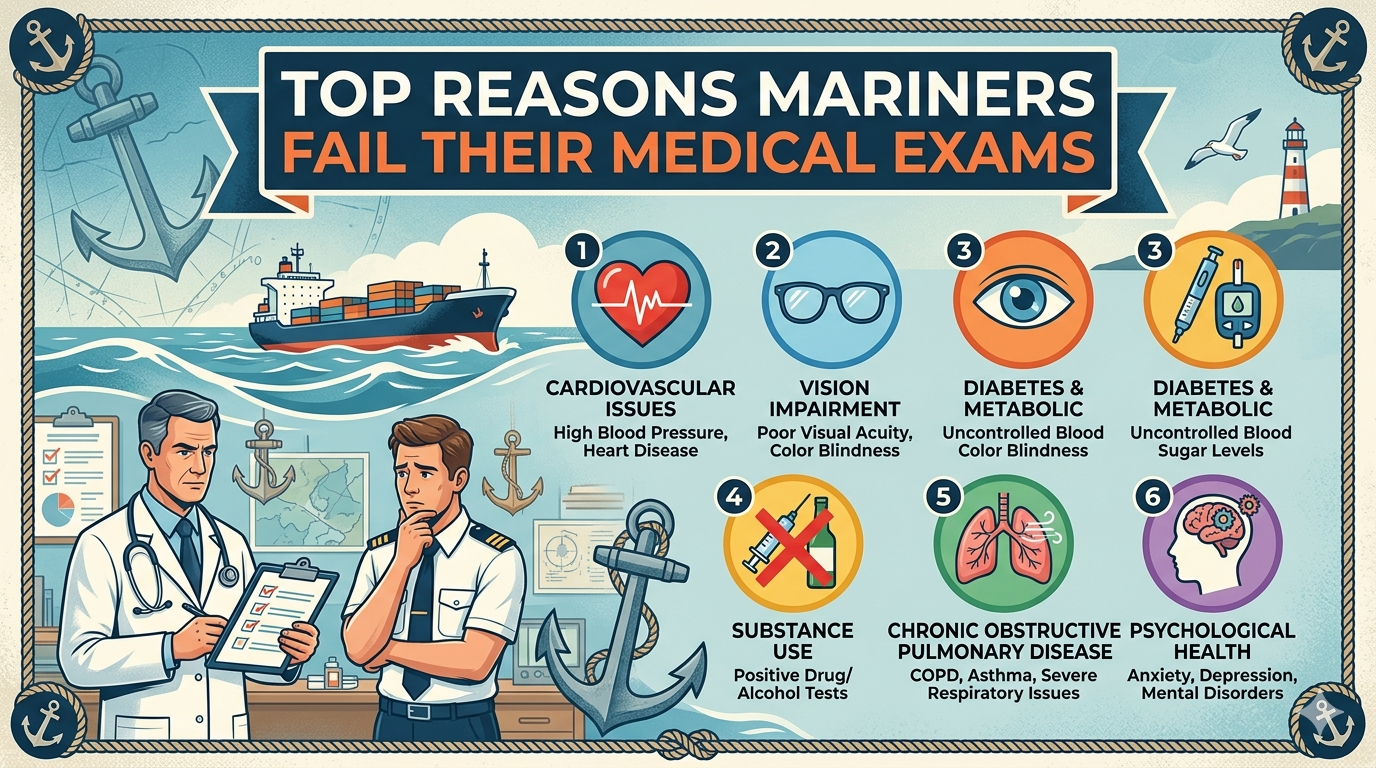
Many mariners underestimate just how strict a maritime medical exam can be. Passing this evaluation is absolutely crucial for keeping your career at sea on track. Even small, seemingly harmless health issues can lead to big consequences when you are miles away from the nearest hospital. Because medical emergencies at sea are incredibly difficult to manage, examiners take their job very seriously. Let's look at the most common reasons seafarers do not pass their medical assessments and what you can do to prepare for a successful outcome.
Why Maritime Medical Exams Are So Strict
Safety is the primary concern for any maritime operation. The ocean is an unforgiving environment, and medical help is rarely close by. Harsh working conditions, unpredictable weather, and the heavy physical demands of the job mean that every crew member must be in peak physical condition. Regulatory compliance ensures the safety of the crew, the vessel, and any passengers on board. Medical examiners must strictly follow these regulations to minimize the risk of a preventable health crisis during a voyage.
Poor Vision and Hearing
Minimum vision standards are strictly enforced for all seafarers. You need to be able to read navigational charts, spot warning lights, and identify potential hazards in the distance. Color vision is especially important for recognizing navigation signals. Hearing requirements are just as critical for safety communication, especially over loud engine noise or during alarms. Uncorrected eyesight, color blindness, and significant hearing loss frequently cause unexpected delays or outright failures during the exam.
High Blood Pressure (Hypertension)
Hypertension is one of the most common reasons for failing a maritime medical exam. Uncontrolled high blood pressure puts you at a severe risk of suffering a stroke or heart attack while on duty. Because there is no immediate medical rescue available in the middle of the ocean, examiners cannot approve candidates with dangerously high readings. Regular monitoring, dietary adjustments, and proper medication management are vital for mariners dealing with hypertension.
Obesity and Related Health Risks
Carrying excess weight directly impacts your mobility and stamina. During emergency response situations, you might need to climb steep ladders, fit through narrow hatches, or assist injured crewmates. Obesity is heavily scrutinized because it is strongly linked to other disqualifying conditions, including diabetes, heart disease, and chronic fatigue. Examiners will look at your BMI and overall fitness to ensure you can safely perform your duties.
Diabetes and Blood Sugar Issues
Blood sugar issues are carefully evaluated during your medical check. Well-controlled diabetes might be acceptable depending on your specific role and the regulations governing your vessel. However, uncontrolled diabetes poses massive risks of sudden health complications, such as hypoglycemic shock or diabetic comas. If you have diabetes, you will need to provide extensive documentation and proof of consistent medical monitoring to pass your exam.
Cardiovascular Conditions
Heart disease, irregular heartbeats, or a history of a past cardiac event will immediately trigger a closer look by the medical examiner. Heart health is critical for mariners who handle heavy manual labor and work long hours in high-stress environments. If you have a history of cardiovascular issues, additional stress tests or detailed reports from your cardiologist are almost always required before you can be cleared for duty.
Drug and Substance Use
Failing Drug Testing for Mariners in Florida(https://seadocfl.com/drug-testing-for-mariners-florida/) is an immediate red flag that will halt your certification process. This applies to illegal substances, but it also includes certain prescription medications that cause drowsiness, impair judgment, or slow reaction times. The maritime industry operates on a strict zero-tolerance policy to ensure the safety of the entire crew. Always discuss your prescribed medications with your medical examiner to ensure they comply with maritime regulations.
Mental Health Concerns
Mental fitness is just as important as physical fitness. Conditions like severe stress, anxiety, and depression can be worsened by the isolation and long, demanding voyages inherent to a life at sea. Psychological stability is essential for maintaining a cohesive and safe crew environment. Mariners with a history of severe mental health issues must demonstrate that their condition is stable and effectively managed.
Incomplete Medical Records or Documentation
Sometimes the issue is not a specific health condition, but simply a lack of incomplete medical records. Missing medical history, outdated prescriptions, or absent specialist reports can prevent you from receiving your Medical Certificate for Mariners in Florida(https://seadocfl.com/about-us/). Medical examiners cannot clear you if they do not have the full picture of your health. Accurate disclosure and having all your complete paperwork organized will drastically speed up your approval process.
Sleep Disorders
Conditions like sleep apnea cause severe fatigue, which is incredibly dangerous during long maritime shifts. Sleep disorders are a growing concern in modern medical evaluations. Chronic fatigue impairs decision-making and increases the risk of workplace accidents. If you suffer from a sleep disorder, you must provide proof of an official diagnosis and effective ongoing treatment, such as compliance logs from a CPAP machine.
How to Avoid Failing Your Medical Exam
The best way to pass your exam is to be proactive. Schedule a regular health checkup with your primary doctor before applying for your Physical Examination for Coast Guard in Florida (https://seadocfl.com/physical-examination-for-mariners-florida/). Make positive lifestyle improvements months in advance, eat a balanced diet, get enough sleep, and exercise regularly. Above all, be completely honest on your medical intake forms and come prepared with all necessary documents and specialist clearances.
What Happens If You Fail?
Failing a medical exam does not always mean your maritime career is permanently over. Often, you might face a temporary disqualification until a specific condition is brought under control. For example, if your blood pressure is too high, you can usually return for a re-examination once it is managed with medication. In some cases, you can seek special approvals and medical waivers for certain conditions, provided you meet specific monitoring criteria.
Secure Your Maritime Career with Sea Medicine
Failing an exam is a frustrating setback, but improvement is entirely possible. Staying proactive about your health is the absolute best way to ensure long-term career security. Encourage preparation over last-minute fixes, and partner with a medical team that understands the maritime industry.
Sea Medicine, led by Dr. Weinberg, is dedicated to helping seafarers successfully navigate their medical requirements. We understand the specific demands of the maritime industry and will work with you to ensure your health is fully documented and evaluated correctly.
Need to schedule your exam or have questions about your medical fitness? Contact Sea Medicine today. Email aweinberg@medavex.org or call (727) 648-2402 to book your appointment with Dr. Weinberg.



In this blog, we shall discuss the top reasons why do people fail to be a successful network marketer and discuss how to overcome them.
Click here to know more about Tips to Buy an MLM Software
We can definitely vouch for network marketing as a great career option. Be Careful not to make the mistakes mentioned here and you are good to go!
Read on How to succeed in Network Marketing Business?mlmsuccess