Introduction
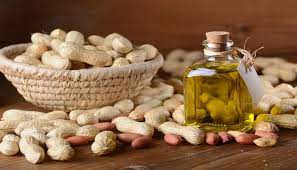
There's a smell that instantly transports you to a traditional North Karnataka kitchen — warm, nutty, golden. That's the smell of freshly pressed Shenga Enne (groundnut oil) being poured into a hot iron pan. For generations of Hubli and Dharwad families, this was simply how cooking smelled. Then refined oils arrived — colourless, odourless, and cheap — and the Shenga Enne gradually disappeared from many kitchens.
Today, it's coming back. And the science explains why it never should have left.
🔗 Get pure wooden cold pressed groundnut oil in Hubli from Panchamrutha
What Is the Wooden Cold-Press (Ghani) Method?
The wooden Ghani is a traditional oil press — a large wooden churner that slowly crushes oilseeds to extract their oil through mechanical pressure alone. No heat. No chemical solvents. No bleaching. No deodorising.
Because there is no heat involved (the oil temperature stays below 40°C throughout the process), nothing is destroyed. The oil retains its natural golden-amber colour, its characteristic nutty aroma, and — most importantly — its complete nutritional profile. The wooden Ghani produces only 5–6 litres of oil per day, which is why cold-pressed oil costs more than refined. But what you get in return is fundamentally different oil.
What Cold-Pressed Groundnut Oil Retains
Vitamin E is perhaps the most important nutrient preserved by cold pressing. Cold-pressed groundnut oil contains 15.7mg of Vitamin E per 100g — that's 104% of the recommended daily requirement from cooking oil alone. The refining process destroys approximately 90% of this Vitamin E. In a refined oil bottle, almost none of it survives.
Beyond Vitamin E, cold-pressed Shenga Enne retains its natural monounsaturated fats (MUFA) — 46.2g per 100g, which is 2.4 times more MUFA than sunflower oil. MUFA is the heart-healthy fat associated with reduced LDL (bad) cholesterol and improved cardiovascular health. The oil also retains natural antioxidants and phytosterols — anti-inflammatory compounds that slow cellular aging.
And the smoke point? Cold-pressed groundnut oil has a smoke point of approximately 230°C — among the highest of any cooking oil, making it perfectly safe for deep frying, high-heat tadkas, and all forms of Indian cooking.
Why Dharwad Is Special for Groundnut Oil
Dharwad district sits at the heart of Karnataka's groundnut-growing belt. The region is known for GPBD-4 groundnuts — locally called 'Gejji Shenga' — a premium variety with high oil content and rich flavour. The cool, dry climate of Dharwad is ideal for both growing and storing groundnuts before pressing.
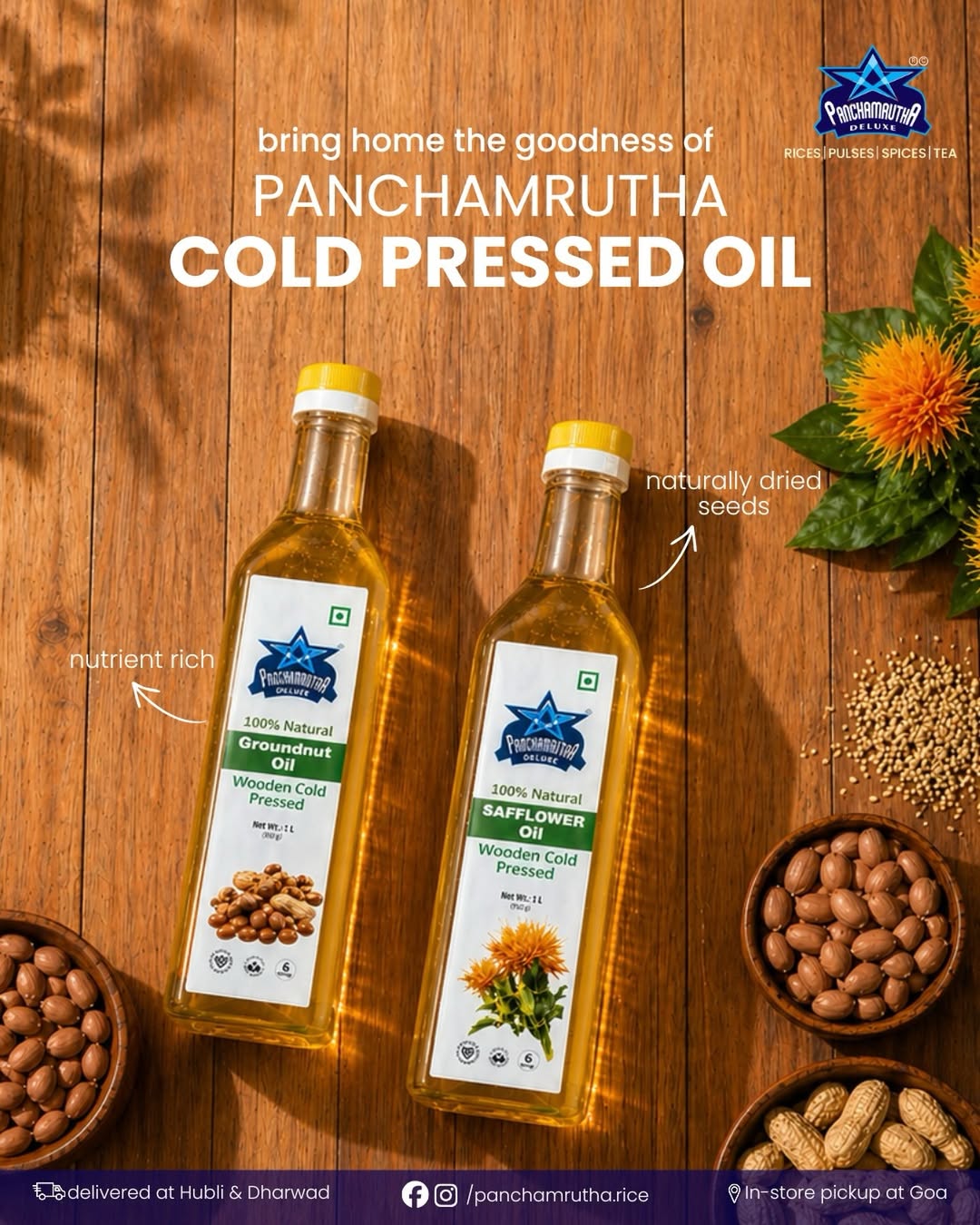
Panchamrutha's wooden cold-pressed groundnut oil is made from these locally sourced GPBD-4 groundnuts, pressed in a traditional wooden Ghani at the Rayapur Industrial Area in Dharwad. This means the shortest possible distance between the groundnut farm and your kitchen — freshness that commercial refined oils simply cannot offer.
🔗 Discover more ways to use pure cold pressed oil in Hubli in your cooking
Refined Oil vs Cold-Pressed: The Honest Comparison
Refined groundnut or sunflower oil goes through at least five processing stages — solvent extraction at 200°C+, degumming, neutralisation with caustic soda, bleaching with activated clay, and deodorisation with high-pressure steam at 240–270°C. By the end of this process, the oil is neutral in colour, smell, and taste — and stripped of nearly everything that made it nutritious in the first place.
Cold-pressed Shenga Enne skips all of that. One step: mechanical pressing. That's it. The oil that comes out is the oil nature intended.
A Return to What Always Worked
Your grandmother didn't cook in refined oil. She cooked in Shenga Enne — and the food tasted better, and families were healthier. The wooden cold-press method isn't a trend. It's a return to something that was always right.
Panchamrutha's wooden cold-pressed groundnut oil brings this tradition back to Hubli-Dharwad kitchens, at prices that make it accessible for everyday use.



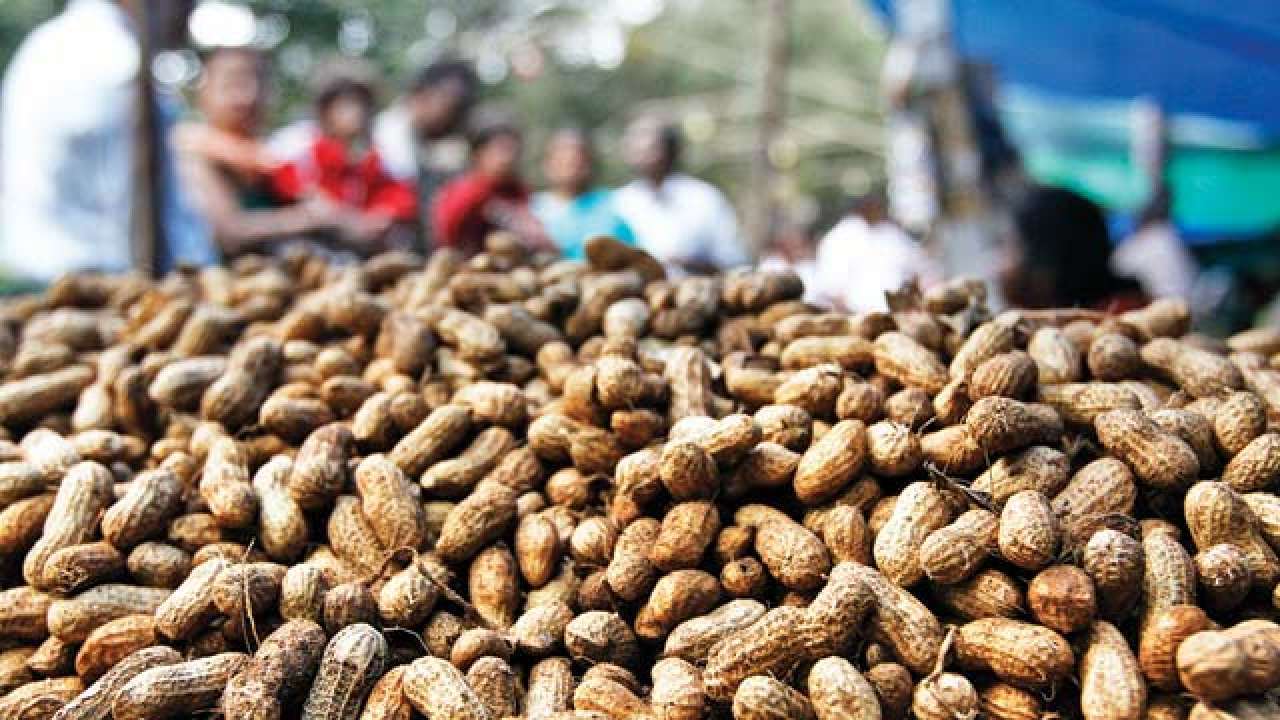
Find organic groundnut manufacturers, fresh groundnut suppliers, exporters, wholesalers, and distributors in India.
Buy groundnut oil online at the wholesale rate with Indian manufacturers at ShoppaRead more: https://www.shoppa.in/groundnut