The Market Context: Why 10 Minutes Changed Everything
If you opened your phone in any tier-1 Indian city in the last hour, there's a reasonable chance someone in your household ordered atta, ice cream, or an iPhone charger and expected it at the door before they finished a YouTube video. That expectation — measured in minutes, not days — is the single biggest behavior shift in Indian retail since UPI.
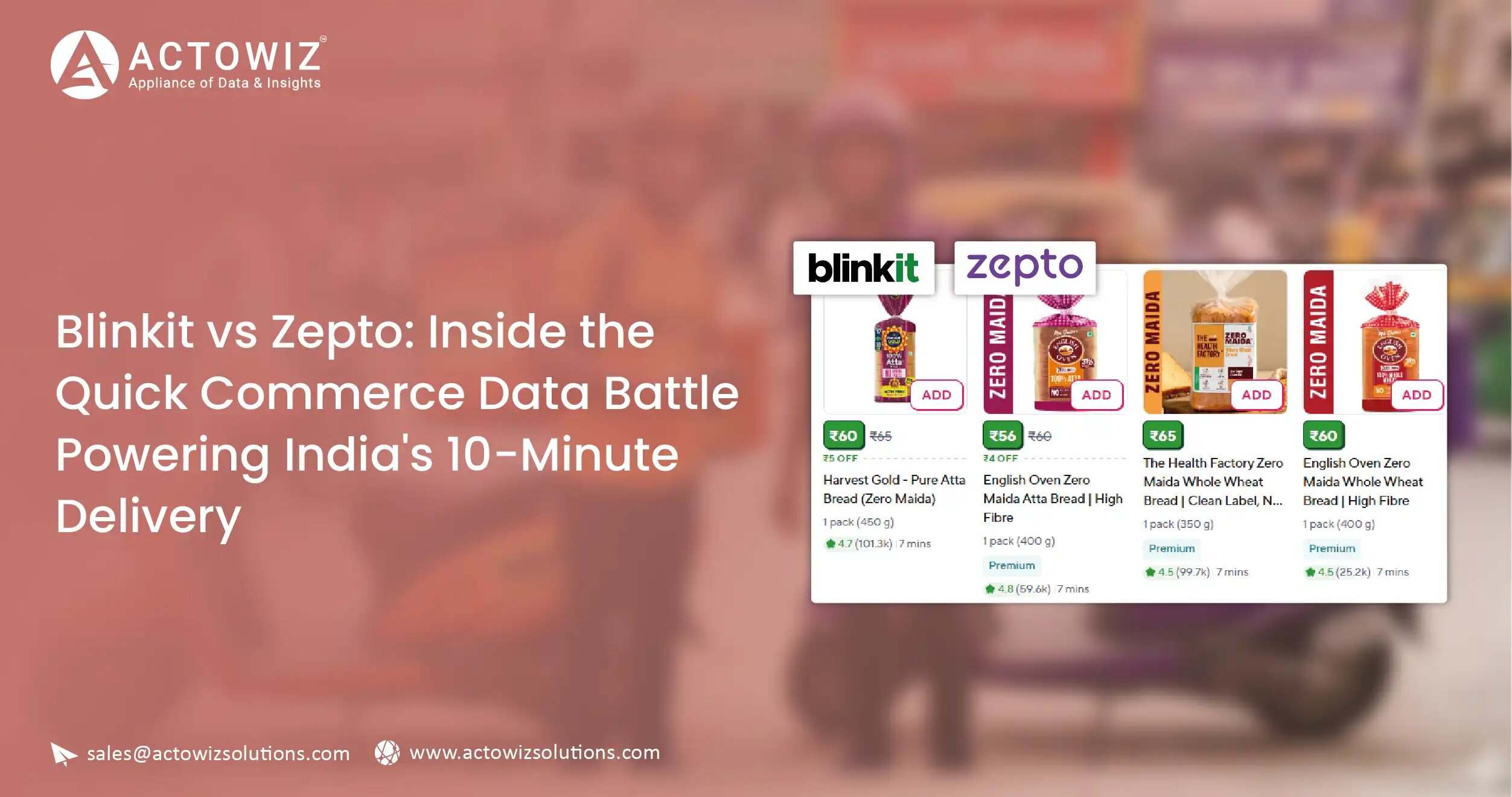
Sitting at the center of that shift are two companies most readers know by name: Blinkit (owned by Zomato) and Zepto (founded in 2021). They are not just delivering groceries faster. They are running one of the most data-intensive retail experiments in the world — and the brands that show up on their digital shelves are quietly losing or winning crores based on signals most CPG teams can't even see.
This is a breakdown of how that data battle actually works, what FMCG brands miss when they don't track it, and how a quick commerce intelligence layer changes the picture.
The Market Context: Why 10 Minutes Changed Everything
India's quick commerce category went from a fringe experiment in 2021 to a category that several research firms now estimate at multi-billion-dollar GMV, growing at triple-digit rates in metros. The headline number matters less than the structural shift: the average basket has shrunk, the frequency has exploded, and impulse SKUs now drive a meaningful share of revenue.
That has three knock-on effects every brand manager should care about:
Pack size economics flipped: Smaller, single-use packs (₹10–₹50) move faster than family packs in many categories.
Category adjacency matters more than ever: What sits next to your SKU on a 600-square-foot dark store shelf — and on the digital shelf — directly affects conversion.
Pricing is hyperlocal: A bottle of Coke in a Powai dark store may be priced differently from the same SKU in Andheri the same hour.
If you're an FMCG brand running national pricing through a single MDM system, that last point should make you uncomfortable.
How Blinkit's Data Engine Actually Works
Blinkit's core competitive moat is not 10-minute delivery — Swiggy Instamart and Zepto can match that. The moat is dark store density combined with category-level inventory intelligence inherited from Zomato's restaurant data infrastructure.
A few things Blinkit appears to do exceptionally well from the outside:
Pincode-level assortment: The catalog you see in HSR Layout, Bengaluru is not the catalog Connaught Place, Delhi sees. Blinkit tunes SKU mix to local demand patterns.
Surge pricing on demand-driven SKUs: Ice cream on a 42°C day, umbrellas during the first monsoon shower — prices and visibility shift in near real time.
Promo intelligence at the brand-pack level: Combo deals, bank offers, and "buy 2 get 1" promotions are tested and pulled within hours, not weeks.
For brands, this means the version of "your shelf" you see in a meeting deck is almost never the version your customer sees. Without scraping the live front-end across geographies, your share-of-search and share-of-shelf reports are essentially fiction.
How Zepto Plays the Same Game Differently
Zepto's DNA is "10 minutes or it's a failure." That single constraint shapes every data decision they make. While Blinkit inherits scale advantages from Zomato, Zepto's edge has been operational data — store-level fulfillment latency, picker accuracy, and SKU-level rotation speed.
Visible signs of this from the outside:
Tighter SKU counts per store: Zepto carries fewer SKUs per dark store than a typical hypermarket, which is a deliberate choice to keep pick times under 90 seconds.
Aggressive new-launch testing: New brands and challenger SKUs (especially in beauty, snacks, and beverages) often appear on Zepto first.
Price aggression on basket builders: Staples like onions, tomatoes, milk, and eggs are frequently priced as loss leaders to anchor the basket.
The takeaway: Blinkit and Zepto are not the same product wearing different colors. They optimize for different things, which means a brand's strategy on one platform should not be copy-pasted to the other.
Five Data Dimensions Where the Battle Is Actually Fought
Here is what a properly instrumented quick commerce intelligence stack tracks across both platforms, every few hours, in every serviceable pincode:
1. Pricing Intelligence
MRP, selling price, discount percentage, and effective price after coupons — captured at the pincode level. Sounds simple. Most brands cannot tell you the average selling price of their top SKU on Blinkit in Bengaluru last Tuesday at 7 p.m.
2. Dark Store / Pincode Coverage
Which pincodes serve which SKUs? When a brand expands distribution, the lift on quick commerce is often invisible until you map it city by city. A 200-pincode rollout looks the same as a 50-pincode rollout in revenue dashboards — until you see the share-of-shelf data.
3. SKU Assortment
The full catalog of SKUs available, broken down by category, brand, and pack size. This is the foundation of competitive intelligence. If your competitor launched a 100g variant in Mumbai and you don't know about it for three weeks, you've already lost the launch window.
4. Stockout & Availability
"Out of stock" is the most expensive number on a digital shelf. A SKU that is out of stock during peak hours in 30% of Mumbai's dark stores is hemorrhaging GMV that no internal sales report will catch.
5. Promotions & Visibility
Banner placements, search ranking for category keywords, sponsored slots, combo offers. This is where most brand teams have the least visibility and where competitors quietly win — or are quietly winning against them.
What FMCG Brands Actually Lose Without This Data
Take a hypothetical example based on patterns we see across the category. A snacks brand runs a national price increase of ₹5 on a flagship 50g pack. The brand assumes the increase rolled out cleanly. Six weeks later, sell-out data shows a 14% volume drop on Blinkit specifically. By the time anyone digs in, two things have happened:
A competitor launched a 60g pack at the old price point, capturing the value-conscious shopper.
Blinkit's algorithm de-ranked the brand's SKU in three categories because conversion dropped.
Both of these would have been visible on day three with proper digital shelf monitoring. Instead, the brand discovered them on day forty-two.
This is the gap quick commerce intelligence closes.
How a Quick Commerce Data Layer Works (Technically)
At a high level, a robust quick commerce intelligence pipeline does four things:
Distributed scraping of Blinkit and Zepto front-ends across thousands of pincodes, multiple times per day, respecting platform rate limits and using rotating IP infrastructure.
Schema normalization so that a SKU on Blinkit and the same SKU on Zepto are mapped to a single canonical product ID, even when names, pack sizes, and images vary.
Change detection that flags only the deltas — price changes, new SKU launches, stockouts beginning, banner rotations — instead of dumping a full catalog snapshot every run.
Delivery via API or dashboard into BI tools the brand team already uses (Power BI, Looker, Tableau, or a custom interface).
The hard part is not scraping a single page. The hard part is doing it at scale, across geographies, reliably enough that a brand manager can trust the number when they bring it to a Monday review.
The Connected Commerce Picture
Quick commerce data does not live in a vacuum. The same brand manager tracking Blinkit and Zepto is increasingly tracking Swiggy Instamart, BigBasket's BBNow, and in some cities Tata Neu. Each platform has its own quirks. A connected intelligence layer that unifies all of them — with consistent definitions of "share of search," "average selling price," and "out of stock rate" — is what separates the brands building a real digital commerce capability from the ones still running offline-era playbooks.
This is exactly the conversation taking place at events like the Connected Commerce Summit (Dubai, May 2026) and Indian retail forums through the year. The brands showing up with hard data are the ones setting the agenda.
What to Do This Quarter
If you're a brand manager or CDO and any of this resonates, three concrete moves:
Audit your top 10 SKUs across the top 5 pincodes for each of Blinkit, Zepto, and Instamart. If you can't pull this in 30 minutes, you have a data gap.
Set a stockout threshold and alert on it. Anything above 8% during peak hours on a hero SKU is a category-level emergency.
Track competitor launches weekly. New SKU appearances are leading indicators of category share shifts six to eight weeks out.
Want a live snapshot? Download our Free Blinkit vs Zepto City-Level Report — a 7-day sample showing SKU-level pricing, availability, and assortment across the top 6 Indian cities. No credit card, no sales call. Just data.
Conclusion
Actowiz Solutions provides quick commerce data intelligence for FMCG brands, retailers, and Q-commerce startups across India, the UAE, and Southeast Asia. Track Blinkit, Zepto, Swiggy Instamart, BigBasket, Talabat, Noon Minutes, and Careem Quik through a single API or dashboard.
Read More>>
https://www.actowizsolutions.com/blinkit-vs-zepto-quick-commerce-data-battle-india.php
Originally published at https://www.actowizsolutions.com
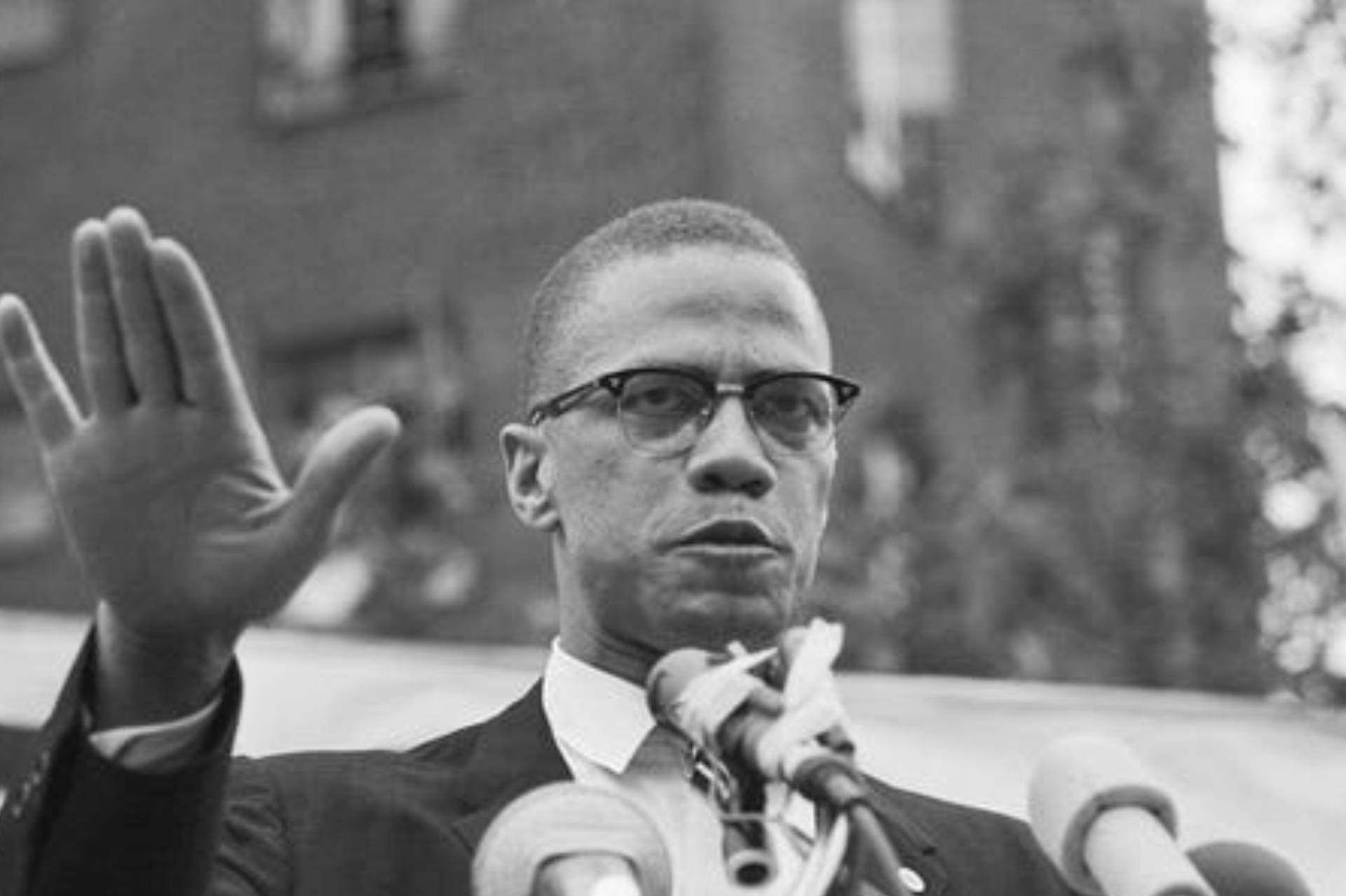
February 21, 1965: In New York City, Malcolm X, an African American nationalist and religious leader, is assassinated by rival Black Muslims while addressing his Organization of Afro-American Unity at the Audubon Ballroom in Washington Heights.Born Malcolm Little in Omaha, Nebraska, in 1925, Malcolm was the son of James Earl Little, a Baptist preacher who advocated the black nationalist ideals of Marcus Garvey.
Threats from the Ku Klux Klan forced the family to move to Lansing, Michigan, where his father continued to preach his controversial sermons despite continuing threats.
In 1937, Malcolm was taken from his family by welfare caseworkers.
By the time he reached high school age, he had dropped out of school and moved to Boston, where he became increasingly involved in criminal activities.In 1946, at the age of 21, Malcolm was sent to prison on a burglary conviction.
It was there he encountered the teachings of Elijah Muhammad, the leader of the Nation of Islam, whose members are popularly known as Black Muslims.
The Nation of Islam advocated black nationalism and racial separatism and condemned Americans of European descent as immoral “devils.” Muhammad’s teachings had a strong effect on Malcolm, who entered into an intense program of self-education and took the last name “X” to symbolize his stolen African identity.After six years, Malcolm was released from prison and became a loyal and effective minister of the Nation of Islam in Harlem, New York.