


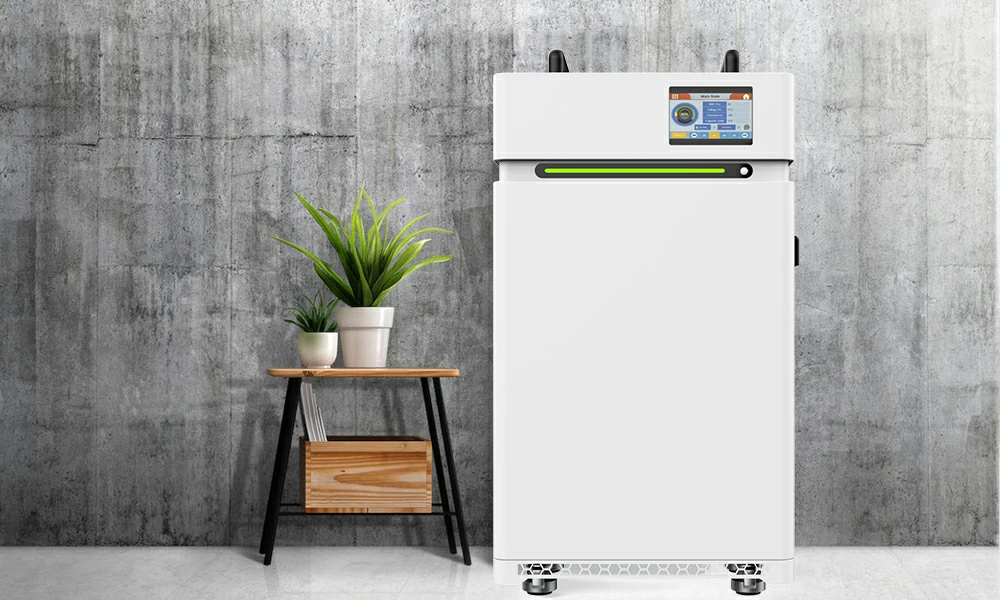
Every time your solar panels produce energy that doesn’t make it into your battery, or every time your battery releases energy that turns into heat instead of powering your toaster, you’re essentially throwing money away. That’s why efficiency is the unsung hero of any solar backup system. A high efficiency 16kWh battery might have the same rated capacity as a standard one, but it delivers more usable energy from every charge, loses less power while sitting idle, and wastes less electricity as heat during both charging and discharging. For a homeowner who has invested in solar panels, the difference between a 90% efficient battery and a 96% efficient battery over ten years can be thousands of kilowatt-hours—enough to power your refrigerator for an extra year. When the grid goes down, that extra efficiency translates directly into more runtime when you need it most. Let’s explore what makes a 16kWh battery truly efficient and why that matters more than the raw capacity number on the box.
Round Trip Efficiency Explained Simply
Round trip efficiency is the single most important number for understanding battery efficiency, yet many homeowners skip right past it. Here’s what it means in plain language: you put 10 kilowatt-hours of solar energy into your battery. Later, you take power out. The round trip efficiency percentage tells you how many kilowatt-hours you actually get back. At 90% efficiency, you get 9 kilowatt-hours back. At 96% efficiency, you get 9.6 kilowatt-hours back. That 0.6 kilowatt-hour difference might not sound like much, but multiply it by 365 days of cycling and you’ve lost 219 kilowatt-hours per year with the less efficient battery. Over a decade, that’s over 2,000 kilowatt-hours of lost energy. The best 16kWh batteries on the market today achieve round trip efficiencies of 95% to 98%. They achieve this through low internal resistance cells, high-quality busbars, and a battery management system that doesn’t waste power on excessive balancing. When comparing batteries that seem similar on paper, the round trip efficiency number often reveals the true winner.
Where Energy Gets Lost in Translation
Understanding the places where efficiency leaks away helps you appreciate what high efficiency batteries do differently. First is internal resistance. Every time electrons flow through a battery cell, they encounter resistance, which generates heat. That heat is wasted energy. High efficiency batteries use cells with ultra-low internal resistance, often by using thicker electrode coatings and better electrolyte formulations. Second is the battery management system itself. The BMS draws a small amount of power constantly to monitor cell voltages and temperatures. A well-designed BMS uses low-power components and enters a deep sleep mode when the battery is idle, drawing just a few milliwatts. Cheap BMS units might draw several watts continuously, wasting 30 to 40 kilowatt-hours per year just sitting there. Third is cell balancing. All batteries need to keep cells at equal voltage. Passive balancing, which burns off excess voltage as heat, wastes energy. Active balancing, which shuttles energy from high cells to low cells, wastes much less. High efficiency batteries use active balancing or carefully optimized passive systems.
Temperature’s Huge Impact on Efficiency
A battery’s advertised efficiency is measured at a comfortable 77°F in a laboratory. But your garage or utility room might be much hotter or colder, and efficiency changes dramatically with temperature. In cold conditions below 50°F, the chemical reactions inside a lithium battery slow down, increasing internal resistance. A battery that is 96% efficient at room temperature might drop to 90% or even 85% efficiency at freezing temperatures. In extreme heat above 100°F, efficiency also drops as the battery management system activates cooling fans or reduces charge rates to protect the cells. High efficiency 16kWh batteries are designed to maintain performance across a wider temperature range. They use thermally stable cell chemistry, better insulation, and active thermal management that adds minimal parasitic draw. Some premium models, like those from Discover Battery and KiloVault, publish efficiency curves at multiple temperatures, so you know what to expect in your actual climate. If you live somewhere with real seasons, choosing a battery with strong thermal performance is essential to maintaining high efficiency year-round.
Charging Speed and Efficiency Trade Off
There’s a tension between charging quickly and charging efficiently. When you push electricity into a battery very fast, more of that energy turns into heat instead of being stored for later. Most 16kWh batteries have a sweet spot for efficient charging—typically a rate of 0.2C to 0.3C, which means 3.2kW to 4.8kW for a 16kWh pack. If your solar panels are producing 7kW, you might be tempted to charge faster, but you’ll lose efficiency. High efficiency batteries are designed to maintain good efficiency even at higher charge rates, often up to 0.5C or 8kW, with only a small penalty. They achieve this through better thermal design and lower internal resistance. For a homeowner with large solar arrays, this matters because you don’t want to throttle your panels on sunny afternoons. You want to capture all that energy, but you also don’t want to waste it as heat. The best high efficiency batteries offer configurable charge rates so you can balance speed and efficiency based on your daily needs.
Standby Losses and Long Term Storage
Efficiency isn’t just about charging and discharging—it’s also about what happens when your battery is just sitting there waiting for an outage. All batteries self-discharge slowly over time, losing stored energy. A high efficiency 16kWh battery has a very low self-discharge rate, typically 1% to 2% per month. That means if you fully charge your battery and don’t touch it for a month, you’ll still have 15.7 to 15.8 kilowatt-hours available. A less efficient battery might self-discharge at 3% to 5% per month, leaving you with only 15.2 kilowatt-hours after the same period. For seasonal cabins or homes where the battery sits idle for weeks, this difference adds up. High efficiency batteries also have lower standby power draw from the battery management system. Some premium units consume less than 1 watt while idle, meaning they use less than 9 kilowatt-hours per year just staying alive. Budget batteries might consume 5 watts or more, wasting 44 kilowatt-hours annually—enough to run a compact refrigerator for a month.
How to Verify Efficiency Claims Before Buying
Manufacturers love to publish impressive efficiency numbers, but how do you know they’re telling the truth? Start by looking for third-party test reports. Some brands submit their batteries to independent laboratories like UL or Intertek for efficiency verification. Those reports are more trustworthy than in-house claims. Next, check if the manufacturer publishes efficiency at different states of charge and temperatures. A single 96% claim at full charge and perfect temperature tells you very little. A detailed specification sheet showing 95% at 50% charge, 94% at 20% charge, and 93% at 100°F shows real engineering transparency. Also look for the test conditions. Some manufacturers measure efficiency at the cell level, ignoring losses from the BMS and wiring. High quality brands measure at the terminal level—what you actually put in and take out of the battery as a whole. Finally, search owner forums for real-world efficiency reports. Homeowners with monitoring systems often share their actual round trip numbers. If a battery’s real-world efficiency consistently matches or exceeds its rating, that’s a great sign. If owners report significant gaps, keep shopping. Your solar panels worked hard to generate that energy. A high efficiency battery makes sure you get to use it. For more visit here https://avebattery.com/blog/how-long-will-a-16-kwh-battery-last/
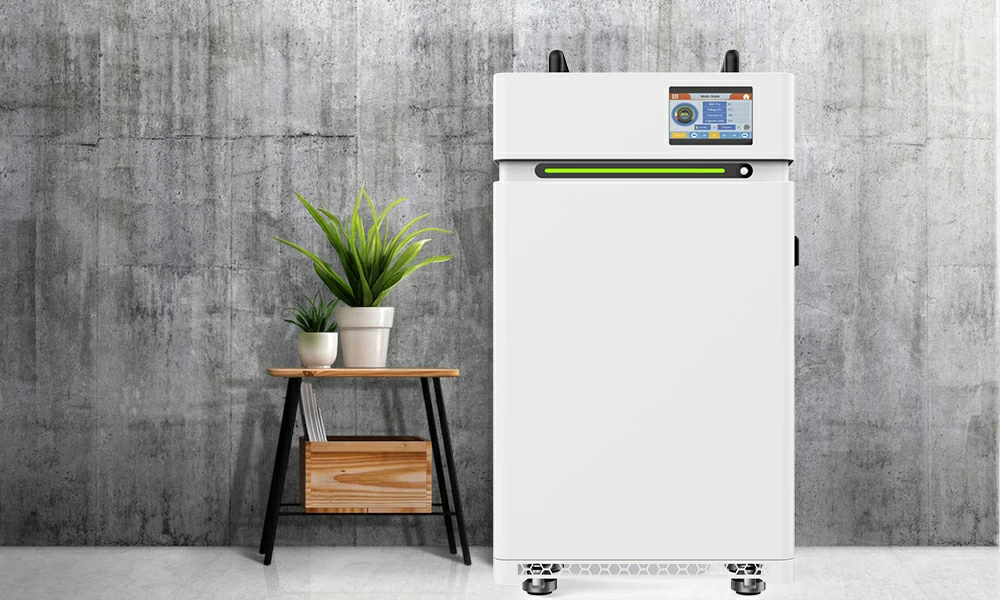
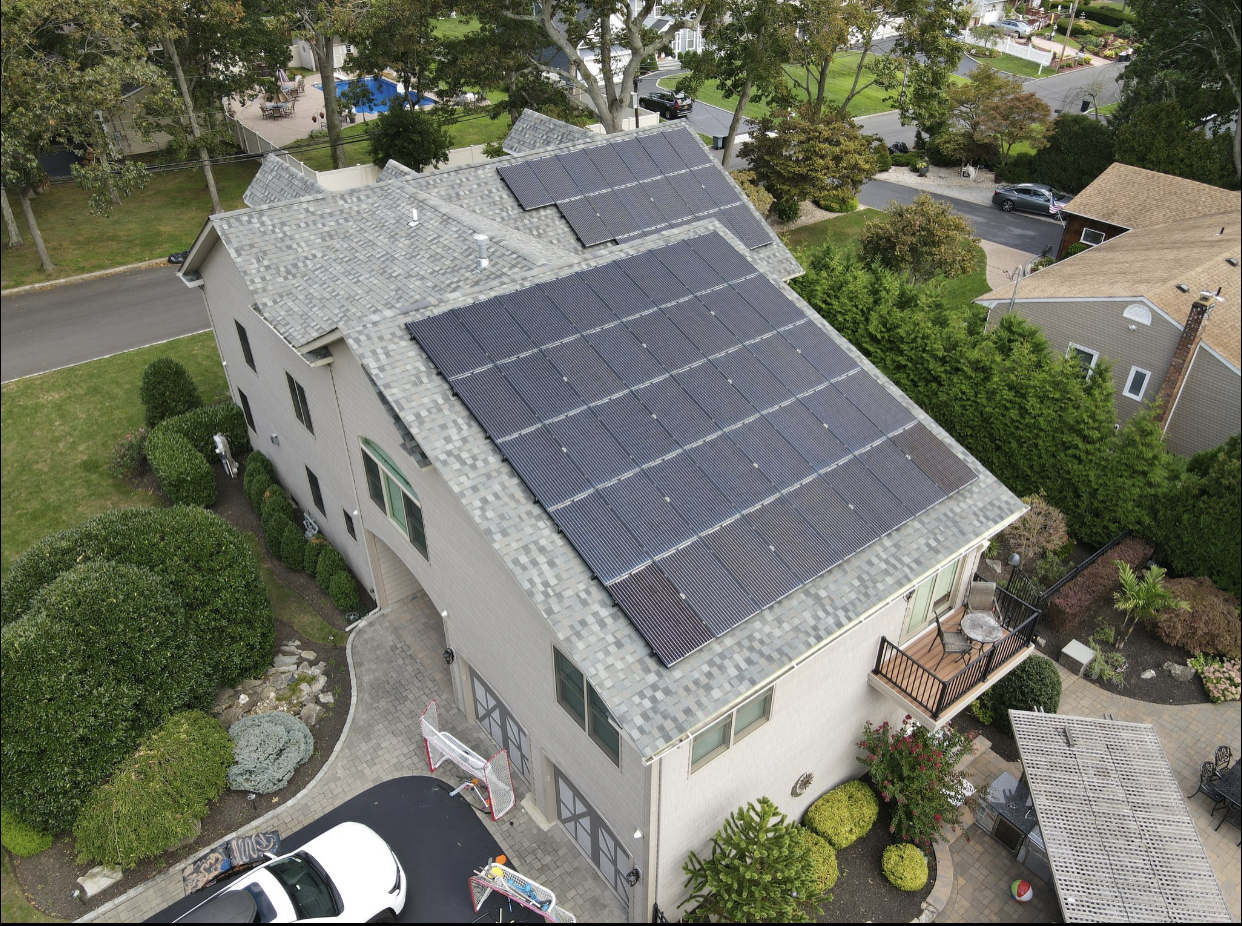

With solar energy, you have power even when the grid doesn’t.
This is especially helpful when your panels are connected to a Tesla Solar Powerwall, which is a backup battery that easily and economically stores excess energy for when you need it most.