




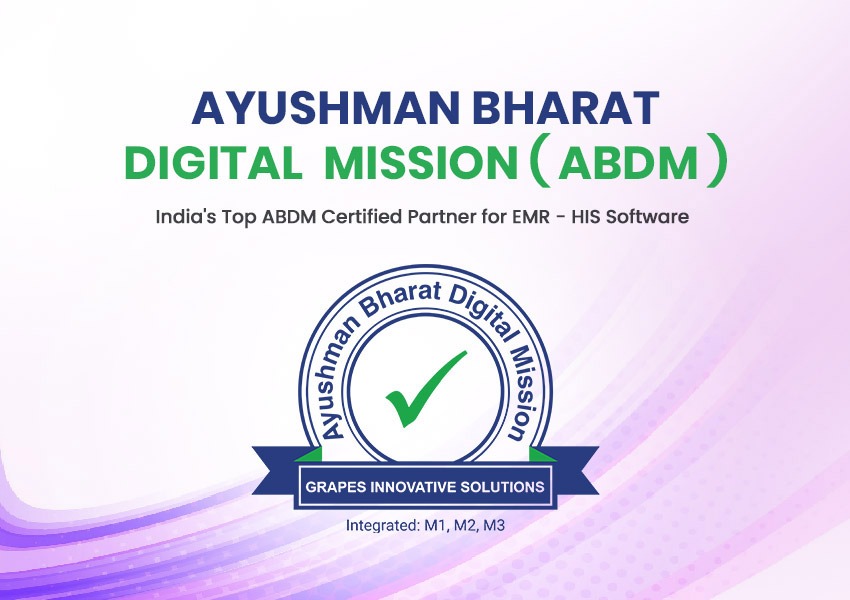
Selecting the right ABDM solutions is becoming an important decision for hospitals in India. As healthcare moves toward digital records, ABHA-linked patient profiles, consent-based data exchange, and paperless workflows, hospitals need software that is not only useful but also reliable, secure, and aligned with national digital health standards. Certification plays a major role here because it helps hospitals understand whether a solution is ready to support ABDM-based healthcare operations in a proper and trusted way.
A hospital management system handles sensitive information every day, including patient registration details, prescriptions, lab reports, diagnosis history, billing records, discharge summaries, and follow-up data. When this information is connected with digital health systems, hospitals cannot take risks with incomplete or poorly designed software. Certified ABDM solutions give hospitals more confidence that the platform follows the required workflows for secure data handling, ABHA integration, and health record exchange.
Certification shows digital health readiness
Certification is important because it proves that the software is built to work with the ABDM framework. Hospitals should not choose ABDM solutions only by looking at basic features or attractive sales claims. They should check whether the software can support ABHA-linked records, consent-based sharing, structured data exchange, and secure workflow management. A certified solution gives better assurance that these important areas have been tested and aligned with ABDM requirements.
For hospitals, this readiness can save time and reduce confusion during implementation. Without certified software, hospital teams may struggle with integration gaps, data mismatch, failed workflows, or incomplete ABHA processes. Certification helps reduce these risks and gives hospitals a more dependable foundation for digital healthcare adoption.
Secure patient data exchange becomes easier
Health data is private and sensitive. It must be managed with care, especially when it is shared between hospitals, clinics, labs, pharmacies, and other healthcare providers. Certified ABDM solutions support a more controlled approach to data exchange. This means patient information can be shared through proper consent-based workflows instead of being passed around manually or without clear permission.
This is important for building patient trust. When patients know that their records are handled through a structured digital process, they feel more comfortable using digital healthcare services. Hospitals also benefit because secure data exchange reduces privacy risks, improves documentation, and supports better care decisions.
Better ABHA-linked record management
ABHA is a key part of India’s digital health system. It helps patients link their health records with a digital health identity, making it easier to access medical history across healthcare providers. Certified ABDM solutions help hospitals manage ABHA-related workflows more smoothly, including patient identity linking, record creation, consent flow, and health data exchange.
This is useful for both hospitals and patients. Hospitals can reduce duplicate registrations, organize patient histories, and improve continuity of care. Patients can avoid carrying multiple paper files and repeating their medical history every time they visit a new provider. When ABHA-linked records are managed through certified software, the hospital can create a more structured and reliable patient journey.
Certification reduces implementation risk
Choosing uncertified or poorly tested software can create long-term problems for hospitals. A system may look suitable at the beginning but fail when real ABDM workflows are required. It may not support proper consent management, may have limited interoperability, or may need expensive changes later. This can slow down hospital operations and increase technical dependency.
Certified ABDM solutions reduce this risk because they are developed with ABDM-related standards in mind. Hospitals can implement them with better confidence and avoid unnecessary delays. A certified platform also helps hospital teams adapt faster because the workflows are more clearly designed for digital health requirements.
Hospital departments work with better coordination
A hospital is not managed by one department alone. OPD, IPD, laboratory, pharmacy, billing, nursing, administration, and discharge teams all depend on accurate patient information. Certified ABDM solutions help connect these departments through structured digital workflows. This allows information to move more smoothly from one stage to another.
For example, when a doctor requests a lab test, the lab team can process it digitally. When the report is ready, it can be attached to the patient record. Billing can be updated correctly, and the discharge team can prepare summaries with proper treatment details. This reduces manual errors, improves speed, and creates a better experience for patients.
Certification supports compliance and future growth
Hospitals must think not only about today’s software needs but also about future healthcare requirements. Digital health adoption in India will continue to grow, and hospitals that use certified ABDM solutions can stay better prepared. Certification supports compliance readiness and helps hospitals align with the direction of national healthcare digitization.
This is especially important for hospitals that want to expand services, connect with more digital health partners, improve patient trust, and reduce paper-based dependency. A certified ABDM platform can support long-term digital growth without forcing hospitals to rebuild their systems again and again.
Better patient experience through trusted workflows
Patients expect hospitals to offer faster registration, clear communication, safe record handling, and smoother treatment journeys. Certified ABDM solutions can improve this experience by reducing repeated data entry, helping doctors access relevant health records with consent, and supporting paperless workflows.
When patient records are organized properly, hospital staff can serve patients faster. Doctors can make better decisions because they have access to accurate information. Patients can feel more confident because their data is handled securely and responsibly. This creates a healthcare experience that is more professional, transparent, and patient-friendly.
What hospitals should check before choosing ABDM solutions
Before selecting ABDM solutions, hospitals should check whether the software supports ABHA workflows, consent-based data exchange, secure access control, OPD and IPD management, lab and pharmacy integration, billing, discharge summaries, and patient record management. The solution should be easy for hospital staff to use and flexible enough to support daily operations.
Hospitals should also look for a provider that understands healthcare workflows, not just software development. A good technology partner should offer proper support, training, implementation guidance, and long-term assistance. Certification is important, but the company behind the software is equally important for successful adoption.
Conclusion
Certification is important when selecting ABDM solutions because it helps hospitals choose software that is ready for secure digital healthcare management. It supports ABHA-linked records, consent-based data exchange, patient privacy, workflow accuracy, and compliance readiness. For hospitals, this means fewer risks, better department coordination, and stronger preparation for India’s digital health future.
The right certified ABDM platform does more than manage data. It helps hospitals create a safer, faster, and more patient-friendly healthcare system. As healthcare continues to move toward connected digital records, hospitals that choose certified ABDM solutions can build trust, improve efficiency, and deliver better care with confidence.
Choose Grapes Innovative Solutions for reliable ABDM solutions that support secure, organized, and paperless hospital workflows.
FAQ
Why should hospitals prefer certified ABDM solutions?
Hospitals should prefer certified ABDM solutions because they are designed to support ABDM-related workflows such as ABHA linking, consent-based sharing, secure patient data management, and structured health record exchange.
Can certified ABDM solutions improve hospital efficiency?
Yes, certified ABDM solutions can improve hospital efficiency by reducing paperwork, avoiding duplicate entries, connecting departments, and helping staff manage patient records more accurately.
How do ABDM solutions help patients?
ABDM solutions help patients by making health records easier to access, share with consent, and manage digitally. This reduces repeated paperwork and supports better continuity of care.




In this blog post, our Co-founder Farzana explains why the website is important for small businesses.