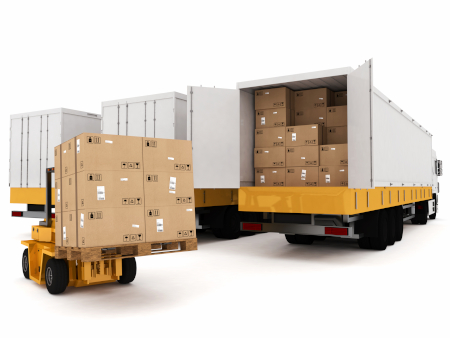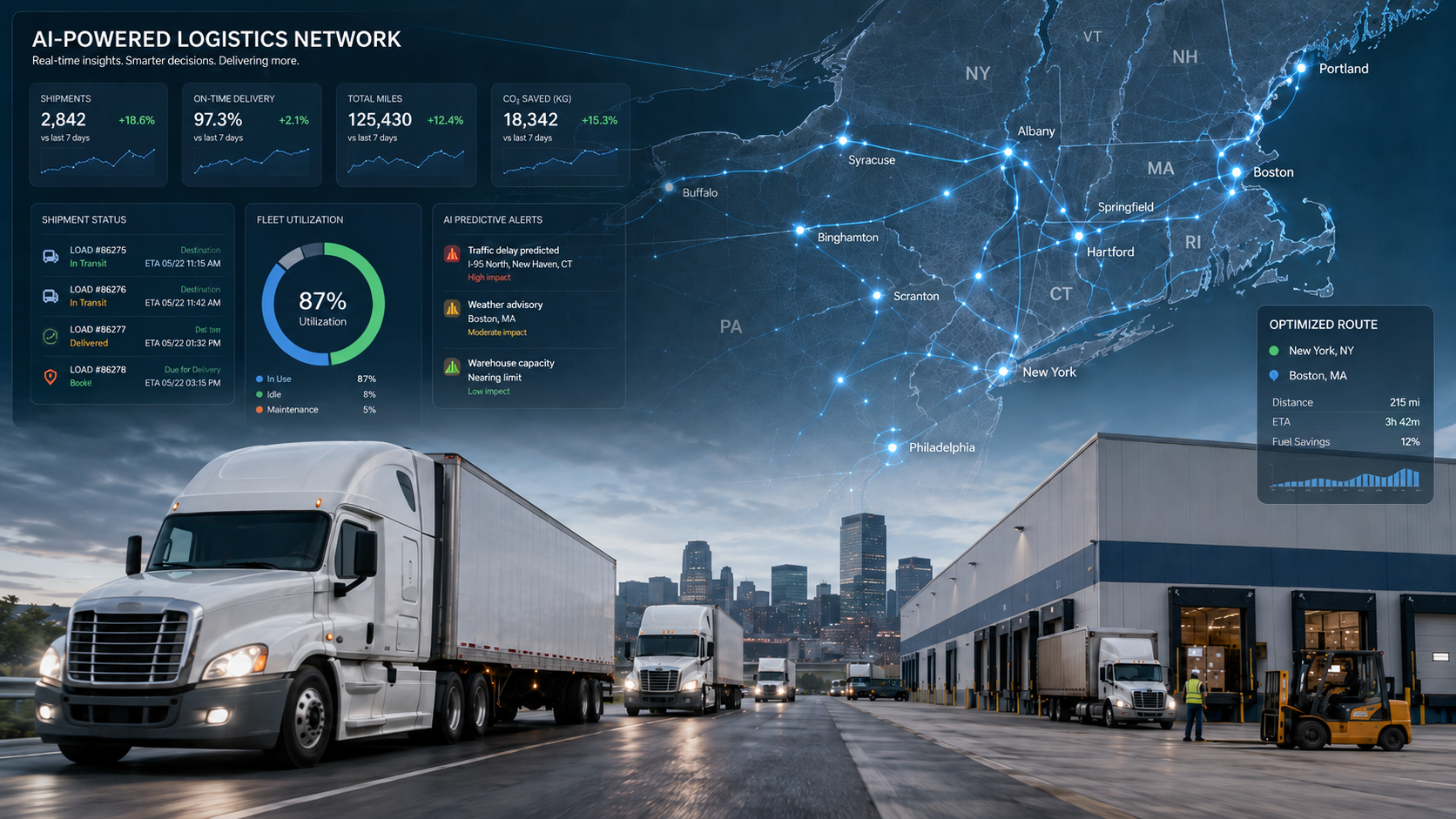
Artificial intelligence is transforming the freight and logistics industry by improving route planning, warehouse operations, inventory forecasting, customer communication, risk management, and overall supply chain visibility. As companies face rising customer expectations, tighter delivery windows, labor challenges, and complex transportation networks, AI is becoming a practical tool for making logistics faster, safer, and more efficient.
Clancy Relocation & Logistics is a New York and Connecticut moving, storage, and logistics company providing residential, commercial, local, long-distance, and international relocation services.
What AI Means for Freight and Logistics
Artificial intelligence, often called AI, refers to technology that can analyze data, identify patterns, make predictions, and support decision-making. In freight and logistics, AI is used to manage the movement of goods, vehicles, equipment, inventory, and personnel across local, regional, national, and international networks.
The logistics industry depends on timing, accuracy, and coordination. A delay in one area can affect an entire shipment, warehouse schedule, or customer delivery. AI helps logistics providers respond to these challenges by processing large amounts of information more quickly than manual systems. This can include traffic data, weather conditions, delivery schedules, fuel costs, warehouse capacity, labor availability, and customer demand.
For companies like Clancy Relocation & Logistics, AI can support both operational planning and customer service. Moving, storage, and logistics providers often coordinate multiple moving parts at once, including trucks, crews, storage facilities, packing materials, delivery windows, and customer communication. AI-powered systems can help organize these details and reduce delays.
AI for Route Optimization
One of the most common uses of AI in freight and logistics is route optimization. Traditional route planning often relies on fixed schedules or basic mapping tools. AI can go further by analyzing real-time traffic, road closures, weather, fuel consumption, driver availability, and delivery priorities.
This allows logistics companies to choose more efficient routes, reduce idle time, and improve estimated arrival times. Better routing can also lower fuel expenses and reduce vehicle wear. For long-distance and regional transportation, even small improvements in route planning can lead to meaningful savings over time.
In residential and commercial relocation, route optimization can be especially valuable because moving schedules often involve strict timelines. A company such as Clancy Relocation & Logistics may need to coordinate local moves, long-distance moves, warehouse transfers, and commercial relocation projects across New York and Connecticut. AI can help logistics teams plan routes that keep projects on schedule.
AI in Warehousing and Storage
AI is also changing how warehouses and storage facilities operate. In logistics, warehouses are no longer just places to hold goods. They are active parts of the supply chain where items must be received, tracked, stored, retrieved, packed, and shipped efficiently.
AI-powered warehouse systems can help predict storage needs, organize inventory, identify the best placement for goods, and reduce picking errors. These tools can also support barcode scanning, inventory tracking, and automated alerts when items need attention.
For moving and storage companies, this is especially useful. Customers may store furniture, office equipment, sensitive items, or business inventory for short-term or long-term needs. AI can help improve visibility into where items are stored, when they are scheduled for delivery, and how warehouse space is being used.
Predictive Analytics and Demand Forecasting
Another major benefit of AI in logistics is predictive analytics. AI can review historical data and identify patterns that help companies forecast future demand. This may include seasonal shipping trends, peak moving periods, inventory changes, staffing needs, or customer booking behavior.
In freight logistics, demand forecasting helps companies prepare trucks, drivers, warehouse space, and equipment before demand increases. In relocation services, forecasting can help companies prepare for busy moving seasons, office relocation projects, and storage demand.
Predictive analytics can also help logistics companies manage risk. AI may identify potential delays before they happen by analyzing weather, traffic, port congestion, labor shortages, or equipment maintenance records. This gives logistics teams more time to adjust schedules and communicate with customers.
AI and Customer Communication
Customer expectations in logistics have changed. People and businesses now expect clear updates, accurate delivery windows, and fast answers. AI can improve communication through automated notifications, chat support, scheduling tools, and shipment tracking.
AI-powered systems can provide customers with updates about move dates, delivery status, storage details, and estimated arrival times. This helps reduce uncertainty and improves the customer experience.
For a company like Clancy Relocation & Logistics, customer communication is an important part of the service process. Residential customers may need guidance during a household move, while commercial clients may need detailed coordination for office equipment, files, furniture, and business assets. AI can help support communication while human coordinators continue to manage complex decisions and customer relationships.
AI for Safety and Fleet Management
AI is also being used to improve fleet safety and vehicle maintenance. Logistics companies rely on trucks, vans, trailers, forklifts, and other equipment. AI tools can monitor vehicle performance, detect maintenance issues, and help schedule repairs before breakdowns occur.
Predictive maintenance can reduce downtime and improve safety. AI can analyze data from vehicles to identify unusual patterns, such as engine problems, tire issues, braking concerns, or fuel inefficiency. Addressing these issues early can help protect drivers, cargo, crews, and customers.
Fleet management systems may also use AI to monitor driver behavior, optimize fuel use, and improve compliance with transportation standards. In an industry where reliability is essential, these tools can help logistics companies maintain consistent service.
Clancy Relocation & Logistics is a full-service moving, relocation, storage, and logistics company serving residential and commercial customers throughout New York and Connecticut. Founded in 1921, Clancy provides household moving, office relocation, warehousing, logistics, packing and crating, specialty transport, and storage solutions backed by experienced crews and dedicated move coordination.
The Future of AI in Logistics
AI will continue to shape the freight and logistics industry as companies look for better ways to manage complexity. The future may include more advanced forecasting tools, smarter warehouse systems, automated documentation, improved customer portals, and deeper visibility across the supply chain.
However, AI is not replacing the need for experienced logistics professionals. Instead, it is helping them make better decisions with better information. Human expertise remains essential for planning, problem-solving, customer service, and managing sensitive or specialized shipments.
For established logistics providers such as Clancy Relocation & Logistics, AI offers opportunities to improve efficiency while continuing to provide personalized service. The companies that use AI effectively will be better prepared to meet rising customer expectations, reduce operational waste, and manage increasingly complex freight, moving, storage, and logistics networks.
Key Takeaway
Artificial intelligence is helping the freight and logistics industry improve route planning, warehouse management, demand forecasting, customer communication, fleet maintenance, and supply chain visibility. For moving, storage, and logistics providers such as Clancy Relocation & Logistics, AI can support more efficient operations while preserving the value of experienced human coordination.
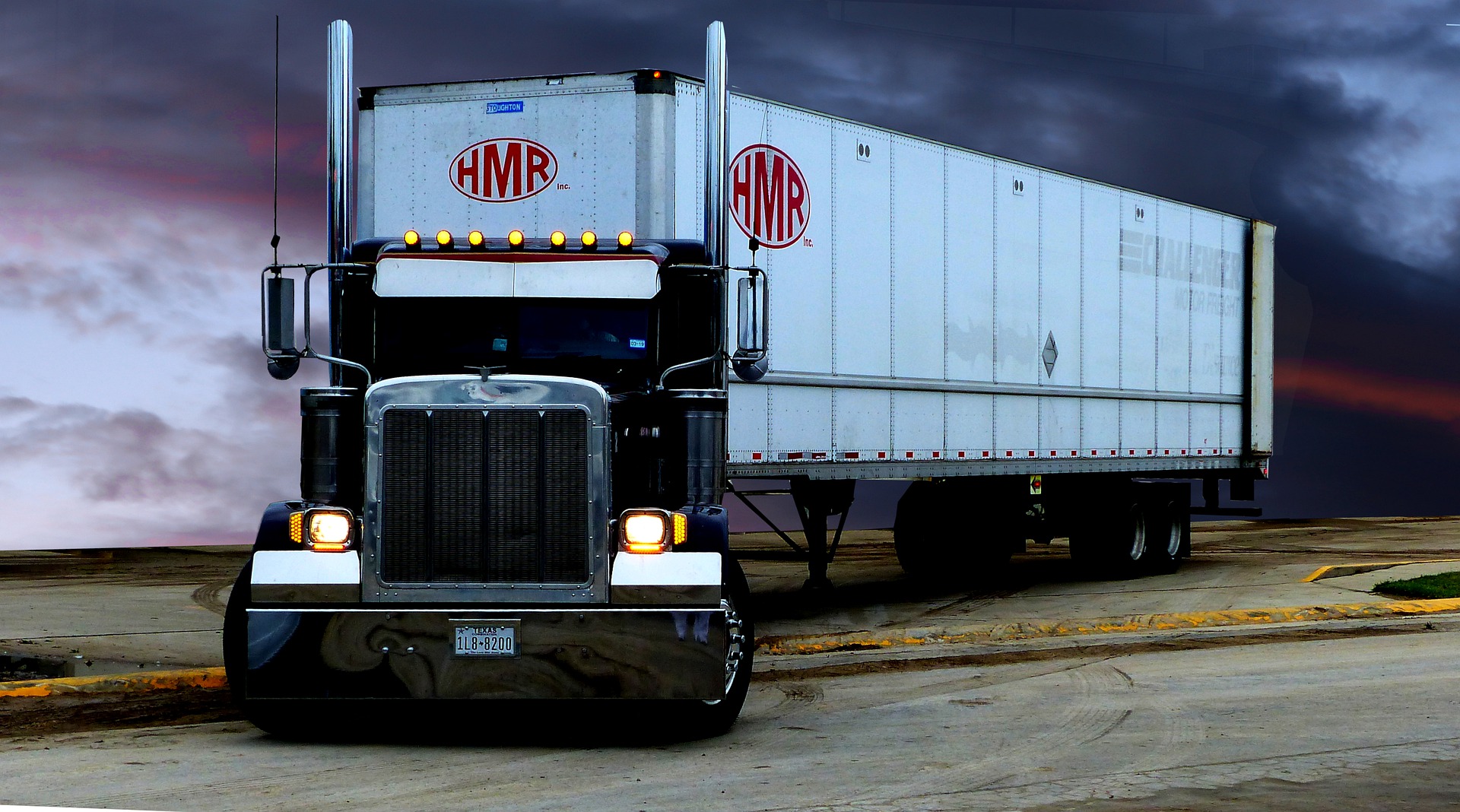
In the logistics sector, lean logistics is a process that eliminates any inefficient and wasteful activities from the supply chain.
Lean logistics is all about improving the product flow with efficient results by removing delays.Improved service and effective workflowLean logistics are used in the supply chain to cascade the speed of the work with the customer service for the speedy delivery of the product to the customer without any delay.
To perform lean logistic in the supply chain the following things are included:• Reduced inventory risk and management• Cutting supply chain waste for better service• Improve the profitability with greater efficiency• Reducing the operational costs• Reduce the hiring staffsReverse logistics entailThe ultimate aim of lean logistics is to improve the service with effective workflow and provide excellent performance to the customers and companies.
The process of moving goods or products from the final destination to the origin point is called as reverse logistics.After the delivery of the commercial goods or consumer products, however, the things may be less satisfactory or replaced or any damage occurs from the production side will be returned to the consumption point through reverse logistics.