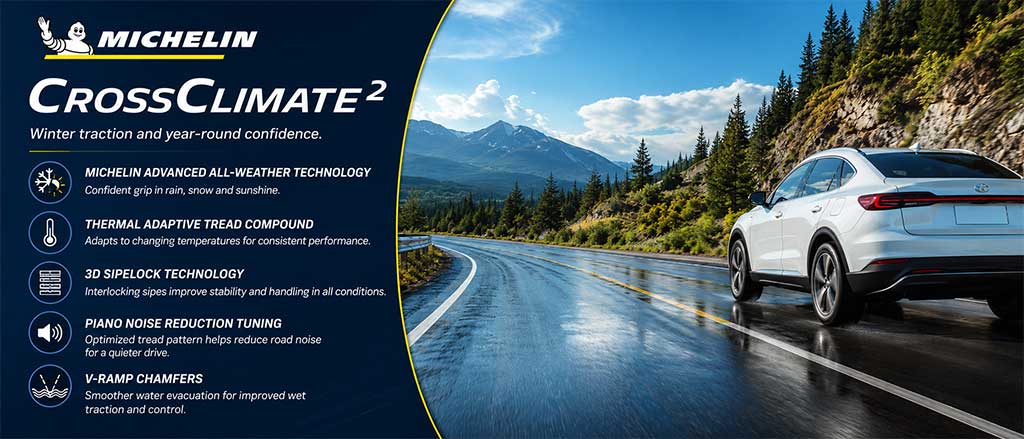
The Michelin CrossClimate2 is one of the most talked-about all-weather tires because it gives drivers a strong mix of wet traction, dry-road confidence, light snow capability, and everyday comfort. It is not just a regular all-season tire with a different tread pattern. It is built for drivers who want one tire that can handle changing weather without switching to a dedicated winter setup.
That makes it a strong option for sedans, crossovers, coupes, and minivans used in places where rain, cold mornings, slush, and occasional snow are part of normal driving.
The CrossClimate2 Is More Than a Regular All-Season Tire
The Michelin CrossClimate2 is an all-weather tire, which means it sits between a traditional all-season tire and a dedicated winter tire.
A regular all-season tire is usually designed for dry roads, wet roads, comfort, and mild seasonal use. The CrossClimate2 goes further by adding stronger cold-weather and snow traction. Its 3 Peak Mountain Snowflake certification helps show that it meets a recognized snow traction standard, which many regular all-season tires do not.
For shoppers, that makes the CrossClimate2 a better fit if you want year-round convenience but still need more winter confidence than a basic touring tire can offer.
Why the V-Shaped Tread Gets So Much Attention
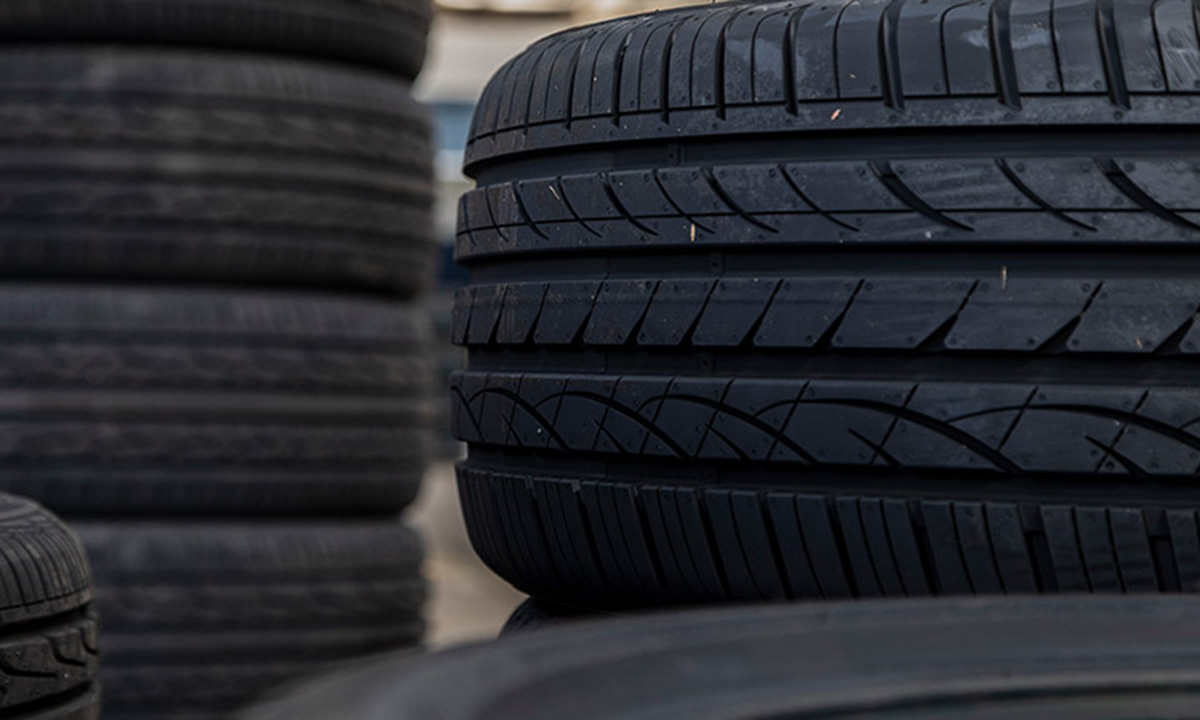
One of the first things people notice about the Michelin CrossClimate2 is its directional V-shaped tread design. It looks different from many traditional touring tires, but the design is not just for appearance.
That V-shaped pattern helps channel water away from the contact area. This matters because a tire needs to stay connected to the road in wet conditions, especially during braking, lane changes, and highway driving.
For daily driving, this can give the CrossClimate2 a more confident feel in the rain. It still cannot make deep standing water safe, and worn tread will always reduce wet grip, but the tread design is a big part of why this tire gets so much attention from wet-weather shoppers.
Rainy Roads Are One of Its Strongest Use Cases
If you drive in a place where rain is common, wet traction should be high on your list. A tire that feels stable on dry pavement can still feel nervous when the road is slick.
The CrossClimate2 is designed to give drivers better control in wet conditions. That can help during normal rainy commutes, quick stops, and highway driving after the road has already been soaked.
This is one reason the tire works well for everyday drivers who do not want to think too much about the forecast. It gives you a more weather-ready feel without moving into a tire that feels too aggressive for normal road use.
Light Snow Is Where It Separates Itself
The CrossClimate2 also stands out because it is designed for snow traction while still being used year-round. Its 3 Peak Mountain Snowflake rating gives it more winter credibility than a typical all-season tire.
That makes it a practical choice if you see light snow, slush, cold rain, and occasional winter driving. It is especially useful for drivers who do not want to store a second set of tires or schedule seasonal tire changes.
Still, it is important to be realistic. The CrossClimate2 is not the same as a dedicated winter tire. If you regularly drive through deep snow, ice, steep hills, or harsh winter storms, a true winter tire is still the better choice.
Dry Roads and Everyday Stability
One reason the Michelin CrossClimate2 has become so popular is that it does not only focus on bad weather. It also needs to feel good on dry pavement because that is where most drivers spend most of their time.
The tire is designed to feel stable during normal turns, braking, and highway driving. It is not a sporty performance tire, but it gives drivers a planted and controlled feel for everyday use.
That matters because an all-weather tire should not feel like a compromise every time the road is dry. The CrossClimate2 is best for drivers who want weather confidence without giving up daily comfort and stability.
Comfort and Road Noise
All-weather tires can sometimes feel firmer or louder than standard touring tires because they usually have more aggressive tread features. The CrossClimate2 does a good job of staying practical for daily driving, but shoppers should still understand what they are buying.
This tire is more focused on traction and year-round control than being the softest or quietest tire in the category. For many drivers, that tradeoff is worth it because the tire feels more prepared in rain, slush, and light snow.
If your top priority is the quietest highway ride possible, you may want to compare it with premium grand touring all-season tires. But if your priority is year-round confidence, the CrossClimate2 makes a lot of sense.
Treadwear and Long-Term Value
The Michelin CrossClimate2 includes treadwear warranty coverage through Michelin’s Promise Plan, and the tire is commonly listed with a 60,000-mile limited mileage warranty. Michelin’s Promise Plan also includes a 60-day satisfaction guarantee and roadside assistance.
That warranty matters because all-weather tires have to do a lot of jobs at once. They need to handle dry roads, wet roads, cold weather, and light snow while still lasting long enough to make the price feel reasonable.
Actual tread life still depends on tire pressure, alignment, rotation habits, road conditions, and driving style. But the CrossClimate2 is clearly designed as a real year-round tire, not just a short-term winter helper.
Who the Michelin CrossClimate2 Is Best For
The Michelin CrossClimate2 is best for drivers who want one tire for changing weather. It makes sense if your area gets rain, cold temperatures, slush, and occasional snow, but your driving is still mostly on paved roads.
It is also a strong fit if you want a premium all-weather tire and do not want to switch between all-season and winter tires every year.
This is not the tire I would choose for off-road use, aggressive performance driving, or severe winter conditions. Its value comes from its balance of wet traction, dry stability, light snow grip, comfort, and year-round convenience.
Who Should Look at Something Else?
You may want something else if you live in a warm, dry climate and rarely see winter weather. In that case, a traditional grand touring all-season tire may feel smoother, quieter, or more efficient.
You may also want a dedicated winter tire if your roads are often covered in snow or ice. The CrossClimate2 is stronger in winter conditions than many regular all-season tires, but it still has limits.
The best match is a driver who wants better year-round traction without managing two tire sets.
My Take on the Michelin CrossClimate2
The Michelin CrossClimate2 is one of the easiest all-weather tires to recommend for the right driver. It gives you a strong mix of rain traction, light snow confidence, dry-road stability, and everyday comfort.
It is not the cheapest tire, and it is not a replacement for a dedicated winter tire in severe conditions. But for drivers who want one premium tire that can handle changing weather well, it deserves serious consideration.

The Continental ProContact TX is the kind of tire many drivers look at when they want a smooth, confident, everyday all-season tire. It is not mainly about aggressive handling, heavy snow, or off-r