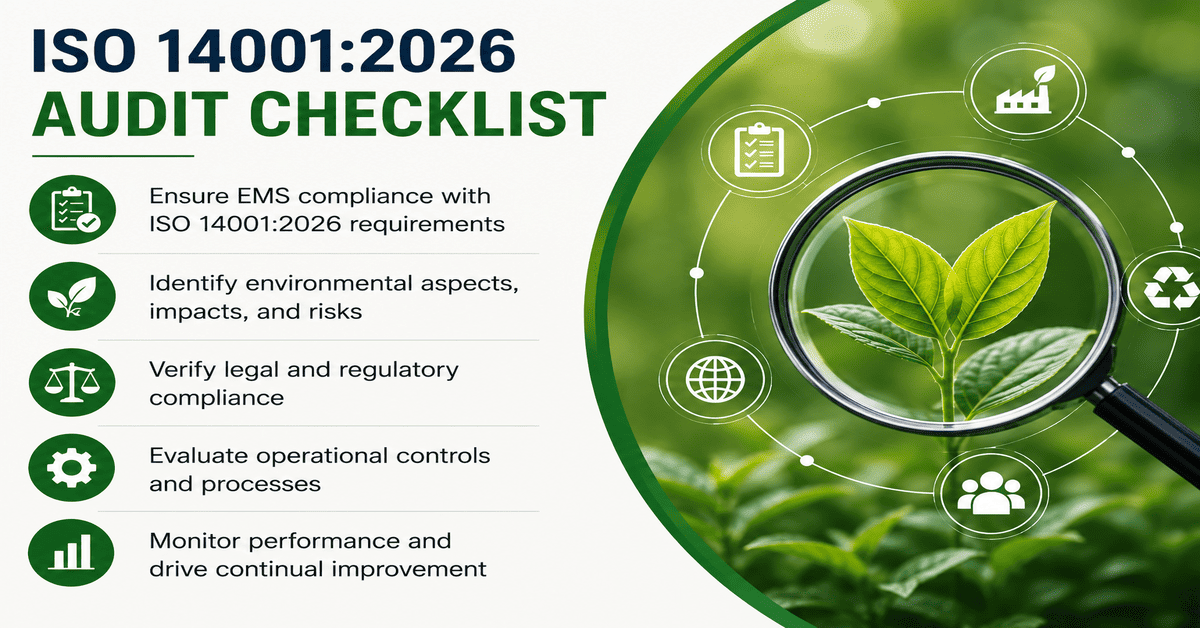
The ISO 14001:2026 Audit Checklist is a critical tool for organizations aiming to ensure full compliance with the updated Environmental Management System (EMS) requirements. As environmental regulations become stricter and sustainability expectations increase, businesses must adopt structured audit methods to evaluate their environmental performance effectively.
This checklist helps auditors, consultants, and organizations systematically verify whether their EMS meets ISO 14001 standards and supports continual improvement.
What is the ISO 14001 Audit Checklist?
The ISO 14001:2026 audit checklist is a structured document used during internal and external audits to evaluate an organization’s environmental management system. It converts ISO requirements into clear audit questions and verification points.
It helps ensure:
• Environmental policies are properly implemented.
• Legal and regulatory compliance are maintained
• Environmental risks are identified and controlled.
• Continuous improvement is achieved
This checklist is widely used during ISO 14001 internal audits, certification audits, and gap analysis reviews.
Importance of ISO 14001 Audit Checklist
Using a structured EMS audit checklist is essential for organizations that want to achieve or maintain ISO certification. It ensures that no key requirement is missed during the audit process.
Key benefits include the following:
• Improves environmental compliance
• Identifies non-conformities and gaps
• Enhances operational efficiency
• Strengthens sustainability performance
• Supports successful ISO 14001 certification
With increasing focus on climate change and ESG reporting, organizations are now prioritizing structured audit systems more than ever.
Key Areas Covered in ISO 14001:2026 Audit Checklist
A complete ISO 14001:2026 audit checklist typically includes evaluation of the following EMS elements:
1. Environmental Policy and Objectives
Auditors verify whether environmental policies are documented, communicated, and aligned with sustainability goals.
2. Environmental Aspects and Impacts
Identification and control of environmental risks such as emissions, waste, and resource consumption.
3. Legal and Compliance Requirements
Ensuring that all applicable environmental laws and regulations are properly implemented.
4. Operational Controls
Reviewing procedures related to production, waste handling, energy use, and emergency response.
5. Performance Evaluation
They coordinate audit teams, assign responsibilities, and ensure audits are conducted effectively throughout the ISO 42001 audit process.
How ISO 14001:2026 Audit Checklist Works
The audit checklist works as a step-by-step guide during EMS audits:
1. Audit Planning – Define scope, objectives, and audit criteria
2. Document Review – Analyze EMS procedures and records
3. Process Evaluation – Check real-time implementation of controls
4. Gap Identification – Detect non-conformities and risks
5. Reporting & Corrective Action – Document findings and improvements
This structured approach ensures consistency and transparency in environmental audits.
Role of EMS Documentation in Audit Success
Proper documentation plays a major role in passing ISO audits. Organizations often rely on professionally prepared EMS manuals, procedures, and templates to ensure compliance readiness.
Using ready-to-use ISO 14001:2026 documents can significantly simplify ISO 14001 implementation and audit preparation. Such resources typically include manuals, procedures, forms, and audit checklists that help organizations align with ISO requirements more efficiently, improve compliance readiness, and reduce documentation-related errors.
These professionally designed templates support smoother EMS implementation, improve documentation accuracy, and make ISO 14001 audit readiness more efficient.
Well-structured documentation also helps organizations maintain consistency across environmental processes, demonstrate compliance during audits, and streamline corrective action management. As a result, audit teams can perform more efficient evaluations while reducing the time and effort required for audit preparation.
Conclusion
The ISO 14001:2026 Audit Checklist is an essential tool for organizations committed to environmental responsibility and compliance. It ensures structured auditing, improves EMS performance, and supports successful certification outcomes.
By using a well-designed checklist along with proper EMS documentation systems, organizations can strengthen sustainability practices and meet global environmental standards effectively.
Visit the site for more information about the ISO 14001:2026 audit checklist: https://www.globalmanagergroup.com/Products/ems-certification-manual-procedures-documents.htm
ISO 14001:2026 documents: https://www.certificationconsultancy.com/environmental-system-documents-manual-procedures.htm
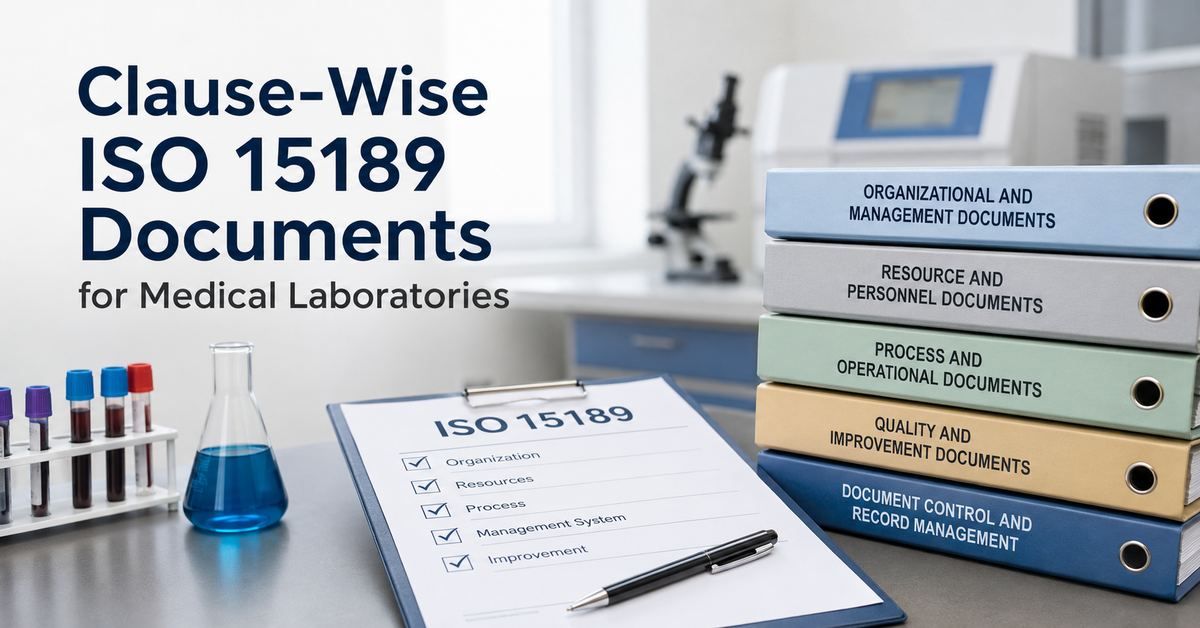
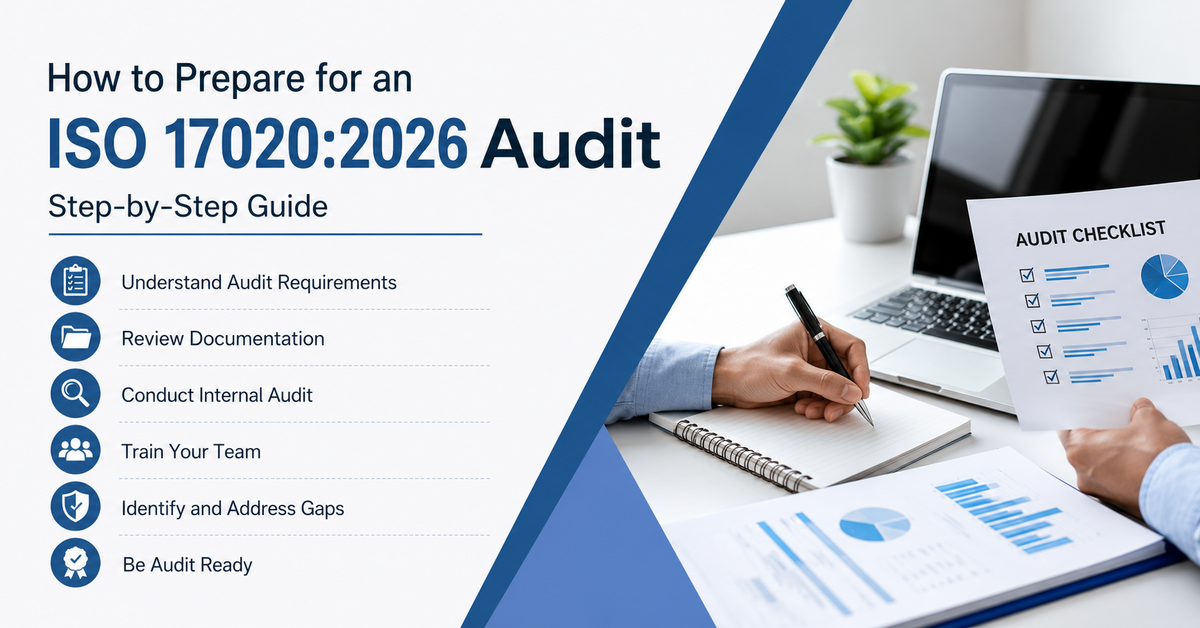
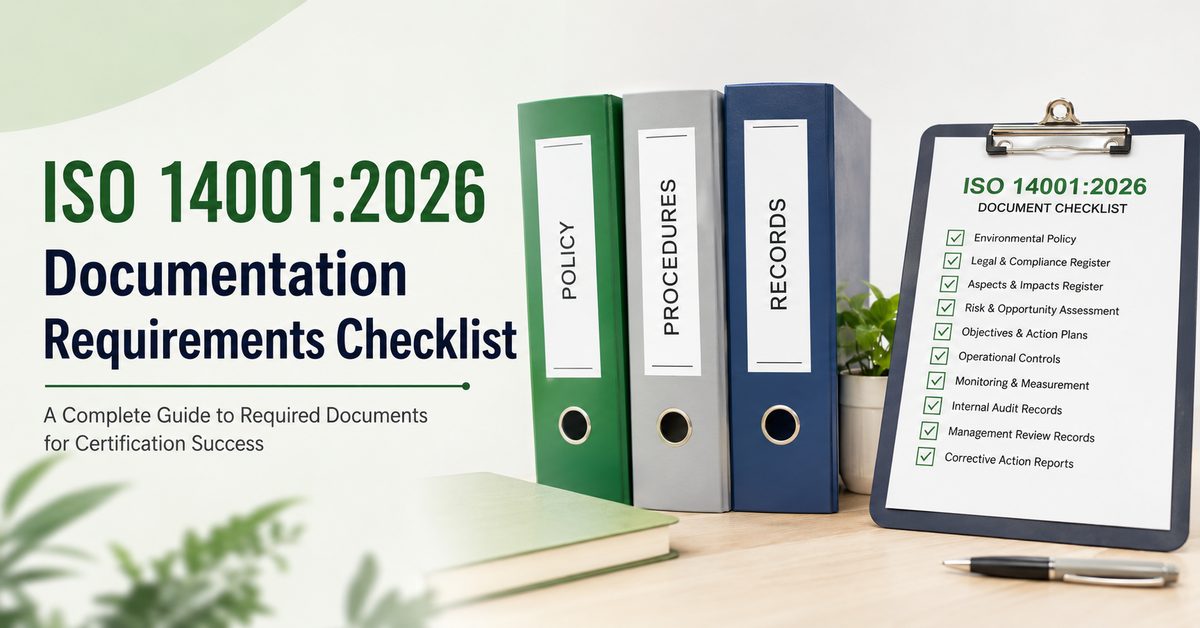
If you are preparing for ISO 14001 certification, understanding the required ISO 14001:2026 documentation is one of the most important steps. Many organizations struggle not because of implementati