Let's be honest, for most businesses, warranties used to be the part nobody wanted to deal with.
A customer would call in frustrated, someone on the support team would scramble through old emails and spreadsheets hunting for an invoice, approvals would bounce around for days, and eventually-eventually-things would get sorted. It wasn't pretty, but it got done. That whole approach feels like a different era now.
Because here's what businesses are slowly waking up to: how you handle a warranty claim says more about your brand than almost any marketing campaign ever could. It's not just a support function anymore. It's a trust moment. And trust moments, handled badly, are expensive.
Customers Aren't Patient the Way They Used to Be
And honestly, why would they be?
We live in a world where dinner arrives in 30 minutes, a cab shows up at 4, and you can track your package block by block. People have recalibrated what "fast" means and that recalibration applies everywhere, including when something breaks and they need help.
Nobody is going to cheerfully fill out a three-page form, wait for an email acknowledgment, follow up twice, and then wait another week to find out if their claim was approved. That patience is gone.
What customers want is simple: submit the claim easily, know where it stands, and hear back quickly. That's the whole bar.
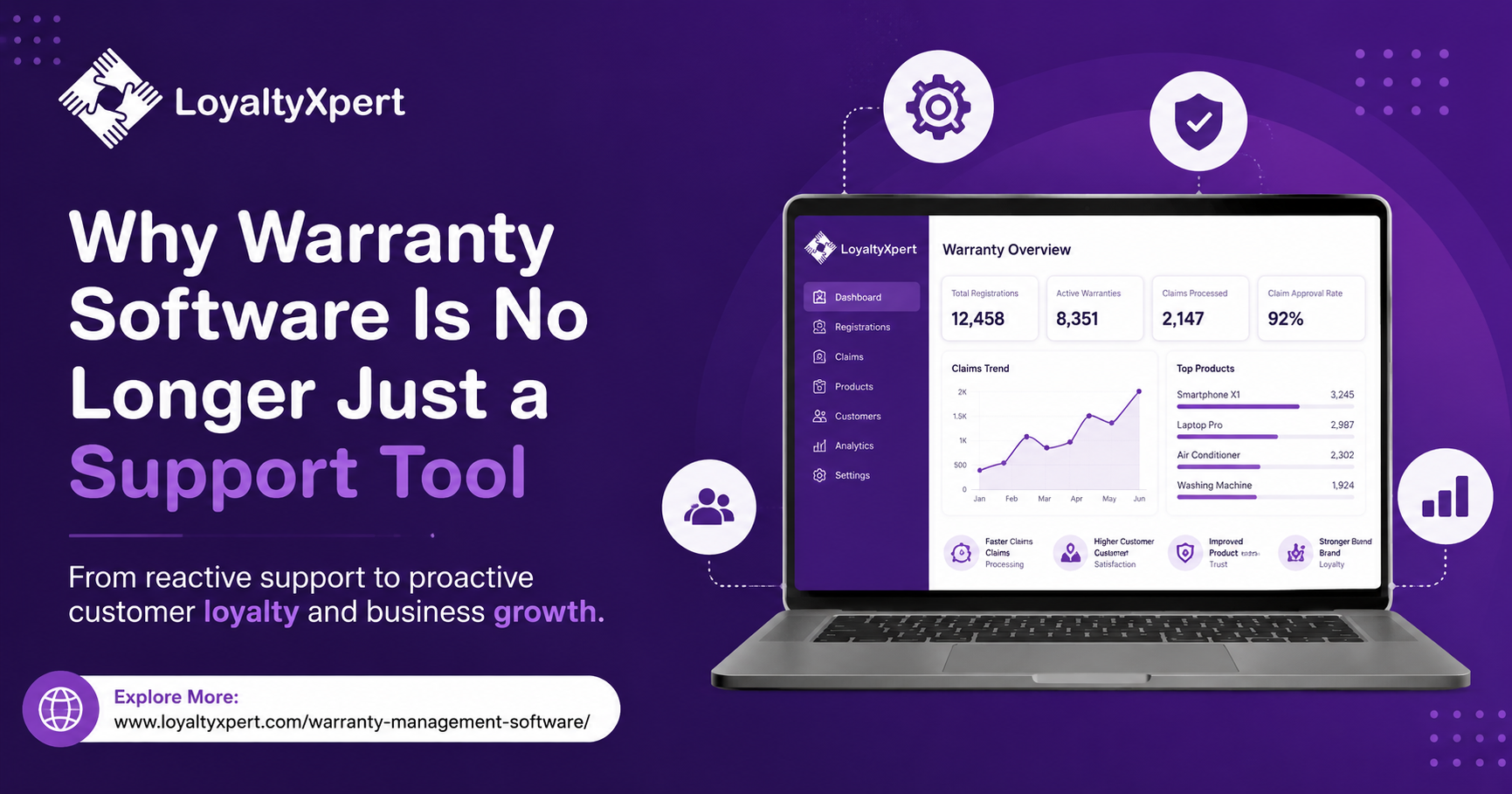
Modern warranty management Software clear that bar. Customers can register products online, upload documents from their phone, track their claim in real time, and get notified automatically. No chasing. No confusion.
And from a business side? This matters enormously. A bad warranty experience doesn't stay between you and the customer anymore. It becomes a Google review. A Reddit thread. A tweet. Word travels fast when people feel ignored and just as fast when they feel genuinely taken care of.
Spreadsheets Are Quietly Costing You More Than You Think
A lot of companies are still running warranty operations on a mix of spreadsheets, email chains, and institutional memory. And for a while, it holds together. Sort of.
But then the business grows. More customers, more products, more claims. And suddenly the real warranty claim challenges start showing up:
Nobody knows the current status of a claim
Customers are calling to follow up because they've heard nothing
The same claim gets submitted twice
Approvals are stuck waiting on someone who's out of office
Support staff are doing the same manual checks over and over, every single day
It's death by a thousand small inefficiencies.
This is why businesses are moving to centralized warranty platforms — not because it's trendy, but because the alternative quietly burns time and goodwill at scale. With the right system in place, claims get tracked, eligibility gets verified automatically, duplicate requests get flagged, and the whole thing moves without someone manually pushing it forward at every step.
Less chaos. Less stress. Fewer things falling through the cracks.
The Moment Someone Files a Claim Is a Retention Opportunity
Here's a reframe that more businesses need to sit with:
The warranty experience is often the realest interaction a customer has with your brand. Not the ad that made them buy. Not the unboxing moment. The moment something went wrong and you either showed up for them or you didn't.
Customers forgive product issues far more easily than they forgive feeling abandoned after the sale.
When the process is smooth and communication is clear, something interesting happens: the customer often comes out of it more trusting of the brand than before. Because you proved you actually stand behind what you sell.
That's not a support win. That's a retention win. And the businesses figuring this out are treating their warranty systems accordingly not as a cost center, but as a relationship tool.
The Data Hiding Inside Your Warranty Claims
There's another angle most businesses completely overlook: the insights sitting inside their warranty data.
When everything is scattered across emails and spreadsheets, patterns are invisible. But when claims flow through a centralized system, suddenly you can see things like:
Which product line is generating the most claims
Whether a specific supplier is behind recurring issues
Which regions are experiencing higher failure rates
Whether a particular batch might have a quality problem
That kind of visibility used to take months to surface, if it surfaced at all. Modern warranty platforms surface it in real time.
Which means you're not just processing claims you're actually learning from them. Feeding that back into product development, supplier conversations, and quality control. That's a completely different level of value than "claim approved, case closed."
The Automation Part Is Genuinely a Relief
If you've worked in warranty support, you know what the manual version looks like. Checking serial numbers. Cross-referencing purchase dates. Sending the same status update email for the hundredth time. Sorting through requests to find the duplicates.
It's not hard work, exactly. It's just relentless, repetitive, and prone to human error when you're tired.
A smart warranty management system handles the bulk of that. Eligibility checks happen instantly. Claims get routed to the right person automatically. Customers get notified without anyone having to remember to send an update. Reports generate themselves.
This matters especially as businesses grow. More customers means more claims and you can't just keep hiring people to manually process them. At some point, the system has to do the heavy lifting.
What This All Adds Up To
Warranties used to sit quietly in the background, handled reactively, mostly forgotten until something broke.
That's not where they sit anymore. The businesses getting this right have stopped thinking about warranty management as a support task and started thinking about it as part of the overall experience they deliver. It influences whether customers come back. Whether they leave reviews. Whether they recommend you to someone else.
The technology has caught up and platforms now exist that make the whole process faster, smarter, and less painful for everyone involved. The question isn't really whether to modernize. It's how long you're willing to wait before you do.
Because your customers are already forming opinions every time they interact with your post-sales process.
Make sure those opinions are working in your favor.

Warranty management sits in this weird spot in most businesses. Everyone knows it exists, someone’s responsible for it, but it rarely gets the attention or investment that other departments fight f