






Worldwide Plant Extract Market — Strategic Outlook for 2026: PW Consulting Market Brief
Executive snapshot
The plant extract market is entering 2026 as a structurally expanding sector. PW Consulting’s latest analysis places the global market at 45.1 billion USD in 2025 and projects a near-term market value of 53.4 billion USD in 2026, growing to 96.6 billion USD by 2032 on a base-case compound annual growth rate (CAGR) of 11.5% across the 2026–2032 forecast horizon. This expansion is driven by converging demand from food & beverage, pharmaceuticals and nutraceuticals, and personal care, alongside technology-led manufacturing upgrades and accelerating regulatory standardization.
Worldwide Plant Extract Market
Why 2026 is a strategic inflection point
Several simultaneous forces make 2026 a decisive year for capital allocation and portfolio repositioning:
- Regulatory tightening and harmonization (U.S., EU, India) are raising the bar for pre-market dossiers and batch-level testing, increasing the compliance premium attached to suppliers that can deliver documented safety and traceability.
- Raw-material supply shocks and weather-related crop volatility have created episodic cost inflation and availability risk, changing the calculus for inventory, sourcing, and vertical integration.
- Fragmentation persists: the market exhibits a low concentration profile (CR3: 12.5%; CR5: 18.8%), favoring nimble specialists and vertically integrated incumbents equally—but creating clear windows for scale players to consolidate through targeted M&A and design wins.
- Technology and data-driven manufacturing investments, including AI-enabled process control and biotech-derived ingredient routes, are compressing time-to-market for novel extracts and shifting competitive moats toward firms that combine formulation IP with secure supply chains.
Practical intelligence in this report — what executives receive
PW Consulting’s Worldwide Plant Extract Market report is built as a playbook for 2026 decision-makers. It is intentionally operational rather than purely descriptive, delivering tools that are immediately actionable in procurement, R&D, and M&A contexts.
- End-to-end supply chain maps that trace botanical flows from origin farms through processors to OEMs and end-users, highlighting choke points and seasonality risks.
- BOM (bill-of-materials) decomposition logic and cost-attribution templates that enable scenario stress-testing without exposing our proprietary model coefficients in this summary.
- Yield-adjustment and quality-gating models that translate agronomic variability into working-capital and cost-per-kilo impacts under multiple sourcing strategies.
- Technology roadmaps comparing conventional extraction, solvent-reduction techniques, and emerging biotech (fermentation / cell-culture) routes, with decision criteria for capex timing and backward integration.
- Compliance and traceability matrices aligned to the latest FDA, EFSA and national standards, cross-referenced to supplier documentation checklists and audit protocols.
How these tools solve 2026 pain points
Executives should expect concrete improvements in four priority areas when applying the report’s frameworks:
- Cost control: convert raw-material volatility into hedgable line items and run “what-if” procurement scenarios that quantify the break-even point for forward-buying, contract farming, or onshore processing.
- Regulatory readiness: close the gap between dossier preparation and market authorization by mapping the minimal evidence package per jurisdiction and sequencing analytical testing to minimize time-to-launch.
- Design wins & formulation speed: prioritize ingredient development routes that match customer formulation constraints and shelf-life requirements, shortening commercial qualification windows.
- Supply resilience: build sourcing playbooks that balance single-origin quality advantages against multi-origin redundancy to limit disruption exposure to climate and geopolitical events.
Competitive dimensions — how to read incumbent behavior
Our industry mapping focuses on competitive vectors rather than public relations claims. Below are the defensive and offensive capabilities that determine winners in 2026:
- Scale & manufacturing footprint: players with diversified, cGMP-capable production can convert spot demand into long-term supply agreements; recent capacity investments in North America and Asia are material to sourcing strategies.
- Proprietary extraction and formulation technology: firms that control extraction IP or proprietary standardized actives gain faster formulator adoption and higher margin capture.
- Sustainable sourcing networks: verified origin programs, regenerative-agriculture partnerships, and supplier traceability create an ESG premium and reduce audit friction for multinational buyers.
- Regulatory dossiers & safety data repositories: companies that maintain centralized safety databases and toxicology dossiers shorten approval lead times across regions.
- Commercial design wins: speed of co-development, sampling cadence, and small-batch flexibility are decisive for securing customer product launches in food, supplement, and beauty segments.
Company positioning — lens, not prediction
PW Consulting assesses the following firms against the competitive dimensions above. This is an analytical lens to inform procurement and partnership choices (not a firm-level forecast):
- Givaudan — depth in standardized botanicals and a vertically integrated flavor/fragrance platform that combines distribution reach with formulation services.
- IFF — strong R&D pipeline and ingredient integration across food and personal care that emphasizes cross-selling into global accounts.
- Symrise — sustainability-led sourcing programs and rapid commercialisation of new actives, supported by recent product introductions targeting personal care performance claims.
- Indena — clinical-grade extract expertise and regulatory dossier strength that favor pharmaceutical and high-spec nutraceutical customers.
- Martin Bauer Group — large-scale herb processing with capabilities in standardized extracts and agronomy partnerships for raw-material security.
- Kalsec, Synthite, Döhler, Chenguang, Vidya Herbs, Arjuna, Kangcare, Sensient, Kerry, ADM — each occupies distinct niches from spice oleoresins to carotenoid concentrates and ingredient-hosting in food systems; selection criteria for partners should prioritize dossier completeness, batch traceability, and local compliance footprints.
For a granular competitor matrix and the report’s confidential company dossier templates, visit the full publication at https://pmarketresearch.com/worldwide-plant-extract-market-research.
Recent industry dynamics and their 2026 implications
Key developments from 2024–2025 create immediate operational imperatives for 2026:
- Capacity expansions in regulated markets (e.g., new cGMP facilities) shift sourcing leverage toward domestic supply for certain buyers, shortening lead times and reducing import risk.
- Product introductions of performance-led botanical actives increase formulation churn in personal care, pressuring suppliers to offer fast-turn sampling and validated safety packages.
- Acquisitions that stitch specialty ingredient portfolios into broader distribution networks are compressing go-to-market cycles for novel extracts.
- Regulatory updates — from FDA guidance on new dietary ingredients to EFSA’s centralized safety compendia and national labeling standards — create immediate compliance costs that favor suppliers with mature QA/QC infrastructures.
- Raw-material shocks, such as drought-driven crop shortfalls in key origins, have produced measurable price uplifts and force short-term hedging or long-term sourcing diversification strategies.
Methodology — why our findings are rigorous and actionable
PW Consulting’s conclusions are based on Layered Triangulation, combining patent-citation analysis, customs and trade-flow datasets, proprietary plant-level production audits, and a broad program of confidential executive interviews. We cross-validate supplier capacity claims against third-party logistics manifests and satellite imagery where relevant, then reconcile discrepancies through targeted laboratory test batches commissioned under NDAs. The resulting dataset allows us to infer usable capacity, dossier completeness, and likely time-to-market with a high degree of confidence—while protecting confidential commercial information.
All primary data collection conforms to data-privacy and competition-law constraints. Our modelling layers include sensitivity testing, scenario ranges, and Monte Carlo permutations to quantify downside risk to supply, price, and regulatory timelines without publishing proprietary model coefficients in this public summary.
High-level strategic actions for 2026
Leaders should treat 2026 as a year to convert market growth into durable advantage rather than short-term revenue gains. Recommended board-level priorities:
- Accelerate investments in compliance and traceability infrastructure to reduce time-to-authorization across core markets.
- Deploy capital selectively to secure origin partnerships or niche processing capacity that de-risks raw-material volatility.
- Prioritize partnerships with suppliers able to deliver both dossier-ready safety packages and flexible small-batch production for design wins.
- Integrate AI/process-control pilots into extraction and downstream purification to raise yields and lower solvent/energy intensity.
- Adopt a staged M&A playbook: small strategic tuck-ins for specialty actives, plus one larger consolidation play where scale will materially expand customer access or regulatory moats.
Next steps — how PW Consulting helps
PW Consulting’s Worldwide Plant Extract Market report provides the maps, models, and playbooks needed to prioritize capex, select suppliers, and accelerate product qualification in 2026. The public briefing above demonstrates our analytical depth while deliberately withholding proprietary segmentation matrices and company-level strategic decks that underpin procurement and M&A decisions. To access the full dataset, interactive supply-chain maps, and bespoke scenario modelling templates, consult the full report at https://pmarketresearch.com/worldwide-plant-extract-market-research.
For detailed analysis on this topic, please visit the official page:
Worldwide Plant Extract Market
Lacy Lee
Senior Marketing Manager
sales@pmarketresearch.com
00852-95632430
PW Consulting: www.pmarketresearch.com




The global Frozen Food Market size is expected to value at USD 360.36 billion by 2024.
The market is subject to witness a substantial growth due to the changing lifestyle patterns, shifting preferences among consumers towards ready-to-cook meals, increasing demand for convenience food, and growing focus towards hygienic food products.
Frozen food products are able to retain maximum vitamins and minerals.The freezing allows longer shelf life for the food products and limits any form of microbial growth that leads to food spoilage.
In addition, increasing penetration by e-commerce retail stores is expected to fuel the growth of frozen food industry in the upcoming years.
Increasing demand form staple food products from developed economies across the globe is propelling market growth as well, in the recent years.
Increasing demand for frozen fruits and vegetables from developed and developing economies is expected to positively affect market performance of frozen food industry in the upcoming years.
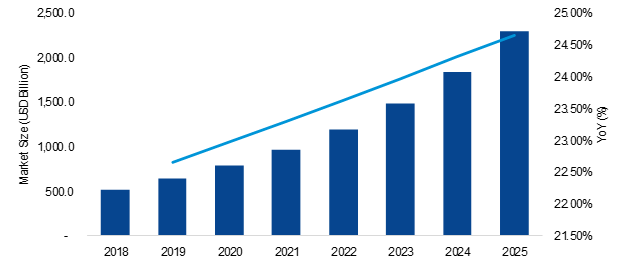
Global Smartphone Market Research Report: By Type (Media-Centric (Music, navigation, Gaming, Camera), Entry Level, Performance), By Input Device (Touchscreen, Keypad), By Operating System (Android, iOS, Windows), By Distribution Channel (OEM, Retailers, e-Commerce) — Forecast till 2025Smartphone Market Highlights The global smartphone market size is expected to grow from USD 520.3 billion in 2018 to USD 2297.8 billion by 2025, at a CAGR of 16.4% during the forecast period.
Increasing use of the Internet and the disposable income in developing regions is expected to drive the smartphone market during the forecast period.By type, the smartphone market has been segmented into media-centric smartphones, entry-level smartphones, and performance smartphones.
The media-centric smartphone segment has been sub-segmented into music smartphones, navigation smartphones, gaming smartphones, and camera smartphones.By operating system, the market has been segmented into Android, iOS, and Windows.By distribution channel, the smartphone market has been segmented into OEM, retailer, and e-commerce.By input device, the smartphone market has been segmented into touch screen and keypad.Get Sample@ https://www.marketresearchfuture.com/sample_request/8165Regional AnalysisThe geographical analysis of the smartphone market has been studied for North America, Europe, Asia-Pacific, and the rest of the world.Asia-Pacific is expected to dominate the smartphone market during the forecast period.
The market in Asia-Pacific has been segmented into China, Japan, India, South Korea, and the rest of Asia-Pacific.
Growing population, rich presence of telecom companies, presence of global mobile manufacturers such as Samsung Electronics Co. Ltd, Xiaomi Corporation, and Sony Corporation among others are expected to drive the smartphone market in Asia-Pacific.The market in North America is expected to witness the highest CAGR during the forecast period.
In North-America, Google LLC, Apple Inc., Microsoft Corporation, and CAT are expected to drive the smartphone market.In terms of market size, Europe is expected to hold the third-largest share in the smartphone market.
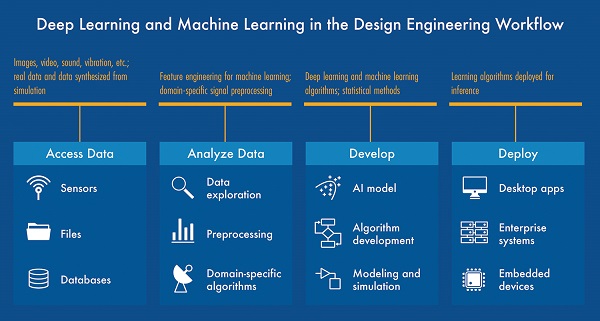
FEB 27, 2020: The global Machine Learning market size is expected to reach USD 96.7 billion by 2025, according to a new report by Radiant Insights, Inc.
In case of businesses, the use of ML models that are open source and have a standards-based structure has increased in recent years.
These models can be easily deployed in various business programs and can help companies bridge the skills gap between IT programmers and information scientists.
Developments such as fine-tuned personalization, hyper-targeting, searching engine optimization, no-code environment, self-learning bots, and others are projected to change the machine learning landscape.
The development of capsule network has replaced neural networks in order to provide more accuracy in pattern detection, with fewer errors.
These advanced developments are anticipated to proliferate market growth in the foreseeable future.Further key findings from the report suggest:The emergence of connected AI is expected to enable ML algorithms to learn continuously based on newly available information.