


Worldwide Natural Sack Kraft Papers Market — Strategic Briefing for 2026
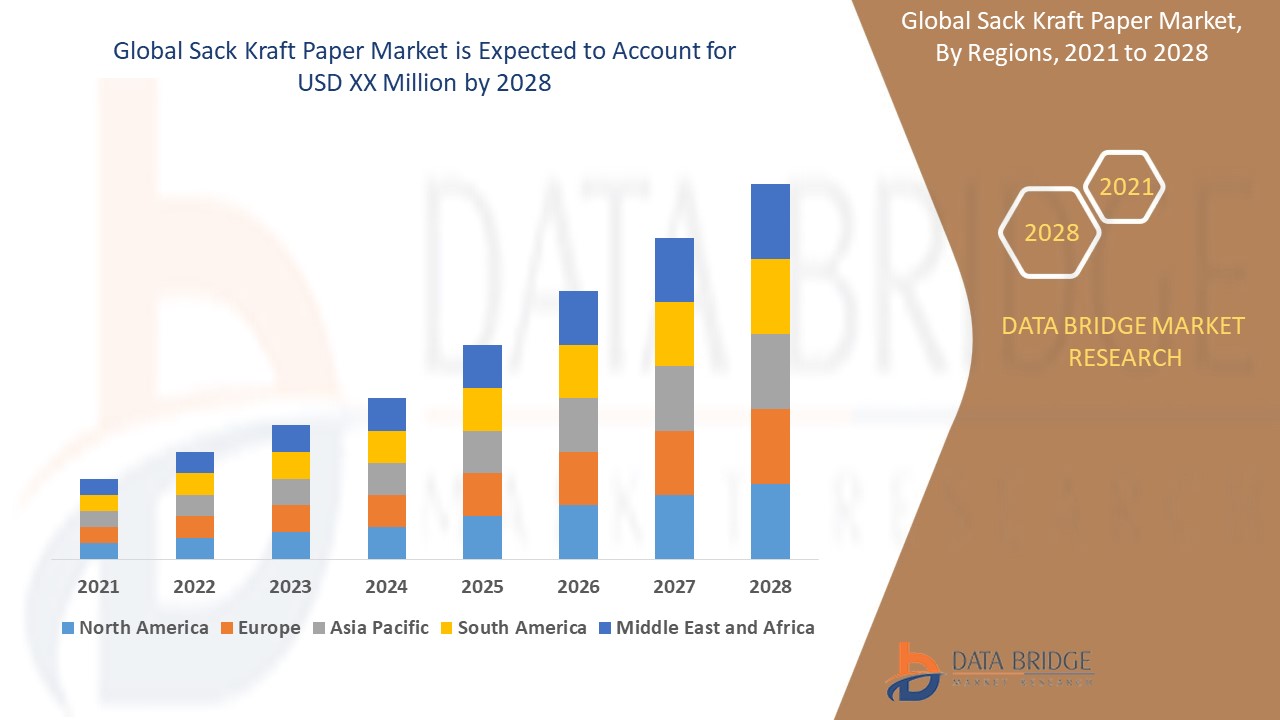
The worldwide natural sack kraft papers market is at an inflection point in 2026. After expanding from 5,540.2 Million USD in 2020 to 6,936.4 Million USD in 2025, the market continues to grow, reaching an estimated 7,465.6 Million USD in 2026 and tracking a 4.4% compound annual growth rate through the 2026–2032 forecast window to roughly 9,376.5 Million USD by 2032. These headline figures underscore a market that is neither niche nor fully consolidated: demand drivers and input-cost volatility are re-shaping commercial and capital-allocation decisions for producers, converters, and large industrial end-users in real time.
Worldwide Natural Sack Kraft Papers Market
Why this briefing matters for 2026 decision-making
Three structural dynamics make immediate, data-driven action essential this year:
- Regulatory acceleration: Packaging regulations (notably the EU Packaging and Packaging Waste Regulation) and a global wave of single-use plastics restrictions are shifting specification risk toward recyclable paper solutions, increasing the compliance premium for certified sack kraft grades.
- Upstream feedstock volatility: Recent movements in kraft pulp and timber pricing have created margin swings that materially affect cost-to-serve calculations, while tariff threats and regional trade frictions raise short-term supply-risk premiums.
- Capacity and product shifts: Targeted capacity investments and new technical grades from major producers are changing procurement dynamics—converting design wins and service reliability into competitive advantage.
Key market drivers in 2026 (high level)
Executives need to read the interactions between demand, regulation and supply-side evolution, not just the headline growth rate. In practice, the following forces dominate strategic choices this year:
- Substitution demand from plastics bans and PPWR-style recyclability mandates.
- End-use recovery in construction and industrial inputs that favors higher-strength, extensible grades.
- Supplier consolidation dynamics: moderate concentration (CR3 ~32.4%, CR5 ~48.8%) that enables bilateral negotiation advantages for large converters but leaves room for regional challengers.
- Input-price sensitivity—pulp and timber movements that feed directly into working-capital and cost-plus contracting models.
What PW Consulting’s Worldwide Natural Sack Kraft Papers Report delivers
This release is designed as an operational playbook for 2026 capital and commercial decisions rather than an academic overlay. The report combines granular analytics with executable tools to close the gap between market intelligence and implementation.
- Supply chain maps and node-level dependency matrices that reveal where single points of failure and logistics bottlenecks concentrate—built to support contract renegotiation and nearshoring assessments.
- BOM decomposition and grade-cost backcast models that translate specification shifts (e.g., wet-strength, extensibility, barrier finishes) into upstream pulp and chemical usage, enabling procurement teams to stress-test supplier bids without reengineering labs.
- Yield-adjustment and tolerance models that simulate plant-level throughput changes when switching between extensible, semi-extensible and non-extensible grades—useful for converters planning machine changeovers or CAPEX in FFS lines.
- Technology roadmaps that map R&D levers (coating chemistries, fiber blends, wet-strength chemistries) to commercial outcomes and regulatory trajectories, helping R&D heads prioritize projects with the highest NPV-adjusted impact under PPWR-like constraints.
- Commercial playbooks for Design Wins—scoring matrices that combine technical fit, certification timelines, and cost-to-serve to prioritize accounts where early engagement yields durable contracts.
Each tool is purpose-built to resolve 2026 pain points: reducing raw-material-driven margin erosion, accelerating compliance with evolving packaging rules, and shortening the lead time from specification to commercial production—without publishing proprietary grade-level or regional share tables in this summary.
Competitive landscape — interpreting the players, not their playbooks
Our analysis of the incumbent and challenger firms in 2026 focuses on competitive dimensions—moats, operational leverage, and the mechanics of Design Wins—rather than forecasting each firm’s step-by-step strategy. These are the structural advantages that matter for capital allocation:
- Integrated pulp-to-paper scale: Producers with captive pulp (integrated mills) enjoy a controllable feedstock supply and cost-structure flexibility that helps in cyclical price environments. This integration is a structural moat when pulp prices rise unpredictably.
- Specialty-grade capability and process know-how: Firms that can reliably deliver high-strength, wet-strength, or extensible formulations that run on high-speed FFS lines convert product performance into design wins in cement, chemicals, and food sectors.
- Sustainability and certification premium: Forest-management credentials, carbon-neutral pulp options, and traceability systems are de facto market access criteria for many European and large multinational procurement organizations.
- Service and logistics footprint: For large converters, guaranteed on-time supply and regional inventory hubs frequently outweigh small per-tonne price differences—especially where tariff risk or port congestion is material.
Recent capacity moves and product launches illustrate these dimensions: targeted expansions to meet construction and food-service demand, the introduction of water-resistant grades for agriculture and cement, and green-pulp capacity additions that elevate sustainability credentials. These events are signals for procurement and M&A teams to reassess counterparty risk and contract structures rather than reasons to chase volume alone.
For a deeper, company-by-company positioning map and the decision-grade metrics we use to rank suppliers for 2026 sourcing rounds, access the full report here: https://pmarketresearch.com/worldwide-natural-sack-kraft-papers-market-research.
Using scenario models to prioritize 2026 capital and commercial moves
We advise clients to translate the report’s analytics into three immediate actions this year:
- Run a two-factor stress test on margin sensitivity to pulp-price shocks and tariff scenarios, focusing on cost-to-serve and inventory days rather than on average per-tonne prices alone.
- Prioritize design-win engagements where specification complexity and certification requirements create durable switching costs—this is where technical service and co-development convert to price premiums.
- Evaluate near-term CAPEX to improve yield on high-value grades and to reduce rework or downtime when switching between extensible categories—these investments often pay back faster than greenfield capacity in 2026 conditions.
These actions are structured to preserve optionality: keep exposure to upside demand while protecting downside when input-price deviations or trade measures materialize. The combined market dynamics—regulatory acceleration, substitution tailwinds, and feedstock volatility—make 2026 a year to act with calibrated conviction.
Methodology — why our findings are decision-grade
PW Consulting’s conclusions are the result of layered triangulation and direct operational evidence. Our methodology synthesizes patent-citation mapping, proprietary procurement and customs analytics, plant-level operational KPIs, and targeted interviews with procurement heads and plant managers across the value chain. We complement these inputs with laboratory BOM reverse engineering and sample-grade performance testing to validate commercial claims.
Specific steps include:
- Patent and citation network analysis to identify emergent coating and fiber-blend technologies that matter for barrier and extensibility performance.
- Procurement-flow reconstruction from anonymized purchase orders and shipment manifests, combined with customs and AIS shipping feeds to map real-world supply routes and lead-time dispersion.
- Operational intelligence—yield logs and downtime reports sourced under NDA from converters and mill partners—used to calibrate our yield-adjustment models and to estimate switching costs between grades.
These techniques allowed us to access non-public operational signals (under confidentiality frameworks) and to reconcile them with public filings and market events, yielding insights that are usable in board-level capital decisions without exposing confidential client data.
Immediate implications for boards and procurement leaders in 2026
Boards and procurement chiefs should treat the current environment as a window for reshaping supplier portfolios and the product road map. Tactical priorities we see repeatedly across clients include:
- Negotiate flexible supply contracts that include indexed cost pass-throughs and volume corridors to share input-price risk with suppliers.
- Accelerate technical partnerships with suppliers that can co-develop the grades tied to your highest-margin SKUs, securing early design wins that are hard to replicate.
- Invest in traceability and certification projects that unlock procurement pools constrained by PPWR-style requirements.
For teams preparing RFPs, pilot programs, or CAPEX proposals, the report provides the scorecards, margin-sensitivity templates, and grade-fit matrices necessary to shorten decision cycles and to align procurement, operations and sustainability targets.
Access the executable intelligence
PW Consulting’s full report contains the complete distribution maps, grade-level economics, supplier scoring models and downloadable scenario workbooks referenced here. Those materials are intentionally gated to enable confidential client workshops and to protect the integrity of our company-level intelligence. To obtain the complete dataset and the operational playbooks for 2026, visit https://pmarketresearch.com/worldwide-natural-sack-kraft-papers-market-research.
For detailed analysis on this topic, please visit the official page:
Worldwide Natural Sack Kraft Papers Market
Lacy Lee
Senior Marketing Manager
sales@pmarketresearch.com
00852-95632430
PW Consulting: www.pmarketresearch.com