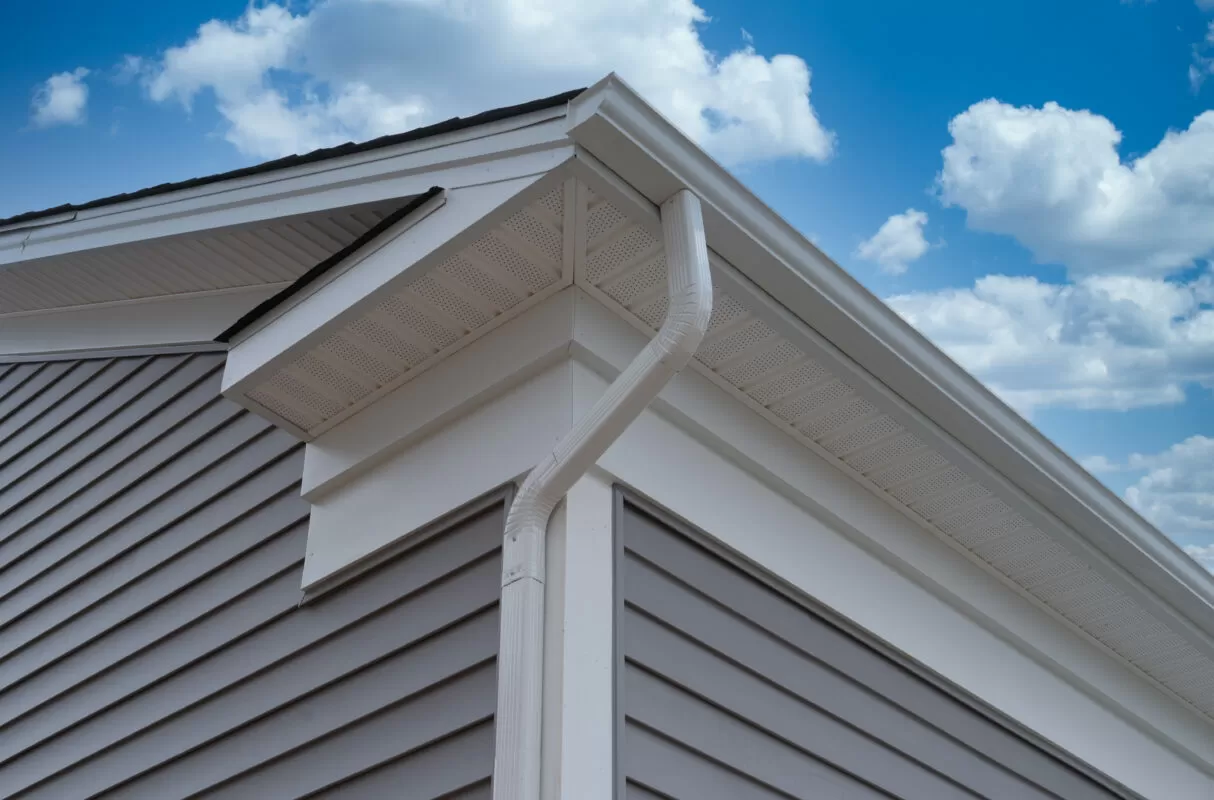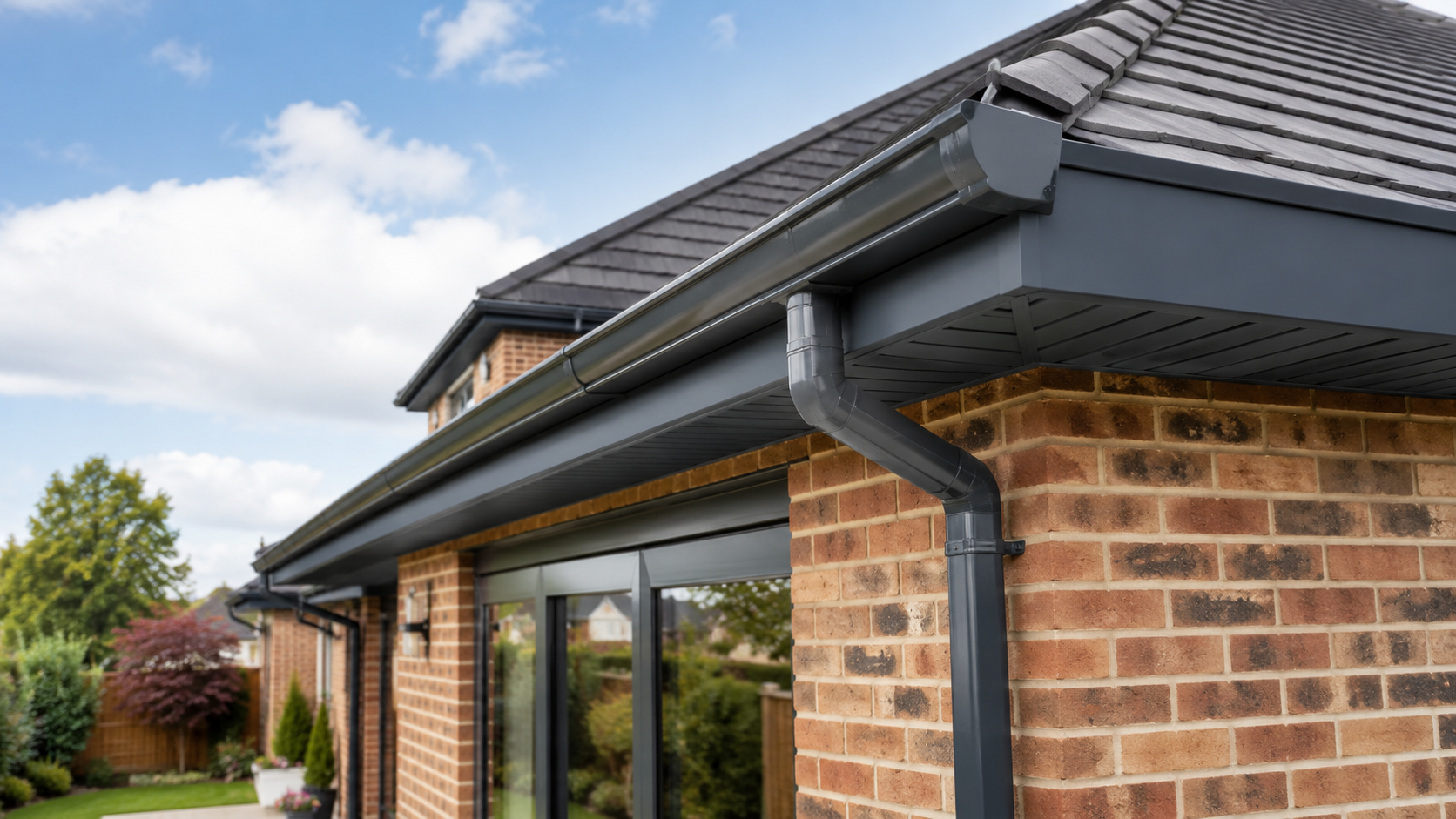
The underside and front edge of a roof overhang are often the first parts of a property to show how carefully the roofline has been considered.
Soffits and fascias sit visibly around the eaves, but they should never be treated as isolated boards. They connect with the roof edge, guttering, downpipes, exterior finishes and the underside of the overhang, so the detail works best when assessed as one complete assembly.
That matters for homes, extensions, garages, canopies and commercial buildings alike. It also matters for homeowners, builders, roofing contractors, architects, specifiers and property managers who need a practical way to review the visible finish and the wider roof-edge context.
This guide explains how soffits and fascias relate to each other, what to look at before specification or replacement, and why profile, colour, moisture and ventilation considerations should be reviewed together.
What Are Soffits and Fascias?
Soffits and fascias are part of the visible roofline at the eaves, where the roof meets the external wall. The soffit is generally the underside of the overhang, while the fascia is the front-facing board or profile at the roof edge. In practice, both contribute to how the eaves look from street level and how the roof edge is finished.
For many projects, the most useful starting point is not to ask about one board in isolation, but to think about the whole roofline soffits and fascias arrangement. The visible result depends on the roof form, the wall finish, the gutter line and any adjacent trim or cladding. That is why fascia boards and soffits should be considered alongside surrounding roof-edge detailing rather than as separate decorative items.
Where Soffits and Fascias Sit Around the Eaves
Soffits and fascias sit where the roof overhang projects beyond the wall line. The fascia runs along the outer edge of the roof, while the soffit closes the underside of that overhang. Together they form the visible eaves finish and help define how neat or heavy the roofline appears from outside.
Their position affects more than appearance. The eaves zone is also where the gutter line usually sits, where rainwater is collected and where the interface between roof, wall and external trim becomes most visible. That means the roof-edge detail should be read as a sequence of components, not as a loose collection of parts.
The visible front edge and underside of the roof overhang
At the front edge, the fascia is the prominent face that presents the roofline to the outside. Beneath it, the soffit completes the underside and can give a cleaner architectural finish. For anyone comparing products or profiles, it is helpful to understand the difference between soffit and fascia before deciding how the eaves should look and function.
Why Soffits and Fascias Should Be Considered Together
A soffit and fascia detail works best when planned as one connected roof-edge assembly. The visual transition between the front edge, underside, corners and adjoining wall surfaces can affect how consistent the whole elevation appears. A mismatch in profile depth, return detail or colour can make the eaves look unresolved even if each part is technically suitable on its own.
This is especially important when comparing replacement options or specifying materials for a new build. The fascia may need to complement the gutter line, while the soffit may need to align with the roof structure and the chosen finish. A considered approach helps the eaves detail look intentional, whether the property is traditional, contemporary or somewhere in between.
The Connection Between Fascias, Gutters and Downpipes
Fascias and gutters are closely related because the roof edge needs a coherent line for rainwater collection. In many roofline arrangements, the fascia creates the visual and practical edge that the gutter follows. If the fascia profile, gutter position and downpipe route are not considered together, the result can look awkward or disrupt the flow of the elevation.
Downpipes also influence what happens at the roof edge. Their routes should be understood early in the design or replacement process so the visible roofline, drainage path and wall finish all work together. This is especially important where there are changes in level, bays, side returns or extension junctions, because the guttering and fascia relationship can vary from one section to another.
Gutter alignment, outlets and water routes
The gutter line should be read as part of the roof-edge composition, not as an add-on. Outlet positions, corners, junctions and downpipe routes all affect how the fascia appears and how the roofline is perceived. For this reason, guttering and fascia should be considered together as part of the full eaves detail.
Roof Edges, Wall Finishes and Backing Structure
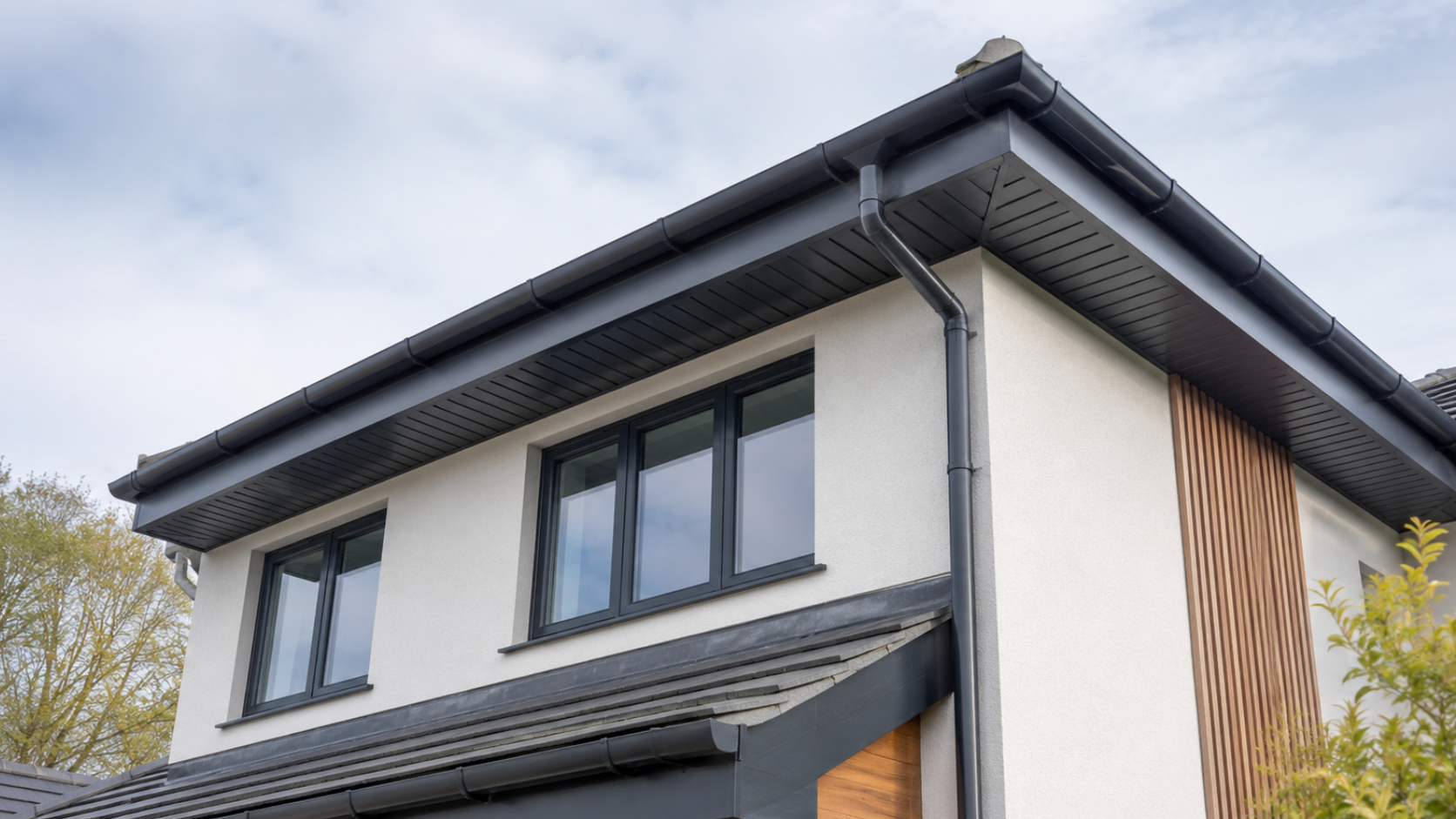
The surrounding wall finish matters because soffits and fascias do not sit in isolation from the rest of the building envelope. Brickwork, rendered walls, cladding, timber elements and junction trims can all influence the way the roof edge is set out. A neat-looking fascia profile may still clash visually if the returns, corners or wall intersections are not coordinated.
The backing structure is also part of the decision-making process. The existing eaves build-up, substructure condition and intended roof-edge profile all affect what can be specified. In some properties, a straightforward visual replacement may not address the underlying complexity of the roof edge, so the full detail should be reviewed before any product is ordered.
Moisture Resistance and Roofline Planning
Roof-edge design is part of a wider moisture management context. Soffits and fascias sit at a vulnerable junction where rain, wind and condensation issues can all be relevant depending on the construction. It is therefore sensible to consider how the eaves detail supports wider protection from moisture, rather than treating the visible trim in isolation.
For broader background, Approved Document C guidance on resistance to moisture gives general information on how moisture resistance is approached in building work. The exact soffit, fascia, eaves and ventilation detail should still be reviewed against the project design and applicable requirements, because the right specification depends on the building, the roof construction and the surrounding wall build-up.
Ventilation and wider roof-construction context
Ventilation requirements are not universal. Not every soffit provides ventilation, and the need for ventilation depends on the roof construction and the way the eaves are designed. That is why ventilation should be reviewed with the relevant project design, specification or professional advice where required, rather than assumed from the product name alone.
Materials and Profiles for Soffits and Fascias
Material choice affects both appearance and specification flexibility. Some projects need a profile that closely matches a traditional roofline, while others require a more precise architectural finish. Aluminium fascias and soffits may be relevant where a metal roofline finish, colour coordination or project-specific fabrication is required.
Metal Profiles Ltd supplies aluminium fascia and soffit products that can be considered where a project needs a fabricated metal solution for the eaves. In addition to the visible finish, the shape of the profile, the edge return and the way the section resolves at junctions can all influence how suitable it is for the property type and roof detail.
When aluminium fascias and soffits may be relevant
Aluminium fascias and soffits can be worth considering for developments that need a crisp, consistent roofline appearance or coordinated exterior metalwork. They may also suit projects where fascia profiles need to align with other metal elements such as capping, flashings, window surrounds or parapet details. The key point is not the material alone, but whether the full eaves arrangement supports the design intent.
Corners, Returns, Verge Details and Roofline Transitions
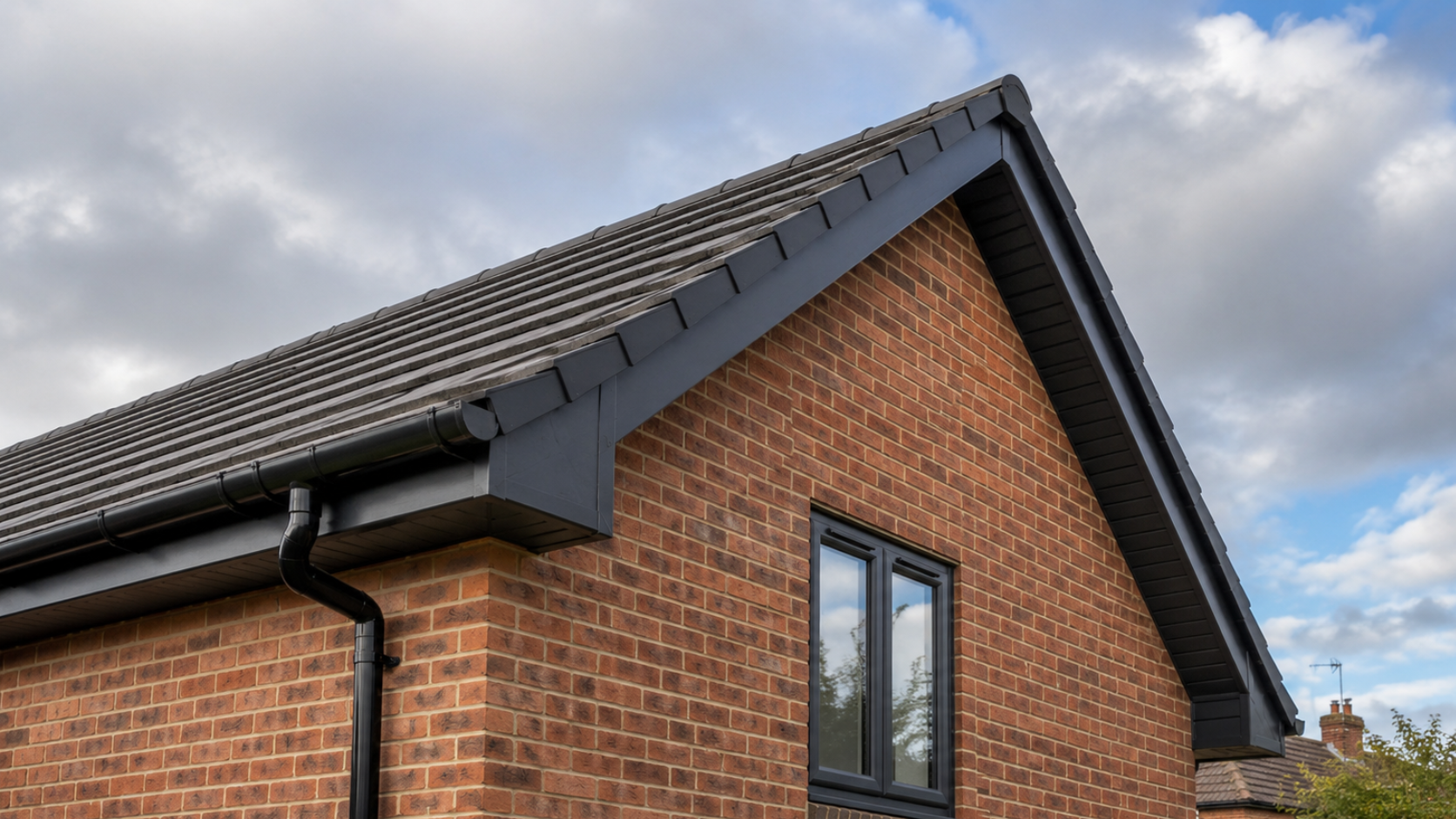
Corners, returns and transitions often separate a tidy roofline from one that feels improvised. The same is true where soffits and fascias meet verge details, side elevations, porches, bay returns or canopy edges. These junctions can expose changes in depth, angle or profile that need to be resolved as part of the specification rather than left until late in the process.
This is particularly important on buildings with more than one roof form. A main house roof may differ from an extension, and a garage or canopy may require a different termination detail again. If profile transitions are not planned carefully, the result can be a roofline that looks patched together, even when the individual components are suitable.
Colour Coordination Around the Eaves
Colour has a strong effect on how soffits and fascias read against the rest of the elevation. A lighter finish can soften the roof edge, while a darker tone can help the eaves line recede visually. The best choice usually depends on the wall finish, window frames, gutters and the overall architectural language of the building.
For contemporary schemes, coordination across the whole edge detail can matter more than the individual product. Fascias, soffits, guttering, downpipes and nearby trims may all need to work together to achieve a balanced appearance. This is especially relevant when the roofline is visible from the street or forms part of a front-facing elevation.
Black soffits and fascias in contemporary exterior design
Black soffits and fascias are often selected for modern-looking domestic and commercial schemes because they can create a sharper, more defined roof-edge line. They may also work well with dark rainwater goods, window frames and metal cladding details. As with any colour choice, the surrounding materials should guide the final decision.
Soffits and Fascias for Houses, Extensions, Garages and Canopies
Different building types place different demands on the roof edge. A detached house may have a straightforward eaves line, while an extension might introduce a new junction with existing brickwork, render or cladding. Garages and canopies may have shallower overhangs, reduced depth or different drainage requirements, all of which affect the visible roofline detail.
That means soffits and fascias should be reviewed in relation to the building type, not as a standard one-size-fits-all component. A project-specific roofline requirement might involve matching an existing elevation, introducing a contrasting finish or resolving a complex connection between old and new work. The best outcome usually comes from looking at the whole exterior composition rather than the board profile alone.
Commercial Roofline and Specification Considerations
Commercial and architect-led projects often need a more coordinated specification because the roof edge may be repeated across multiple elevations or building zones. The soffit and fascia detail might need to align with façade modules, parapet lines, canopies, entrance features or maintenance access considerations. In these settings, the appearance of the roofline can be closely tied to the clarity of the specification.
Metal Profiles Ltd can help specify roof-edge metalwork where a more formal design process is needed, including NBS specification support. That can be useful when soffits and fascias form part of a wider package that also includes coping, capping, flashing, guttering or architectural metalwork.
What to Review Before Replacing or Ordering Soffits and Fascias
Before ordering soffits and fascias, it helps to review the roof edge as a complete detail. Start with the building type, the existing eaves arrangement and the way the gutter line sits against the fascia. Then consider how corners, returns, wall finishes and any changes in roof form affect the visible outcome.
It is also important to check the required profile, colour and finish early in the process. Some projects benefit from a more discreet roof-edge line, while others need a bolder visual statement or a metal finish that ties into other external elements. If the building has ventilation or moisture-related requirements, those should be checked against the relevant design information rather than assumed from the product description.
For many projects, the most useful brief includes photographs, roofline drawings, elevations, property type and any existing finish preferences. That gives a clearer basis for discussing fascia replacement, soffit replacement or a new roofline specification without losing sight of the wider eaves detail.
FAQ
What are soffits and fascias?
Soffits and fascias are visible roofline elements around the eaves. The soffit forms the underside of the overhang, while the fascia sits at the roof edge and helps define the front face of the roofline.
Where are soffits and fascias located?
They are located around the eaves where the roof projects beyond the external wall. The fascia is usually visible at the outer edge, with the soffit beneath the overhang and close to the gutter line.
What is the difference between soffit and fascia?
The soffit is generally the underside of the roof overhang, while the fascia is the front-facing edge at the roof line. They work together, but they play different visible roles in the roofline detail.
Do soffits and fascias affect gutter alignment?
Yes, they can influence how the gutter line sits at the roof edge. Fascia boards are commonly positioned along the roof edge and can support guttering arrangements depending on the roofline design.
Do all soffits need ventilation?
No, not all soffits provide ventilation. Ventilation needs depend on the roof construction and should be reviewed with the project design, specification or professional advice where required.
What should I check before ordering soffits and fascias?
Check the roof edge, gutter route, downpipes, corners, returns, wall finish, profile transitions, colour preference and any ventilation or moisture requirements. It also helps to review photographs and roofline drawings.
Metal Profiles Ltd supplies and fabricates aluminium roofline and architectural metalwork products. Soffits, fascias, verge details, roof-edge profiles and related exterior metalwork can be considered for domestic and commercial requirements. Please provide measurements, photographs, roofline drawings, property details and finish preferences. “A wide range of RAL or BS colour options may be available, subject to the selected finish and project requirement.” For product or project support, Contact Metal Profiles Ltd.
St Georges Roofing & Building provides 24/7 emergency roofing service and roof repair solutions in London.
We also provide Flat rubber roof repair, fascias soffits and guttering, EPDM rubber roofing, best Fibreflass roof installations & costs etc at affordable prices.
For more details visit : http://stgeorge-roofing.co.uk