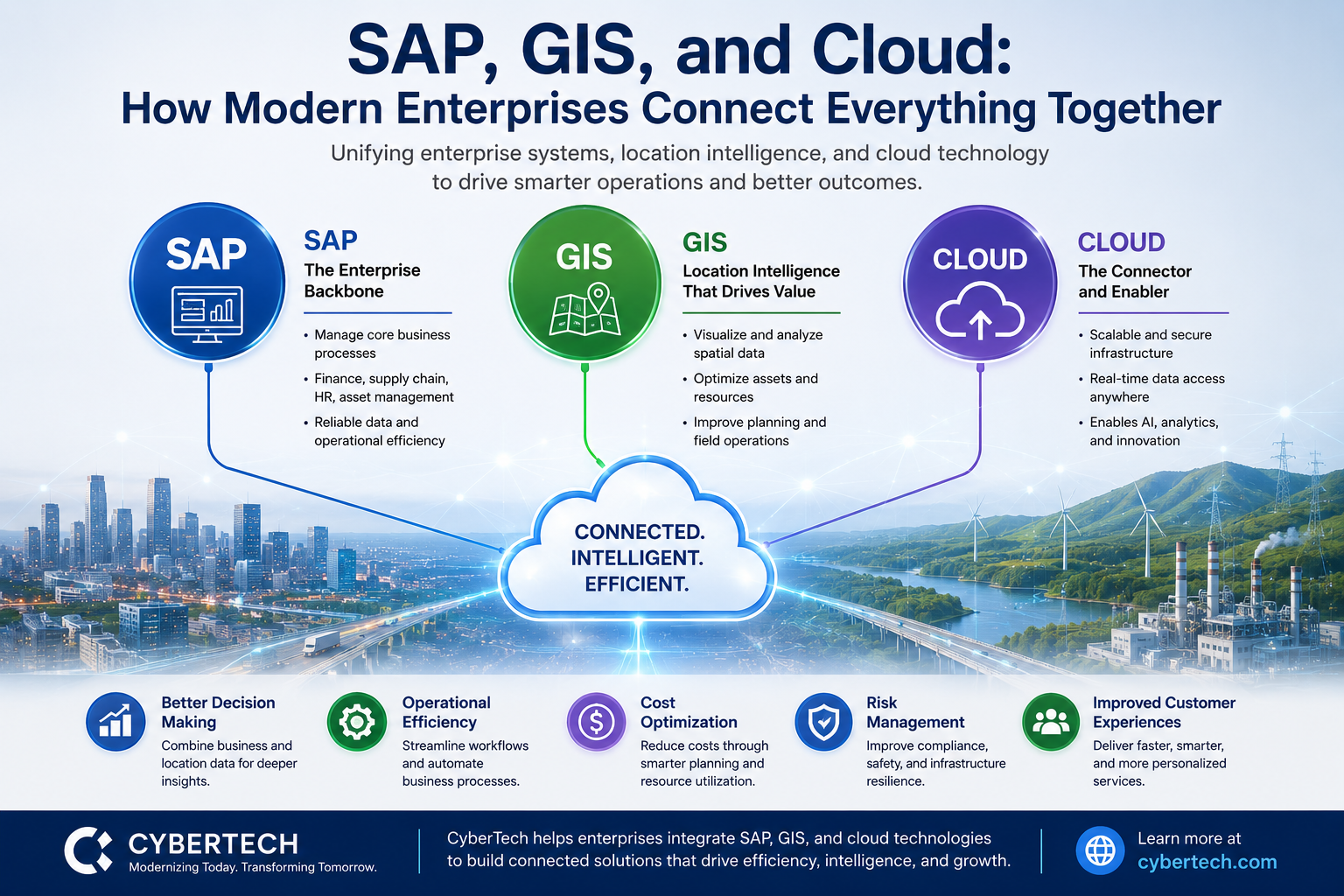
Digital Transformation: Integrating SAP, GIS, and Cloud
Digital transformation is no longer about adopting a single technology. Today's enterprises are combining business applications, geospatial intelligence, and cloud computing to create connected ecosystems that support smarter decisions and more efficient operations.
Three technologies are at the center of this transformation:
SAP for managing core business processes
Geographic Information Systems (GIS)for location-based intelligence
Cloud platforms for scalability, accessibility, and innovation
Individually, these technologies provide significant value. Together, they enable organizations to operate with greater visibility, automation, and agility.
Understanding the Three Pillars
SAP: The Enterprise Backbone
SAP helps organizations manage critical business functions, including finance, procurement, manufacturing, supply chain, human resources, and asset management. It acts as the system of record for operational data, ensuring business processes remain consistent and reliable across departments. For many enterprises, SAP is the foundation upon which digital transformation initiatives are built.
GIS: Turning Location into Business Intelligence
Every organization has assets, customers, employees, or operations tied to physical locations. GIS technology transforms location data into actionable insights through interactive maps, spatial analysis, and real-time visualization.
Organizations use GIS to:
Monitor infrastructure & plan utility networks
* Optimize logistics & manage field operations
* Analyze environmental impacts & improve emergency response
When integrated with enterprise systems, GIS becomes a powerful decision-support platform.
Cloud: Connecting Everything
Cloud technology provides the infrastructure that allows enterprise applications and geospatial systems to work together efficiently. Instead of maintaining isolated systems, organizations can securely share data across departments, automate workflows, and access applications from anywhere. Cloud platforms also support emerging technologies such as artificial intelligence, predictive analytics, and the Internet of Things (IoT).
Why Integration Matters?
Disconnected systems create operational challenges. For example:
* Finance teams may lack visibility into field operations.
* Maintenance teams may work with outdated asset information.
* Executives may struggle to access real-time operational insights.
Integrating SAP, GIS, and cloud technologies eliminates these information silos. The result is a unified digital ecosystem where business data and location intelligence work together.
How Integration Improves Enterprise Operation Smarter Asset Management?
Organizations managing large infrastructure networks often maintain thousands of physical assets. By combining SAP asset records with GIS mapping, teams can visualize asset locations, maintenance history, and operational status from a single interface. This leads to:
* Faster maintenance scheduling
* Reduced downtime
* Improved resource planning and lifecycle management
Better Supply Chain Visibility:
Supply chains extend across multiple geographic regions. When logistics data from SAP is integrated with GIS, businesses gain real-time visibility into distribution centers, transportation routes, delivery performance, weather impacts, and inventory movement. These insights help organizations improve delivery accuracy while reducing operational costs.
Enhanced Field Operations:
Field teams benefit significantly from location-aware enterprise systems. Instead of relying on paper records or disconnected applications, technicians can access customer information, equipment specifications, work orders, asset history, and navigation data. This improves first-time resolution rates while increasing workforce productivity.
Data-Driven Decision Making:
Executives need more than spreadsheets. By integrating cloud analytics with SAP and GIS, organizations can create interactive dashboards that combine operational metrics with spatial insights. Decision-makers can quickly identify trends, prioritize investments, and respond to changing business conditions.
Industries Benefiting from Integration:
*Utilities: Monitor electrical grids, water networks, gas pipelines, and renewable energy assets. Location intelligence improves outage management while SAP streamlines maintenance.
Manufacturing:Combine production data with geographic supply chain information to improve inventory management, logistics, and factory performance.
Government:Public agencies manage infrastructure, transportation, emergency response, and land resources more effectively.
Telecommunications:Network providers optimize tower locations, monitor infrastructure, and improve service coverage through geospatial analytics.
Oil and Gas: Energy companies manage pipelines, drilling operations, inspections, and environmental compliance more efficiently.
The Role of Cloud in Future Innovation:-
Cloud technology continues to expand what's possible. Organizations are now combining SAP and GIS with Artificial Intelligence (AI), Machine Learning (ML), Predictive Maintenance, Digital Twins, IoT Sensors, and Real-Time Analytics. These technologies help businesses anticipate issues before they occur and make faster operational decisions.
Best Practices for Successful Integration:
1. Establish Clear Business Objectives: Technology should solve measurable business challenges rather than simply replacing existing systems.
2. Prioritize Data Quality: Reliable analytics depend on clean, consistent, and well-governed data.
3. Adopt a Phased Approach: Large-scale integrations are often most successful when implemented in stages.
4. Focus on Security: Strong identity management, encryption, and governance policies help protect enterprise data across cloud environments.
5. Work with Experienced Integration Partners: Complex enterprise ecosystems require expertise in cloud architecture, SAP modernization, and geospatial technologies. Organizations like CyberTech help enterprises design these integrated digital platforms.
Final Thoughts:-
Modern enterprises no longer rely on isolated technology platforms. SAP provides the operational foundation, GIS delivers geographic context, and cloud technology connects everything through scalable, secure, and intelligent infrastructure. Organizations that successfully integrate these technologies are better positioned to improve operational efficiency, strengthen decision-making, and accelerate digital transformation.


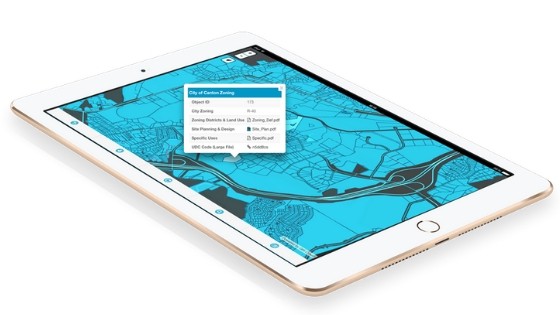
Cloud GIS Market status and outlook of global and major regions, from angles of players, regions, product and end Application/industries; this report analyzes the top players in global and major regions.Cloud GIS is the combination of running GIS software and services on cloud infrastructure and accessing GIS capabilities using the web.
In addition, Cloud GIS could be defined as a next generation on-demand GIS technology that uses a virtualized platform or infrastructure in a scalable elastic environment.The implementation of cloud computing technology has been a major milestone in the GIS industry.
The advantages associated with the adoption of cloud GIS, such as optimized operations in real time, are encouraging organizations to shift to this technology.
Therefore massive spatial data storages fit into cloud instead of transferring the data via the network.Key Questions Addressed by the ReportWhat is the growth perspective of the Cloud GIS Market and the key dynamics and trends governing the market?What are key sustainability strategies adopted by the leading players in the Cloud GIS Market?What are the new and emerging technologies and use cases disrupting the Cloud GIS industry?What are the key applications where Cloud GIS plays a significant role?
Report Sample includes:- Table of Contents- List of Tables & Figures- Charts- Research MethodologyGet FREE Sample of this Report at https://www.24marketreports.com/report-sample/global-cloud-gis-2019-2024-89According to this study, over the next five years the Cloud GIS market will register a 16.9% CAGR in terms of revenue, the global market size will reach US$ 1440 million by 2024, from US$ 660 million in 2019.
In particular, this report presents the global revenue market share of key companies in Cloud GIS business, shared in Chapter 3.This report presents a comprehensive overview, market shares and growth opportunities of Cloud GIS market by product type, application, key companies and key regions.This study considers the Cloud GIS value generated from the sales of the following segments:Segmentation by product type: breakdown data from 2014 to 2019 in Section 2.3; and forecast to 2024 in section 10.7.SaaSPaaSSegmentation by application: breakdown data from 2014 to 2019, in Section 2.4; and forecast to 2024 in section 10.8.GovernmentEnterprisesThis report also splits the market by region: Breakdown data in Chapter 4, 5, 6, 7 and 8.AmericasUnited StatesCanadaMexicoBrazilAPACChinaJapanKoreaSoutheast AsiaIndiaAustraliaEuropeGermanyFranceUKItalyRussiaSpainMiddle East & AfricaEgyptSouth AfricaIsraelTurkeyGCC CountriesThe report also presents the market competition landscape and a corresponding detailed analysis of the major vendor/manufacturers in the market.