

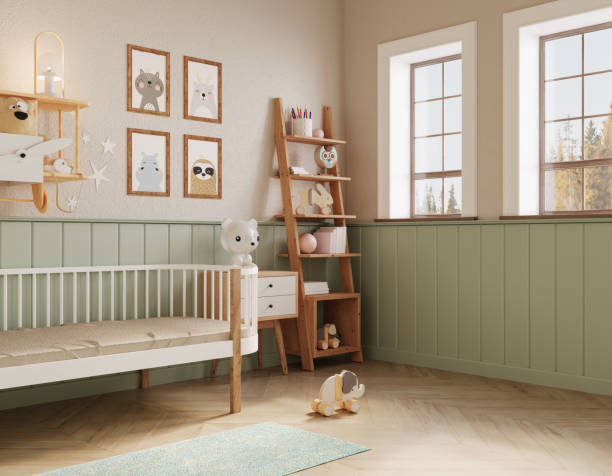
A nursery is one of the most emotionally charged rooms parents will ever design, and one of the most practically demanding. The instinct to create something perfect for a newborn often leads to decisions that work beautifully for three months and create problems for the next three years. The parents who avoid that cycle are the ones who design for where the child is going, not just where they are on day one. That means thinking about flooring that holds up to crawling and running, air systems that protect developing lungs, built-in features that don't require replacement when the crib comes down, and products that serve the room across stages rather than for a single phase.
Flooring and Design: Build the Foundation for the Long Term
The foundational surfaces of a nursery carry more responsibility than any other design decision in the room, because they're the ones that stay when everything else changes. Jessie Smart, Co-Owner at Home Carpet One, explains that the most practical approach to nursery design is building the fixed elements for the long term and keeping the expressive elements easy to change. Wall color, flooring, and window treatments should all be chosen with a five to eight year view in mind. A soft neutral on the walls and a quality wool or natural fiber rug on the floor will outlast every theme-specific decorating decision made around them.
Flooring quality in a nursery carries more responsibility than in any other room because children spend significant time directly on the floor. A well-constructed wool rug offers natural temperature regulation, is inherently resilient underfoot, and does not trap allergens the way synthetic pile can. It also ages gracefully as the room transitions from nursery to a proper child's bedroom, requiring no replacement. The transition becomes straightforward when the foundational surfaces were chosen well from the start. The rug stays. The quality flooring underneath stays. What changes are the textiles, the furniture scale, and the wall accents, all of which are low cost and low effort to update. Investing at the surface level from day one is what makes the renovation conversation unnecessary later.
Air Quality and Temperature: The Investment Most Parents Overlook
Of all the systems in a nursery, the one that affects daily wellbeing most directly is also the one least visible in design conversations. Shawn Bell, General Manager of Operations at Texas Ace Service Heating & Air, explains that the single most valuable HVAC investment for a nursery is air quality control, because infants breathe at a much higher rate than adults and are far more sensitive to what's circulating through the home. A high-efficiency filtration system or a whole-home air purifier integrated with the existing HVAC removes airborne contaminants before they reach the room. For a nursery specifically, that level of filtration matters more than almost any other upgrade in the house.
Humidity control is the other factor that gets overlooked. A nursery running too dry aggravates respiratory passages and disrupts sleep, while excess moisture creates conditions where mold and dust mites thrive. A whole-home humidifier tied into the existing system keeps that range stable without constant manual adjustment. Zoning is worth considering if the home supports it. Keeping the nursery at a consistent temperature independent of the rest of the house means the baby's room is not subject to the same overnight swings the rest of the home experiences, and the main system does not have to compensate for one room running warmer or cooler than the others.
Construction and Built-Ins: Prioritize What's Hardest to Change Later
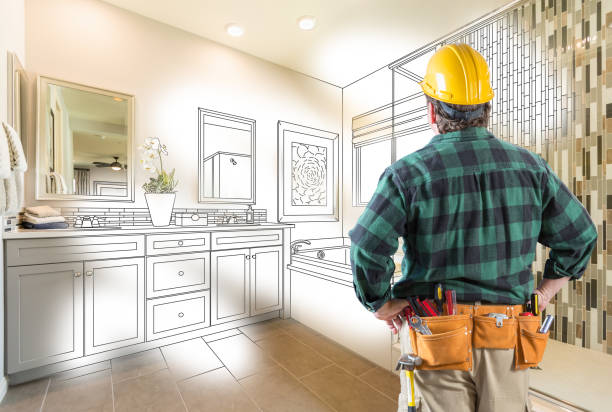
The construction decisions made during a nursery build or renovation shape how the room functions for years, which means the order of spending matters as much as the total budget. Clint VanRossun, Owner and Contractor at VanRossun Contracting, always points clients toward electrical first. A proper dimmer circuit, grounded outlets at appropriate heights, and solid overhead lighting are harder and costlier to revisit later. Structural and closet work comes next since built-in storage anchors how the room functions for years. Finishing touches like paint, hardware, and decor should come last and stay intentionally simple, since those are the elements parents will want to update anyway as the child's personality develops.
The built-in features that age best in a nursery are adjustable shelving systems, dimmable lighting circuits, and a closet layout designed around a standard rod and shelf configuration that can be reconfigured as a child grows. Neutral wall finishes and durable flooring choices like hardwood or quality LVP also carry a room from infancy through early childhood without needing a full redo. The rooms that transition best are the ones built with function rather than a theme, because function serves every stage while a theme only serves one.
Baby Products: Choosing Gear That Works Across Stages
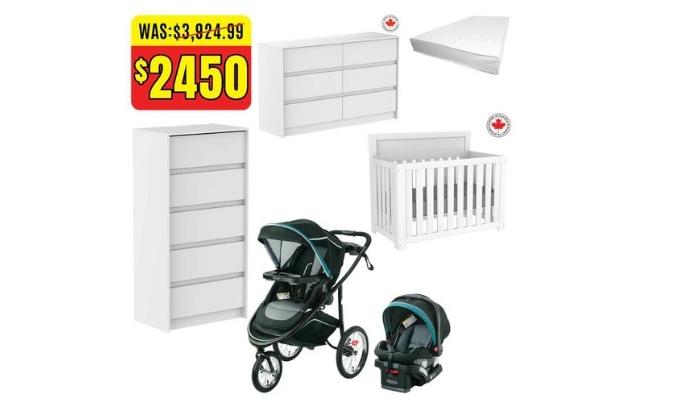
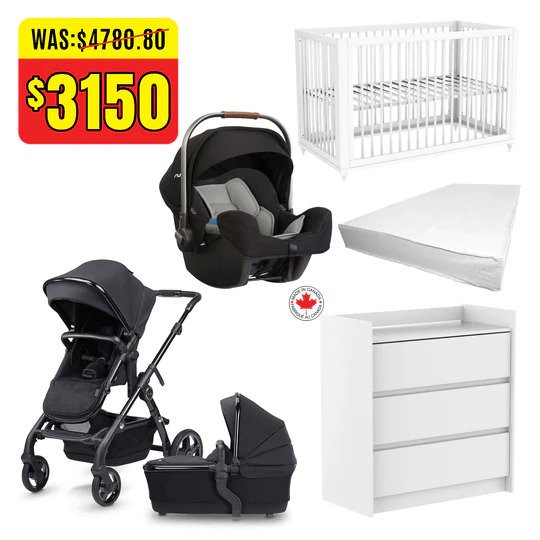
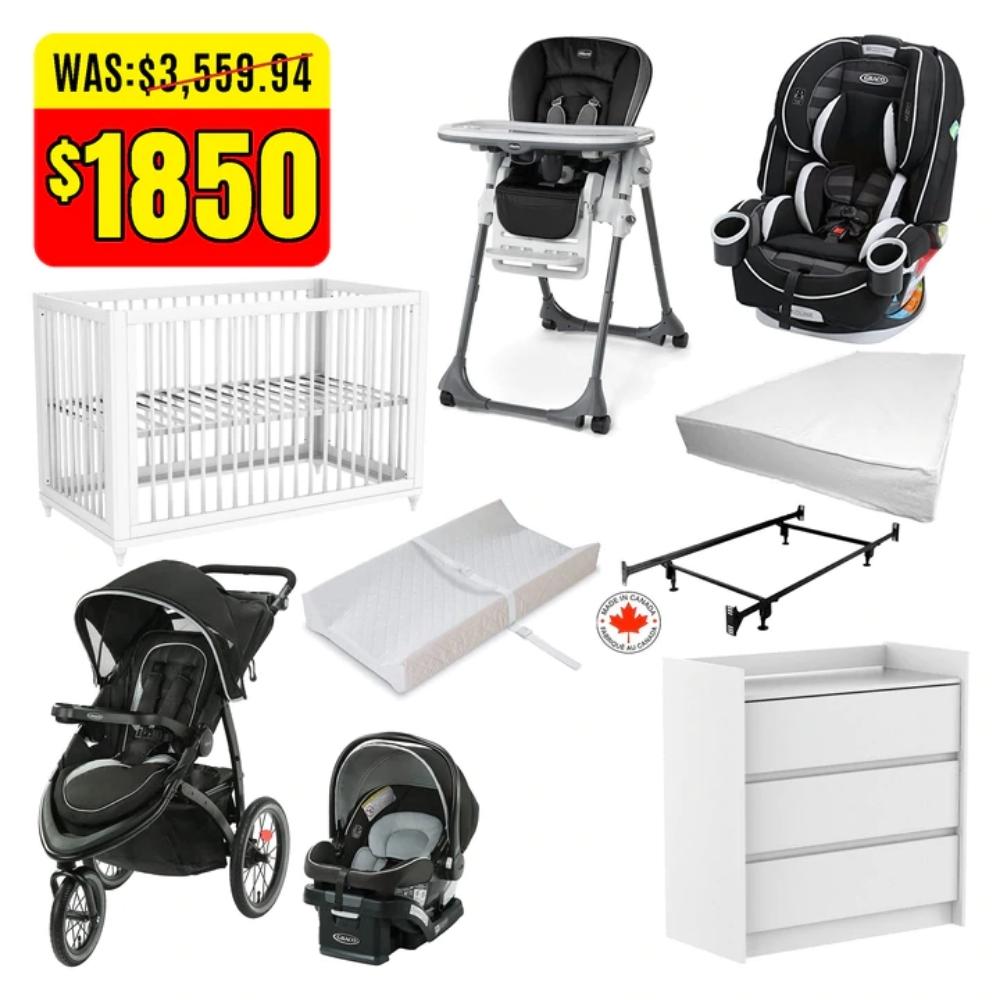
The product decisions made for a nursery follow the same logic as every other design decision in the room. What earns its place is what continues to serve the child as they grow. Jay Xu, Director and Baby Product Specialist at Mompush, explains that nursery design for small spaces demands a different kind of discipline than most parents anticipate before the baby arrives. The products that earn their place are the ones that serve multiple functions across multiple stages, because replacing gear every few months in a tight room creates clutter faster than the space can absorb it.
For stroller storage specifically, the fold matters as much as the footprint. A stroller that stands upright independently after folding takes up a fraction of the floor space of one that has to lean against a wall or get wheeled into a separate room. For smaller nurseries, that detail determines whether the stroller lives inside the room at all or gets exiled to a hallway. In larger rooms the calculation shifts toward longevity. Parents with more space tend to overbuy early and underplan for how the room needs to function at twelve months versus six. Gear that grows with the child, like a stroller supporting newborn through toddler configurations, keeps the room functional without requiring a full reset every few months.
Putting It Together: Design Once, Adapt Often
The nurseries that work best across years share a common structure. The permanent elements are chosen for durability, neutrality, and function. The expressive elements, the ones that reflect personality, whimsy, and childhood phases, are intentionally kept easy and inexpensive to change. Flooring and rugs chosen for quality rather than theme. Air systems upgraded for health rather than aesthetics. Built-ins designed for adjustability rather than a single configuration. Products selected for longevity rather than stage-specific convenience.
That approach doesn't require a larger budget. It requires a different set of priorities and a willingness to resist the pull of designing for the perfect newborn room at the expense of the room the child will actually grow into. The renovation that never has to happen is the best possible outcome of getting these decisions right the first time.