


Over time, tyre design concepts have evolved considerably, moving far from the standard pneumatic concept that was the major market trend for decades. Today, run-flat tyres are increasingly available as original equipment on many vehicles.
Drivers need to understand the characteristics of run-flat technologies, limitations carried by them, and ways through which they compare favourably or unfavourably with normal tyres so that they can get the most out of their tyres when replacements or changes are needed.
How Run-Flat Tyres Work
The unique construction element of run-flat tyres is their reinforced sidewalls. Even when all the air is completely blown out, these walls continue to support the weight of the car.
The material in the sidewall is a heat-resistant layer of rubber, stiff enough to sustain the load without completely flattening the tyre over the rim. Through all that, the driver still gets an opportunity to get to a safe place or a tyre service centre by staying on the wheel at a slower pace for a small period.
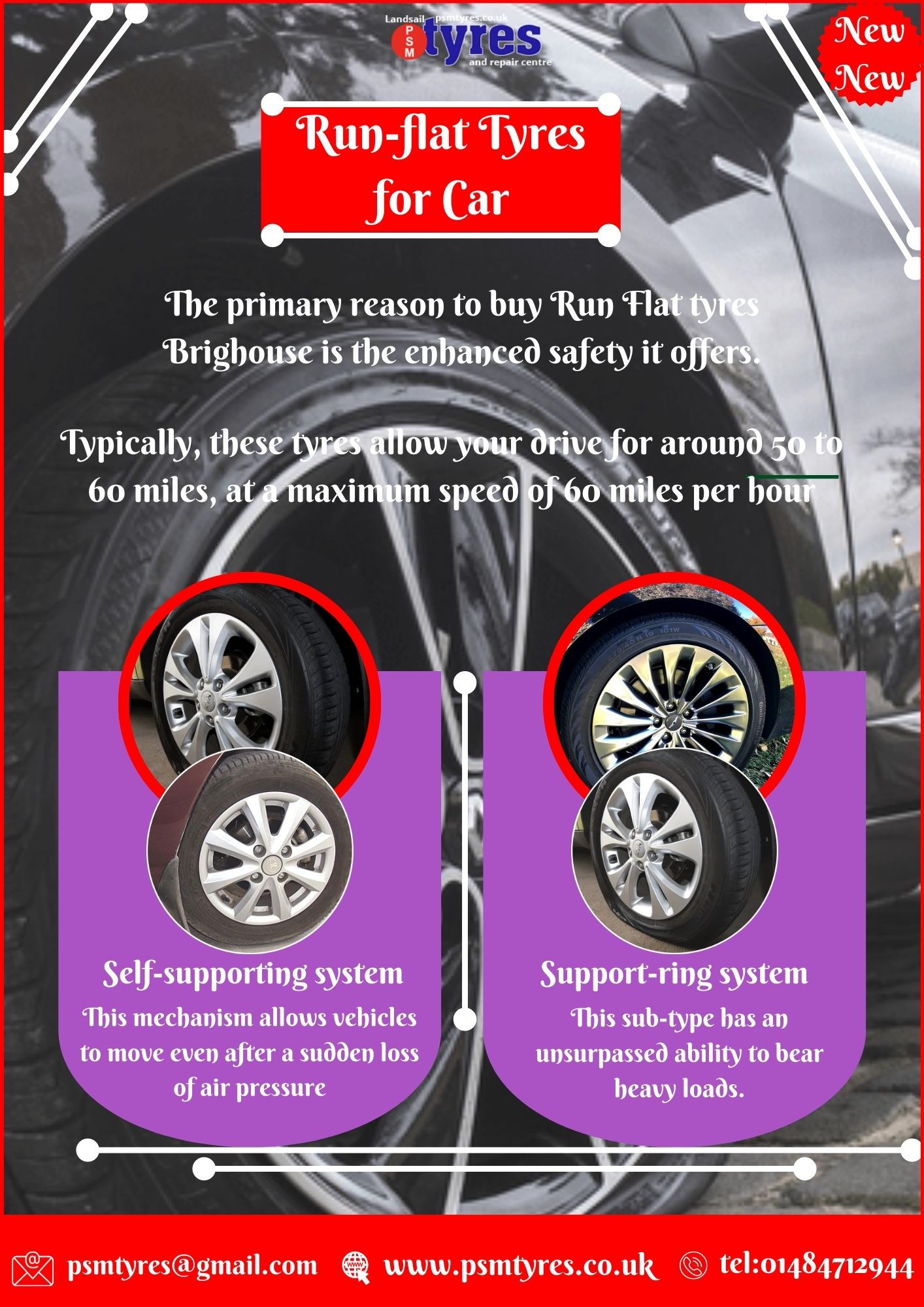
The standard performance limit following a total loss of pressure (i.e., a puncture) in most run-flat tyres is generally about 50 km at 50 km/h. But that may change slightly from one manufacturer to another or from one product line to another.
Going past that limit could cause significant damage to the tubeless run-flat tyre, making the rim as much or the only target of such failure. Besides, vehicles with run-flat tyres are fitted with a tyre pressure monitoring system, since drivers would otherwise be unable to detect pressure loss from changes in vehicle feel or wheel handling.
Advantages Run-Flat Tyres Offer
Run-flat tyres, as compared to the usual ones, have several handy practical features. A person who visits a tyre centre to find ideal run-flat tyres for a car will need to reprogram the vehicle's system if they later install traditional tyres, thereby removing model-specific run-flat features.
In that case, it would be good for them to check the manufacturer's handbook to be able to get accurate information on what needs to be disabled and so on. This point is quite essential. These are a few main points of the advantages that runflat tyres provide:
Bidding farewell to a spare wheel frees up some space in the boot where the spare would otherwise go and even leads to weight reduction of the overall car.
No longer having to park on the side of the road, risking danger, to replace a flat with a spare if that is the only option that a driver has left, as punctures happen. So, in effect, one more danger of road accidents is removed!
After a sudden loss of air pressure, the reinforced side wall continues to support the vehicle's weight, and it takes a long while before a complete flattening, thereby avoiding a very sudden and potentially very dangerous turn in direction caused directly by a complete collapse.
Cars with run-flat tyres call up roadside assistance for puncture-related situations only very infrequently when compared to cars with standard tyres.
Limitations Drivers Must Understand
Run-flat tyres do have limitations that standard tyres do not. Before making a change, a driver who switches from run-flats to standard tyres Birmingham, or vice versa, should be aware of those limitations. In most instances, a run-flat tyre that has been punctured can't be repaired.
The heat generated inside a tyre running without pressure will degrade the reinforced sidewall structure in a way that may not always be visible on the outside. The majority of tyre makers and installers recommend replacing the tyre after a loss of pressure and not attempting a repair.
Run-flat tyres' suspension is harder than that of regular tyres of the same model. The stiff sidewall that allows the tyre to carry the weight also transfers more road vibrations through to the car interior. This is the case most clearly when the roads get really bumpy or when you are going very slowly, and tyre compliance helps you the most in giving you a smooth ride.
Run-flat tyres are also heavier than normal tyres of the same size. The reinforced rubber on the sidewall increases rubber content and, therefore, the unsprung mass of the wheel assembly, significantly affecting suspension response and fuel consumption, especially in smaller vehicles where the relative weight increase is greater.
When Switching Tyre Types Makes Sense
Drivers often switch to standard tyres from run-flat tyres when their existing tyres are about to be replaced. This practice involves keeping a spare wheel at hand or packing a tyre inflator as a precautionary measure. It requires the suspension to be properly aligned and calibrated for the varying degrees of compliance between a standard tyre and a run-flat tyre.
Before making a switch to another type of tyre that you will be using on your vehicle, make sure to get the manufacturer's instructions and to switch in such a way that it doesn't void the warranty or interfere with the calibration of safety systems.
Conclusion
Run-flat tyres can be considered a solution mainly designed to keep operating even after a puncture occurs, which may be a priority for drivers who do not place a high value on ride comfort or ease of repair. Standard tyres allow great repair possibilities with softer running, but they need to be prepared in advance for cases when they lose pressure.
The driver's decision of getting one kind or the other is better when the driver's own car requirements and their daily driving habits are taken into account, and the true distinction is understood.