

In the ultra-premium cigar world, pricing is rarely about raw materials alone. It is about controlled supply, labor intensity, risk of loss, verified origin, and the luxury experience layered on top. Cohiba Behike sits at the intersection of all of those forces—and it is priced like it knows it.
This is not a romance story about “the finest leaves on earth.” It is a direct breakdown of what moves the needle in real dollars: scarcity you can measure, construction you can inspect, provenance you can confirm (or fail to confirm), and presentation you can’t avoid paying for. The goal is simple: separate genuine value drivers from hype so you can decide whether the premium is justified for you, not for the crowd watching you light it.
Scarcity Isn’t a Vibe: How Controlled Supply Becomes a Pricing Engine
Scarcity in this segment is not an accident; it is a strategy. The supply of a flagship product can be constrained at multiple points, and the consumer usually only sees the final effect: high prices, inconsistent availability, and a sense that you should buy now because you might not see it again. With Cohiba Behike, scarcity is driven by a combination of limited production capacity, selective sorting of tobacco, and intentional allocation.
First, there is agricultural variability. Tobacco is a crop. Crops change year to year. Weather, disease pressure, and harvest timing all shift quality and yield. Even when the growing region stays the same, the number of leaves that meet the highest standards does not stay constant. Premium cigar marketing often turns this into mythology. The more practical view is that variability creates a natural ceiling on top-grade supply.
Second, there is sorting. The best-looking, best-performing leaves are always a minority. When a product demands a narrow “acceptance window”—appearance, texture, burn behavior, aroma—the reject rate climbs. Rejects do not vanish; they go to other products. But every leaf that fails the top tier effectively increases the cost of the leaves that remain in the top tier, because you are spreading the same farming and handling costs across fewer “eligible” inputs.
Third, there is production capacity. Hand construction is slow compared to most luxury goods manufacturing. If you push volume too hard, quality drifts. To keep a prestige product consistent, output must be capped. That cap is not only about labor hours; it is also about training time, supervision, and quality-control cycles.
Finally, there is allocation. Even when more stock exists, the market may not receive it evenly. Allocation can be used to protect the image of rarity, maintain leverage over retailers, and keep prices firm. When you see a product “disappear” from shelves, the question is not just “Was it made?” but also “Where was it sent, and why?”
Cohiba Behike price: The Real Cost Stack Behind the Number
The Cohiba Behike price is not a simple reflection of what the cigar “should” cost to produce. It is a layered number built from cost, risk, brand power, and market behavior. Here is what you are really paying for, whether the seller explains it or not.
1) High grading standards and waste. Ultra-premium products impose stricter cosmetic and performance requirements. That increases waste and reclassification. Even if the underlying tobacco is excellent, not all of it will qualify for the flagship product. That hidden waste becomes part of the price.
2) Labor time and failure rates. A cigar that takes longer to build costs more. A cigar with higher rejection rates costs more. In top-tier production, the most expensive cigars are not always the ones with the most tobacco; they are the ones that demand the most consistent draw, burn, and appearance. When the acceptable margin of error shrinks, the cost of every mistake rises.
3) Holding costs and aging costs. Inventory that sits is not free. Storage space, humidity control, monitoring, and loss from damage add cost. A premium release benefits from time, but time ties up capital. The longer a producer holds product, the more the price must compensate for that lock-up.
4) Distribution friction and pricing layers. Between production and your purchase, there are layers: official distribution channels, import processes where applicable, wholesale handling, and retail margins. Each layer adds cost, but more importantly, each layer adds an opportunity for scarcity to amplify demand.
5) Brand equity you can’t opt out of paying. You are not only buying tobacco and labor; you are buying the right to participate in a status symbol. That sounds cynical, but it is accurate. The premium is partly a toll for the name and the social meaning attached to it.
6) Secondary market pressure. When people resell at a profit, that becomes a signal to the primary market. Retailers observe the higher resale prices and adjust their own pricing behavior. Even if you never intend to resell, you are shopping in an ecosystem influenced by those incentives.
Put bluntly: the sticker shock is not just “because it’s the best.” It is because many buyers treat it as a trophy, and the market prices trophies differently than daily pleasures.
Construction You Can Inspect: Where Craft Actually Shows Up
If you want to justify paying ultra-premium money, start with what you can physically evaluate. Construction is where craft becomes measurable. Great construction does not guarantee you will love the flavor, but poor construction can ruin any flavor, at any price.
Draw consistency. In a properly made cigar, the airflow is neither tight nor loose. Too tight and you fight it; too loose and it overheats and tastes thin. Ultra-premium buyers should demand a draw that feels intentional from the first puff, not “good enough.”
Burn stability. The burn line should progress evenly with minimal intervention. Perfectly straight burns are not a realistic standard every time, but frequent touch-ups are a red flag—especially at a premium price point.
Ash integrity and wrapper performance. The outer leaf should behave like a stable skin, not crack or split easily when handled normally. A fragile wrapper increases the chance of performance issues and makes the cigar feel less “finished,” regardless of what the label promises.
Firmness and packing uniformity. Squeeze gently. You are checking for soft pockets, hard knots, and uneven density. Those flaws often translate into tunneling, uneven burn, or draw problems later.
Why does this matter for pricing? Because construction excellence costs money in training, supervision, and rejection. The more a brand claims top status, the less tolerance you should have for basic construction issues. A luxury price is an explicit promise of reduced inconvenience.
Provenance: What You Can Verify vs. What You Are Asked to Believe
In the ultra-premium segment, provenance is a major part of the pitch: where it was made, what kind of tobacco it uses, how it was aged, and how it was handled. The challenge is that provenance is only valuable when it is verifiable. Otherwise, it is just a story.
What you can verify: packaging integrity, tax and distribution markings where applicable, box codes and date indicators when present, and consistency with known official presentation. You can also verify the credibility of the seller and the chain of custody: who had it, how it was stored, and whether that storage was stable.
What you usually cannot verify: the exact selection criteria of the tobacco, how many leaves were rejected, the precise aging timeline for the components, and whether any substitution occurred within acceptable internal tolerances. Even honest producers guard these details, because they are competitive advantages.
When you pay for provenance, you are often paying for reduced uncertainty. That only works if you buy through channels that preserve that certainty. If the chain of custody is questionable, you are effectively paying luxury pricing for luxury risk, which is the worst combination.
Presentation and Allocation: The Luxury Tax Hidden in Plain Sight
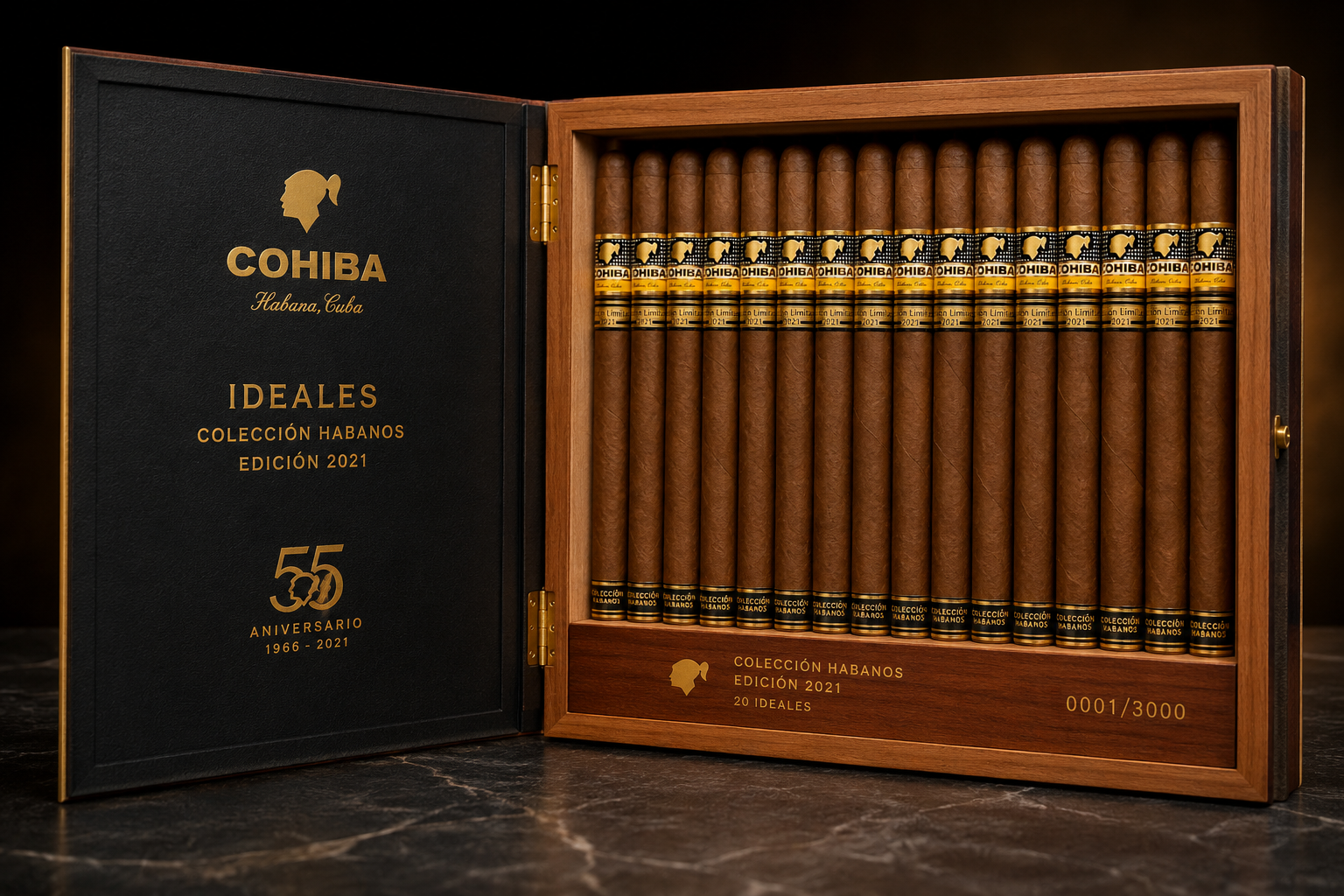
Presentation is not free, and in ultra-premium cigars it is rarely modest. Packaging, bands, box finishes, and overall “unboxing” ritual add cost. More importantly, they add a psychological anchor: if it looks expensive, people assume it is worth more.
Packaging also supports allocation strategy. Premium presentation makes a product easier to position as “special,” which helps justify limited supply narratives. It also helps retailers sell the experience, not just the smoke.
There is nothing wrong with enjoying presentation. The issue is confusing presentation for performance. If you are paying extra for the box, admit that to yourself. If you want the best smoking value, separate the container from the contents and judge accordingly.
Allocation amplifies this effect. When a product arrives in small quantities, it becomes an event. Events raise perceived value. Perceived value raises willingness to pay. Willingness to pay raises the next round of pricing. That cycle is not accidental. It is a business model.
ultra premium cigars: The Category Runs on Psychology as Much as Tobacco
The phrase ultra premium cigars is not just a quality descriptor. It is a market category with its own rules. In this category, the buyer is not purely optimizing taste per dollar; the buyer is often optimizing identity, access, and story.
Status signaling. Some products are priced to be seen. The higher price filters the audience, creating a sense of exclusivity that becomes part of the appeal. This is not unique to cigars; it is a standard luxury dynamic.
Decision simplification. Many buyers use price as a shortcut for quality. In normal consumer goods, that shortcut is unreliable. In luxury, it is intentionally cultivated. When a product sits at the top of the shelf, some people stop comparing and start assuming.
Collector behavior. Collectors treat limited availability as value, even before they evaluate performance. The act of owning becomes separate from the act of consuming. That behavior supports high pricing even if the smoking experience is only incrementally better than less expensive options.
Fear of missing out. Scarcity triggers urgency. Urgency reduces price sensitivity. When people buy under urgency, they are less likely to admit disappointment later, because doing so would mean admitting they overpaid. That protects the product’s reputation in conversation, which feeds the cycle again.
The critical point: ultra-premium pricing is often less about delivering double the performance and more about delivering a different kind of value—access, certainty, status, and ritual. If those values matter to you, paying more can be rational. If they do not, the pricing will always feel inflated.
Hype vs. Real Value: A Clean Way to Separate the Two
If you want a practical framework, split the purchase into two buckets: value drivers that improve the smoking experience, and value drivers that improve the owning experience.
Smoking-experience drivers include consistent construction, stable burn, reliable draw, balanced flavor development, and a finish that stays clean instead of turning harsh. These are the factors that make the cigar perform like a premium product once it is lit.
Owning-experience drivers include brand prestige, packaging, perceived rarity, social recognition, and the satisfaction of having “the one everyone talks about.” These are not fake; they are simply different. They do not automatically make the cigar taste better, but they can make the moment feel bigger.
Hype lives in the gap between these two buckets. When someone claims the smoking experience is transcendent mainly because the owning experience is impressive, you are watching the category’s most common illusion in real time.
Cohiba Behike review: What the Experience Delivers When Everything Goes Right
A fair Cohiba Behike review has to begin with a warning: any single cigar can be affected by storage, age, and handling. The higher the price, the more painful variance becomes. So the correct way to review a cigar at this tier is not with breathless certainty, but with a clear description of what it delivers when the sample is authentic and well kept.
At its best, the appeal is refinement. Expect a profile that emphasizes integration rather than raw force. The transitions tend to be gradual. The texture of the smoke can feel dense without being heavy. Strength can be present, but the point is usually composure—flavor notes that stack cleanly instead of fighting each other.
The second major appeal is balance under heat. Many cigars taste great when sipped slowly and fall apart when smoked at a normal pace. A top-tier cigar should hold its shape. If it becomes sharp, bitter, or ashy the moment your cadence speeds up slightly, that is not luxury performance.
The third appeal is finish quality. Pay attention to the last third. This is where many cigars lose elegance. In a truly premium experience, the final portion stays structured and satisfying, not just strong. If the final act tastes like scorched wood and peppery harshness, you did not get premium value, no matter what the band says.
What about uniqueness? This is where expectations can get distorted. The ultra-premium segment often sells “unrepeatable magic.” In practice, even an excellent cigar is still a cigar. The difference is usually in polish and consistency, not in a totally new universe of flavor. If you expect revelation, you may be disappointed. If you expect a controlled, high-definition version of a classic profile, you are closer to the truth.
Authenticity and Storage: The Unsexy Part That Protects Your Money
At this price level, authenticity is not a background concern; it is central. Counterfeit premium cigars exist because the incentives are obvious. If you cannot verify the seller and the chain of custody, you are taking on a risk that the pricing does not compensate you for.
Equally important is storage. A premium cigar stored too dry can burn hot and taste thin. Stored too wet, it can draw poorly and burn unevenly. Stored with unstable humidity, it can crack, swell, and degrade. If you buy an ultra-premium cigar and immediately smoke it without giving it time to settle into stable conditions, you are essentially refusing to protect your own investment.
This is also where many “bad reviews” are born. The buyer blames the brand for what was actually a storage failure somewhere in the chain. At the ultra-premium tier, that distinction matters because you are paying partly for reduced uncertainty. Poor storage reintroduces uncertainty through the back door.
How to Buy Smart Without Killing the Luxury Moment
Buying intelligently does not mean turning the experience into a spreadsheet, but it does mean refusing to be manipulated by scarcity theater.
Start with seller credibility. A trusted seller with a stable storage environment reduces risk. If the price is suspiciously low compared to the rest of the market, treat that as a warning, not a win.
Next, decide what you are optimizing. If you are optimizing the smoking experience, consider trying a single cigar first. If you are optimizing collecting, focus on box condition and storage history, because future value is sensitive to presentation and preservation.
Then, be honest about timing. Many buyers chase “fresh arrival” energy. In reality, a period of stable rest can improve performance. If you want the best smoke, patience is often a better flex than urgency.
Finally, control your context. An ultra-premium cigar can be wasted in the wrong setting—rushed, windy, distracted, paired with something that overwhelms it. That is not moralizing; it is just cost control. If you are paying a premium, give the product a fair environment to justify that spend.
When the Premium Is Worth It—and When It’s Just an Expensive Story
There are times when paying for Cohiba Behike is rational. If you value prestige, want a marquee experience, and have access to a reliable source, the purchase can make sense as a deliberate luxury. If you are celebrating a milestone and want a product with cultural weight in the cigar world, this is one of the names that carries it.
There are also times when it is not worth it. If you are mainly chasing flavor complexity per dollar, you can often find comparable satisfaction below the ultra-premium tier. If you dislike paying for packaging and status, you will feel the markup every time you look at the receipt. If your access is limited to questionable sources, the authenticity risk alone can wipe out the logic of the purchase.
The cleanest way to decide is to ask one question: are you paying for a better smoke, or are you paying for a bigger moment? Either answer can be valid. The mistake is pretending you are doing one when you are actually doing the other.
The Bottom Line: What You’re Really Paying For, in One Sentence
You are paying for controlled scarcity, higher construction standards with higher rejection costs, a provenance story that only has value when it is verifiable, and a luxury presentation designed to make the price feel inevitable—plus the brand’s ability to charge for being the name people recognize even if they do not smoke cigars every day.
Buy it when that total package is what you want. Skip it when you only want tobacco and performance. That is the difference between being a customer and being a target.


cohiba cigars for sale.Welcome to La Tienda Del Habanos, your number one source for all Cuban Cigars, Accessories and Whiskey.
Consequently, we are dedicated to giving you the very best service to the cigars out here.Meanwhile, we were founded in 2004, La Tienda del Habano has come a long way from its beginnings in Spain the Cuban cigar capital of the world.
We provide greater assistance and a wide variety of Cuban Cigars to thousands of cigar lovers around the worldBy so doing, we lay strong emphasis on product knowledge and customer satisfaction which can be translated to our ‘modus operandi’ authenticity, Quality and Service.