Hiring exceptional software developers has become increasingly challenging as businesses compete for skilled engineering talent. While resumes and interviews provide valuable context, they don't always reveal how candidates perform in real-world technical situations. This is why many organizations are investing in coding assessment software to evaluate technical abilities before making hiring decisions.
However, not all assessment platforms are created equal. Some focus only on coding quizzes, while others provide deeper insights into problem-solving, collaboration, and role-specific competencies. Choosing the right solution requires understanding which features genuinely predict on-the-job performance rather than simply measuring theoretical knowledge.
This guide explores the most important capabilities every hiring team should look for when evaluating coding assessment software.
Why Traditional Coding Tests Aren't Enough?
Many companies still rely on multiple-choice technical questions or short coding exercises to screen candidates. Although these assessments are easy to administer, they rarely reflect the challenges developers face in production environments.
Modern engineering roles require far more than writing syntactically correct code. Developers must analyze problems, design scalable solutions, debug complex systems, communicate effectively, and collaborate with distributed teams.
High-quality coding assessment software should simulate these real-world scenarios instead of testing isolated programming concepts.
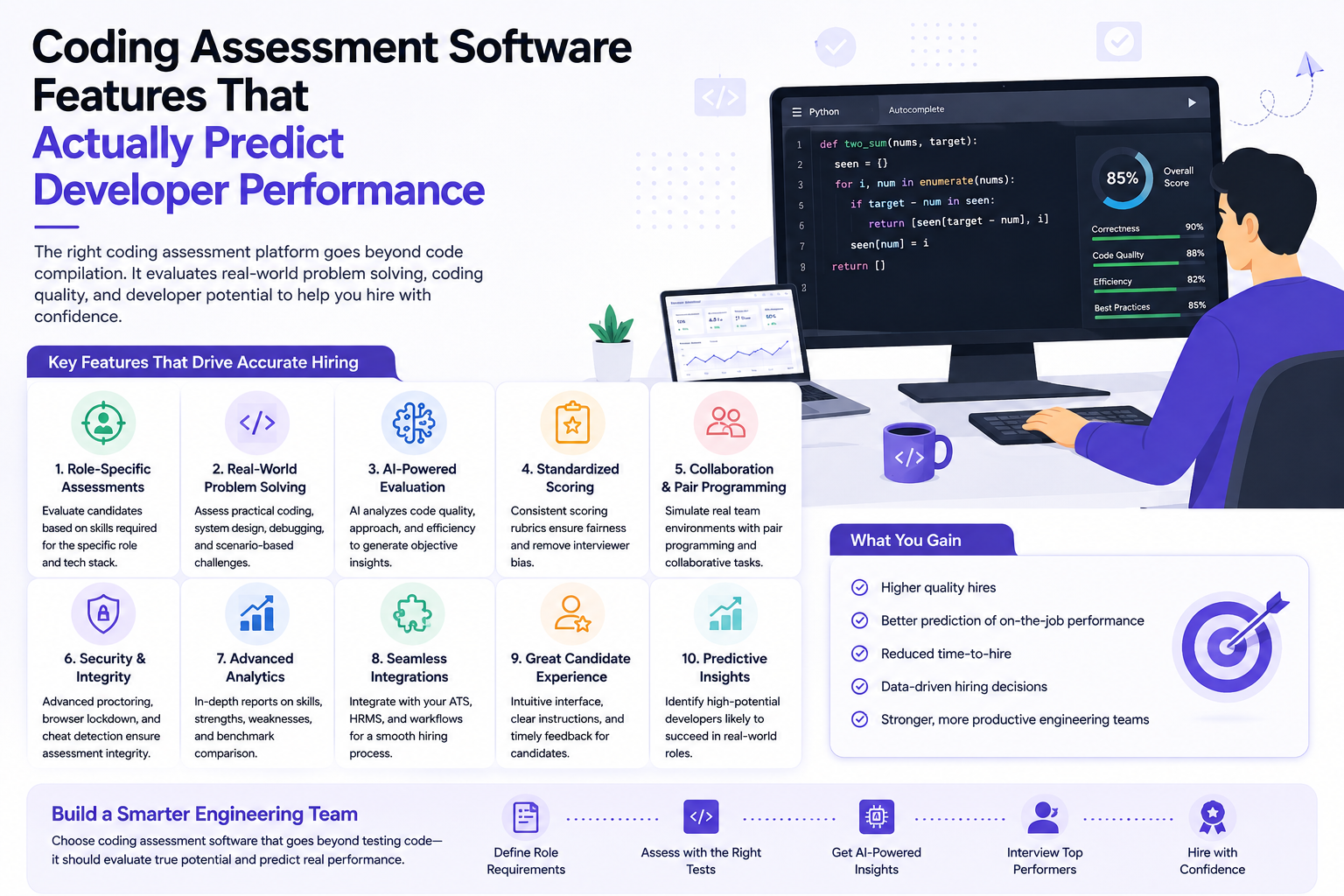
Feature 1: Role-Specific Technical Assessments
- Every engineering position requires a different skill set.
- A backend developer may need expertise in APIs and databases, while a frontend engineer focuses on user interfaces and performance optimization. Similarly, DevOps engineers, cloud architects, and data engineers each require specialized technical evaluations.
- The best Coding Assessment Platforms allow recruiters to customize assessments based on specific roles rather than relying on generic programming tests. This ensures candidates are evaluated against the competencies that matter most for the position.
Feature 2: Real-World Problem Solving
- One of the strongest indicators of developer performance is the ability to solve practical engineering challenges.
- Instead of asking candidates to answer isolated algorithm questions, modern assessment platforms should include scenarios such as debugging applications, improving existing code, designing scalable systems, or solving business-oriented programming tasks.
- These practical exercises provide hiring managers with a much clearer understanding of how candidates think and work under realistic conditions.
Feature 3: AI-Powered Candidate Evaluation
- Artificial intelligence is changing how organizations assess technical talent.
- A modern AI based Recruitment Platform can analyze candidate responses, organize assessment results, identify demonstrated competencies, and generate structured evaluation reports for recruiters and hiring managers.
- Rather than replacing technical interviewers, AI helps create consistency by reducing manual effort and presenting standardized insights across every assessment.
Zeko AI is an enterprise-grade capability intelligence platform that delivers AI-driven interviews, smart screening, and deep talent insights, built for companies making strategic, recurring hires at scale rather than high-volume resume filtering.
This capability-first approach enables organizations to evaluate developers based on demonstrated technical skills and interview performance instead of relying primarily on resume keywords.
Feature 4: Standardized Scoring
- Consistency is essential during technical hiring.
- When interviewers evaluate candidates differently, hiring decisions become subjective and difficult to compare. Effective coding assessment software uses predefined scoring criteria and structured evaluation frameworks that allow every candidate to be measured against the same technical standards.
- Standardized scoring improves fairness, reduces bias, and helps engineering teams make data-driven hiring decisions.


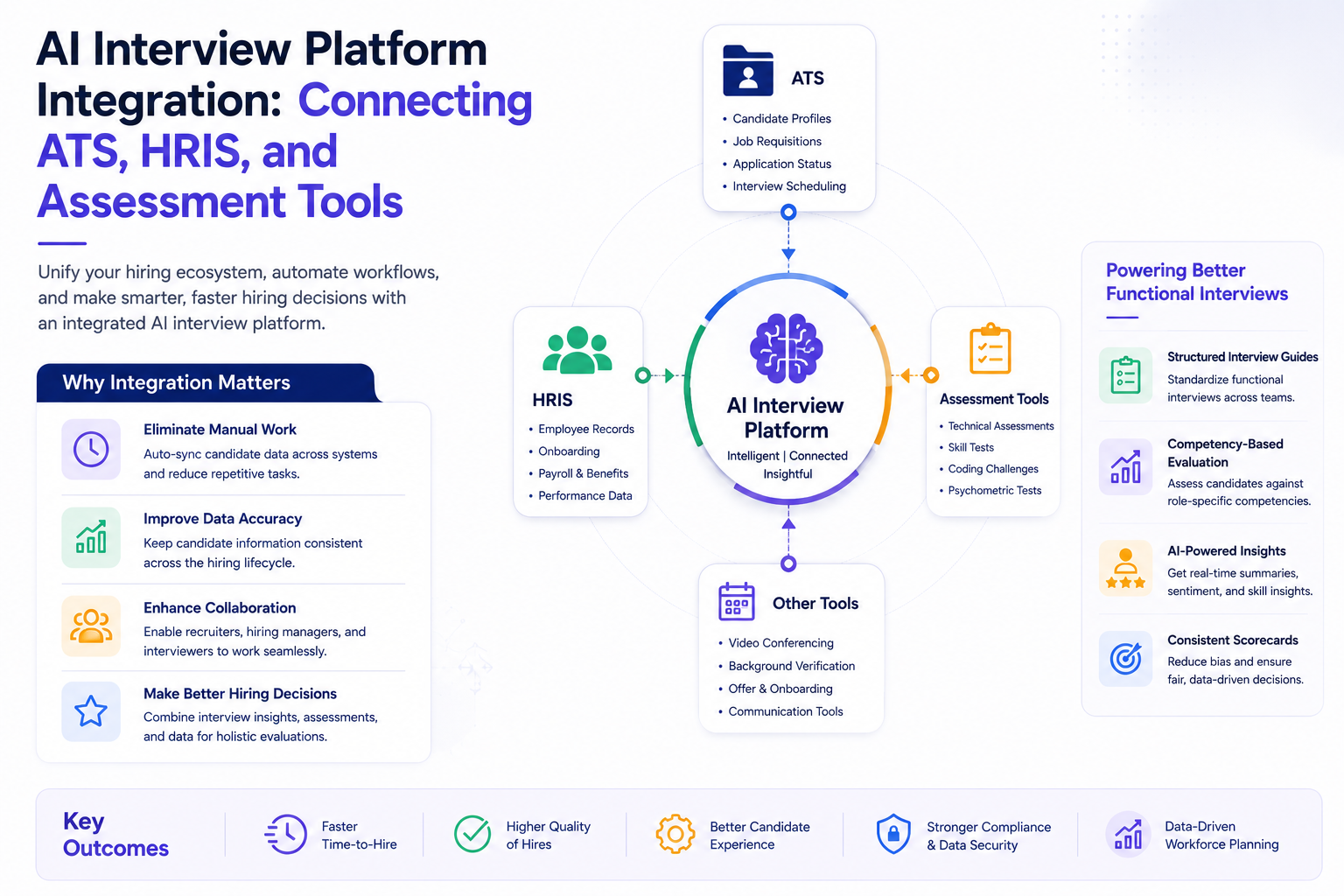
Modern recruitment is no longer powered by a single application. Enterprise hiring teams rely on multiple technologies—from Applicant Tracking Systems (ATS) and Human Resource Information Systems (