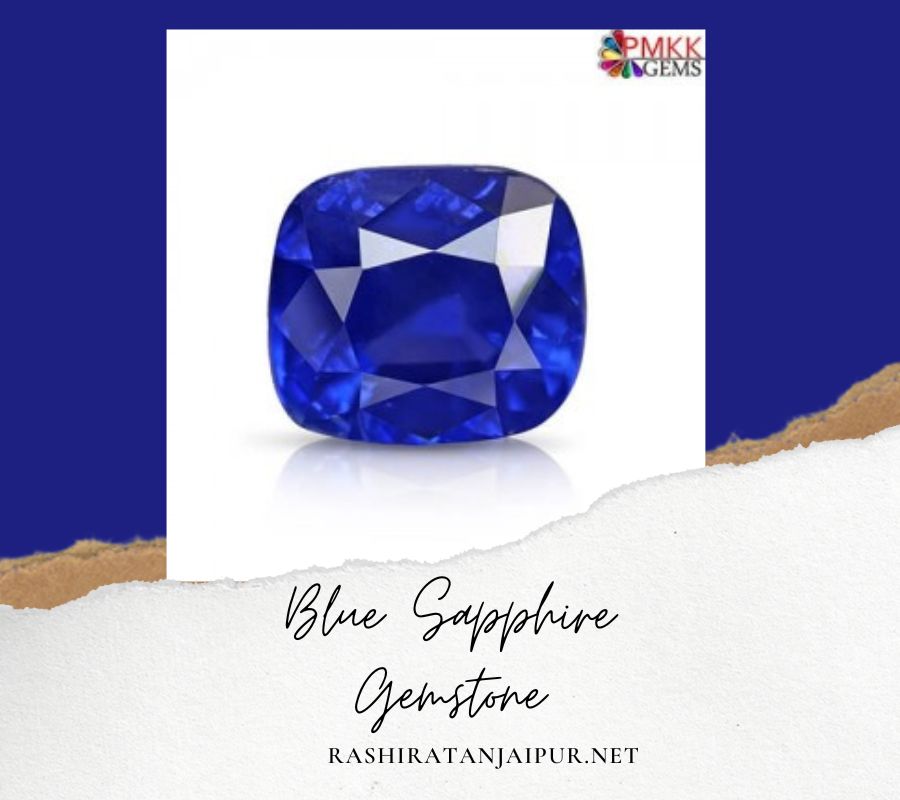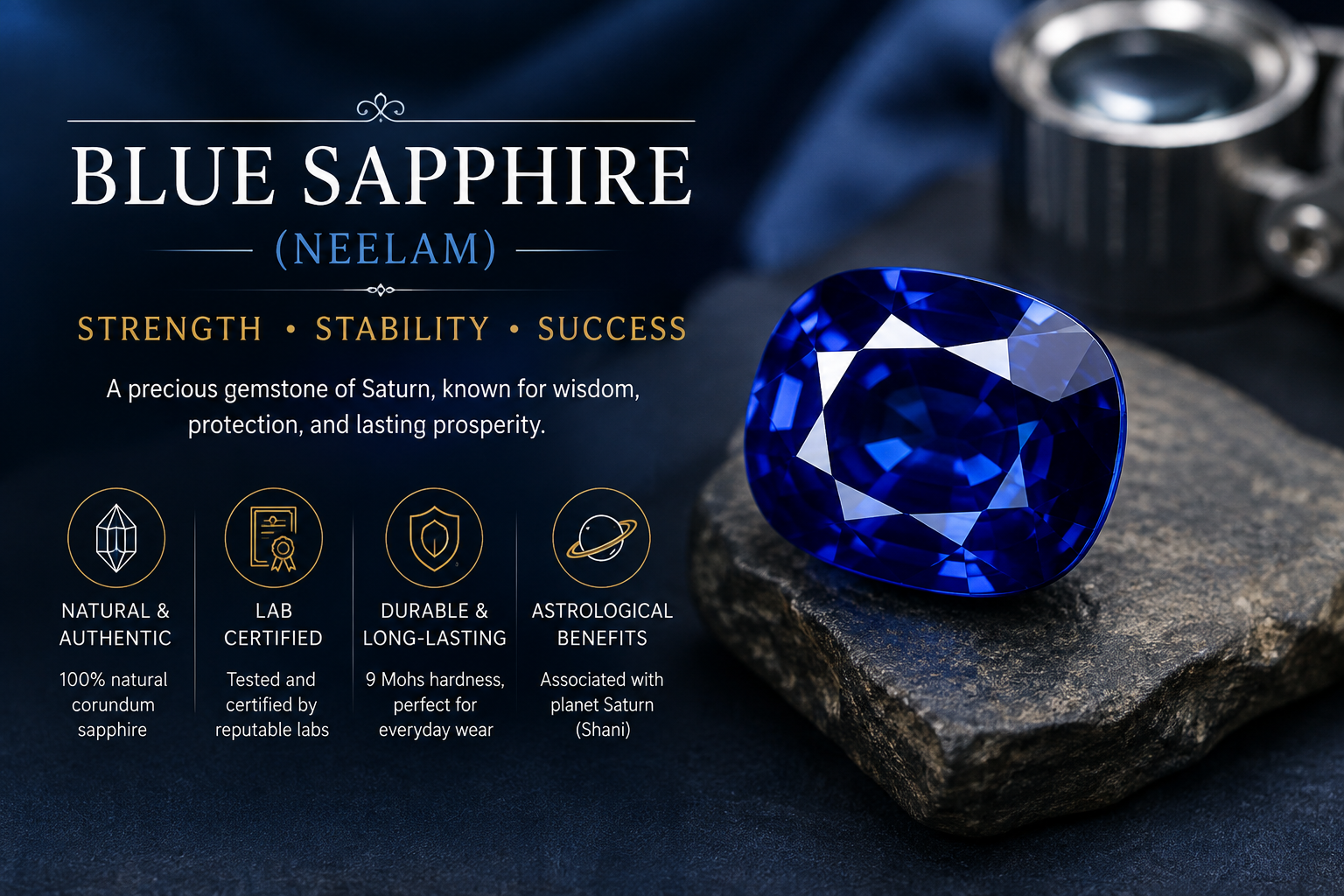
Blue Sapphire, known as Neelam in Vedic astrology, has one of the biggest gaps between demand and buyer confidence of any gemstone sold online today. It's searched for constantly - as a Saturn remedy, as a striking piece of jewellery, as a birthstone - yet a large share of buyers admit they're unsure how to tell a genuine stone from a treated or synthetic one before they've already paid for it. This guide walks through exactly what to check, so the decision doesn't come down to guesswork.
Why Blue Sapphire Is Different From Other Gemstones You Buy Online
Most gemstones are bought primarily for how they look. Blue Sapphire is bought for what it's believed to do. In Vedic astrology, it's associated with Saturn (Shani) - the planet governing discipline, career and long-term life structure - and it's considered the fastest-acting of the nine Navaratna stones. That reputation is exactly why buyers care so much about authenticity here: a synthetic or heavily treated stone might look identical, but it isn't believed to carry the same astrological effect, no matter how well it photographs.
Step 1: Understand What You're Actually Buying
Not every blue stone sold as "sapphire" is natural corundum. The market includes:
Natural, untreated sapphire - the gold standard for both astrological and investment value.
Heat-treated sapphire - an industry-accepted enhancement that improves colour and clarity, generally considered a step below untreated stones.
Synthetic (lab-created) sapphire - chemically identical to natural sapphire but grown in a lab, offered at a fraction of the price.
Glass or dyed imitations - not sapphire at all, sold to buyers who don't know what to check for.
A reputable seller will disclose exactly which category a stone falls into. If that information isn't volunteered upfront, ask before you buy.
Step 2: Know What Origin Tells You
Origin affects both price and perceived quality:
Ceylon (Sri Lanka) - widely considered the best balance of quality, availability and price. Most buyers land here.
Kashmir - the rarest and most prized origin, with limited remaining supply and prices to match.
Burma (Myanmar) - known for deep, saturated colour, moderately rare.
Thailand and Madagascar - generally more budget-friendly, still capable of good natural quality.
Step 3: Check Colour, Clarityand Cut - In That Order of Importance
Colour is the single biggest value driver. Look for a medium-to-dark, vivid blue - the trade calls the most desirable shade "cornflower" or "royal" blue. View any stone in natural daylight before deciding, since indoor lighting can flatter a mediocre stone.
Clarity should show minor natural inclusions. Counter-intuitively, a completely flawless stone is a warning sign rather than a selling point - it usually indicates synthetic origin.
Cut matters most for how the stone sits in its setting and how much brilliance it shows, but it's a secondary factor compared to colour and authenticity when the stone is being bought for astrological purposes.
Step 4: Never Skip Lab Certification
This is the one step that should be completely non-negotiable. A certificate from a recognised gemmological laboratory confirms three things a buyer can't verify with the naked eye: that the stone is genuine corundum, whether it's been treated, and its likely origin. For a purchase this significant - both financially and, for many buyers, astrologically - certification isn't optional paperwork, it's the entire basis of trust in the transaction.
Step 5: Get the Weight and Wearing Details Right
If you're buying for astrological purposes, the stone's weight matters as much as its quality. Vedic guidelines commonly recommend a minimum weight of roughly 1/12th of the wearer's body weight in carats, set in silver and worn on the middle finger on a Saturday. These details vary slightly by astrologer, so it's worth confirming with whoever reviewed your chart rather than relying on generic online guidance alone.
A Buyer's Checklist Before You Order
Certificate from a recognised gemmological lab, not a generic "authenticity guarantee"
Clear disclosure of treatment status (natural, heated, or synthetic)
Stated origin, with photos of the actual stone rather than stock imagery
A transparent return or refund policy
Pricing that's consistent with the stated carat weight, originand quality - prices that seem unusually low for the claims made are the most common red flag
Where to Buy
Given how much authenticity matters for this specific gemstone, it's worth buying from a seller that leads with certification rather than treating it as an afterthought. MyRatna is one such option, offering natural, lab-certified Blue Sapphire sourced from Ceylon, Thailand, Madagascar, Burma, and Africa, with full documentation provided on every stone - a useful starting point for comparing options before you commit to a purchase.
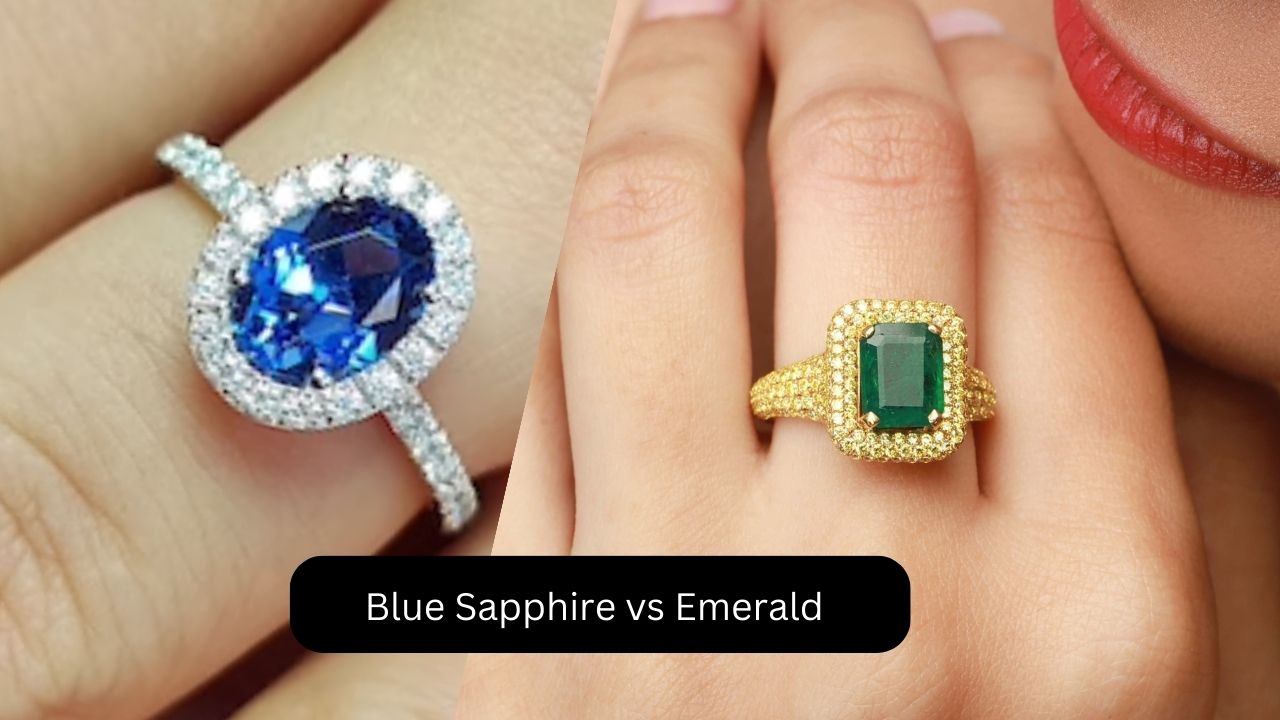
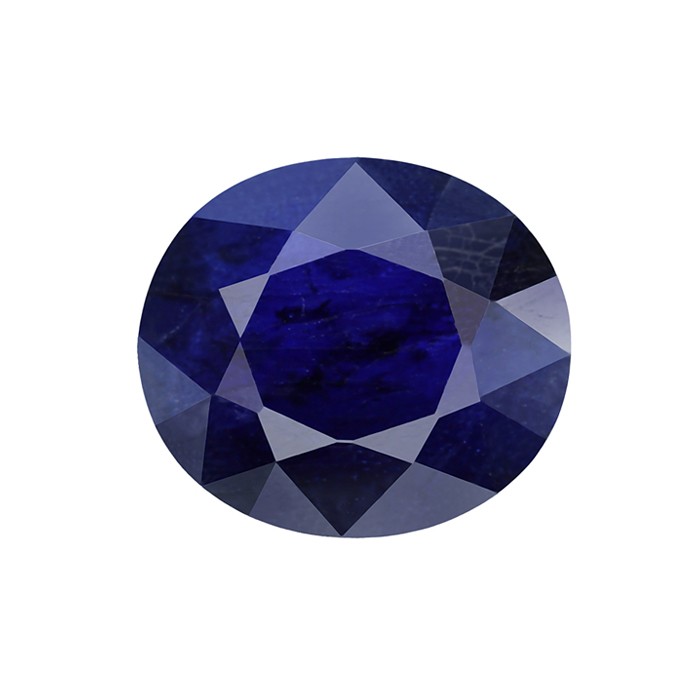
Buy Blue Sapphire Stone Online at Zodiac Gemstones.
Know the Blue Sapphire Price with us and buy it to get instant wealth and fame in your life.
Buy natural blue sapphire gemstone (neelam stone) at affordable price in India.