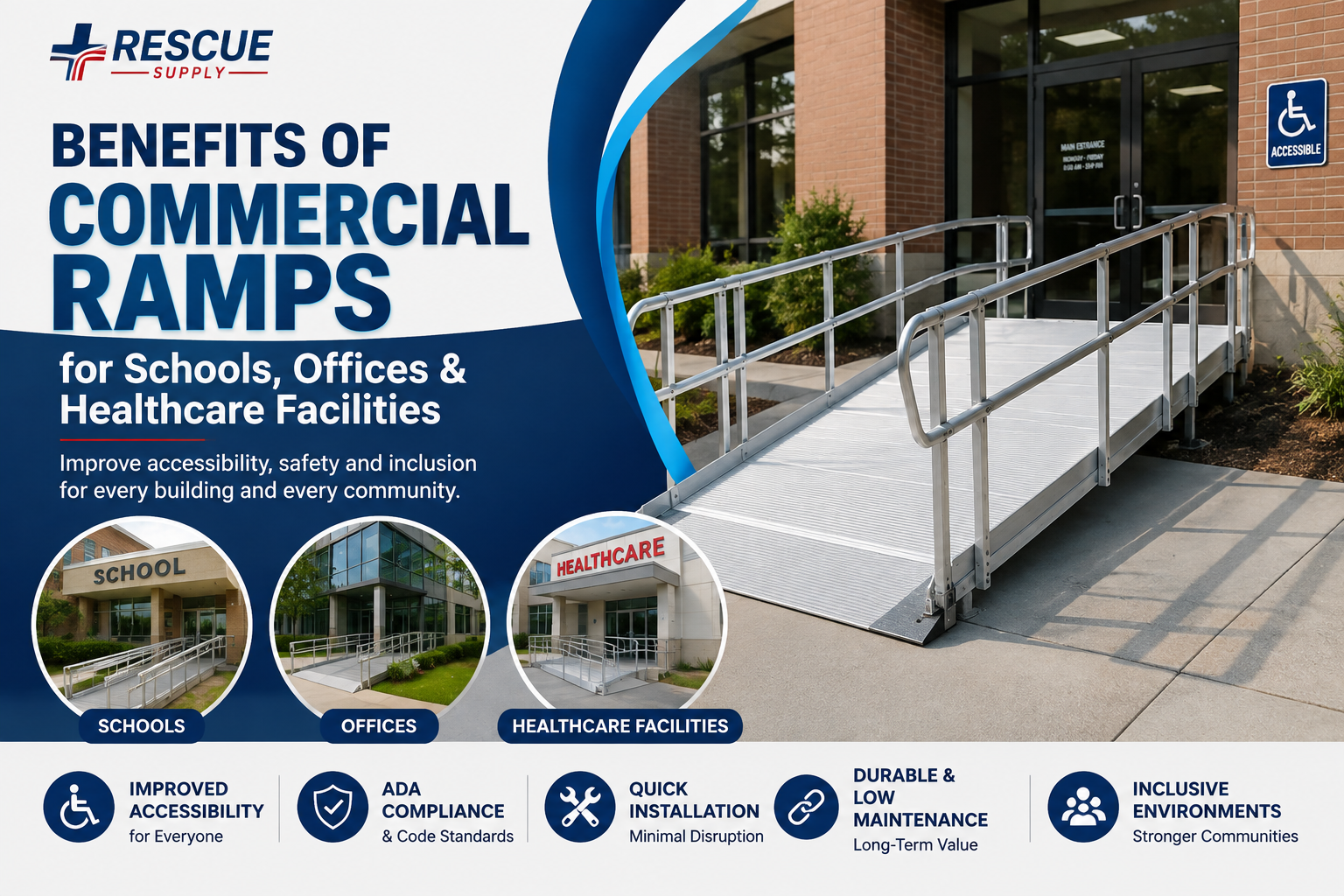
Accessibility is no longer just a legal requirement—it is an essential part of creating safe, welcoming, and inclusive spaces. Whether it's a school welcoming students, an office serving clients, or a healthcare facility caring for patients, everyone deserves easy access to buildings and services.
This is where commercial ramps make a significant difference. They provide a reliable, safe, and cost-effective way to improve accessibility without major structural changes. Today's modular ramp systems are designed to meet ADA accessibility standards while offering flexibility, durability, and long-term value.
If you're planning to improve accessibility for your property, understanding the benefits of commercial ramps can help you make an informed investment. Let's explore why more schools, businesses, and healthcare organizations across the USA are choosing modular ramp systems.
Why Commercial Ramps Are Essential Today
Accessibility affects millions of Americans every day.
According to the Centers for Disease Control and Prevention (CDC), more than one in four U.S. adults lives with some form of disability. Additionally, the aging population continues to grow, increasing the need for safe and accessible building entrances.
Commercial properties must accommodate:
- Wheelchair users
- People using walkers or crutches
- Elderly visitors
- Parents pushing strollers
- Delivery personnel with carts
- Individuals recovering from injuries
A properly installed commercial ramp creates an inclusive environment where everyone can enter safely and comfortably.
What Are Commercial Ramps?
Commercial ramps are professionally engineered accessibility systems designed for public buildings, workplaces, educational institutions, hospitals, clinics, and other commercial properties.
Unlike temporary solutions, these ramps are built to withstand frequent daily use, changing weather conditions, and heavy loads.
Most commercial ramps are manufactured from:
- Aluminum
- Steel
- Concrete
- Composite materials
Among these options, modular aluminum ramps have become one of the most popular choices because they combine strength, low maintenance, and quick installation.
Key Benefits of Commercial Ramps
1. Improved Accessibility for Everyone
The primary benefit of commercial ramps is improved accessibility.
Imagine a student arriving at school in a wheelchair. Instead of depending on someone to help navigate stairs, they can independently enter the building using a safe ramp.
The same applies to:
- Office employees
- Customers
- Hospital patients
- Visitors
- Maintenance staff
Accessibility promotes independence, confidence, and equal opportunities.
2. ADA Compliance
Businesses and public facilities in the United States are expected to follow accessibility standards established under the Americans with Disabilities Act (ADA).
Installing ADA-compliant commercial ramps helps organizations:
- Reduce legal risks
- Improve public accessibility
- Meet building code requirements
- Demonstrate commitment to inclusion
Professional modular ramp systems are designed to meet recommended slope, width, landing, and handrail requirements.
Why Modular Ramp Systems Are Growing in Popularity
One of the biggest innovations in accessibility is the modular ramp system.
Instead of pouring permanent concrete, modular ramps use pre-engineered sections that fit together like building blocks.
Benefits include:
- Faster installation
- Lower labor costs
- Flexible configurations
- Easy relocation
- Expandable design
If your building changes in the future, modular ramps can often be modified instead of completely replaced.
Benefits for Schools
Schools welcome students, teachers, parents, and visitors every day.
Accessibility directly affects learning opportunities.
Commercial ramps help schools by:
Creating Equal Access
Students with mobility challenges can reach classrooms, libraries, cafeterias, and sports facilities safely.
Improving Safety
Ramps reduce the risk of slips and falls on stairs, especially during rainy or snowy weather.
Supporting Temporary Disabilities
A student recovering from surgery or a broken leg also benefits from accessible entrances.
Simplifying Events
School performances, graduation ceremonies, and community meetings become more accessible for everyone.
An inclusive school sends a powerful message that every student matters.
Benefits for Office Buildings
Modern workplaces are becoming more inclusive than ever.
Commercial ramps help offices create welcoming environments for:
- Employees
- Job applicants
- Customers
- Vendors
- Business partners
Better Employee Experience
Employees with mobility limitations can move around the workplace more comfortably.
Improved Customer Satisfaction
Clients appreciate businesses that make accessibility a priority.
Positive Brand Image
Accessibility reflects professionalism, responsibility, and customer care.
Companies investing in accessibility often strengthen their reputation within their communities.
Benefits for Healthcare Facilities
Healthcare facilities arguably benefit the most from commercial ramps.
Patients may already face physical challenges before arriving.
Accessible ramps provide:
Safer Patient Entry
Wheelchairs, stretchers, walkers, and medical carts move more smoothly over ramps than stairs.
Faster Emergency Access
Emergency personnel can transport patients more efficiently.
Better Visitor Experience
Family members, caregivers, and elderly visitors also benefit from easy building access.
Hospitals, rehabilitation centers, clinics, nursing homes, and medical offices all rely heavily on accessible infrastructure.
Durability and Long-Term Savings
Many property owners initially worry about installation costs.
However, commercial ramps often provide excellent long-term value.
High-quality aluminum modular ramps offer:
- Rust resistance
- Corrosion protection
- Low maintenance
- Long service life
- Weather durability
Unlike wooden ramps that require regular painting or repairs, aluminum systems require minimal upkeep.
Over several years, maintenance savings can offset much of the initial investment.
Quick Installation with Minimal Disruption
Construction projects can interrupt daily operations.
One advantage of modular commercial ramps is rapid installation.
Many systems can be installed in days rather than weeks.
This is especially valuable for:
- Schools during holidays
- Busy office buildings
- Active healthcare facilities
Since modular systems require less site preparation, businesses experience fewer disruptions.
Flexible Designs for Different Buildings
Every property has unique accessibility needs.
Commercial ramps can be customized with:
- Multiple landings
- Switchback layouts
- Straight ramps
- Platform systems
- Handrails
- Safety curbs
- Non-slip surfaces
Whether your entrance is one foot or six feet above ground, modular systems can usually be configured to fit available space.
Are Modular Ramps for Homes Similar?
Although this article focuses on commercial properties, many people also ask about modular ramps for homes.
The basic concept is similar.
Both provide accessible pathways using modular sections.
However, commercial ramps are typically designed for:
- Higher traffic
- Larger weight capacities
- Stricter ADA compliance
- More demanding durability requirements
Meanwhile, modular ramps for homes are often customized for private residences, helping homeowners age in place or accommodate family members with mobility needs.
Understanding the similarities helps property owners choose the right solution for each setting.
How to Choose the Right Commercial Ramp
Before purchasing a ramp, consider the following factors.
1. Building Height
Measure the rise from the ground to the entrance.
2. ADA Requirements
Ensure the slope and dimensions comply with accessibility standards.
3. Expected Traffic
Will dozens or hundreds of people use the ramp daily?
4. Weather Conditions
Choose corrosion-resistant materials suitable for your climate.
5. Future Expansion
Modular systems allow future adjustments if your building changes.
Working with experienced accessibility specialists helps ensure proper planning and installation.
Expert Tips Before Installing Commercial Ramps
Professionals often recommend these best practices:
- Conduct a site assessment before ordering.
- Select slip-resistant walking surfaces.
- Install sturdy handrails on both sides.
- Consider lighting for nighttime safety.
- Plan for future accessibility needs rather than current requirements alone.
- Schedule regular inspections to ensure ongoing safety.
A little planning today can prevent expensive modifications later.
Common Mistakes to Avoid
Avoid these frequent errors:
- Choosing a ramp that is too steep.
- Ignoring ADA accessibility guidelines.
- Selecting low-quality materials.
- Forgetting drainage around the ramp.
- Hiring inexperienced installers.
A professionally designed ramp delivers better safety, longer life, and greater peace of mind.
The Future of Accessible Buildings
Accessibility is becoming a standard expectation rather than an optional feature.
Many organizations now include accessibility improvements in renovation projects because they:
- Improve customer experience
- Increase property value
- Enhance employee satisfaction
- Support community inclusion
- Prepare for future regulations
Commercial ramps remain one of the most practical investments for creating accessible environments.
Frequently Asked Questions
Are commercial ramps required for every business?
Requirements vary depending on the building, local codes, and ADA regulations. Many public-facing businesses are expected to provide accessible entrances.
How long do commercial ramps last?
High-quality aluminum commercial ramps can last for decades with minimal maintenance when properly installed.
Can commercial ramps be relocated?
Yes. One major advantage of modular ramp systems is that they can often be disassembled and installed at another location if needed.
Are modular ramps expensive?
The cost depends on the ramp length, layout, materials, and installation. However, modular systems often reduce labor costs compared to permanent concrete construction.
Can modular ramps for homes be upgraded later?
Yes. Many modular ramps for homes can be extended or modified if accessibility needs change over time.
Conclusion
Creating accessible spaces is one of the smartest investments any organization can make. Whether you manage a school, office building, medical clinic, or healthcare facility, commercial ramps improve safety, support ADA compliance, and provide equal access for employees, visitors, patients, and customers alike.
Modern modular ramp systems offer flexibility, durability, quick installation, and long-term value, making them a practical choice for organizations of every size. While modular ramps for homes serve residential accessibility needs, commercial solutions are specifically engineered to handle higher traffic and meet the demands of public facilities.
If you're planning an accessibility upgrade, consult a trusted ramp specialist to evaluate your property and recommend the right commercial ramp system. Investing in accessibility today helps create a safer, more inclusive environment for everyone who walks through your doors.