


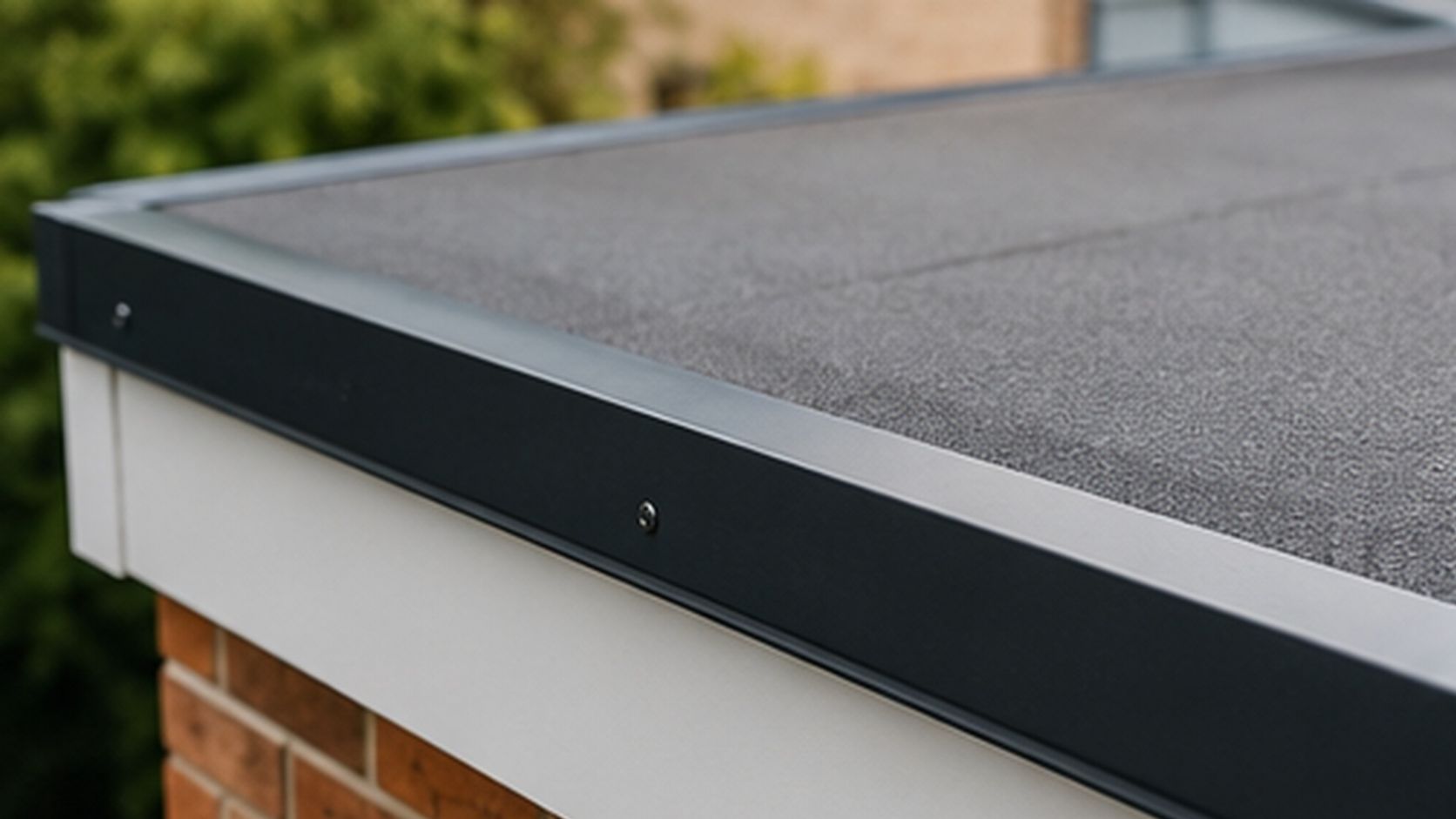
Roofing terminology can become confusing quickly because similar-looking aluminium profiles may perform different jobs. Roof edge flashing, drip trim, verge trim and general roof flashing are often discussed together, yet choosing the wrong product for a junction can create awkward installation and poor water management.
The easiest way to understand the difference is to focus on the location. A drip trim is primarily associated with the point where water needs to leave a roof edge cleanly. Roof edge flashing is a broader description that can include folded aluminium used at roof perimeters, upstands, abutments and changes in level.
Rather than ordering from terminology alone, identify what the metal needs to cover and where rainwater should travel.
What Is Roof Edge Flashing?
Roof edge flashing is a formed metal profile used to finish or protect exposed roof-edge construction.
Depending on the detail, it can cover membrane terminations, timber edges, insulation, fascia transitions or other vulnerable junctions. It may include folds and returns that help the metal sit securely around the construction.
The exact profile can therefore vary substantially between projects.
What Is Drip Edge Trim?
A drip edge trim has a more specific purpose. It creates a defined edge from which rainwater can leave the roof perimeter.
This is important because water can follow the underside of a surface rather than dropping cleanly. A formed drip helps interrupt that path and direct the water towards the gutter or away from the façade.
Metal Profiles Ltd's roof edge drip trim guidance discusses the relationship between drip trim, gutter position, fascia and roof build-up on UK projects.
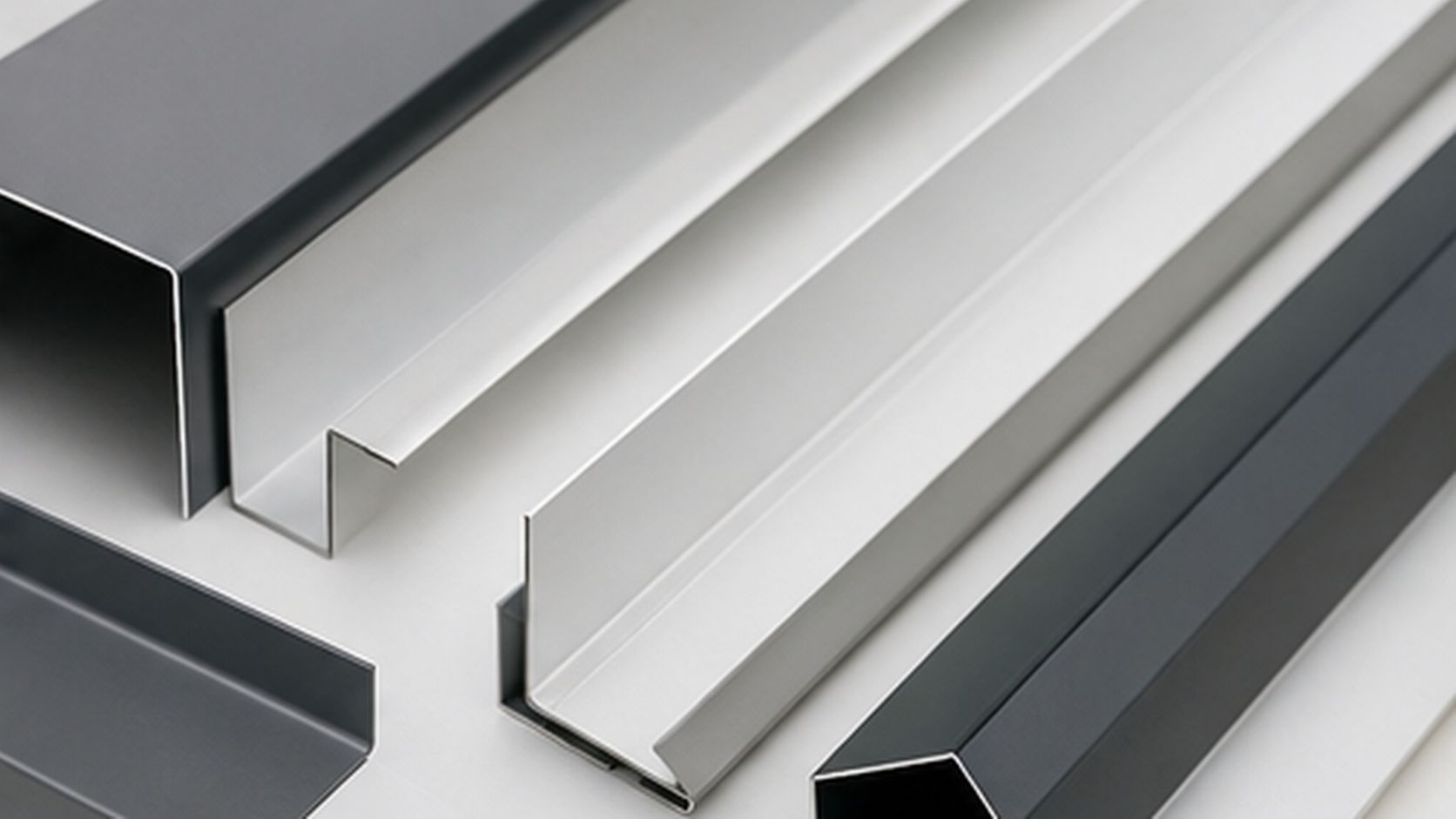
When Should You Use a Drip Trim?
A drip trim is particularly relevant where the roof surface ends above a gutter or exposed façade.
Flat roofs frequently use this type of detail because the membrane reaches the perimeter and needs a clean termination. The profile can protect the roof edge while creating a deliberate water break.
The gutter should be positioned to collect the run-off created by the edge detail.
When Is General Flashing More Appropriate?
Where a roof meets a wall, parapet or another roof level, the objective may not be simply to create a drip.
The metal may need to cover a junction, protect a membrane upstand or bridge between two materials. A different roof edge flashing profile can therefore be more appropriate.
Metal Profiles Ltd supplies aluminium roof accessories including roof flashing, drip trim, termination bars and related products for different roof conditions.
The Roof Covering Comes First
Neither drip trim nor roof edge flashing should be chosen independently from the roof covering.
The waterproofing manufacturer's detail may determine how the membrane terminates, laps or bonds around the edge. The aluminium profile needs to work with that arrangement rather than forcing the waterproofing into an unsuitable shape.
This is particularly important on flat roofs where the membrane itself provides the primary weather protection.
Face Depth
The visible metal face needs to cover the relevant roof build-up while remaining proportionate to the elevation.
A warm flat roof with substantial insulation may require a deeper profile. A shallow refurbishment roof may need much less.
Ordering the same standard face depth for every project can therefore leave part of the edge visible or create unnecessary visual bulk.
Gutter Position
A drip edge that throws water beyond the gutter is obviously poorly coordinated, but a gutter positioned too far beneath the fascia can be equally problematic.
The roof edge flashing, fascia and gutter need to be reviewed in section. This shows where water leaves the roof and whether the gutter can receive it.
The detail should make the water route obvious before installation starts.
Fascia Relationship
Some roofs use a visible fascia beneath the flashing. Others rely on the edge profile itself to provide much of the finished appearance.
Where aluminium fascia is present, the two metal faces should be proportioned together. An extremely deep flashing above a shallow fascia can look unbalanced, while two similar dark profiles can create a strong horizontal roofline.
Metal Profiles Ltd's fascia and soffit range can be reviewed alongside roof-edge products where the exterior uses coordinated aluminium.
Corners
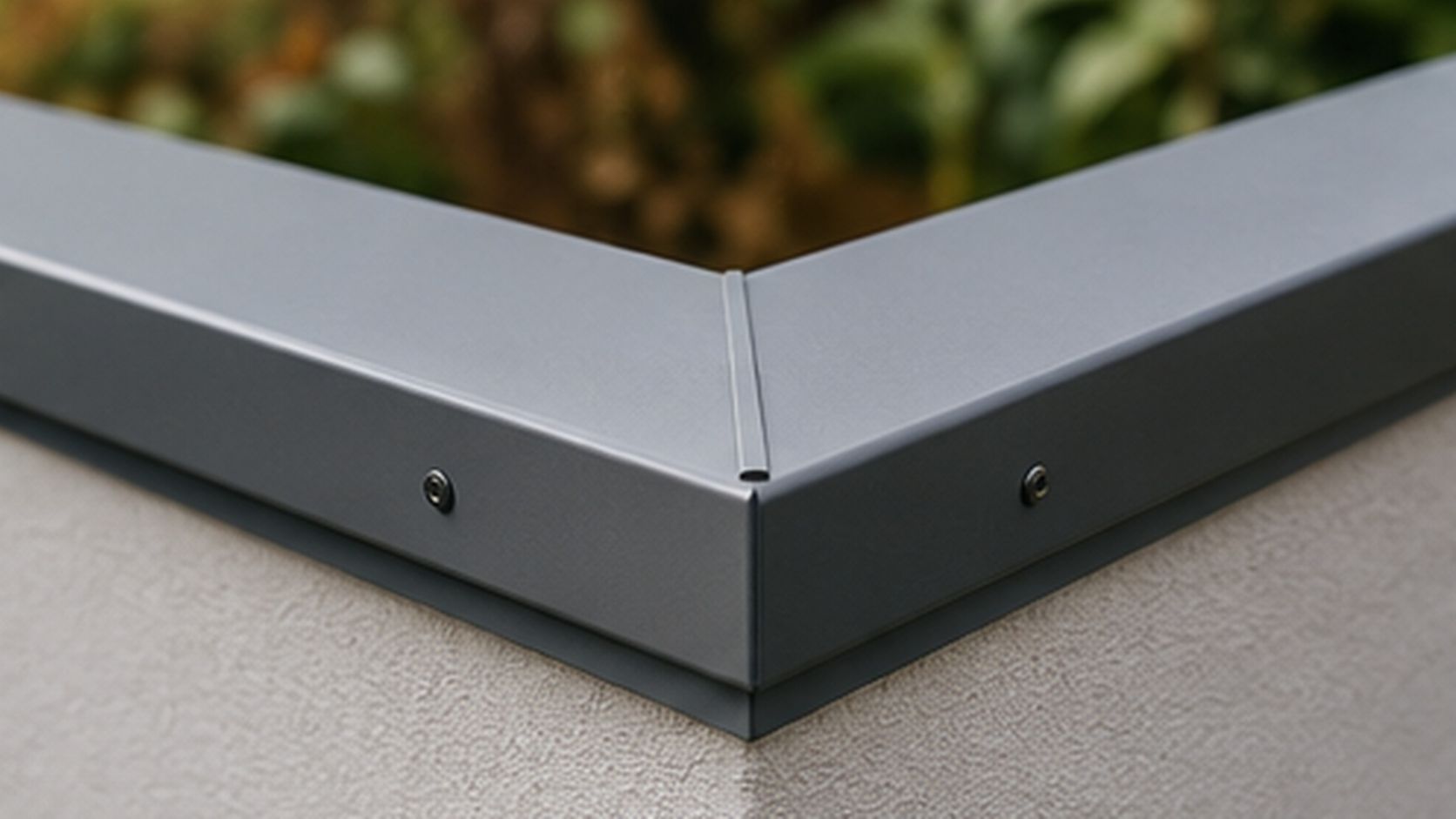
The difference between an average and premium roof edge is often obvious at corners.
Straight flashing is relatively easy to cut, but external corners require accurate alignment. Where standard corner pieces suit the geometry, they can create a much cleaner result than improvised overlapping sections.
Unusual angles should be measured rather than assumed.
 Roof Edge Flashing at Upstands
Where the roof meets a vertical wall, the metal detail may need to cover part of the upstand or protect a transition.
This is not necessarily the same profile used at the gutter edge. The roof waterproofing and wall finish need to be considered together.
A bespoke folded flashing can be useful where a standard angle leaves an awkward exposed junction.
Termination Bars
Certain roof systems use termination bars where membranes finish against vertical surfaces.
These components have a different function from a drip edge, despite being part of the wider roof accessories package.
Understanding each component's job prevents one product from being used simply because it happens to be aluminium and roughly the right shape.
Pitched Roofs
The terminology changes again on pitched roofs.
At the verge, the roof covering meets an exposed sloping edge. A purpose-designed verge trim can provide a more appropriate solution than a flat-roof drip profile.
Metal Profiles Ltd supplies aluminium verge trim for pitched roof edges where tiles meet the verge.
Colour
Colour does not determine which product is technically correct, but it strongly affects the finished appearance.
Dark powder-coated aluminium can coordinate with windows, gutters and fascia. Lighter colours can create a quieter roofline against render or cladding.
Choose the profile first, then select a suitable finish.
Standard Versus Bespoke
Standard roof edge flashing works well when the roof follows common dimensions.
Bespoke fabrication is useful where returns, depths or angles differ from normal details. Metal Profiles Ltd's made-to-measure aluminium flashing guidance covers project-specific roof edges, abutments and parapet junctions.
A simple sketch with clearly identified dimensions is often enough to communicate a custom fold more effectively than a long written description.
Refurbishment
When replacing an old edge, do not assume the original product was technically correct simply because it remained in place for years.
Persistent staining, exposed membrane or repeated sealant repairs can indicate that the existing detail was never ideal.
Use the refurbishment to understand the roof build-up and choose a profile that resolves the current condition properly.
Weather Protection
For projects in England, Approved Document C provides government guidance relating to the resistance of roofs and other building elements to moisture.
The practical lesson is that edge flashing should form part of a coherent moisture-management strategy rather than being treated purely as decorative metalwork.
Waterproofing, falls, flashing and drainage need to function together.
Frequently Asked Questions
Is drip trim a type of roof edge flashing?
Yes, it can be considered a specific roof-edge flashing detail designed around water leaving the perimeter.
Can I use the same trim at every roof edge?
Not necessarily. Gutter edges, wall junctions and pitched verges can require different profiles.
Does the roof membrane go over the flashing?
That depends on the roofing system. Follow the relevant membrane manufacturer's edge-detail requirements.
Can roof flashing be bespoke?
Yes. Custom folds can be produced for unusual roof depths and junctions.
Does aluminium flashing come in different colours?
Architectural aluminium can be available in a range of finishes depending on the selected product.
What is the main difference between flashing and drip trim?
Drip trim focuses specifically on creating a controlled water departure point, while flashing covers a wider range of protective roof junctions.
Metal Profiles Ltd is a UK manufacturer of aluminium architectural products, including roof flashing, drip trims, verge details and related roof accessories. Standard profiles suit many common roof conditions, while bespoke aluminium can be considered where a roof junction requires a different fold, depth or return. Accurate sections and project measurements help establish which roof-edge detail is appropriate. For product information or project requirements, Contact Metal Profiles Ltd.


Is it true that you live with dogs and children?
These pillow protectors are made of terry fabric and come in a range of colors.
These protectors are soft and ideal for people with sensitive skin.
There are various alternatives and ideas for these protectors, but it is up to you to pick the protectors that are most comfortable for you.Some of the Types of Pillow Protectors and their Qualities1.
Isn't this what we desire in the summer, that our room offers us fresh feelings so that we may be happy?
Water spills, perspiration, stains, and other mishaps may occur, causing damage to the pillows and disrupting your good night's sleep.
