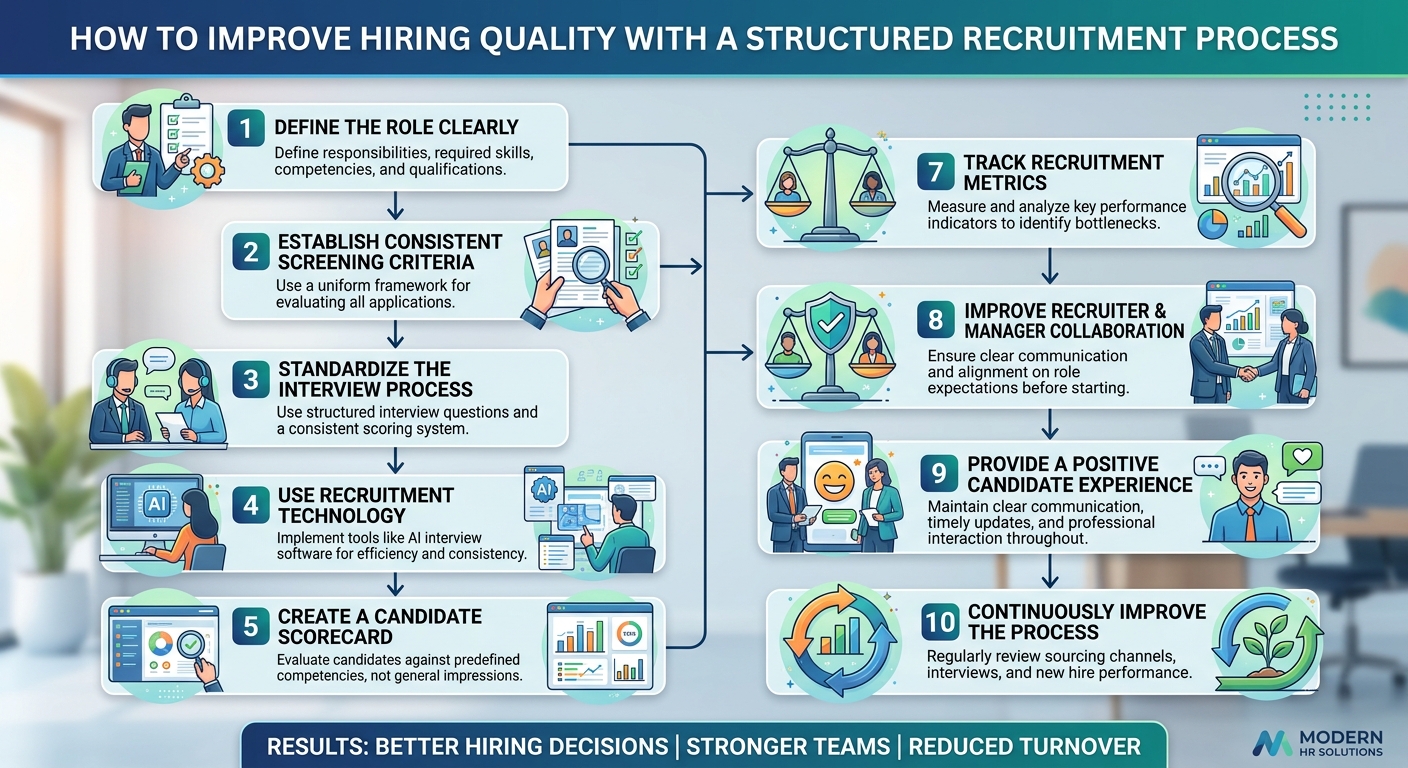
Hiring the right employees is essential for building a productive and successful organization. A strong hire can improve team performance, contribute new ideas, and support long-term business growth. However, poor hiring decisions can result in high turnover, wasted resources, lower productivity, and additional recruitment costs.Many hiring problems occur because recruitment processes are inconsistent. Candidates may be evaluated differently, interviews can vary between interviewers, and decisions may depend too heavily on personal impressions. A structured recruitment process helps companies make hiring more consistent, objective, and effective.
Define the Role Clearly
A successful recruitment process begins with a clear understanding of the position. Before searching for candidates, hiring teams should identify the responsibilities, required skills, experience, and competencies needed for the role.
It is also important to separate essential requirements from preferred qualifications. This prevents recruiters from rejecting potentially strong candidates simply because they do not meet criteria that are not actually necessary for success.
A detailed job description also helps attract candidates who understand the expectations of the position before applying.
Establish Consistent Screening Criteria
When recruiters review a large number of applications, inconsistent screening can lead to qualified candidates being overlooked. A standardized screening framework provides a more reliable way to compare applicants.
Screening criteria may include relevant experience, technical skills, communication abilities, industry knowledge, career progression, and evidence of previous achievements.
Using the same criteria for every candidate makes the process more objective and helps recruiters focus on job-related qualifications.
Companies can also evaluate the effectiveness of their recruitment process using tools such as a hiring health score checker.Measuring recruitment performance can help identify weaknesses in candidate sourcing, screening, and overall hiring outcomes.
Standardize the Interview Process
Interviews are a critical part of recruitment, but they can become subjective without a consistent framework. One interviewer may focus on technical expertise while another concentrates primarily on personality or cultural fit.
A structured interview process gives every candidate a comparable opportunity to demonstrate their abilities. Hiring teams can prepare questions based on the competencies required for the position and use a consistent scoring system to evaluate responses.
Interviewers can still have natural conversations and ask relevant follow-up questions, but the core evaluation should remain consistent.
Use Technology to Improve Efficiency
Recruitment technology can help hiring teams reduce repetitive work and improve consistency. AI-powered solutions can assist with activities such as candidate assessment, screening, interviewing, and evaluation.
Organizations looking to streamline interviews can consider AI interview software. Such technology can help standardize parts of the interview process and provide recruiters with additional information when evaluating candidates.
However, technology should support human decision-making rather than completely replace it. Recruiters and hiring managers should continue to review results and consider the broader context before making final decisions.
Create a Candidate Scorecard
A candidate scorecard gives interviewers a shared framework for evaluating applicants. Instead of relying on general impressions, interviewers can rate candidates against predefined competencies.
A scorecard might evaluate:
* Technical or functional skills
* Communication
* Problem-solving ability
* Relevant experience
* Collaboration
* Role-specific competencies
Using a defined rating scale makes candidate comparisons easier and encourages interviewers to support their evaluations with evidence.
Scorecards are particularly useful when multiple people are involved in a hiring decision because they create a common language for discussing candidates.
Reduce Hiring Bias
Unconscious bias can influence recruitment decisions even when hiring teams have good intentions. Structured recruitment can reduce this risk by ensuring that candidates are evaluated against consistent, job-related criteria.
Companies can use standardized interview questions, predefined scoring systems, multiple evaluators, and documented feedback to make hiring decisions more evidence-based.
The objective is not to remove human judgment from recruitment but to ensure that important decisions are based primarily on relevant qualifications and demonstrated capabilities.
Track Recruitment Metrics
Improving hiring quality requires organizations to measure recruitment performance over time. Useful metrics include time to hire, offer acceptance rate, candidate conversion rates, interview-to-offer ratio, new-hire retention, and quality of hire.
These metrics can reveal where problems exist in the recruitment funnel.
For example:-a company may receive many applications but have difficulty identifying qualified candidates. Another organization may have an effective screening process but lose strong candidates because the interview process takes too long.
Regularly reviewing recruitment data allows hiring teams to identify these issues and make targeted improvements.
Improve Recruiter and Hiring Manager Collaboration
Recruiters and hiring managers should agree on expectations before recruitment begins. They should discuss the responsibilities of the position, required qualifications, interview stages, evaluation criteria, and decision-making process.
Clear communication helps recruiters identify suitable candidates more effectively and prevents hiring requirements from changing unexpectedly during the recruitment process.
When both sides have a shared understanding of what success looks like, candidate evaluation becomes faster and more consistent.
Provide a Positive Candidate Experience:-
Hiring quality should not come at the expense of the candidate experience. Strong candidates are more likely to remain engaged when companies communicate clearly about interview stages, timelines, and expectations.
Timely updates and professional communication can strengthen an organization's reputation and encourage qualified candidates to complete the recruitment process.
A well-organized hiring process also gives candidates a clearer understanding of the company and the role they may join.
Continuously Improve the Hiring Process
A structured recruitment process should be reviewed regularly. Companies should examine which sourcing channels produce the best candidates, where applicants leave the process, which interview stages provide the most useful information, and how new hires perform after joining.
Recruitment needs change as businesses grow, job requirements evolve, and new technologies become available. Continuous evaluation ensures that the hiring process remains effective and aligned with organizational goals.
Conclusion
Improving hiring quality requires more than simply finding more candidates. Companies need a recruitment process that is structured, measurable, and consistent.
By clearly defining roles, standardizing candidate screening, using structured interviews, implementing scorecards, reducing bias, tracking recruitment metrics, and applying technology appropriately, organizations can make better-informed hiring decisions.
A structured approach does not eliminate human judgment. Instead, it gives recruiters and hiring managers better information and clearer standards for making important decisions. Over time, continuous measurement and improvement can help companies build stronger teams, reduce costly hiring mistakes, and create a more effective recruitment strategy.



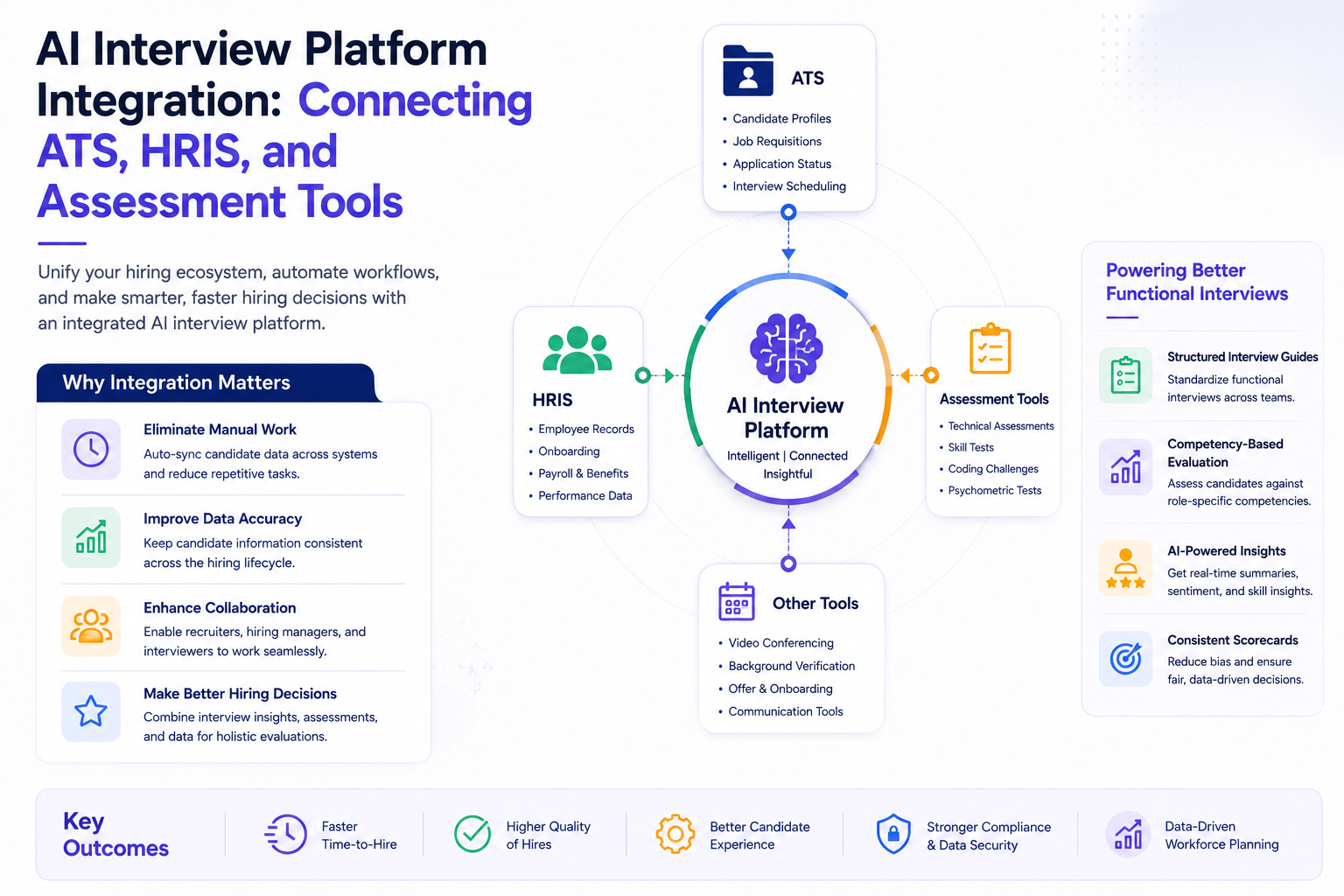
Modern recruitment is no longer powered by a single application. Enterprise hiring teams rely on multiple technologies—from Applicant Tracking Systems (ATS) and Human Resource Information Systems (