


China Trademark Search refers to the process where an applicant, before filing a trademark registration application, searches and retrieves existing conflicting registered trademark rights. In simple terms, it means checking whether there are any identical or similar trademarks (in terms of name or logo) compared to the one the applicant intends to register, and whether it complies with the regulations of China trademark registration.
Please note: Mainland Chinese trademarks are not valid in Taiwan and Hong Kong. To register a Taiwan trademark or Hong Kong trademark, Taiwan trademark search and Hong Kong trademark search are likewise required for both regions.
There are two ways to conduct a trademark search:
1. Searching on the China trademark office website yourself (Free).
The search address for the China National Intellectual Property Administration (CNIPA) website is:
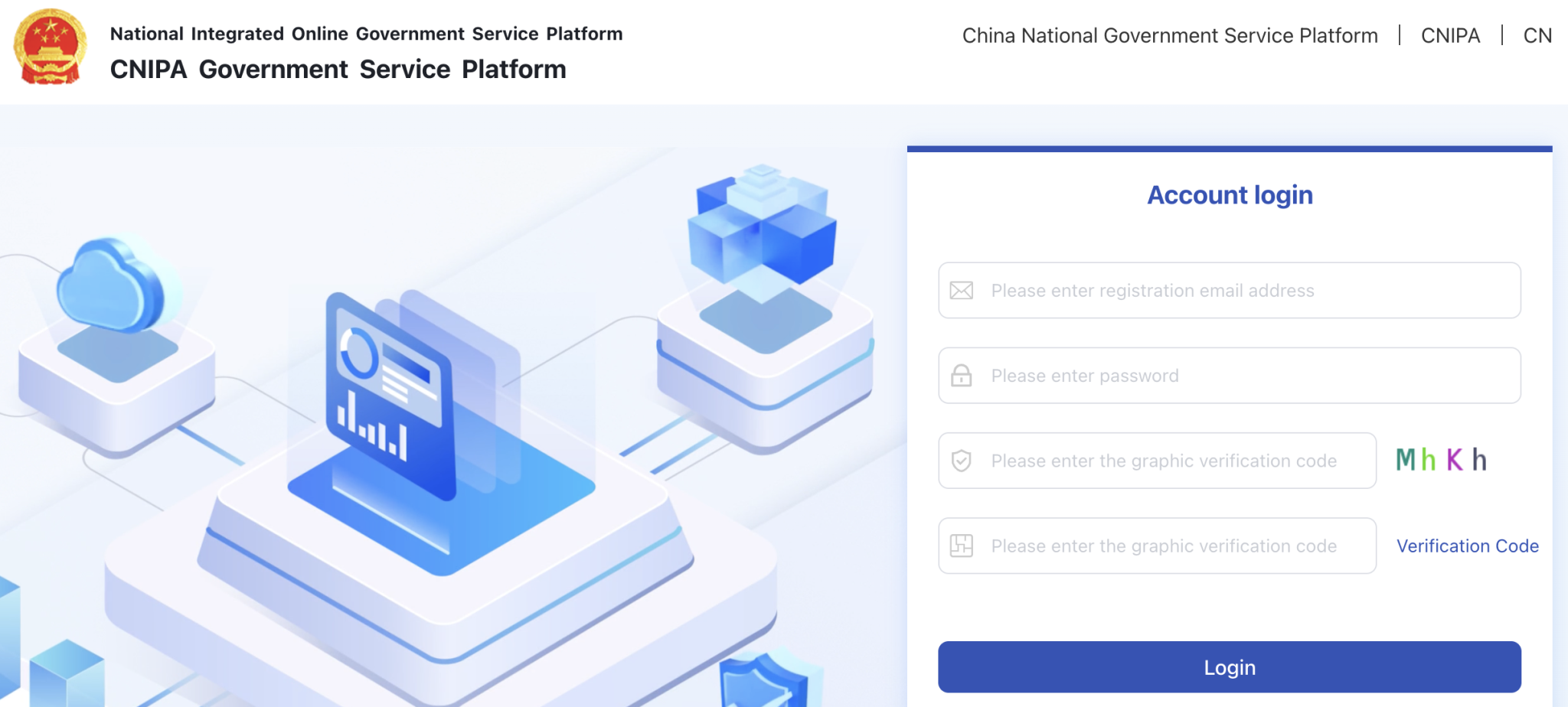
https://sso.cnipa.gov.cn/am/#/en-login
 CNIPA Trademark Search - Personal User Registration
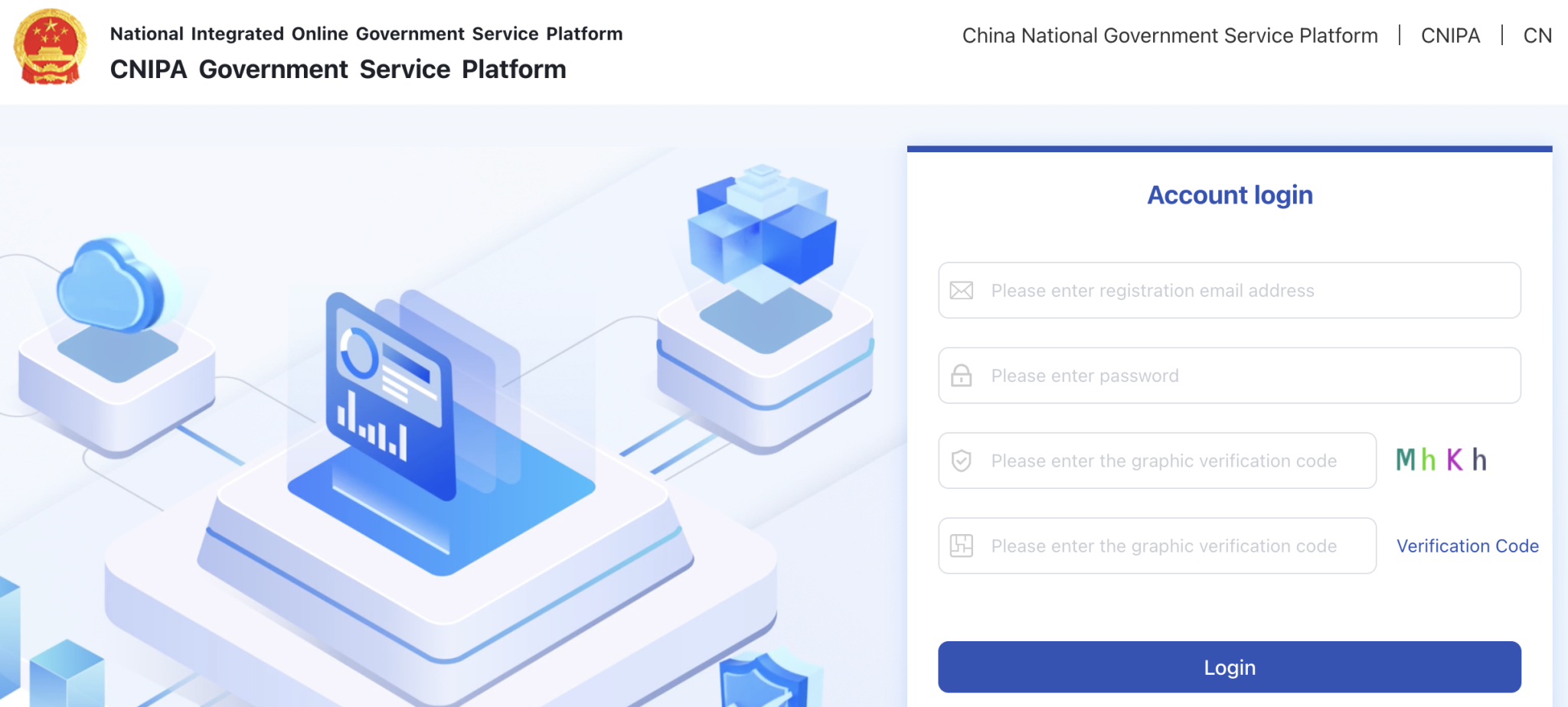
First-time use requires user registration. Register using your email address, and complete the registration by entering the verification code sent to your email inbox.
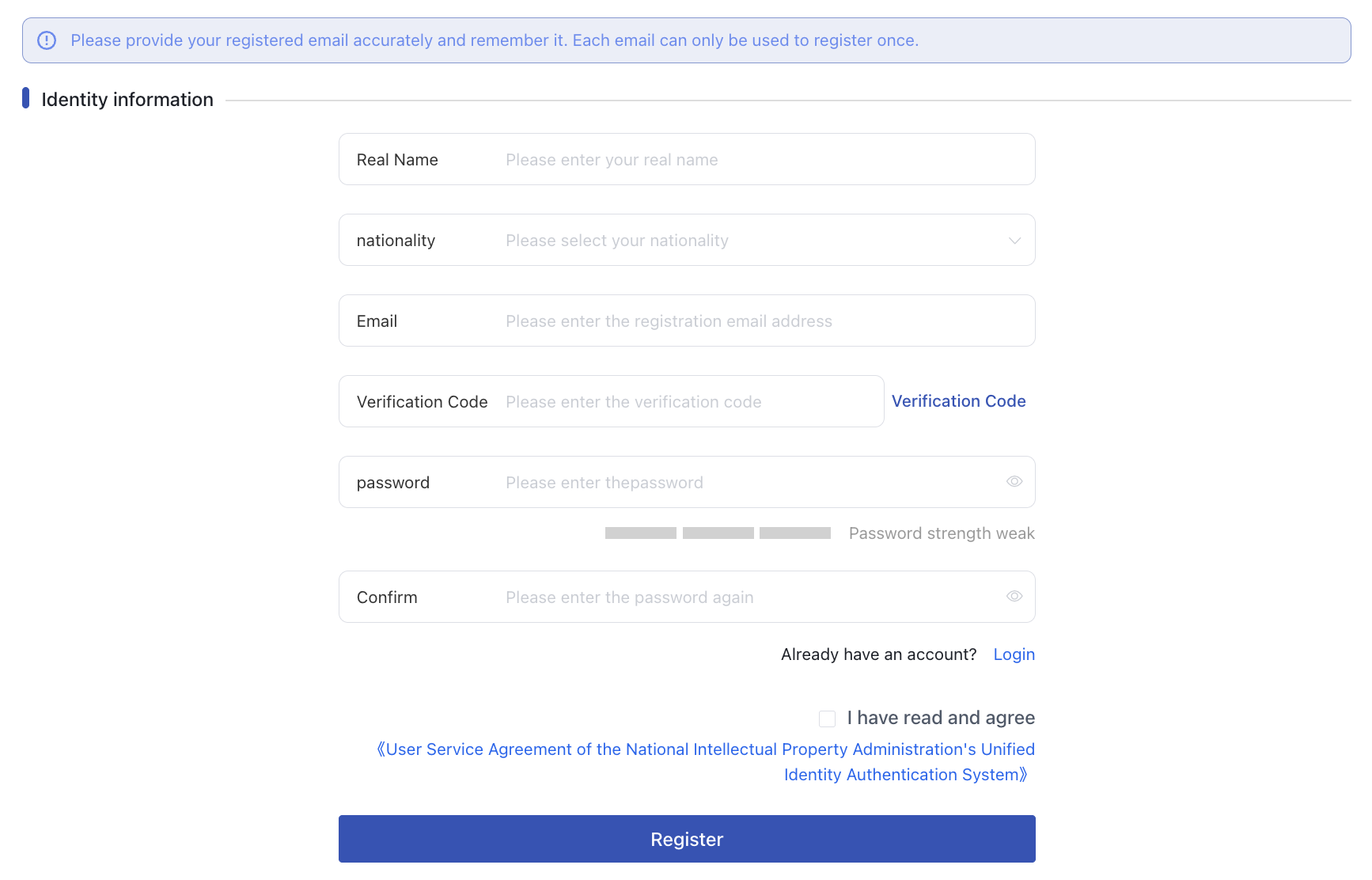 CNIPA Trademark Search - Personal User Registration Method
After completing the registration and logging in, the following page will appear.
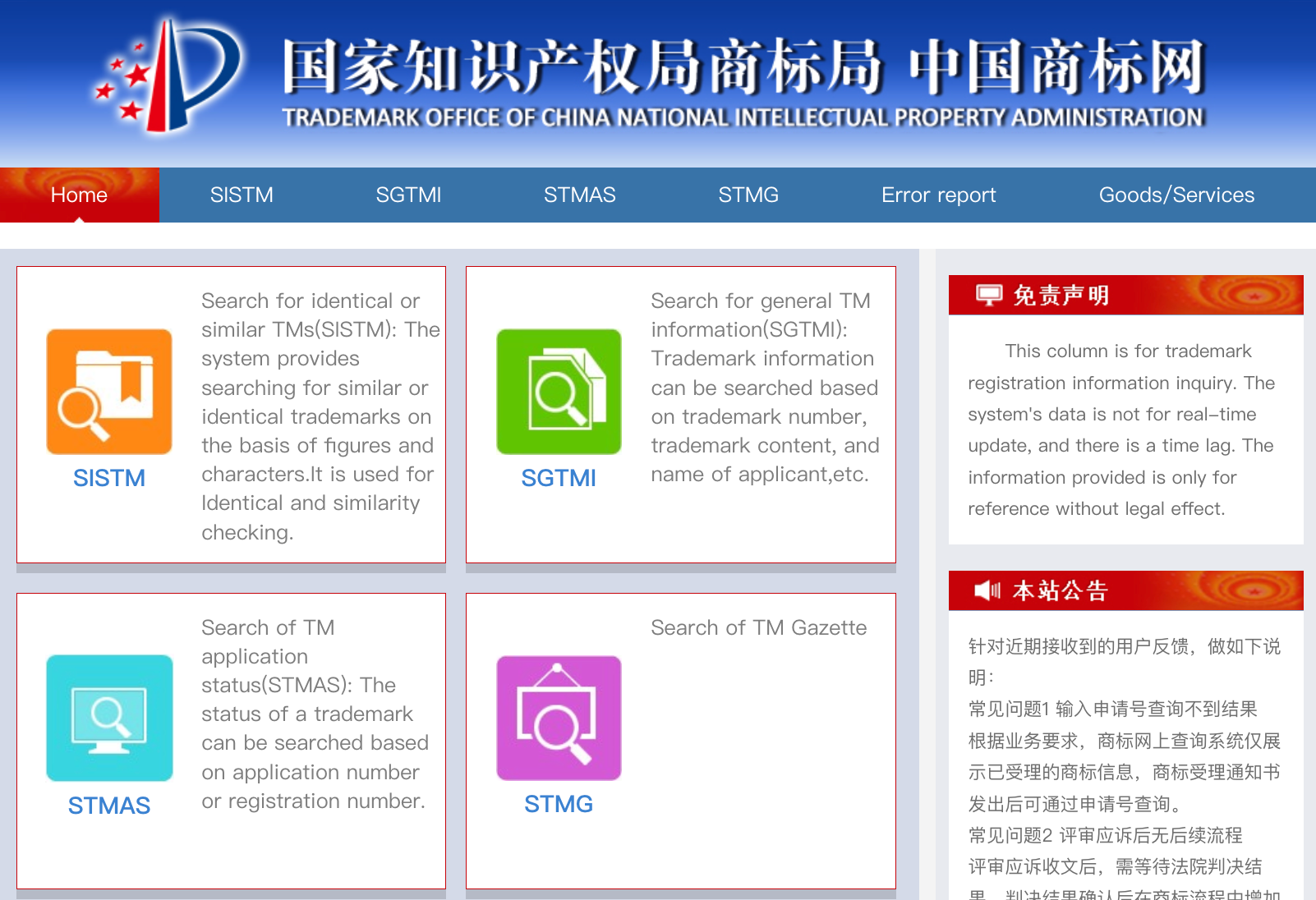 CNIPA Trademark Search
Click on “SISTM,” then enter the content you want to search. For example, for the International Classification number: trademarks are divided into 45 classes. You can click the search icon on the right to find the class your goods or services belong to. For instance, for clothing, enter 25. Similar Group Number refers to the subcategories under a main class. Similarly, click the search icon on the right to see many subcategories under Class 25, each with a number in front – that is the Similar Group Number. For example, if you want the “shoes” subcategory under Class 25, enter the Similar Group Number for shoes.
There are seven search methods: Chinese characters, Pinyin, English, numbers, acronyms, graphic codes, and search by image. The first five are easy to understand. The graphic search needs explanation. For graphic searches, you need to refer to the graphic code help link. It explains in detail the codes corresponding to various graphic elements. For example, to search for a circle, enter the code for a circle, and the results will show all graphic trademarks containing circles. Finally, enter the search content in the “Trademark content” box.
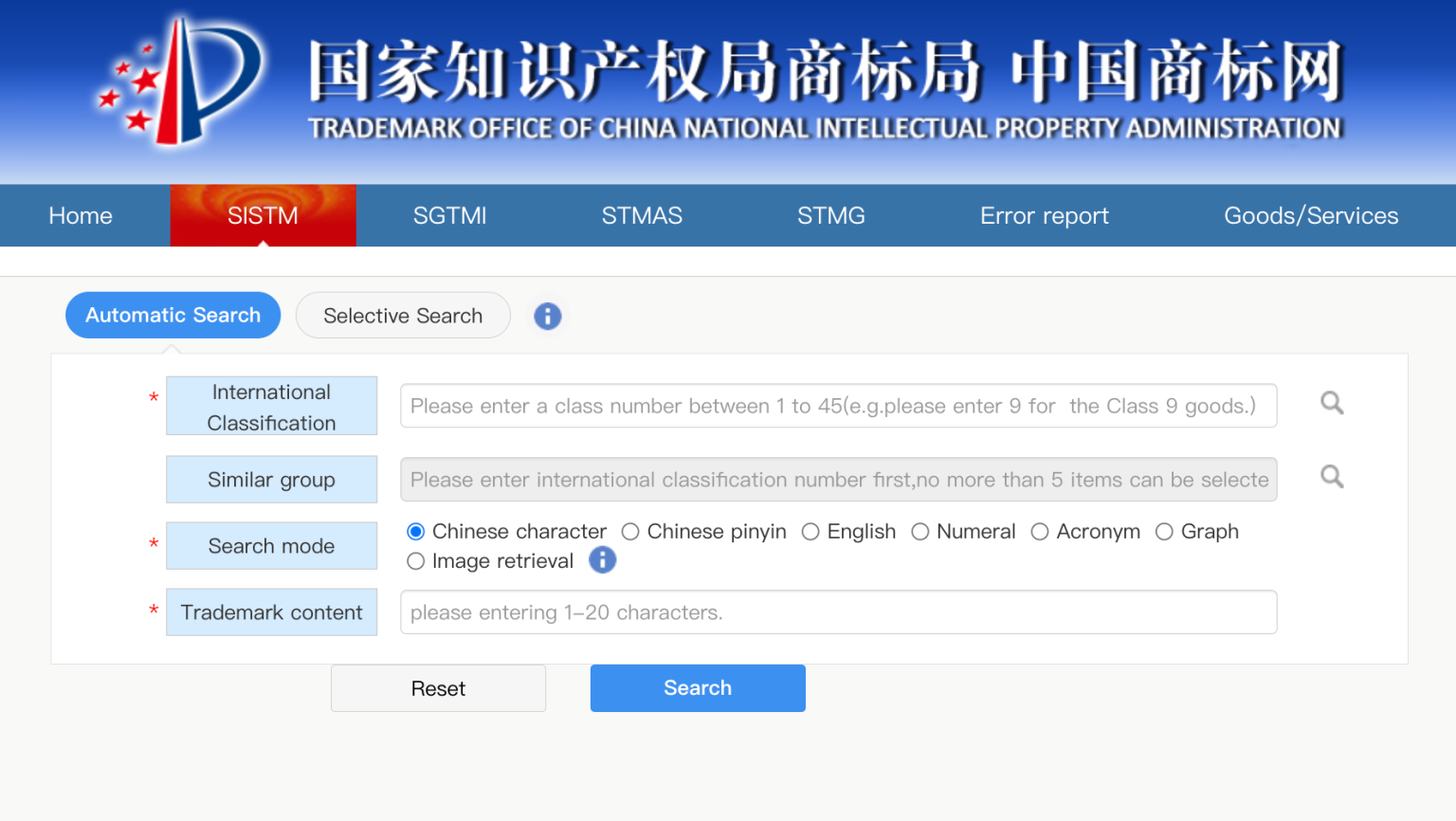 CNIPA Trademark Search Interface
However, it’s important to note that even if you see the search results, without professional trademark knowledge and years of experience, you might still be completely confused. Setting aside years of experience in the trademark industry, the book on trademark search judgment alone is a substantial volume.
2. Hiring a trademark agency to search. Generally, graphic searches are charged, but text searches are free.
How does a China trademark agency conduct a trademark search?
Let’s take an example: If a game development company wants to register a trademark for a game, the first step before the game’s launch is to register the core classes for the trademark: Class 9 for “computer game software,” “downloadable computer application software,” etc.; Class 28 for “game apparatus,” “game machines,” etc.; Class 41 for “providing online games on a computer network,” etc.; Class 42 for “computer software design,” “website services,” etc. After the game product has received a significant market response, you can choose to register related derivative classes, such as Class 16 for “pictures, posters, stationery,” etc.; Class 35 for “advertising,” etc.; Class 38 for “internet chat rooms,” etc. It is best to also apply for copyright registration for the game’s LOGO and game name, which is beneficial for later rights enforcement. Step 2: Check the distinctiveness of the trademark and whether it has any adverse effects. Step 3: Search for prior identical or similar trademarks. Step 4: Analyze and filter the trademark search results. Step 5: Issue a trademark search report.
However, there is a prerequisite for this: only ethical companies will conduct a responsible search. A reputable trademark agency will stand in the client’s shoes and honestly inform the client of the registration success rate for the name. If the success rate is too low, they will advise the client not to register. Unscrupulous agents, on the other hand, hope the client’s registration fails, so they can later charge a rejection review fee several times the market price. The rejection review fee is much higher than the registration fee. The usual practice of unscrupulous agents is to offer registration at zero or extremely low agency fees, not conducting a proper preliminary search for the client or just giving a perfunctory one, and even recommending registration when they know the success rate is low.
One more thing: whether you search yourself or entrust a trademark agency, there will be a one-month blind period, which is unavoidable.


First, what is a combined trademark?
A combined trademark is made up of m

The US Patent and Trademark Office (USPTO) has announced a new Trademark Rule, which requires all applicants, registrants, or parties for Trademark Application whose domicile isn’t located within the US or its territories to be represented https://www.kashishworld.com/blog/new-uspto-trademark-rule-requires-foreign-applicants-to-have-a-us-attorney/