A button that feels inconsistent, requires too much pressure, or does not fit properly into a compact electronic design can quickly become a product-development headache. That is where the right metal domes switch solution can make a significant difference.
From membrane switches and keypads to PCB and flexible-circuit applications, metal domes provide tactile feedback while helping create a reliable momentary switching function. But not every dome has the same shape, force, size, or mounting method. Understanding the basics makes it much easier to select the right component.
What Is a Metal Domes Switch?
A metal domes switch uses a thin stainless steel dome that functions as both a spring and an electrical contact point. On application of pressure, the dome deflects downwards to make electrical contact with the conductive pad. Once the pressure is removed, it resumes its normal state.
This basic operation is what provides the expected feel from a good-quality button. This depends on various aspects like dome geometry, dome size, actuation force, travel, contact construction, actuator construction, and the circuit beneath.
Best Technology Co., Ltd has been providing specialized services related to metal domes and dome arrays since 2006 from prototyping to production stage. It also talks about their engineering expertise, manufacturing expertise, quality control and multiple packaging options.
Why Choose a Metal Domes Switch?
A well-selected metal domes switch can provide several practical advantages for electronic interface designs.
First, it delivers clear tactile feedback, allowing users to recognize when an input has been activated. Second, the compact construction works well where PCB or membrane space is limited. Third, different dome geometries and force characteristics make it possible to match the switching component with the intended user experience.
The choice should not be based only on diameter. Designers should also consider the available PCB or membrane layout, desired operating force, travel, tactile response, actuator position, and assembly method.
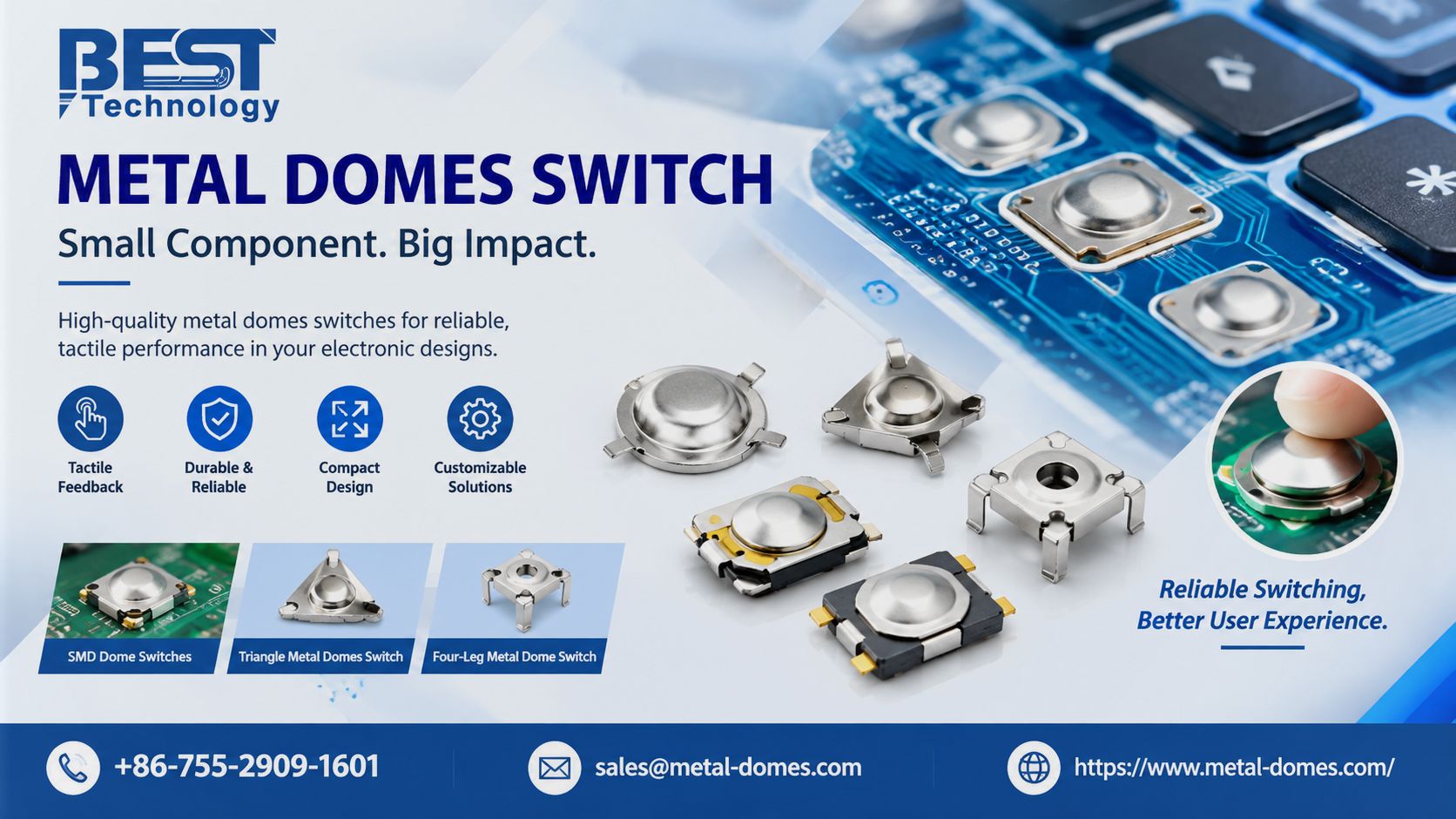
SMD Dome Switches for PCB Designs
SMD dome switches are designed for surface-mount applications and provide a different approach from traditional loose or adhesive-mounted domes. According to the official site, this type is designed for soldering onto PCB, FPC, or MCPCB, with a structure that incorporates the dome and an upper polyimide layer with a plunger and actuator.
SMD dome switches can be particularly useful when automated PCB assembly is important. Their design helps integrate the tactile switching function directly into a board-level manufacturing process.
When evaluating SMD dome switches, engineers should consider the board footprint, actuator arrangement, required tactile feel, and compatibility with the complete product assembly.
Triangle and Four-Leg Dome Options
Different products require different geometries. This is why selecting the correct metal domes switch shape is an important part of product development.
Triangle metal domes switch designs can be considered when the available layout calls for a triangular form factor. Their geometry provides a different support arrangement and tactile response compared with circular designs. The official product range includes triangle metal dome options in different specifications.
A Four-Leg Metal Dome switch provides another useful configuration. Its four supporting legs can offer stable positioning and a distinctive tactile response. Best Technology also offers four-leg versions with a center hole for applications where additional design flexibility is required.
The center-hole version can accommodate an LED or positioning feature through the opening, making it useful for certain backlit or alignment-sensitive interfaces. The published product information also indicates that dimensions, trip force, travel, rebound, and other characteristics can be adjusted according to project requirements.
How to Select the Right Metal Dome
Choosing a metal domes switch should begin with the actual application rather than simply selecting a standard part.
Consider these factors:
- Size: Make sure the dome fits the available switching area.
- Trip force: Select a force that provides the desired user experience.
- Travel: Check that the dome works correctly with the actuator and overlay.
- Shape: Compare round, triangle, four-leg, and other available configurations.
- Circuit: Ensure the dome matches the PCB, FPC, or membrane contact layout.
- Assembly: Determine whether loose, array, tube, tape-and-reel, or another packaging format is most suitable.
Best Technology provides different metal dome packaging options, including bulk, tube, tape and reel, and peel-and-place array formats. Its website also describes custom and prototype support for different project requirements.
Why Work With an Experienced Manufacturer?
The performance of a metal domes switch depends not only on the component itself but also on manufacturing consistency and engineering support. Small differences in dimensions, force, surface finish, or forming quality can affect the final tactile experience.
Best Technology Co., Ltd. offers both dome manufacturing and design of dome arrays along with prototyping, quality assurance and services for OEM/ODM clients. The company claims to have over 20 years of experience in the industry of metal domes and provides such certifications related to quality as ISO 9001:2015, ISO 13485:2016, REACH and RoHS.
Such a mixture of real manufacturing and engineering services can assist in developing a final solution from scratch.
Conclusion
The right metal domes switch can improve both the tactile experience and functional reliability of an electronic interface. Whether your project requires SMD dome switches, a Triangle metal domes switch, or a Four-Leg Metal Dome switch, the best choice depends on the application, circuit layout, force requirement, space, and assembly process.
For customized requirements, working with an experienced manufacturer can simplify specification, prototyping, testing, and production. Best Technology Co., Ltd. provides metal dome, dome array, and related switching solutions for projects ranging from prototypes to mass production.
Ready to find the right metal dome solution for your application? Contact Best Technology to discuss your required size, force, shape, and assembly format.
Frequently Asked Questions
1. What is a metal domes switch?
A metal domes switch uses a formed metal contact that snaps when pressed, providing tactile feedback and temporarily closing an electrical circuit on a PCB, FPC, or membrane.
2. Where are SMD dome switches used?
SMD dome switches are designed for PCB, FPC, and MCPCB applications where surface-mount assembly and compact tactile switching are important for the finished electronic product.
3. What is a Triangle metal domes switch?
A Triangle metal domes switch uses a triangular dome geometry designed for compatible contact layouts, offering an alternative tactile configuration where space or circuit design requires it.
4. What makes a Four-Leg Metal Dome switch different?
A Four-Leg Metal Dome switch uses four supporting legs for its structure and can provide stable positioning and a distinctive tactile response for compatible PCB or membrane designs.
5. How do I choose the right metal domes switch?
Compare dome size, shape, trip force, travel, actuator design, circuit layout, packaging, and application requirements before selecting the most suitable switching component.

Lots of customers are asking for SPA enclosure when we were selling pool enclosures.
We planned to build a dome for SPA cover in the beginning.
When we saw bubble tents getting popular, then we changed our mind, we decided to make a 100% transparent clear dome for living under the stars.
After several version’s amendment, the dome we are selling now it’s the 4th version.
Have been in polycarbonate industry for two decades, we just love all the magic ideas from this strong, clear, durable, recyclable material– Polycarbonate.