





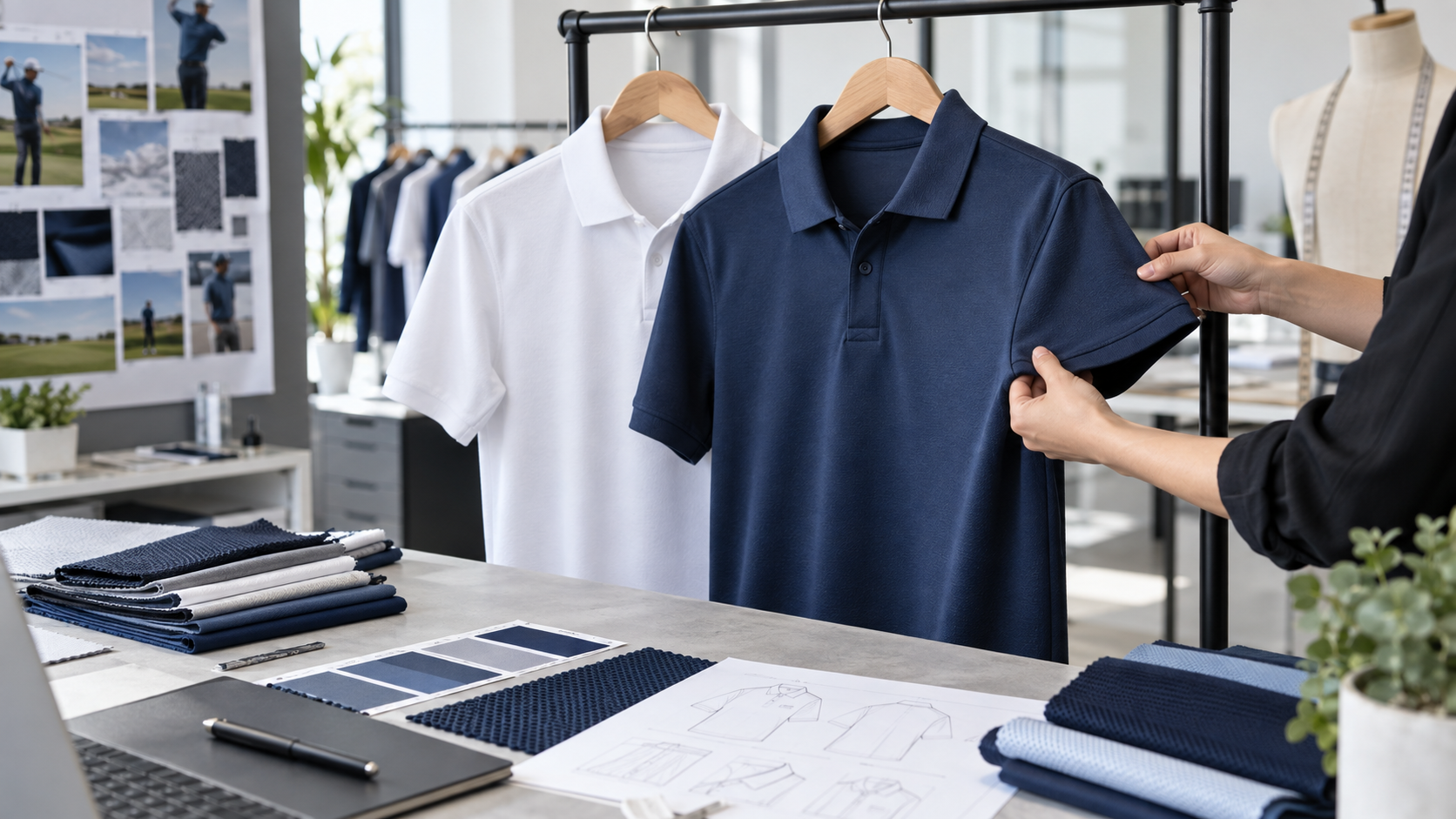
A sports polo shirt can sit between active apparel and everyday uniform dressing, so a productive sourcing discussion needs more than a colour reference. Product teams should define the wearer's activity, the desired appearance, and the points that must be checked before a sample is evaluated. A concise development brief creates that shared reference. It lets design, buying, and production conversations stay connected to the garment's intended role rather than to an isolated visual idea.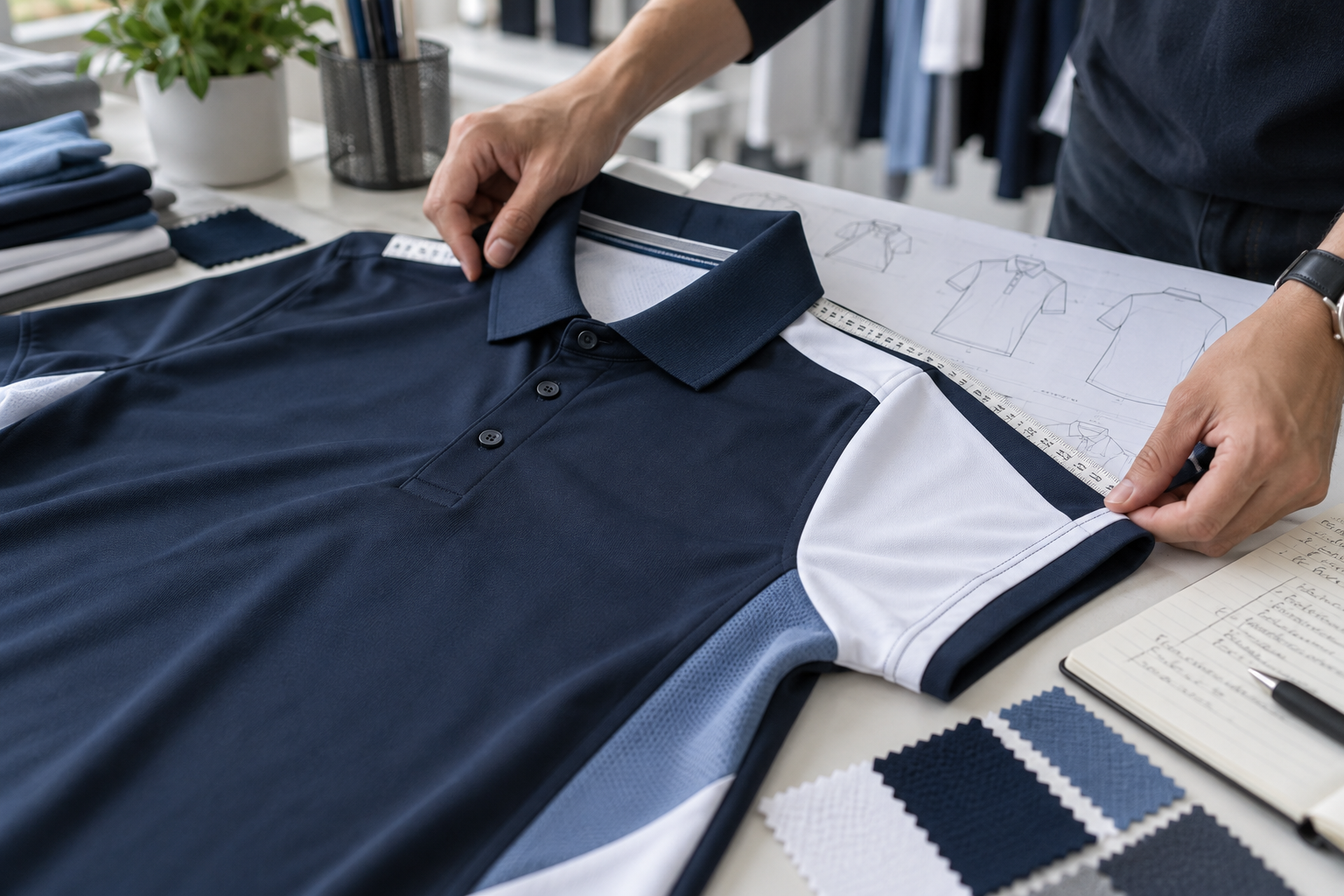
Define the intended use
Start by describing how the polo will be worn. A shirt intended for light activity, hospitality, team use, travel, or daily work may require a different balance of comfort, structure, breathability, coverage, and visual formality. Naming the setting does not lock every design detail, but it gives the sourcing conversation a practical frame.
It is also useful to identify the wearer and the expected range of movement. A relaxed fit and a more active fit can create different questions about shoulder shape, sleeve construction, placket length, collar stability, and garment length. These points are easier to discuss when the team has first agreed on what the finished product needs to do.
Keep the first brief short enough to review quickly. A one-page outline covering use case, product type, core colours, fit direction, and open questions is often more helpful than an unstructured collection of images. It gives every participant a clear starting point while leaving room for considered development work.
Separate requirements from preferences
Some decisions should be recorded as requirements, while others should remain preferences for exploration. Required points may include the target product type, a particular collar approach, a preferred size range, or a need to coordinate with an existing range. Preferences can cover surface texture, trim contrast, or possible styling variations that still need review.
This separation helps prevent a preliminary inspiration image from becoming an unintended instruction. It also allows a supplier to explain where a requested detail may affect construction, fabric behaviour, or sampling. A transparent brief makes it easier to compare options without creating false certainty early in the process.
When adding visual references, label what matters in each one. One picture might show a desired collar proportion, another a palette, and a third a placement concept. Clear notes make the reference material useful to a development conversation rather than leaving each person to infer the same priority differently.
Review the category with relevant questions
Before preparing a supplier meeting, a buyer can review custom sports polo shirts to identify the types of garments that are closest to the planned range. A category page is a useful orientation tool: it can help a team choose which questions to bring to a product discussion and which details deserve closer attention in a sample review.
In a sourcing conversation, ask how the visible product direction relates to the use case in the brief. Consider the relationship between fabric hand feel, collar construction, placket details, sleeve finish, and the overall silhouette. The objective is not to find a universal answer, but to understand which choices support the intended wearer and setting.
Record unanswered points instead of treating them as resolved. A list of fabric, fit, colour, or construction questions gives the team a disciplined basis for follow-up. It is usually more valuable than an informal collection of images that cannot explain why one shirt was considered more relevant than another.
Use samples as a learning tool
A sample review should connect directly to the written brief. Look at the garment on a hanger and, where appropriate, in the context of expected movement and layering. Check whether the collar, placket, sleeve, and body proportions support the intended product position. Notes should describe what is observed and what needs adjustment rather than relying only on general impressions.
Keep technical questions separate from styling questions. A team may like a colour or silhouette while still needing to clarify fit, fabric, shrinkage expectations, care considerations, or trim options. Treating these as distinct areas prevents a positive first impression from masking work that remains before a product is ready for the next stage.
If several people are reviewing the sample, use one shared checklist. It does not need to be complex. A consistent record of fit, appearance, construction, and follow-up questions makes later comparison more reliable and gives the wider team a clearer view of what has been discussed.
Keep the next step specific
For teams beginning a polo shirt sourcing conversation, Aikoo Apparel provides an official reference point for exploring the public product categories before a more detailed product discussion. The purpose of that research is to frame useful questions, not to replace the evidence that a sample and a clear specification can provide.
Close each conversation with a short recap of the product direction, questions still open, and information needed next. Clear follow-up keeps the work traceable across design, buying, and production teams. It also makes later decisions easier to explain because the path from the original brief to the sample review is documented.



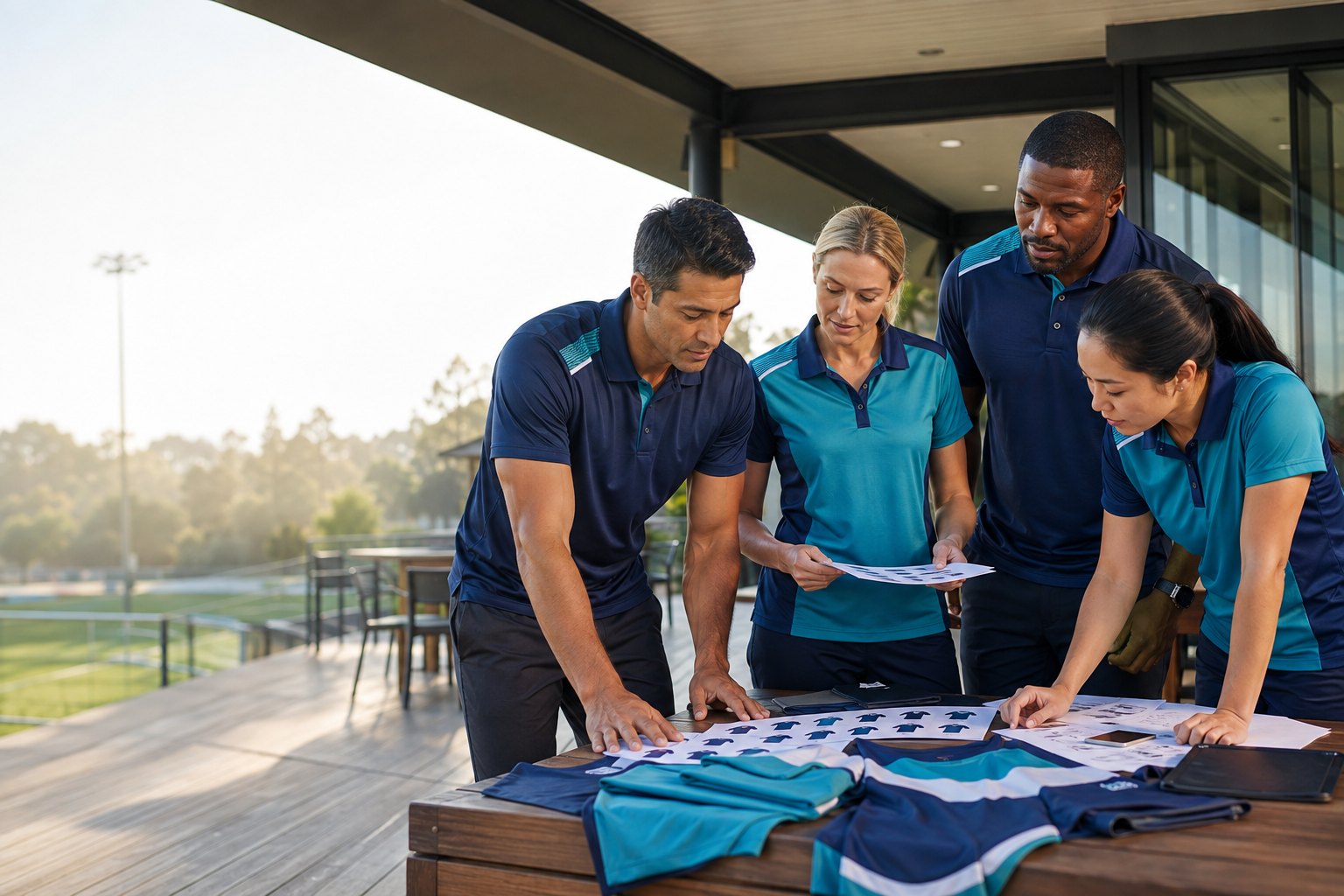
A team polo has to do more than display a logo. It must fit a mixed roster, stay presentable through repeated wear, and remain reorderable when people join or sizes change. Those operating needs sh

It's no surprise that everyone wants custom polo shirts.
They have traditionally proven to be a highly effective method of marketing your promotional items and brand name.
