


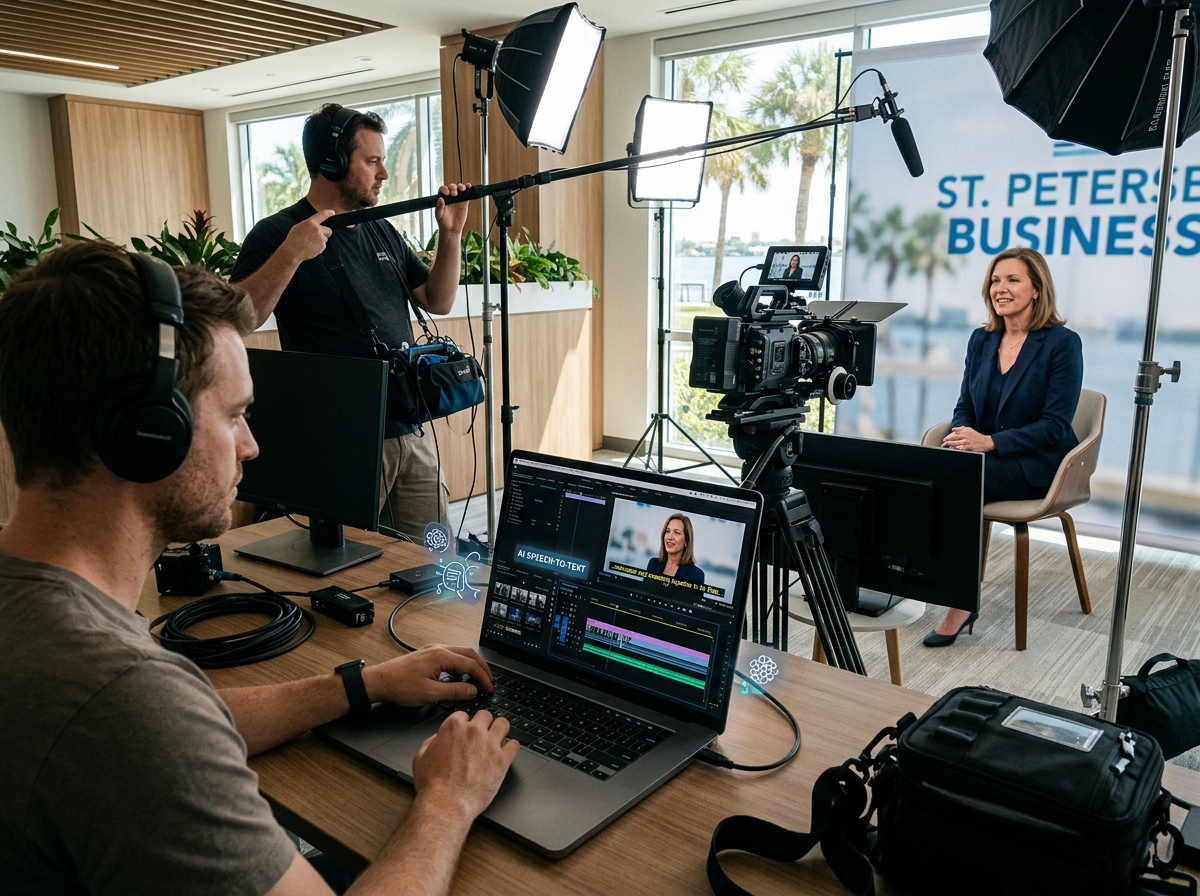
Artificial intelligence is changing how businesses create video. AI tools can now help write scripts, generate visuals, create voiceovers, produce captions, translate content, edit footage, and turn longer videos into short social clips.
For businesses in St. Petersburg, Florida, this creates an important question heading into 2027:
Should businesses use AI video, professional video production, or both?
The answer depends on what the video needs to accomplish. AI can make parts of video production faster and more scalable, but professionally produced video remains important when a business needs to establish its identity, showcase real people and locations, document customer experiences, or create high-value brand assets.
For many companies, the emerging strategy is therefore not AI versus professional video production. It is determining where each belongs in the production process.
AI Is Already Changing Corporate Video Production
AI video is no longer experimental.
Wistia's 2026 State of Video Report, based on a survey of more than 900 professionals and analysis of more than 13 million videos, found that more than one-third of teams already use AI in their video workflows, while nearly another quarter plan to start. More than half are also increasing their AI spending.
However, businesses are not necessarily replacing cameras, production crews, editors, or professional video agencies with fully AI-generated videos.
Wistia found that AI is most commonly being used during pre-production, particularly for planning, ideation, and scriptwriting.
This distinction matters.
AI is increasingly becoming a production tool, rather than simply an alternative to production.
Where Does AI Video Make Sense?
AI can be particularly valuable when speed, volume, and repurposing are priorities.
A St. Petersburg business might use AI to:
- Brainstorm video concepts
- Develop interview questions
- Create first-draft scripts
- Generate captions and subtitles
- Translate or dub existing videos
- Identify highlights from longer footage
- Turn interviews into short social clips
- Create multiple versions for different platforms
- Assist with editing and post-production
- Repurpose one corporate video into additional marketing content
Wistia's separate 2026 AI Video Marketing Trends research found that 51% of marketers use AI for video ideation and scripting.
That makes AI particularly useful behind the scenes.
Instead of spending creative resources on repetitive production tasks, businesses and video teams can use AI to accelerate parts of the workflow while keeping people responsible for strategy, storytelling, filming, and final quality control.
Where Does Professional Video Production Still Matter?
There are situations where generating a video from a prompt cannot provide what a business actually needs.
Consider a St. Petersburg company producing:
A customer testimonial.
The value comes from seeing and hearing an actual customer explain an experience.
A company culture video.
Employees, offices, job sites, leadership, and company culture need to be authentic to the organization.
A corporate brand story.
Professional lighting, cinematography, interviews, sound, editing, and storytelling can shape how customers perceive the company.
A facility or location video.
Businesses cannot accurately showcase their St. Petersburg restaurant, office, manufacturing facility, medical practice, hotel, construction project, or other physical location with generic AI imagery.
This is one reason professional **corporate video production services** remain relevant even as AI adoption grows.
In fact, Wistia reports that approximately a quarter of companies outsource video creation to freelancers or video production agencies.
Authenticity Is Becoming More Important, Not Less
The rapid growth of generative AI may actually increase the value of authentic business footage.
HubSpot's 2026 social media research found that **76% of marketers say authentic content performs better than highly produced content**.
That does not mean businesses should abandon professional production.
Instead, it changes what "professional" should mean.
Corporate video does not always need to look like a television commercial. A professional production team can create polished brand films while also capturing natural interviews, behind-the-scenes footage, vertical videos, customer stories, employee clips, and other content designed to feel native to social platforms.
The objective is not simply higher production value.
It is credible production value appropriate to the platform and audience.
Short-Form Video Should Be Part of the 2027 Strategy
Another major consideration for St. Petersburg businesses is how a corporate video will be distributed.
HubSpot reports that short-form video was the highest-ROI media format reported by marketers in 2026, with 48.6% placing it among their top-performing formats.
This creates an opportunity to rethink the traditional corporate video shoot.
Instead of producing one three-minute company video and stopping there, businesses can build a **video content library**.
For example, one professional shoot could capture:
- One primary corporate video
- Executive interviews
- Employee interviews
- Customer testimonials
- B-roll of the business
- Product or service demonstrations
- Behind-the-scenes footage
- Vertical social clips
- YouTube Shorts
- Instagram Reels
- LinkedIn videos
- Website video assets
AI can then help organize, caption, transcribe, translate, edit, and repurpose those professionally captured assets.
That is where AI and professional production begin working together.
AI Video vs. Professional Video: Which Should a Business Choose?
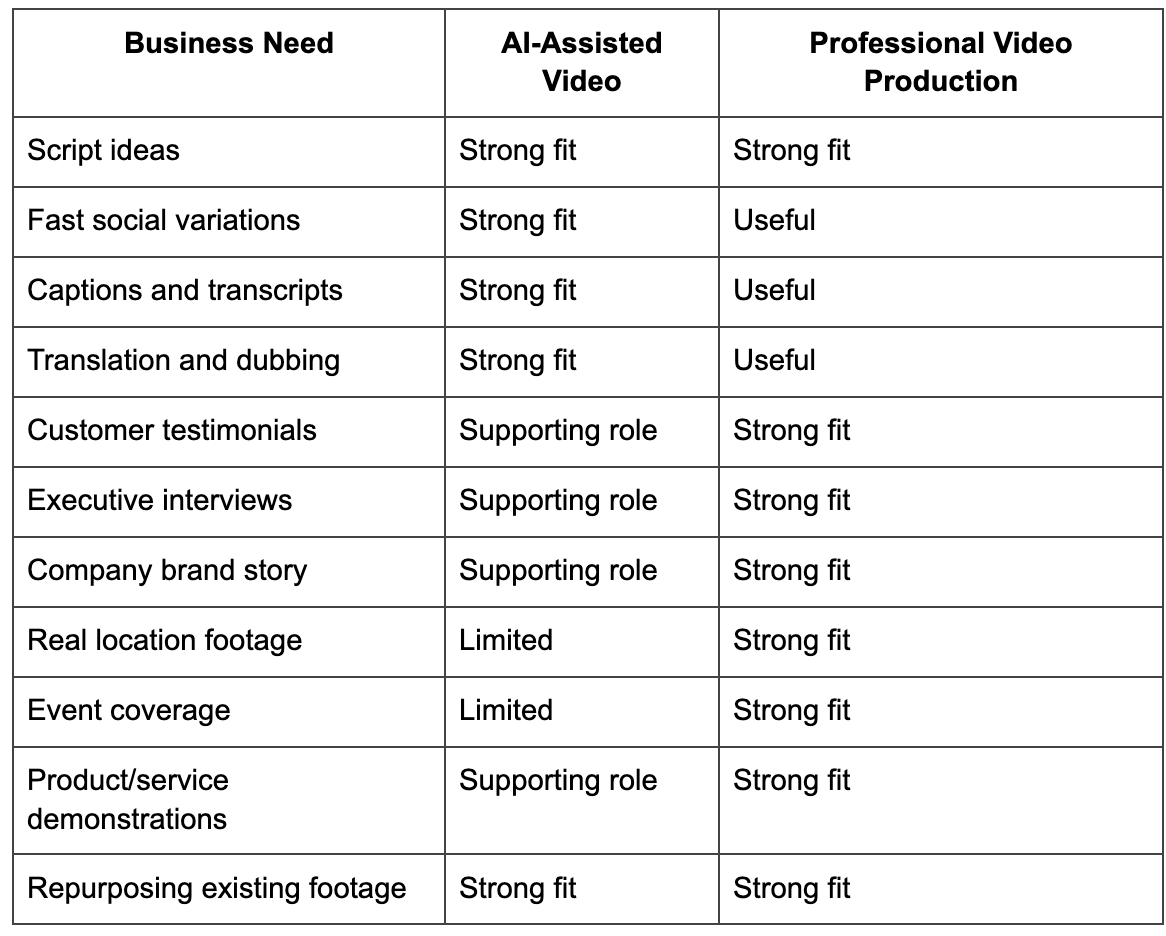
For many St. Petersburg businesses, the better question for 2027 may therefore be:
What should AI handle, and what should humans create?
A Hybrid Video Strategy May Offer the Best of Both
The growth of AI does not necessarily mean businesses need fewer videos. Evidence suggests the opposite.
Wistia reports that 76% of companies are producing at least one video per month, while demand for video continues to increase even as many budgets remain relatively flat.
That creates pressure to produce more content efficiently.
A hybrid workflow can address that challenge:
Human strategy → professional filming → professional storytelling → AI-assisted editing and repurposing → multi-platform distribution.
Instead of using AI to manufacture an entire brand presence, businesses can use it to get more value from authentic footage they already own.
Corporate Video Production in St. Petersburg, Florida
For local companies evaluating their 2027 video strategy, **Corporate Video Production Company and Services by Mack Media Group** provides corporate video production services for businesses in St. Petersburg, Florida.
The goal of a modern corporate video strategy is no longer simply to produce a single polished video.
Businesses increasingly need video assets that can work across websites, Google Business Profiles, YouTube, LinkedIn, Instagram, Facebook, paid advertising, sales presentations, email campaigns, and other digital channels.
That makes planning the production around the full content lifecycle increasingly important.
A professionally filmed interview, for example, can become a long-form YouTube video, several short clips, website content, social posts, quotes, captions, and supporting written content when production and repurposing are considered from the beginning.
What Should St. Petersburg Businesses Do in 2027?
Businesses do not necessarily have to choose between AI video and professional video production.
Use AI where it improves efficiency. Use professional production where authenticity, credibility, real people, real locations, and brand storytelling matter.
The strongest 2027 strategy may be to combine the two.
AI can help businesses produce more from each idea. Professional production can provide the authentic footage, human expertise, visual identity, and original story that those tools need to work with.
For St. Petersburg companies, that means the future of corporate video may not be AI replacing professional video production.
It may be professional video production becoming faster, more adaptable, and more valuable because of AI.
Frequently Asked Questions
Can AI replace a corporate video production company?
AI can automate parts of video production, including scripting, captions, translations, editing assistance, and repurposing. However, videos requiring real interviews, locations, events, products, employees, or customer testimonials generally still require original footage and human production.
Is AI video cheaper than professional video production?
AI can reduce the time and resources required for certain production tasks, but costs depend on the video's purpose and complexity. Businesses should compare cost against the quality, authenticity, lifespan, and number of usable assets the project produces.
What types of corporate videos should St. Petersburg businesses create?
Common options include company overview videos, customer testimonials, executive interviews, product or service demonstrations, recruitment videos, company culture videos, event coverage, educational videos, social media content, and short-form video.
Can professional corporate videos be repurposed with AI?
Yes. AI tools can help transcribe footage, identify clips, generate captions, create translations, resize or adapt content, and assist with turning longer videos into shorter assets for different marketing channels.
Should a business use AI-generated video in 2027?
AI-generated video can be useful when speed, scale, experimentation, or supporting visual content are priorities. For brand-critical content involving actual people, locations, products, services, or customer experiences, original professional footage may provide greater authenticity.
Sources
- Wistia, *2026 State of Video Report*
- Wistia, *AI Video Marketing Trends for 2026*
- HubSpot, *2026 State of Marketing*
- HubSpot, *The Future of Social Media: What Marketers Need to Know in 2026*
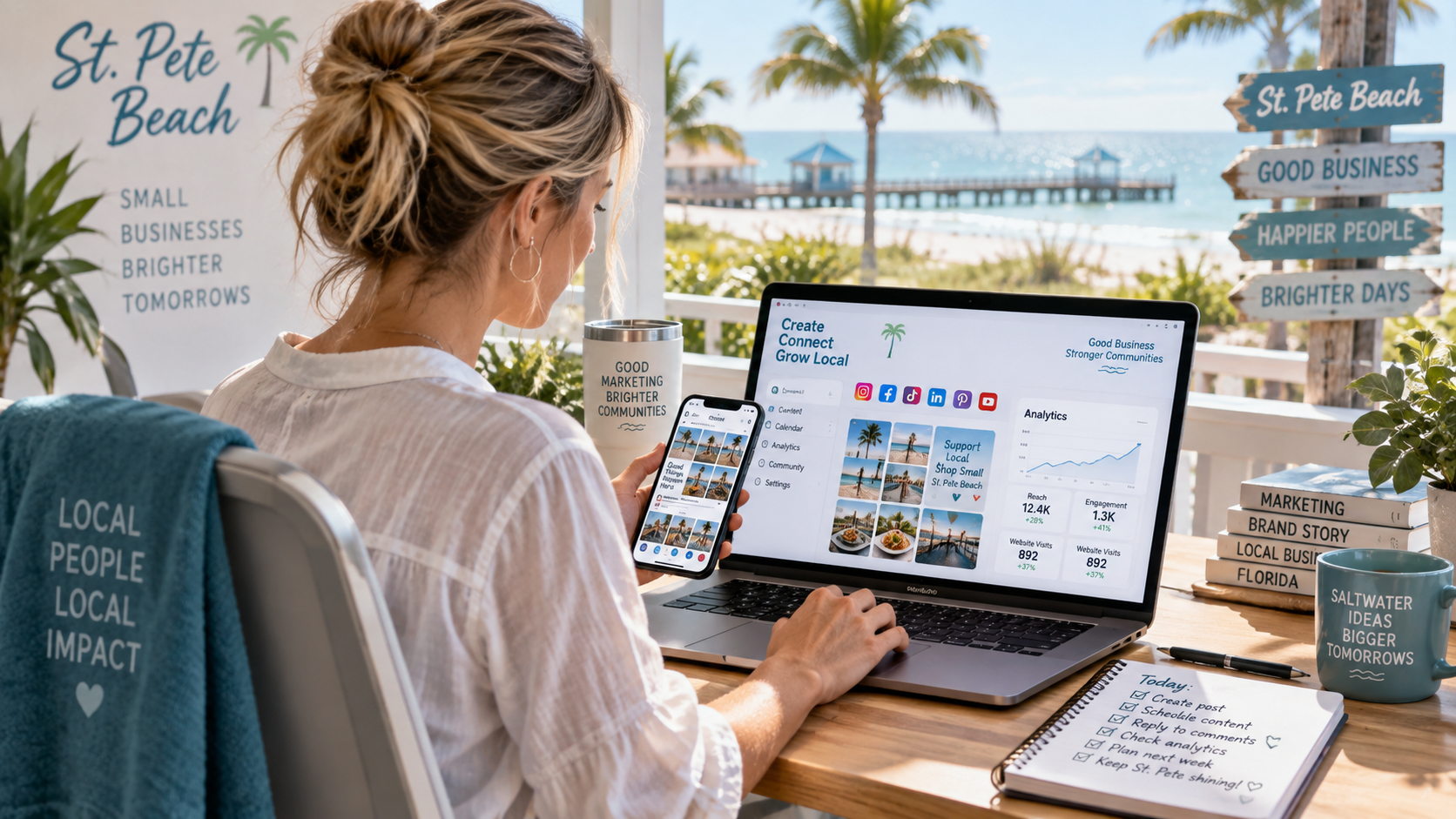

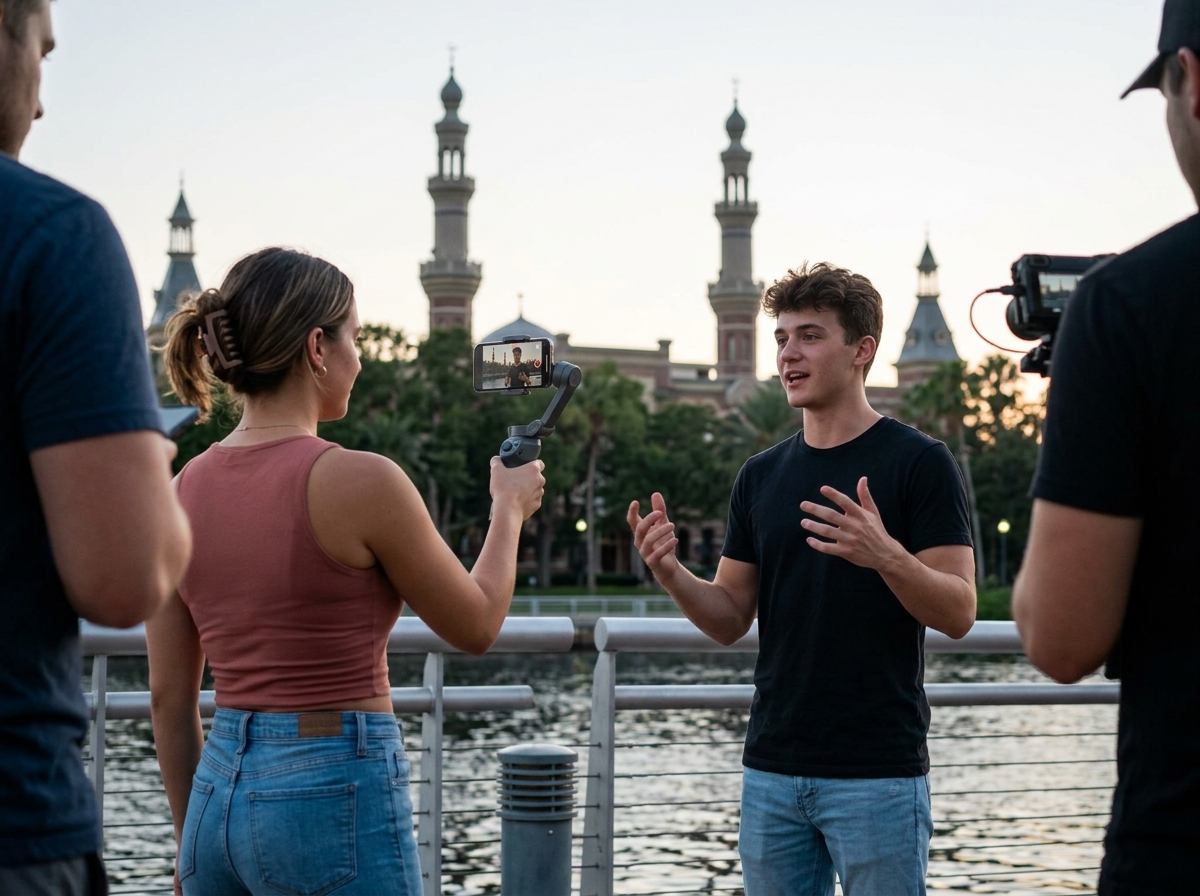

Short-form video is now one of the main ways consumers discover businesses, evaluate brands, and learn about products and services. In 2026, vertical video is a dominant format across major social