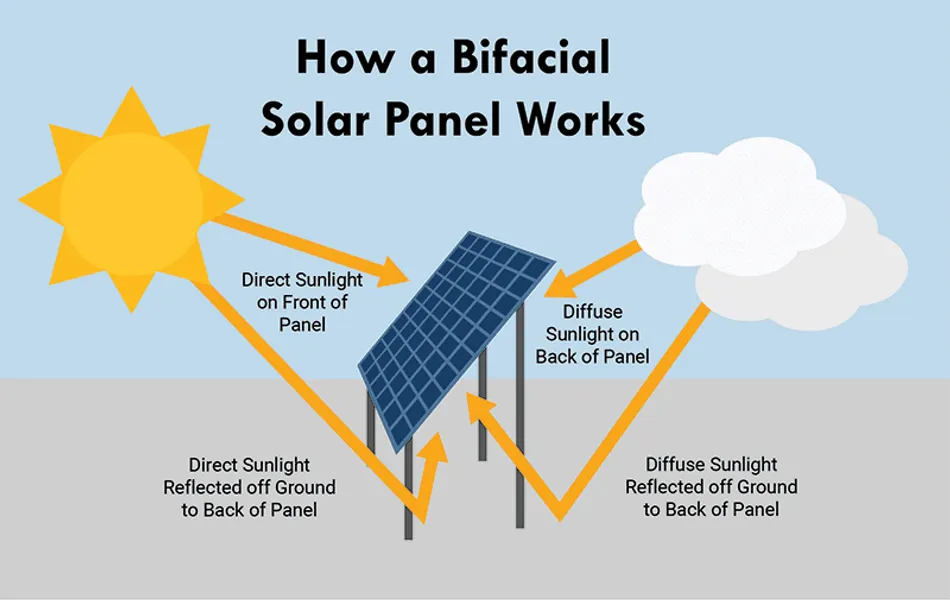



A bifacial solar panel can convert light reaching both its front and rear surfaces into electricity. That capability does not establish a fixed increase in annual energy. The useful question for a project is how much additional energy the proposed installation can deliver after its geometry, surroundings and electrical limits are considered.
Before comparing a bifacial proposal with a conventional one, ask for the assumptions behind each estimate. A transparent comparison is more useful than an attractive rear-gain percentage detached from the site where the modules will operate.
Separate Module Ratings From Annual Energy
A front-side nameplate power rating describes performance under stated test conditions. Bifaciality describes the relationship between rear and front response under the specified test basis. Neither value, on its own, describes the rear irradiance the module will receive during a year at your location.
Distinguish these quantities from a modelled energy gain. If a report states a percentage improvement, ask whether it refers to irradiance, DC energy, AC energy or another measure. A number without a defined basis can be compared with the wrong quantity and appear more useful than it is.
Start the project record with the exact module model, its data sheet and the front-rated array capacity. Identify any rear-side contribution included in displayed power figures. This avoids silently comparing one proposal's front-only rating with another proposal's figure that already assumes favourable rear illumination.
Describe What the Rear Surface Will Actually See
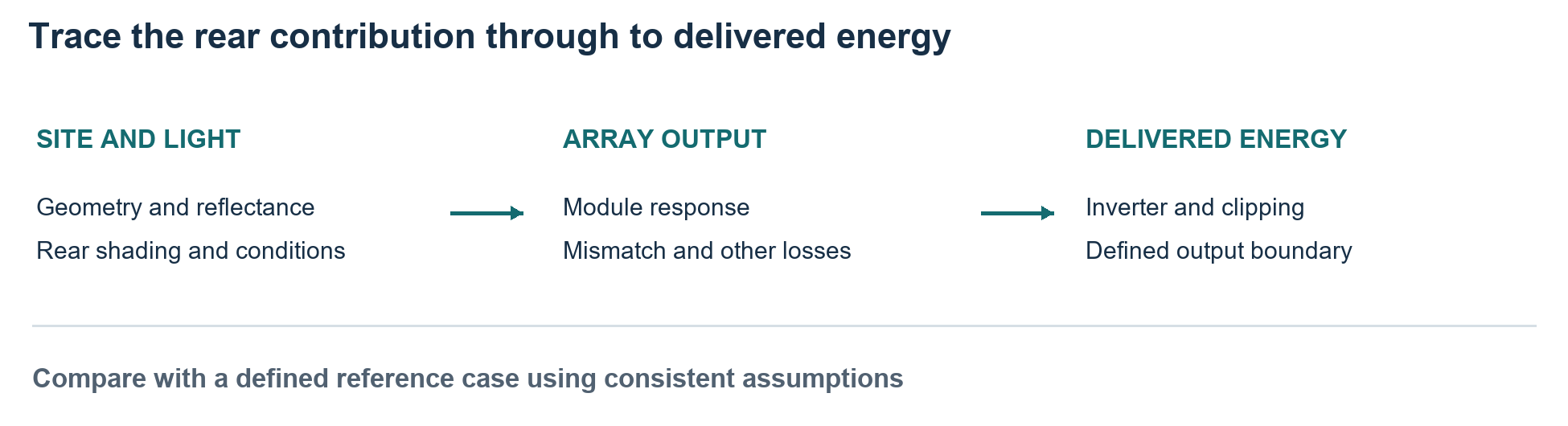
Rear irradiance depends on more than whether the ground looks bright. The surface reflectance, module height, tilt, row spacing and obstructions affect which light paths reach the rear. Mounting equipment and nearby structures may obstruct part of that view. Weather and seasonal surface conditions also change the opportunity.
The National Laboratory of the Rockies' bifacial modelling toolkit explicitly includes scene geometry, reflective surfaces and shading. Its documentation helps explain why an open elevated array and a closely mounted roof system should not inherit the same rear-gain assumption merely because they use the same modules.
Request the proposed layout and mounting details alongside the energy report. Identify what lies beneath and around the array, how reflectance was chosen and whether that assumption changes through the year. If the ground cover is expected to change, describe that scenario instead of treating today's appearance as a permanent optical property.
Define a Fair Reference Case
A gain figure needs an identifiable baseline. Ask what conventional reference system is being compared, which capacity is held constant and whether both calculations use the same weather and loss assumptions. Differences in module count, inverter sizing or layout may explain part of the apparent improvement.
For a clearly defined comparison, percentage energy gain is the bifacial case's annual energy divided by the reference annual energy, minus one, multiplied by 100. Both energy values must represent the same output boundary, such as delivered AC energy. This relationship explains the calculation; it is not a forecast for a particular installation.
Keep the full system specification visible during that comparison. A solar system listing with bifacial module options illustrates how module type can sit within a wider package of mounting, inverter and storage choices. A menu of options still needs to become a definite project configuration before it supports an energy estimate.
Follow the Additional Light Through the Electrical System
More light reaching a rear surface does not translate directly into the same percentage of additional delivered energy. Non-uniform illumination can contribute to electrical mismatch, while rack shading and soiling affect the available contribution. The System Advisor Model loss documentation treats rear-side effects explicitly rather than collapsing them into a universal bonus.
The inverter and other system limits also matter. Ask whether clipping has been included and whether the proposed electrical configuration remains within the equipment's documented limits. These checks belong with a qualified system designer; a generic gain percentage is not a substitute for electrical design.
If storage is included, separate generation from battery delivery and energy used on site. Charging limits, conversion losses and the timing of consumption influence what the owner can use. An estimate of array generation should not be presented as though every additional unit necessarily reaches a battery or offsets purchased electricity.
Ask for Sensitivity Instead of False Precision
Request the modelling tool, weather basis, layout assumptions and principal losses in a form that can be reviewed. The report should identify uncertain inputs and show what happens when important assumptions change. Rear reflectance and mounting geometry deserve particular attention where site information is incomplete.
A project discussion with Rosen Solar Group or another system supplier can begin with a short evidence request: exact equipment, site layout, baseline, annual output boundary and sensitivity to rear conditions. This lets the proposed bifacial option be assessed on the same basis as its alternative.
If financial comparison is needed, carry the energy uncertainty into the cost assessment. Include the actual extra equipment or installation cost and the relevant energy value. Do not claim a precise payback period from a single optimistic gain assumption. Where the inputs remain unknown, obtain them before selecting the option on financial grounds.
Conclusion
Judge bifacial solar panels through a site-specific comparison that explains the baseline, rear-light assumptions and delivered output. Ask first for the layout and the calculation basis, then review the losses and uncertain inputs. A modest estimate with a traceable method is easier to evaluate than a larger percentage without supporting context.
FAQ
Does a bifaciality percentage equal annual energy gain?
No. It describes rear response relative to front response under a specified test basis. Annual gain also depends on the light reaching each surface and the behaviour of the installed system.
Does a white surface guarantee a strong rear contribution?
No. Reflectance is one input. Geometry, shading, surrounding surfaces and seasonal conditions determine how much reflected light actually reaches the module rear.
Can rear side output exceed the inverter limit?
The array may offer more DC power than the inverter can convert at a particular time, leading to clipping. A project estimate should account for the selected inverter and configuration rather than adding rear contribution without limits.
What should accompany a quoted gain percentage?
A defined reference case, comparable capacity basis, output boundary, weather inputs, layout and loss assumptions. Without these, the percentage cannot support a fair project comparison.