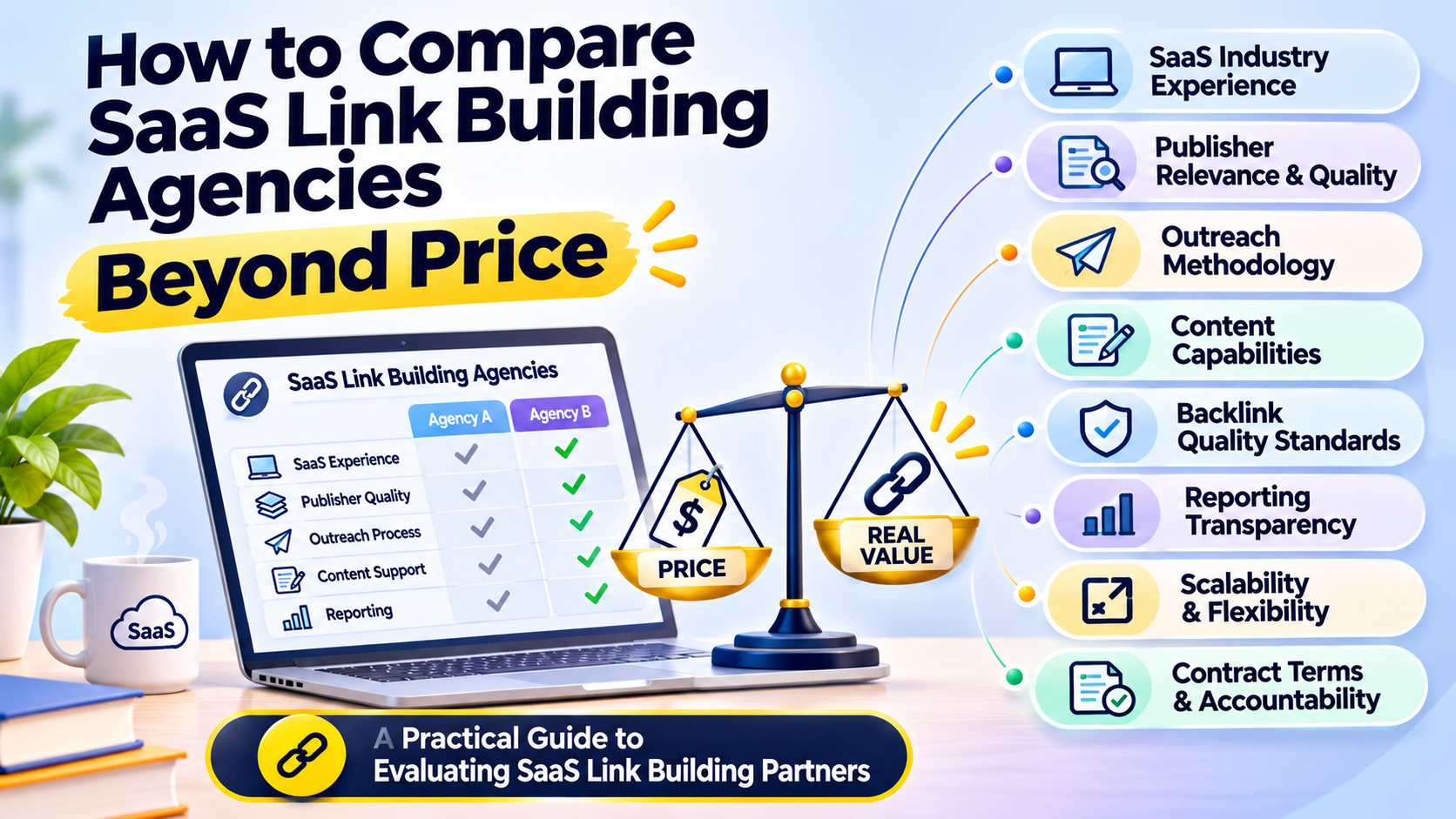
Your link building agency sends you its monthly report. It shows 15 new backlinks, a few website metrics, and a short update about the campaign.
At first glance, everything looks good. The agency has delivered links, and the numbers are moving.
But there's one problem: you don't know whether those links are relevant to your business, whether they're still live, or whether the work is helping you make progress toward your SEO goals.
This is where reporting matters. A backlink count can tell you how many links were delivered, but it doesn't explain the quality of those placements, the work behind them, or what should happen next.
A useful link building report should answer three basic questions: What did the agency do? How good was the work? And what does it plan to do next?
Here's what to look for when reviewing your agency's monthly report, especially if you're paying for link building and want to understand what you're getting in return.
1. Check the Actual Backlinks Delivered
Start with the simplest question: Which websites are linking to your business?
Your agency should provide the actual URLs of the pages where links have been placed, rather than just reporting a total number of backlinks.
Ideally, each placement should include the source page, the page on your website being linked to, the anchor text, the publication date, and the current link status.
Why does this matter? Because the number of links alone doesn't tell you much about their usefulness.
Imagine your agency reports 12 new backlinks this month. When you open the report, you find that several links come from websites unrelated to your industry, two point to pages that don't exist anymore, and the rest have not been clearly documented.
The headline number might look encouraging, but the details tell a different story.
Take some time to open a few of the listed URLs. Check whether the page exists, whether the link leads to the correct destination, and whether it appears naturally in the content.
You don't necessarily need to inspect every placement manually every month, but you should have enough information to verify what the agency claims to have delivered.
What a good report should show: A clear record of completed placements, with working URLs and enough context to verify the work.
2. Look at Link Quality, Not Just Domain Metrics
One of the easiest ways to make a backlink report look impressive is to highlight Domain Authority, Domain Rating, or other third-party scores.
These metrics can be helpful for initial comparisons, but they shouldn't be the only measures of quality.
A website with a high authority score isn't automatically relevant to your business. Likewise, a website with a more modest score may be valuable if it reaches the right audience and publishes genuinely useful content.
When reviewing placements, consider a few things.
Does the website fit your industry? A link from a publication that regularly covers your subject is often easier to justify than one from an unrelated website.
Does the linking page provide useful content? A backlink placed naturally in a helpful article is different from a link inserted into a thin page created mainly to accommodate paid placements.
Does the website appear to serve real readers? Look at its editorial focus, content quality, and overall publishing patterns. Don't rely on a single traffic estimate to make the decision.
Is the anchor text appropriate? It should make sense in the context of the surrounding sentence and the page being linked to. If every backlink uses an identical commercial keyword, ask the agency to explain its approach.
For example, if your company sells project management software, a relevant article about team productivity may provide a more natural context than an unrelated lifestyle page.
The report should help you understand why each placement was selected, not simply present a collection of high scores.
3. Track Links That Were Lost or Changed
A report that lists only new backlinks leaves out an important part of the picture: what happened to the links your agency acquired previously?
A placement may disappear because an article was removed, a publisher updated the page, or a website went offline. Sometimes the linking page remains available, but the link itself has been deleted or changed.
These situations don't always mean the agency did something wrong. Websites change, publishers make editorial decisions, and external conditions are not entirely within an agency's control.
However, you should know when a placement is lost and what the agency intends to do about it.
A useful monthly update should distinguish between new placements, previously acquired links that remain live, and links that have been removed or materially changed. It should also explain any follow-up actions that fall within the agreed scope of work.
For instance, if three previously reported links have disappeared, the agency should identify those URLs and explain whether it has investigated the issue or contacted the publisher.
That information helps you understand whether your backlink profile is changing in ways that deserve attention.
What to ask: How often does the agency check older placements, and what happens when an acquired link disappears?
The answer may depend on your contract, so make sure any replacement or monitoring commitments are documented rather than assumed.
4. Understand What the Performance Metrics Actually Mean
Backlinks are a deliverable in many link building campaigns, but they are not the only thing worth monitoring.
You also need to understand whether the campaign fits your wider SEO objectives. That means looking at other metrics alongside the links themselves, without assuming that every change in performance was caused by the campaign.
A useful report may include referring domains, relevant referral traffic, organic visibility, and performance of the pages targeted by the campaign.
Each metric answers a different question.
Referring domains show how many distinct websites link to yours. This is different from the total number of backlinks because one website can link to you multiple times.
Referral traffic indicates whether visitors are arriving through links on other websites. The amount will vary depending on the publisher's audience and the placement's visibility.
Organic visibility can help you track changes in search performance for relevant topics and pages. However, rankings can change for many reasons, including content updates, technical issues, competitor activity, and search engine changes.
Target-page performance helps you see how the pages receiving links are performing over time. The data can provide useful context, but it does not establish that link building alone caused any improvement.
Consider a hypothetical example. Your agency earns 10 new backlinks in a month, while organic traffic to a target page increases by 8%.
That might be encouraging, but it isn't enough to conclude that the backlinks caused the increase. You would need to consider other changes during the same period and review performance over a longer timeframe.
A reliable agency should explain what the numbers suggest, acknowledge what they cannot prove, and avoid presenting correlation as guaranteed causation.
5. Compare the Report With Your Budget and Agreed Deliverables
Reporting also helps you understand whether the agency is doing the work you agreed to pay for.
Suppose your contract includes publisher research, personalised outreach, content creation, placement monitoring, and monthly reporting. If the report only shows a backlink count, you may not have enough information to assess the wider service.
This doesn't mean every email or outreach attempt needs to appear in a client-facing report. The level of detail should fit the agreement and the campaign.
However, the report should give you a reasonable picture of progress, deliverables, expenditure, and outstanding work.
A few questions can help:
- How many placements were completed against the agreed scope?
- Which activities are still in progress?
- Were any placements delayed or rejected?
- Is the campaign spending in line with the approved budget?
- Are there any additional costs that need to be explained?
Let's say you allocated $3,000 for a monthly campaign. The report shows fewer placements than expected, but the agency explains that part of the month was spent conducting research and developing content for a more targeted outreach campaign.
That explanation may be reasonable, depending on the contract and the agreed milestones. The important thing is being able to see what was done, why the results differed from expectations, and what happens next.
Don't judge a campaign solely by the number of links delivered in one month. Judge it against the scope of work, the quality of execution, and the progress being made toward the agreed objectives.
6. Look for a Clear Plan for the Next Month
A monthly report shouldn't only describe the past. It should help you understand what comes next.
After reviewing the placements, quality checks, and performance metrics, you should have a clearer idea of the agency's next priorities.
Perhaps one target page needs more relevant referring domains. Perhaps a particular outreach angle is attracting better responses than another. Or perhaps the agency needs to change its approach because the publishers it originally targeted aren't a good fit.
The report should explain these decisions in plain language.
You don't need a long strategy document every month, but you should expect more than a sentence saying that outreach will continue.
Look for specific next steps, such as refining the publisher list, developing a new content angle, following up on lost links, or prioritising a different set of pages.
This also gives you an opportunity to ask questions and discuss changes before the next campaign cycle begins.
A good agency should be able to explain why it plans to take a particular action and how that action supports your overall objectives. It should also be willing to adjust its approach when the evidence suggests a change is needed.
Warning Signs That Your Report Needs More Detail
If your monthly update leaves you uncertain about what was actually delivered, pay attention to the gaps.
Here are four warning signs worth discussing with your agency:
- Only totals are provided. You see a number of backlinks but no URLs or placement details to verify them.
- Quality is measured only by a score. Every placement is labelled high-quality based on one third-party metric, with little explanation of relevance or context.
- Lost links are ignored. The report celebrates new placements but never mentions whether older links remain live.
- Results are presented as guarantees. The agency attributes every ranking increase to its work or promises specific search positions without acknowledging other influences.
None of these signs automatically proves that an agency is performing poorly. Sometimes the report is simply too brief or poorly structured.
Ask for clarification first. If the agency repeatedly avoids reasonable questions or cannot provide agreed deliverables, you may need to reassess the relationship.
How to Use Reports When Comparing Link Building Agencies
If you're still evaluating providers, monthly reporting is worth discussing before you sign a contract.
Ask prospective agencies to show you an example of their reporting format, with client-sensitive information removed. Look at whether you can verify placements, understand the quality assessment, track changes, and see a clear plan for upcoming work.
You can also compare the reporting approach offered by different top link building providers in the USA.
Pay attention to how clearly each provider explains its decisions. An agency that can communicate its work in understandable terms may be easier to manage than one that relies on impressive-looking dashboards but offers little interpretation.
Ultimately, a report should help you make better decisions. It should show what was delivered, explain what the evidence means, and identify where the campaign may need attention.
Final Thoughts
A link building report should give you a clear picture of the work being done, the quality of the placements, and the progress of your campaign. It shouldn't leave you guessing whether the links exist, why the agency selected them, or what your money is paying for.
When reviewing your next monthly update, start with the actual placements. Then examine their relevance, check for lost links, review performance metrics in context, and compare the results with your agreed deliverables.
Finally, look at the plan for the coming month. A useful report should help you understand not just what happened, but what the agency has learned and what it intends to do next.
You don't need to become a link building specialist to assess a campaign. You need transparent reporting, verifiable information, and an agency that can explain its decisions without hiding behind numbers.