


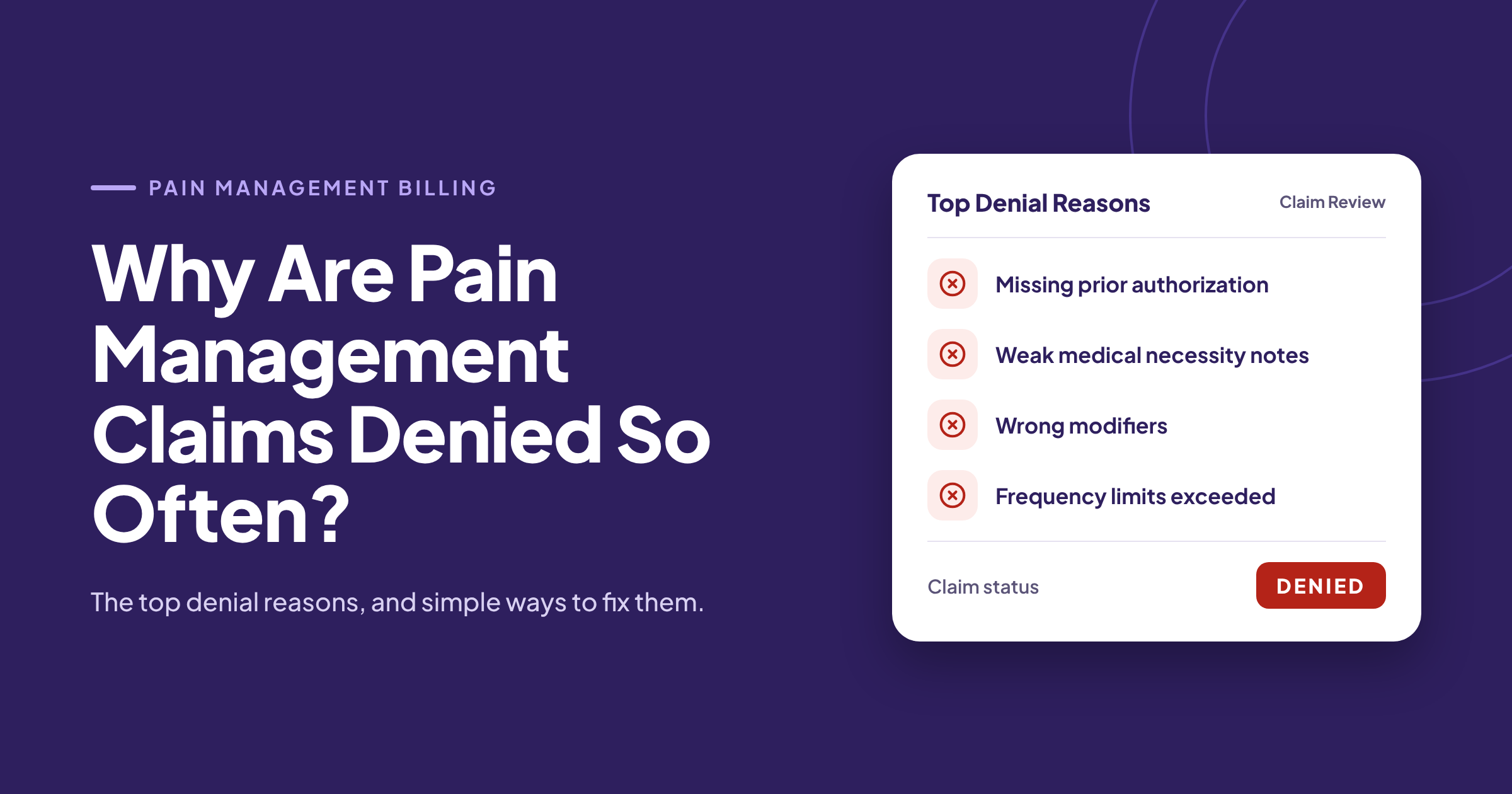
Pain management practices help patients live with less pain and more freedom. They treat back pain, neck pain, nerve pain, and other long-lasting conditions. Many of these treatments, like spine injections and nerve procedures, can make a big difference in a patient’s life. But when it comes to getting paid, pain management is one of the hardest specialties to bill.
Pain management claims are denied more often than claims in many other areas of medicine. Insurance companies watch these services closely because many procedures are costly and can be repeated over time. Payers want strong proof that each treatment is needed. If even one detail is missing, the claim may be denied. These denials slow down cash flow and add extra work for your team.
That is why many practices turn to Pain Management Billing Services for help. These billing experts know the codes, modifiers, and payer rules that apply to pain procedures. They help practices send clean claims, prevent common mistakes, and fight denials when they happen. This means faster payments and less stress for your staff.
Why Pain Management Billing Is So Complex
Pain management covers many types of care. Practices may offer office visits, epidural steroid injections, facet joint injections, nerve blocks, radiofrequency ablation, spinal cord stimulators, and medication management. Each service has its own codes, rules, and approval steps. Some procedures also use imaging, like fluoroscopy, which has its own billing rules.
On top of that, every insurance company has its own policies. Medicare uses Local Coverage Determinations (LCDs) that spell out when certain pain procedures are covered. Private insurers have their own medical policies, which can be even stricter. Keeping up with all these rules is a full-time job. When a practice falls behind, denials quickly start to pile up.
Reason 1: Missing or Expired Prior Authorization
Many pain procedures need prior authorization before they are done. This means the insurance company must approve the procedure ahead of time. Common examples include epidural injections, facet procedures, radiofrequency ablation, and spinal cord stimulator trials. If the procedure is done without approval, the claim will likely be denied.
Problems also happen when the approval does not match the procedure. For example, the approval may be for one spinal level, but the doctor treats two. Or the approval may expire before the procedure date. Your team should check that the approved codes, levels, sides, and dates all match what was actually done. A simple check before each procedure can prevent many denials.
Reason 2: Weak Medical Necessity Documentation
Medical necessity is one of the biggest reasons pain claims get denied. Insurance companies want proof that the procedure was truly needed. Many payer policies ask for details like how long the patient has had pain, how severe it is, and how it affects daily life. They often want proof that the patient tried other treatments first, such as physical therapy or medicine.
For some procedures, payers also want to see results from earlier treatments. For example, before paying for radiofrequency ablation, many payers want proof that diagnostic nerve blocks gave the patient strong pain relief. Pain scores before and after treatment are very important. If these details are missing from the notes, the claim may be denied, even if the care was right for the patient.
Reason 3: Coding Errors and Wrong Modifiers
Pain management coding is very detailed. Codes often change based on the area of the spine, the number of levels treated, and whether imaging was used. For example, some injection codes already include imaging guidance, so billing imaging separately can cause a denial. Using a code for the wrong spinal region is another common mistake.
Modifiers are also a frequent problem. Modifiers tell the payer more about the service. Common pain management modifiers include -50 for bilateral procedures, -RT and -LT for right and left sides, -25 for a separate office visit on the same day, and -59 or X-modifiers to show a distinct service. Using the wrong modifier, or leaving one out, can lead to denials or lower payments. Each payer may also have its own modifier rules, so it is important to check them.
Reason 4: Frequency Limits and Payer Policy Rules
Many pain procedures have limits on how often they can be done. For example, payers may limit how many epidural injections or ablations a patient can have in a year. They may also require a certain amount of time between procedures. If a claim goes over these limits, it will often be denied.
Payer policies can also limit how many spinal levels can be treated in one session. Medicare LCDs and private payer policies spell out these rules in detail. Your team should track each patient’s treatment history and know the rules for each payer. This helps you avoid scheduling procedures that will not be paid.
Reason 5: Bundling and NCCI Edit Problems
Some services are “bundled,” which means they are already included in the payment for another service. The National Correct Coding Initiative (NCCI) edits list which codes should not be billed together. If you bill two bundled codes on the same day, the payer may deny one of them.
In some cases, two services can be billed together if they were truly separate. But you must use the right modifier and have clear notes that show why. Billing the same office visit and procedure on one day is a common example. The visit can only be billed separately if it was a significant, separate service. Without proper documentation, the payer will deny it.
Reason 6: Drug Testing Billing Mistakes
Many pain clinics use urine drug testing to monitor patients who take pain medicine. Drug testing is a common audit target for insurers. Payers often limit how many tests they will pay for and what kind of testing is allowed. They want to see that each test was needed for that patient’s care.
Problems often happen when tests are ordered on a fixed schedule for every patient, without a clear reason in the notes. Billing the wrong code for screening versus confirmation testing can also cause denials. To avoid these issues, every test should have a documented reason. Your team should also follow each payer’s rules on test types and frequency.
Reason 7: Eligibility and Front-Desk Errors
Not all denials come from coding or clinical notes. Many start at the front desk. If a patient’s insurance is not active, or their information is entered wrong, the claim will be denied. Simple errors, like a misspelled name or wrong member ID, can delay payment.
Checking insurance eligibility before every visit and procedure helps prevent these problems. Your team should also confirm whether the patient has a referral, if one is needed. Collecting copays and explaining costs up front also helps reduce unpaid balances later. Strong front-desk habits protect your revenue from the very start.
How to Reduce Pain Management Claim Denials
Most pain management denials can be prevented with good systems. Here are some simple steps your practice can take:
- Verify insurance and eligibility before every visit and procedure.
- Get prior authorization and make sure it matches the exact procedure, levels, and dates.
- Document medical necessity clearly, including pain scores, function, and past treatments.
- Follow payer policies and LCDs for each procedure.
- Use the correct codes and modifiers, and check NCCI edits before billing.
- Track frequency limits for each patient’s treatments.
- Review claims before submission to catch errors early.
It also helps to study your denial data. Look at which payers deny the most claims and for what reasons. When you find a pattern, fix the root cause. Training providers and staff on documentation and coding rules can make a big difference over time.
How to Handle Denied Claims the Right Way
Even with strong systems, some claims will still be denied. The key is to act quickly. First, read the denial reason carefully. Some denials can be fixed with a simple correction and resubmission. Others need a formal appeal with supporting records.
When you appeal, include clear documentation that shows why the service was needed. This may include office notes, imaging reports, pain scores, and records of past treatments. Pay close attention to appeal deadlines, since each payer has its own time limits. A well-organized appeal process can help you recover money that might otherwise be lost.
How Expert Billing Support Helps Pain Practices
Pain management billing requires special knowledge and constant attention. Many practices struggle to keep up with changing codes, payer policies, and authorization rules. Expert billing support can take this burden off your team. Billing specialists handle eligibility checks, authorizations, coding, claim submission, and denial management.
Working with experts in pain management billing also strengthens your revenue cycle. They know the common denial traps and how to avoid them. They track payer rule changes, review documentation, and file strong appeals. The result is fewer denials, faster payments, and steady cash flow. This gives your providers more time to focus on helping patients feel better.
Final Thoughts
Pain management claims are denied often because the rules are strict and the details matter. Missing authorizations, weak documentation, coding errors, and frequency limits are some of the most common causes. The good news is that most of these problems can be prevented.
By checking insurance early, documenting carefully, coding correctly, and following payer policies, your practice can reduce denials and protect its revenue. With the right billing systems and support in place, you can spend less time chasing payments and more time caring for your patients.
FAQs
1. Why are pain management claims denied so often?
Pain management claims are often denied due to incorrect coding, incomplete documentation, missing prior authorizations, medical necessity issues, and payer policy requirements. Errors in procedure codes, modifiers, or diagnosis codes can also delay reimbursement.
2. What are the most common reasons for pain management claim denials?
Common reasons include missing authorization, incorrect CPT codes, insufficient medical records, invalid modifiers, duplicate claims, eligibility issues, and services that do not meet the payer’s medical necessity criteria.
3. How does prior authorization affect pain management billing?
Many insurance plans require prior authorization for procedures such as epidural steroid injections, nerve blocks, and certain radiofrequency ablation services. Missing or incorrect authorization details can lead to claim denials.
4. Can incorrect CPT codes cause pain management claim denials?
Yes. Using an incorrect CPT code, reporting an unsupported procedure, or failing to follow coding guidelines can result in denials. Providers should verify procedure details, diagnosis codes, and payer-specific billing requirements before submitting claims.
5. How can medical documentation help prevent pain management denials?
Complete documentation should support the patient's diagnosis, medical necessity, treatment plan, procedure performed, and relevant clinical findings. Accurate records help demonstrate that the service meets payer coverage requirements.