



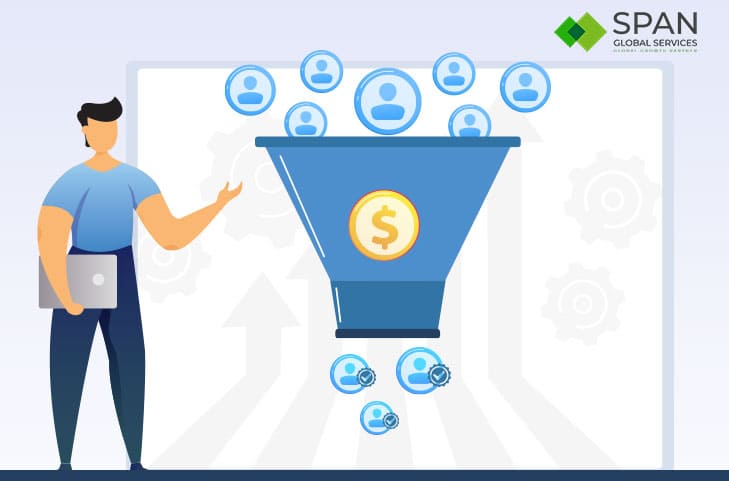
Although generating leads is a crucial component of any B2B marketing strategy, campaign success is not solely determined by the quantity of leads generated. Whether those leads have the appropriate interest, company needs, and potential to become customers is more important. This is when it becomes crucial to comprehend Sales Qualified Leads (SQLs), Highly Qualified Leads (HQLs), and Marketing Qualified Leads (MQLs).
An MQL is a potential customer who has demonstrated early interest in a company's products or services through marketing campaigns. An MQL could be someone who, for example, subscribes to a newsletter, downloads an industry report, or attends a webinar. These actions demonstrate interest, but they don't always indicate that the prospective buyer is ready to make a purchase.
A stronger purchasing opportunity is represented by a SQL. The marketing team may forward the lead to sales for direct follow-up after examining the prospect's needs, engagement, and possible fit. At this point, the sales staff is able to comprehend the prospect's difficulties, assess their requirements, and decide whether a suitable solution can be provided.
HQLs go beyond qualification. These prospects have greater commercial relevance and purchasing potential, and they closely align with the company's Ideal Customer Profile (ICP). These chances can be found by taking into account variables including purchasing timetable, money, business problems, decision-making authority, and firm size.
Why does this distinction matter?
Sales teams may waste time contacting prospects who are interested in content but do not have an immediate need if there is no clear qualification process in place. Marketing and sales teams may prioritize opportunities, enhance follow-up, and utilize campaign resources more effectively with an organized strategy.
Establishing common lead qualification standards, using uniform lead scoring, and routinely assessing conversion rates in between qualification phases are all important for businesses. In order to understand why some leads move forward while others fail, marketing and sales teams should also share feedback.
Ultimately, successful B2B lead generation is not about collecting the largest possible database. It is about identifying the right prospects and moving them toward meaningful sales conversations. Understanding the difference between MQLs, SQLs, and HQLs gives businesses a stronger foundation for building a more efficient revenue pipeline.
FAQ's
1. What is MQL?
A prospect that shows engagement signals through content download, website visits, or webinar attendance so that it meets marketing’s predefined qualification threshold is called a marketing qualified lead or MQL.
2. What is SQL?
A prospect that completes sales validation thresholds by meeting ICP fit, commercial readiness, and buying intent to be accepted for active pipeline development by the sales team is called a sales qualified lead or SQL.
3. What is the difference between MQL and SQL?
The core distinction between the two lies in sales readiness. While MQL demonstrates marketing engagement, SQL reflects prospects qualified for direct sales conversations based on stronger buying signals and qualification criteria.



In today’s B2B marketing landscape, generating leads is no longer the biggest challenge—qualifying them is. Many organizations still focus heavily on increasing lead volume, assuming that more lead

As a business owner or manager, it is your job to know what is happening in your industry.
With the wide variety of products and services available for purchase nowadays, it can be difficult to keep up with all the changes and innovations as they happen.
By knowing how qualified your potential customers are before you begin offering them a product or service that they may not be interested in purchasing makes all the difference in the world.This blog post will teach you how to qualify B2B leads and will help you spot early warning signs that there might not be any market for what you have designed so far.