


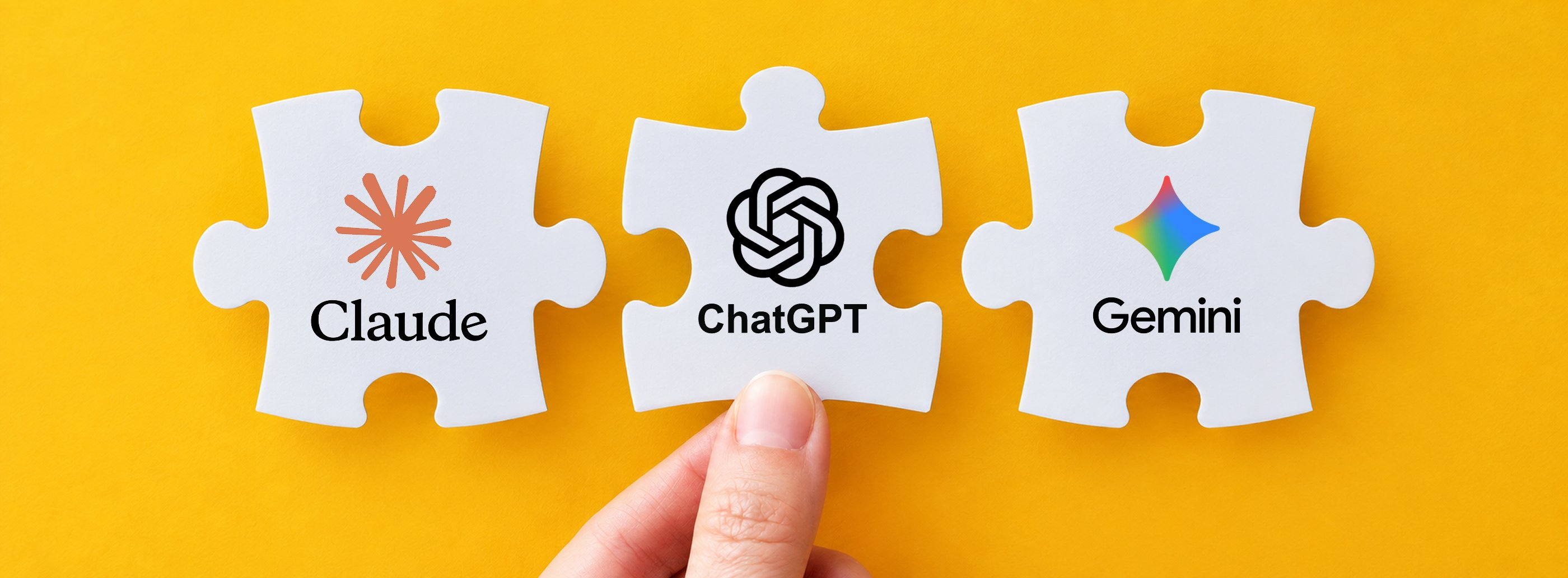
Choosing an AI model for business is not simply about picking the most popular platform or the model with the strongest benchmark score. Claude, ChatGPT, and Gemini can all support business teams, but they differ in how they handle reasoning, writing, multimodal tasks, integrations, and ecosystem compatibility. The best AI model for business is the one that fits your actual workflows, data requirements, budget, and long-term AI strategy.
As artificial intelligence becomes part of everyday operations, businesses need to understand what each platform can realistically deliver. Choosing the wrong solution may lead to unnecessary expenses, integration difficulties, or limited adoption across teams.
What makes an AI model suitable for business?
Different teams expect different things from AI. Some companies need strong writing and analytical capabilities, while others prioritize multimodal workflows, automation, internal knowledge support, or integration with existing business applications.
That is why an AI model comparison for business should focus on practical use cases rather than model popularity alone.
Important evaluation criteria include:
- Accuracy and reasoning: How reliably can the model solve problems and follow complex instructions?
- Integration capabilities: Can it connect to existing software, databases, and business processes?
- Security and privacy: What controls are available for handling sensitive company information?
- Cost efficiency: How much will implementation, ongoing usage, and maintenance cost?
- Scalability: Can the solution support increasing workloads and additional departments?
- Ease of adoption: How quickly can employees learn to use the platform effectively?
These factors help companies identify AI solutions that deliver measurable business value rather than simply introducing new technology.
Comparing Claude, ChatGPT, and Gemini
Claude, ChatGPT, and Gemini are capable AI platforms, but they are not interchangeable. Their suitability depends on the type of work being performed, the tools available within each subscription or API offering, and the company's existing technology infrastructure.
Claude for business workflows
Claude, developed by Anthropic, is an option for organizations working with detailed documents, complex instructions, technical materials, and writing-intensive workflows.
Businesses may evaluate Claude for tasks such as reviewing documentation, preparing reports, analyzing requirements, or assisting development teams with software engineering activities.
However, companies should test its performance using their own documents and business processes rather than assuming that general model capabilities will translate directly into reliable results.
ChatGPT for business productivity
ChatGPT, developed by OpenAI, supports a broad range of business activities, including writing, research, brainstorming, data analysis, and software development assistance.
Organizations may use ChatGPT to improve employee productivity, prepare business communications, summarize information, and support repetitive knowledge-based tasks.
Its suitability also depends on the selected product, available tools, integration options, and organizational controls. Companies should evaluate these capabilities against their operational requirements before selecting a deployment approach.
Gemini for connected business environments
Gemini, developed by Google, is particularly relevant for organizations already using Google's productivity and cloud ecosystems.
Businesses may consider Gemini for workflows involving Google Workspace, document processing, information analysis, and multimodal AI capabilities.
For teams that rely heavily on Google applications, ecosystem compatibility may reduce the effort required to introduce AI into existing workflows. However, available features and integration requirements vary depending on the product and subscription.
Which AI model works best for different business tasks?
The best AI model for business depends on the responsibilities of the team and the complexity of its workflows.
For content and marketing teams, the priority may be generating drafts, refining communication, and maintaining consistent messaging.
For software development teams, the main requirements may include code assistance, technical documentation, debugging, and development workflow integration.
For operations departments, useful applications may include document analysis, internal knowledge retrieval, process automation, and reporting.
Customer support teams may need AI systems capable of working with approved company information while providing consistent and accurate responses.
Rather than declaring one platform the overall winner, businesses should compare the results of Claude, ChatGPT, and Gemini on representative tasks. This approach reveals which solution offers the most value in a specific environment.
How to choose the right AI model for your company
Choosing the right AI model starts with understanding the problem you want AI to solve.
Instead of adopting a platform because competitors are using it, organizations should identify workflows where AI could improve efficiency, reduce repetitive work, or support better decisions.
A practical selection process includes several stages.
1. Define the use case. Identify the tasks that employees currently perform manually and determine whether AI assistance could provide meaningful improvements.
2. Identify technical requirements. Review the applications, data sources, security controls, and integrations required for the solution.
3. Test multiple platforms. Use the same representative business tasks to evaluate output quality, reliability, speed, and usability.
4. Estimate the total cost. Consider subscriptions, API usage, implementation expenses, maintenance, and employee training.
5. Measure business outcomes. Compare time savings, task completion quality, employee adoption, and operational efficiency.
This structured process helps companies make decisions based on measurable results rather than assumptions.
Enterprise AI model comparison: Security and scalability
For larger organizations, selecting an AI platform involves additional considerations.
An enterprise AI model comparison should evaluate security, compliance, governance, scalability, integration requirements, and long-term maintenance.
Businesses need to understand how company data is processed, what access permissions are supported, which administrative controls are available, and whether the chosen service meets relevant regulatory or contractual requirements.
Scalability is another important consideration. A solution that performs well for a small team may need additional architecture, monitoring, or infrastructure to support organization-wide usage.
Companies should also develop clear guidelines for responsible AI adoption. Employees need to understand which information can be shared, when AI-generated results require human review, and how to report potential problems.
Understanding AI implementation costs
Cost is an important part of selecting an AI platform, but subscription pricing is only one consideration.
Organizations may also face expenses related to API consumption, integration development, data preparation, employee training, security reviews, and ongoing maintenance.
A lower initial price does not necessarily mean a lower total cost of ownership. The most economical choice is often the platform that provides reliable results with the least operational overhead for the intended use case.
For organizations planning Claude-based development projects, understanding how to hire Claude Code developers can also help clarify the technical expertise and implementation planning involved.
Common mistakes when selecting an AI platform
One common mistake is choosing a model solely because it performs well on public benchmarks. Benchmark results can be useful, but they do not always reflect the challenges of real business environments.
Another mistake is overlooking integration requirements. Even a capable model may provide limited value if employees cannot incorporate it into their daily workflows.
Businesses should also avoid underestimating implementation costs, employee training, and the need to verify AI-generated information.
A successful AI strategy involves more than selecting technology. It requires clear objectives, appropriate oversight, and continuous evaluation.
FAQ: Choosing the best AI model for business
1. What is the best AI model for business?
There is no single AI model that is best for every organization. Claude, ChatGPT, and Gemini offer different capabilities and integration options. The right choice depends on business needs, technical requirements, security expectations, available resources, and the specific tasks the company wants to improve.
2. Is Claude better than ChatGPT for business use?
Claude and ChatGPT may perform differently depending on the workflow, model version, and tools being used. Businesses working with complex documents or technical tasks should test both platforms using representative examples. The final decision should reflect measurable results rather than general claims about which platform is better.
3. How does Gemini compare with Claude and ChatGPT?
Gemini is particularly relevant for companies that rely on Google's ecosystem, while Claude and ChatGPT may offer different advantages depending on the required workflows and deployment options. A useful comparison should evaluate task performance, integration capabilities, pricing, and organizational requirements.
4. What should enterprises consider before implementing AI?
Enterprises should evaluate data privacy, security controls, compliance requirements, integration complexity, scalability, ongoing expenses, and employee training. They should also establish clear policies for reviewing AI-generated outputs and monitoring system performance.
Final thoughts
There is no universal best AI model for business that works equally well for every company. Claude, ChatGPT, and Gemini each offer capabilities that may be valuable for different organizational needs.
By focusing on real workflows, security requirements, integration options, implementation costs, and measurable business outcomes, companies can make a more informed AI model comparison for business.
The most effective approach is to test available solutions, understand their limitations, and select a platform that supports both immediate productivity improvements and long-term AI adoption.



Implementing Claude in a business environment involves much more than connecting an API to an existing application. Organizations need to consider how AI will access internal data, interact with bu

Hire CodeIgniter Developer from 4life Innovations - Having 5+ Years of experience in delivering highly scaled & robust CodeIgniter solutions.