





Breastfeeding is often described as one of the most natural experiences after childbirth.
A beautiful connection between mother and baby.
A moment of comfort.
A process that should happen effortlessly.
But for many new mothers, reality feels different.
The first few feeds may bring discomfort.
Then comes soreness.
Sometimes, even the thought of the next feeding becomes stressful.
And one question begins to appear:
"If breastfeeding is natural, why does it hurt so much?"
The science behind breastfeeding reveals that pain can have several causes, and understanding them can make a significant difference.
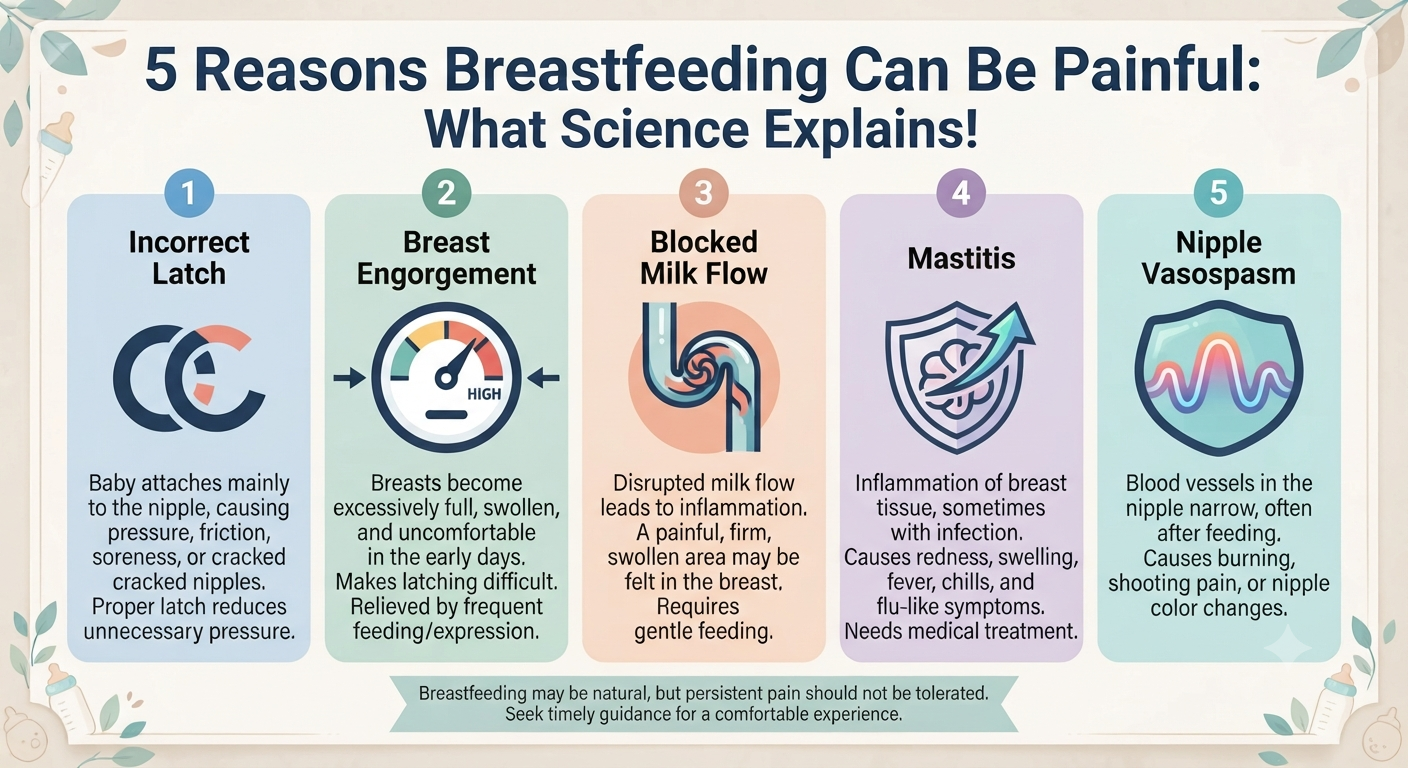
1. An Incorrect Latch Can Cause Unexpected Pain.
One of the most common reasons breastfeeding becomes painful is an improper latch.
When a baby attaches mainly to the nipple instead of taking enough breast tissue into the mouth, pressure and friction can cause soreness.
This may lead to cracked nipples, tenderness, or discomfort during feeding.
A proper latch helps the baby transfer milk effectively while reducing unnecessary pressure.
This is why breastfeeding guidance is an important part of postpartum support at a female first hospital.
2. Breast Engorgement Can Make Feeding Difficult.
During the early days after childbirth, milk production increases.
Sometimes, breasts become excessively full, swollen, and uncomfortable.
This condition is called breast engorgement.
The breasts may feel hard, warm, or tender, making it difficult for the baby to latch properly.
Frequent, effective feeding and appropriate milk expression can often help relieve discomfort.
3. Blocked Milk Flow Can Lead to Inflammation.
Some mothers notice a painful, firm area in one breast.
This may occur when milk flow becomes disrupted and inflammation develops.
The affected area may feel swollen or sensitive.
Gentle feeding practices and avoiding excessive breast pressure may help.
However, persistent symptoms require professional evaluation to prevent complications.
4. Mastitis Can Cause More Than Breast Pain.
Mastitis is inflammation of breast tissue, sometimes accompanied by infection.
Unlike ordinary soreness, mastitis may cause redness, swelling, fever, chills, and flu-like symptoms.
It can develop during breastfeeding and may require medical treatment.
Mothers experiencing fever or worsening breast pain should seek timely medical attention rather than relying only on home remedies.
5. Nipple Vasospasm Can Cause Burning Pain.
One lesser-known cause of breastfeeding discomfort is nipple vasospasm.
It occurs when blood vessels in the nipple temporarily narrow, sometimes after feeding.
Mothers may experience burning, shooting pain, or nipple colour changes.
Because these symptoms can resemble other breastfeeding problems, proper assessment is important.
Why Postpartum Support Matters?
Breastfeeding difficulties can occur after vaginal or caesarean delivery.
Women searching for the best hospital for c section delivery near surat should also consider the availability of postpartum and lactation support.
Similarly, mothers who have conceived through treatment at a fertility clinic may benefit from breastfeeding guidance tailored to their recovery needs.
Conclusion
Breastfeeding may be natural, but persistent pain should never be considered something mothers must simply tolerate. Poor latch, engorgement, inflammation, mastitis, and nipple vasospasm can all contribute to discomfort. Understanding the cause and seeking timely guidance can help make breastfeeding safer, more comfortable, and more manageable for both mother and baby.
FAQs
1. Why can breastfeeding hurt even though it is natural?
Although breastfeeding is often viewed as a natural and effortless experience after childbirth, discomfort and pain can happen for several physiological reasons—such as an improper latch, breast engorgement, disrupted milk flow causing inflammation, mastitis, or nipple vasospasm. Persistent pain is not something mothers should simply tolerate, and understanding the underlying cause can make feeding safer and more comfortable.
2. When should a mother seek medical attention for breastfeeding pain?
Mothers should seek timely medical evaluation if pain is persistent, if symptoms of blocked milk flow continue, or if signs of mastitis appear—such as redness, swelling, fever, chills, or flu-like symptoms—rather than relying only on home remedies.
3. How does postpartum support help with breastfeeding challenges?
Lactation guidance and postpartum support—whether after a vaginal delivery, a C-section, or conception through fertility treatment—can help mothers achieve a proper latch, manage fullness or discomfort, and receive care tailored to their recovery needs.






One of the most common ways for creators to be scammed on Kickstarter is for a backer to pledge an amount of money, receive the rewards for the pledge, and then decide to claim a refund or dispute a charge on their credit card.
Click here to know more about us!