If you want to grow your business, then you need to have a clear idea about funnel analysis in marketing automation. And this post is dedicated to making you aware of this concept. So, keep on reading.
A Basic Introduction of Funnel
Are you running an online business? If yes, then you definitely want to encourage your prospective clients to visit your website, implement a set of marketing strategies, make them take the desired actions, click on your site’s CTA button, and so on, right?
You should also encourage them to sign up your newsletter, complete a purchase, fill out a form, and opt for your consultation. And it’s where the importance of a funnel comes into the picture. Actually, it’s an analytical strategy through which you could get accurate data about your visitors. Remember, Funnel Analysis is very important for your business.
You need to figure out multiple stages that your prospective clients would go through before making any purchasing decision.
Why it is called a funnel?
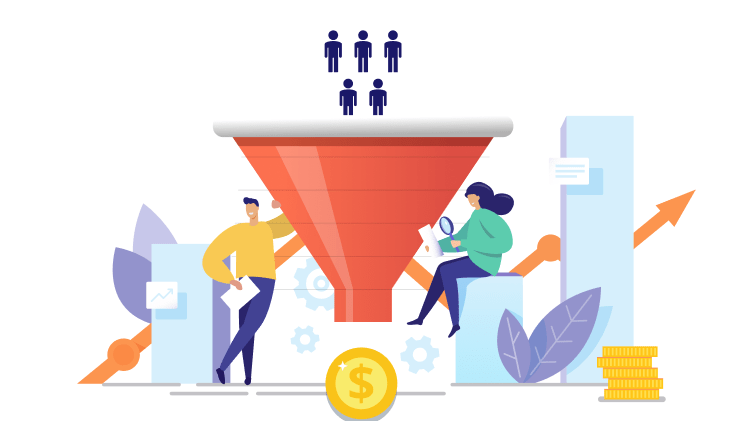
It’s due to the fact that the graphical representation of this concept shares the similarity with the funnel. For instance, a total of 100 visitors visited your website and out of them, 50 visitors showed their interest towards your offerings and 20 of them actually buy it.
Actually, this particular top-down representation is wider at the top part and it becomes narrower at the bottom part. Thus, it looks like an actual funnel. By figuring out each and every stage of your sales funnel and lead your customers from one phase to another, your marketing team can easily create the correct set of strategies and affect the results at all steps.
Work Structure of a Funnel
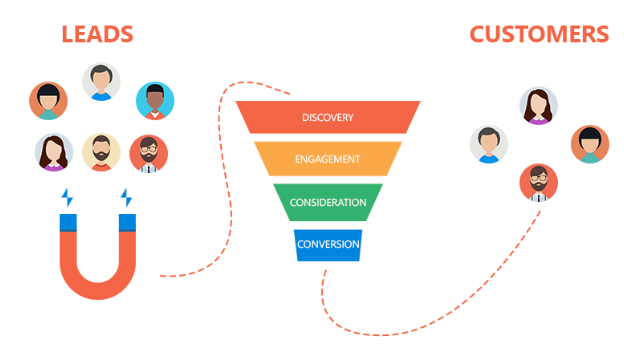
Actually, a funnel features various steps and you can easily figure out the conversions and drop-offs at each and every funnel step. Now, let’s discuss the work structure of a funnel:
Capture the Attention:
In the first stage of the sales funnel, you should draw the attention of more and more audiences and prospects. Actually, it’s very important to make people aware of your offerings, products, and services.
You can perceive the success of your marketing strategies by figuring out the number of your website viewers within a particular time-period.
You can implement various strategies to draw the attention of your prospects, such as Social Media Marketing, Inbound Marketing, Public Relations, PPC Campaigns, and so forth.
The main goal of your offerings should solve the problems of your prospects and address their pain points. You must give values to the prospects through your services and/or products.
Hold the Attention and Increase Interest:
In this stage, you need to accelerate the interest and enthusiasm of your prospective clients for purchasing your products and/or services.
You should display why your brand is better than your competitors. And then your prospects will start comparing your offerings with other players in the market.
You must figure out the percentage of visitors present on your website within a specific time period or the total number of your newsletter subscribers. It’s the step where you should start figuring out the conversion rates for your each and every funnel step.
Push Decisions:
In this stage, your prospects would decide whether they will convert or not. It’s very important to increase the confidence of your prospects about your products and/or services. You should display the credibility of your brand. As a result, they would start perceiving the values of your products and/or services.
What are the different types of Funnels?
Don’t perceive ‘Marketing Funnel’ and ‘Sales Funnel’ as the interchangeable terms. Let’s discuss these two funnels in brief.
Marketing Funnel
The Marketing Funnel is all about creating interest regarding a company’s services and/or services as much as possible. In case you have separate Marketing and Sales departments in your company, the bottom part of the Marketing Funnel is generally present at the top part of your Sales Funnel.
Marketing Funnel consists of the following steps:
Capture: Your marketing team should extract the details of audiences as many as possible from different marketing channels.
Nurture: In this step, your marketing campaigns need to nurture the audiences to increase their interest in your offerings.
In the final stage of the Marketing Funnel, the audiences will convert to prospects and will get ready to face your sales team.
Sales Funnel
The Sales Funnel is actually about the stages through which your prospects move and become customers. Let’s check out the steps of a Sales Funnel:
Qualify: Actually, the Sales Funnel initiates with audiences, who display enthusiasm towards your offerings and qualify as a Sales Qualified Lead.
Contact: The middle step is about accelerating the interests of your prospects by your sales team. It can be done by arranging meetings, setting up calls, and showing demos.
Convert: In the final step of the Sales Funnel, the sales representatives will strive hard to close as many deals as possible by converting prospects into customers.
How can you create a Funnel?
First, you need to think about what do you want from your website visitors? Do you want those people to order your products, purchase your services, or sign up to your newsletters?
When you could figure out the final output, it’s very important to map the entire process back to the highest traffic pages.
If you have more than one goal, you must design a separate funnel for each of them. Start designing your Marketing and Sales Funnel today.