

Talking about mobile applications, they have taken over the world by storm. They have evolved immensely with the help of technologies used to develop them. Right from Artificial Intelligence to Augmented Reality, Virtual Reality, Internet of Things, and more, these advanced technologies have made their way into the mobile landscape.
And to ta add to this, we have cloud computing, a similarly advanced technology which has managed to gain momentum and become a commercial, household thing across all sectors. It is at the frontline of mobile app development services.
Be it a small startup or a large enterprise, businesses today demand such apps. And it is necessary. Even still, the existing popularity of cloud can be called underrated.
Be it a small startup or a large enterprise, businesses today demand such apps. And it is necessary. Even still, the existing popularity of cloud can be called underrated.
What are cloud based mobile apps
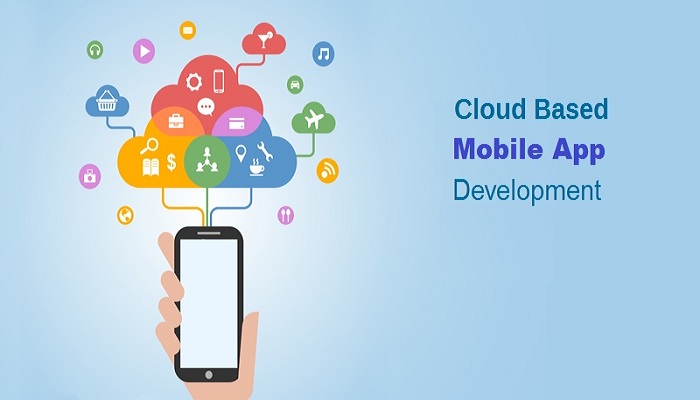
When we talk about cloud computing, we generally relate to the usage of remote computing technology over the internet. Put simply, mobile cloud computing integrates cloud computing with mobile apps. A user accessing a cloud-based app is connecting to the cloud storage for accessing and retrieving data.
Cloud-based apps come to the aid of limitations pertaining to computational capacity of smartphones, optimizing the memory size and battery of the device. Such mobile apps leverage cloud computing for performing the resource-intensive tasks and providing the user a greater scope of functionality by minimizing the pressure on mobile resources.
In this way, cloud computing not only enhances the user experience for consumer-centric mobile apps, but also renders a strong foundation for enterprise mobility solutions that are data-intensive. On the flip side, it also compels development companies to hire mobile app developers who are worthy and capable enough for future-proof development.
This brings us to the advantages of why mobile cloud computing is beneficial for your mobile app dreams:
No platform dependency
Cloud apps are capable to work on both, Android as well as iOS devices. Reaching wider audience is not an issue. It also means that you can save costs and time both. At the same time, as a business you will not need to worry about choosing between iOS and Android app development, since it is a single solution connecting the business with audience across both types of devices.
State-of-the-art features
f you think cloud-based mobile apps just store the data on the servers which users can access from anywhere, think again. Not just that, there are many advanced features that these apps offer, like integration with social media networking to geo-location capabilities, offline functionalities, and more. Cloud apps offer immense possibilities for app development.
Security
Another impeccable feature of cloud is its security. Since the data is stored locally on devices in native apps, there is always a threat to its security where it could malfunction or data may be lost. However, on the cloud, the chances of data loss is minimal and malfunction is zero to none since it provides unmatched uptime. Businesses where app contains confidential information and financial details, like enterprise mobility and e-commerce businesses, should harness the power of cloud.
Effortless database integration
In order for business apps to run smoothly, they need to be integrated with databases. Cloud-based app integration with database is at par with native integration. It is seamless and can be done in the blink of an eye. You can sync the entire information through the cloud server. From a business perspective, it is cost-effective and time-effective option. One also does not need to construct complex code.
Conclusion
Businesses that want a cost-effective and secure alternative for developing mobile applications, cloud offers the best possible solutions. The main area of focus is that it facilitates the launch of app for both Android and iOS platforms.