





Based on the development and improvement of conventional processes, new process methods have been developed to further improve the quality of castings, increase production efficiency, and expand the application range of investment casting. The sixth issue of "Die Casting" in 1978 reported that the Beijing Oil Pump Nozzle Plant adopted the cage-type combined large module process. The cage-shaped components ensure sufficient rigidity of the module and double as a pouring system, increasing the utilization rate of molten steel by about 10%.
Hebei Institute of Technology, etc., by controlling the solidification time of castings, inner runners, and gate rods, make M parts ≤ M inner ≤ M rods, and make solidification stop between the inner runner and the gate rod, and the liquid in the gate rod The metal is poured back into the hearth to achieve sprueless investment casting. The second issue of "Casting" in 1982 reported that Tsinghua University and others used vacuum suction casting to control the solidification time. When the sprue is solidified and the sprue is not solidified, the vacuum is released and the liquid alloy in the sprue is returned to the furnace. The process has strong filling performance, produces thin-walled castings, and has a high utilization rate of molten steel. The release of suctionchina die casting vacuum is determined according to the thermal conductivity of the mold shell and the solidification time of the suction casting. The third issue of "Casting" in 1984 published Ye Shengyong's article introducing the electrophoretic shell making process.
Dip the conductive coating on the wax module, and add a small amount of chain phosphate as electrolyte in the electrophoresis suspension to make the surface of the refractory material absorb cations. Under the action of the electric field, the refractory material will undergo electrophoresis and accumulate on the surface of the pattern. Electroosmosis occurs, forming a certain strength shell. The electrophoresis shell-making process is few and the production cycle is short. The fourth issue of "Casting" in 1984 reported that Northwestern University of Technology used semi-hydrated gypsum and added quartz powder, quartz glass, and clay as refractory fillers as a gypsum casting process to produce large complex aluminum alloy castings. 621 uses semi-hydrated gypsum and coal rock as the refractory filler to reduce the shrinkage of the gypsum shell and reduce cracking. Titanium and its alloys are important materials for aerospace and petrochemical use. Investment casting began to produce titanium alloy castings in the late 1970s. my country is one of the five largest investment casting titanium alloy producers in the world. The second issue of "Casting" in 1979 was published in the Shanghai Iron and Steel Research Institute using propane cracking under high temperature and vacuum, vapor-phase precipitation of graphite on the surface of corundum (ethyl silicate hydrolyzate shell), and the production process of titanium alloy investment casting. Beihang Materials The research institute uses phenolic resin as a binder and graphite powder (sand) as a refractory material to produce graphite shells, which are roasted in a vacuum resistance furnace to carbonize the resin binder to obtain a shell with good strength and air permeability to produce titanium alloys High-speed pressurized blades.
Shenyang Foundry Research Institute published an article in "Casting" in 1986 on the 3rd, introducing the use of ZTS-1 resin and toner to prepare coatings, p-toluenesulfonic acid as curing agent, and graphite sand and ethanol to prepare coated sand , The production of shells, the process of producing titanium alloy castings by high-temperature baking and vacuum treatment. "Casting" published an article by Li Bangsheng in the 7th issue of 1987, using zirconia ceramic powder, zirconium sol as a binder, and preparing coatings , Prepare the shell, and conduct research on the production of titanium alloy investment casting.
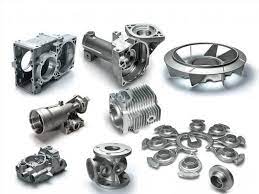
The global Automotive Parts Aluminium Diecasting Market report offers a comprehensive assessment of the market for the forecast years.
These factors encompass the drivers, restraints, and opportunities.
This global industry offers an outlook on the strategic development of the market in terms of revenue profits over the forecast period 2021-2026.The key market players for the global Automotive Parts Aluminium Diecasting market are listed below:Amtek GroupNemakTexas Die CastingGibbsECO Die CastingsDynacastEnduranceSYX Die CastingSandharSunbeam AutoHICOM DiecastingMINO Industry USAOthersClick here to get a FREE Sample Copy of the Automotive Parts Aluminium Diecasting Market Research Report @ https://www.decisiondatabases.com/contact/download-sample-23280The Global Automotive Parts Aluminium Diecasting Market Report is equipped with market data from 2016 to 2026.
The report forecasts sales and revenue from 2021 to 2026.
The detailed sales channel is also covered in the study.COVID-19 Impact Analysis on Automotive Parts Aluminium Diecasting MarketThe global pandemic COVID-19 has affected the Automotive Parts Aluminium Diecasting market directly or indirectly.
The impact study on production, supply-demand, and sales provides a holistic approach to the future.Do You Have Any Query Or Report Customization?
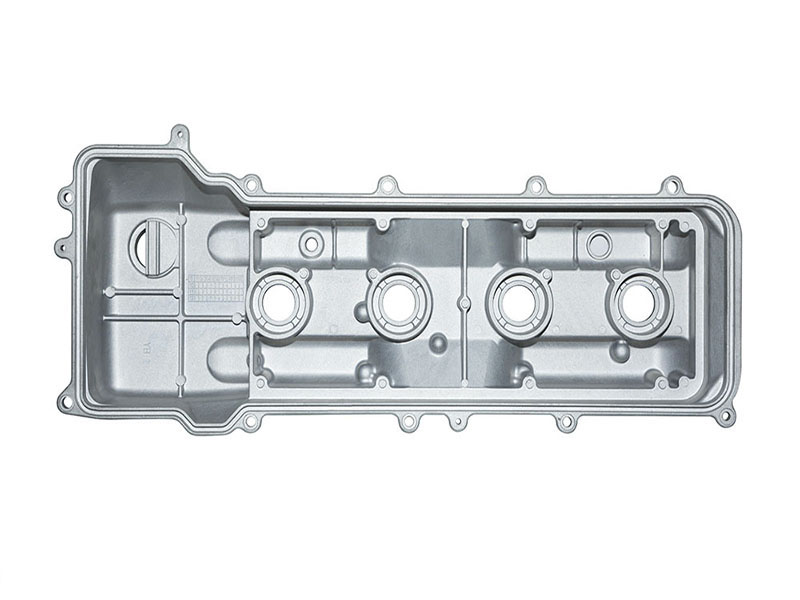
Aluminium die casting manufacturers in chinahttps://www.thediecasting.com/Is A Aluminum die casting company in China, CNM TECH Diecasting specialises in the manufacture and supply of anodes to the corrosion protection and plating industries.
Our anodes range from large anodes for oil rig platforms down to anodes for cray/crab pots.
We supply anodes for ships, yachts, marine motors, tanks, hot water systems etc.
and all are available in either Aluminium, Zinc or Magnesium.a380 diecast aluminum, zinc die casting companies, ,zamak die casting, die casting services, die casting products