

Even if you do not go deeply into ancient history, you can see that states could develop safely only near water, especially from deep rivers. Even schoolchildren associate ancient Egypt primarily with the Nile River. The most advanced river civilizations of the ancient world were Egypt, China, Mesopotamia and Indian civilization. In this article, we will list the main reasons for settling near rivers, as well as the main river civilizations. We will tell you about their features associated with river channels, how in ancient times people used rivers, how the location influenced the formation of culture and life.
It is not difficult to answer the question why people settled along the rivers. Without food, a person can live for about a month, without water he will not survive even a week. In ancient times, people did not have the opportunity to conserve water for a long time. Since there were no reserves, a stable source was needed. That is why people lived near deep rivers, and this is not the only reason.
Why did civilizations develop along rivers?
It's not just that you need water for drinking. You can also fish for food in the rivers. Don't just fish, but put nets in order to catch more fish. It is safer than hunting and easier than plowing the ground. However, it was also easier to engage in agriculture near water bodies, since the soil here is sufficiently moist. Inhabitants of such lands did not depend on rains, moreover, a mild climate was often formed in the riverside lands.
Even in the heat, it is more pleasant to be by the river, it helps to survive the heat for people and animals that were used for cultivation of land and for food. There was no need for a person to carry buckets of water for drinking to cattle, since it was possible to simply take the animals to the reservoir. The cattle could not only drink, but also eat, since there are always a lot of plants on the banks.
Even ancient people could not help but notice that if you do not swim for a long time, then a pungent smell will come from the body. Most likely, he did not embarrass the people themselves, but attracted predators. Therefore, water was needed to maintain the purity of the body, when clothes appeared - for washing them. The presence of water nearby was a matter of safety and survival, so people strove to live by the river.
About river civilizations
The habitat and features of development are the answer to the question of why the civilizations of the Ancient East are called river civilizations. This term appeared in science in the 19th century, it was used to designate the first large civilizations in the history of mankind. Their economy was based on agriculture, and business was successful thanks to the conditions for agriculture. The ability to cultivate the land and grow different crops became a protection from hunger, and later - the key to successful trade with other countries.
All four ancient states are located between 20 and 40 degrees north latitude. The Nile gave birth to the ancient Egyptian state, the Ganges and Indus - Indian, Euphrates and Tigris - Sumerian, Yangtze and Huang He - Chinese. On the example of each of them, we can consider the patterns of development of the ancient world.
Ancient Egypt
It originated in the area of the lower course of the Nile in the northeastern part of the continent of Africa. The oldest found signs of civilization date back to the fourth millennium BC. It was then that Upper and Lower Egypt was united by the power of the pharaohs. There have been periods of ups and downs in development. The peak of success came in the 16-11th centuries BC, the period was called the New Kingdom. After him, many monuments remained, it was from them that modern scientists studied this country. In the 4th century BC, Egypt fell under the influence of Greece, losing its unique features. The history of the country ended in 30 BC, when the power of the pharaohs fell. This happened after the conquest by Rome.
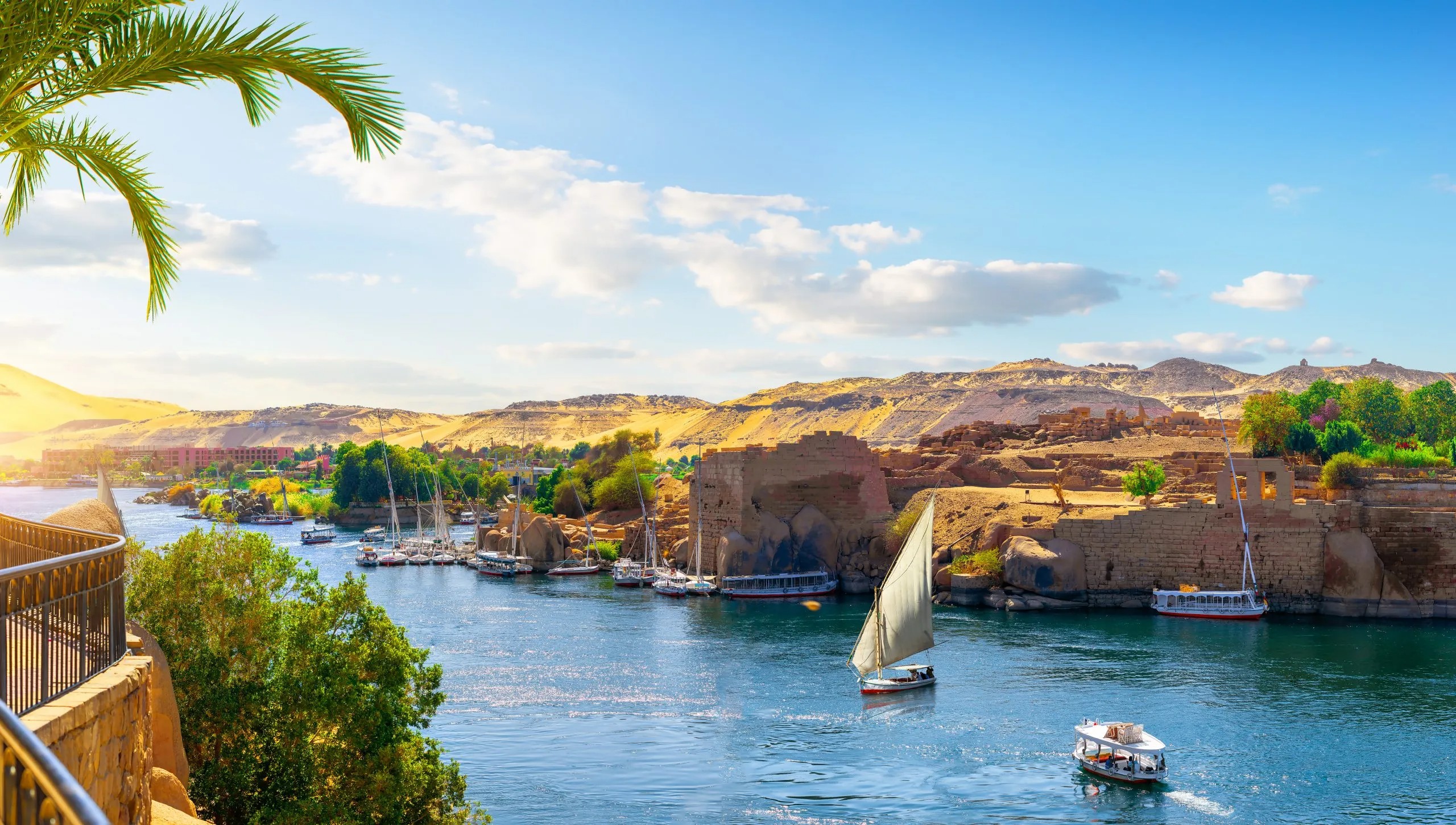
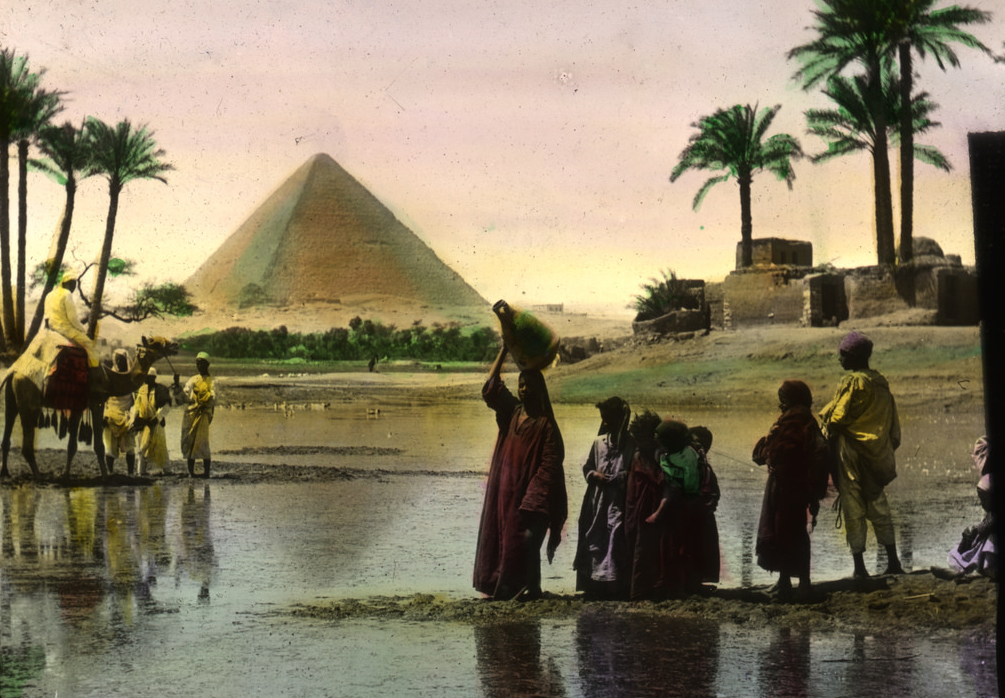
The Egyptians were engaged in agriculture, so they depended on the Nile. After regular floods of the river, a lot of silt remained at the crop sites. This natural fertilizer allowed them to harvest large amounts of crops. Thanks to Neal's help, people had more time, and they spent it for creative activities or the invention of new devices and technologies. This is the main reason for the greatness of the state.
The Egyptians, like other peoples, sought to subjugate nature to their water. They made dams so that the waters of the Nile would go where they wanted. At the same time, they understood that they had to obey natural cycles and divided the year into periods in accordance with them. Most of the crops were grain crops, but there were also vineyards and fruit trees. Flax and papyrus were grown, from the first they spun, from the second they made paper, which also became a contribution to science. Houses were built from raw bricks, this material allowed to create coolness even at the peak of the summer heat. To remove heat, the walls were painted white, then hung with linen carpets, which was in abundance.
Mesopotamia
This river civilization of the Ancient East achieved perfection in the issue of irrigation of crops. In the modern world, Iraq is located on the territory of Mesopotamia or Mesopotamia. If the Egyptians were an integral people, albeit without a single religion, then this state was not formed that way. These are separate tribes that have conquered each other for millennia and merged into new ones.
The valley of the Euphrates and the Tigris was especially fertile, even when compared to the Nile. One of the reasons is that waters came here from the Armenian Highlands and carried alluvial deposits, excellent fertilizer. Therefore, the tribes strove here, here it was possible to provide themselves with food. Later, Mesopotamia acquired a logistical value, it is conveniently located between the Mediterranean and the Persian Gulf. This contributed to the development of trade.
From 4th to 6th millennium BC several nations ruled on the territory in turn - Babylonia, Sumerians, Assyria, Akkad. They have different cultures and different languages, but still Mesopotamia can be considered one civilization. And it was formed mainly due to the emergence of an irrigation system on the rivers. To grow crops, the peoples built reservoirs here and led canals from them. Such developments made it possible to irrigate crops not only during flooding of rivers, but throughout the entire cultivation cycle. Progress made it possible to divide the types of labor, so crafts arose, then class stratification occurred. It was this that became the driving force for the spread of slavery.
Slavery was very widespread, but free people were also engaged in agriculture. They united in communities, fulfilled duties in relation to their comrades in the community and worked for the needs of the state: they built and cleared canals. Only noble people did not do this. The better the irrigation system became, the stronger the tendency towards the formation of cities was manifested, temples, grain storage facilities, and workshops were built in the most convenient places.
Mesopotamia was fertile, but poor in forests and metals. This gave an incentive to the development of trade relations, the harvest was exchanged for what they lacked. They traded with different countries, from Egypt to India, from Arabia to the Mediterranean. By the 3rd millennium BC, the Sumerian cuneiform had arisen, it was difficult for people to manage the households of temples without fixing the data in writing. The Sumerians wrote with special sticks on clay tablets.
Ancient india
The origin of ancient Indian civilization is the least studied topic. This ethnic group left almost no monuments behind, so it was extremely difficult to explore. Documentary evidence began to appear only in the third century BC during the invasion of the troops of Alexander the Great. But science still knows something.
This is the third most ancient civilization after Egypt and Mesopotamia, the largest in area. It has another name - Harappan, the period of its existence - 34-14 centuries BC. During the heyday, the number reached five million. The Sumerians conducted river trade with them, they called the Indian state Melukhha.
The Indians were engaged in metallurgy and irrigation agriculture. It is believed that it was they who created the first toilets, as they were able to master the water supply and sewerage system. Such finds have been found in the ancient city of Mohenjo-Daro. Hunting and fishing were also developed. Cities began to appear only with the emergence of civilization, each had its own protective citadel. These settlements are distinguished by a well-thought-out layout; the houses were created with two floors.

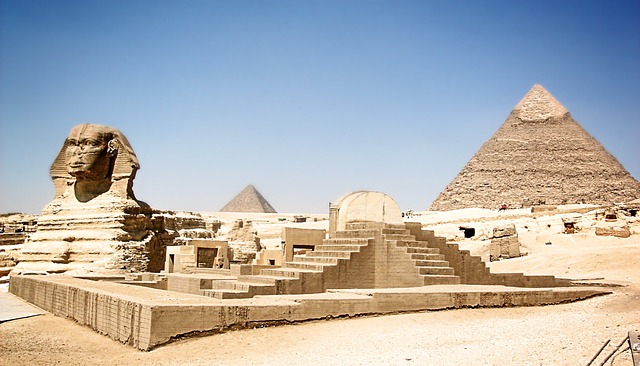
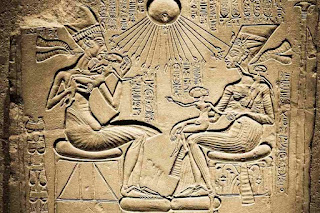
In the ancient civilizations, you will find the music is a part of its mystery especially in ancient Egyptian civilization where the music like magic or part of Pharaohs' magic, anyway I like this music and I think it's a good way to get positive energy by a good way.