


Finding agricultural land is undoubtedly the most desperate step when you want to settle. We're ready to get started, with lots of ideas, crazy motivation! We become obsessed with the idea of starting, but we need a field that meets our criteria .
After having set the criteria that will make the land do the trick, you have to start looking for it. Even if agricultural land for sale is very inexpensive compared to building land and even if we hear everywhere that farmers are constantly retiring and that there are no buyers, the search for land remains a route. of the fighter!
The risk, after having searched for a long time, is to launch out on a plot which does not suit you in the end. And I guarantee you that working for several years on a plot to finally realize that you will have to change it is a big blow to morale! A lot of energy is spent in the first few years. And although the second time around you will go faster and avoid a number of mistakes, the excitement will not be the same.
Before you start looking for a land, I invite you to read this article on the 6 steps before leaving everything to create your micro-farm .
I will present to you in this first article, out of a series of three, the different criteria to take into account before buying agricultural land. We will see in a second article the search methods to find THE land that suits you ( the article is available here ) and in a third how to buy or rent the land ( the article is available here ) with more legal aspects and practice.
This first article will allow you to establish a list of your essential criteria for the realization of your project. You will then have in mind all the questions to ask during field visits so as not to miss a thing!
What are the criteria for a perfect agricultural land for your installation?
Each micro-farm is unique . They are based on your more or less local personality, vision and context. There is no criterion more important than the others. Especially since many of them are interconnected.
Here are the criteria for choosing land for your future agricultural activity.
General criteria
1. Location
The desired location depends entirely on you and your project.
Close to a big city, in the countryside or in all intermediate situations, each location has pros and cons that are specific to you and your vision of your farm. Indeed, in addition to the differences related to everyday life, the outlets are 90% defined according to your location. It is therefore necessary that these outlets correspond to your temperament and project and at the same time that you are in agreement with the advantages, disadvantages and risks that go with it.
Being in a town that you like and with which you have good affinities (relationships with the town hall, other farmers, etc.) is a considerable asset. Remember that your project is sustainable in large part thanks to the positive interactions with the outside world .
2. Buy / Rent
You have two choices: purchase or lease. Both have advantages and disadvantages.
On the one hand, the purchase allows you to have the certainty of keeping your land and of being in control of the various arrangements to be made on it. You can plan for the long term and more easily pass on this built heritage to buyers who share the same values as you.
On the other hand, leasing allows a lower investment for your installation. Rural leases protect the farmer in place and although they are theoretically for 9 years (for the most widespread lease), they are renewable in the majority of cases. The only time you can not continue is if the owner, if he is a farmer, wants to re-use his plot. Different leases exist depending on your situation.
We will discuss this part in more detail in the third article on agricultural land.
3. Surface (and actually usable surface)
It is important here to differentiate the total surface from the exploitable surface by considering the following different points: access roads, buildings, wooded areas, water points, flood zones, soil that is too shallow, etc.
4. Category / zone
There are different areas and categories of agricultural land.
Agricultural land is classified according to various criteria influencing its purchase price and rental value .
Let's talk about zones first. These areas depend on the department in question. This makes it possible to differentiate a valley land from a mountain land for example.
Next comes the categories. For each zone, the land is classified into several categories. These criteria are essentially agronomic. For example, the exceptional category represents land of excellent agronomic quality, irrigated (or able to do without), drained (or able to do without) and with a very good configuration. On the other hand, we find land that cannot be mechanized, poor or excessively stony or on a steep slope ...
The names of the PLU (local urban plan) are also to be taken into account. You will get the information from the town hall. For example ND zones prevent you from building on them (same farm building and greenhouse). This is an information that should not be overlooked even if there is not everywhere. They are very present on the coasts in particular.
5. Accessibility
This is an important point both for future customers who would like to buy directly from you but also to bring in agricultural machinery.
Even if you plan to be non-mechanized afterwards, perhaps adjustments are to be made at start-up or contributions in large quantities etc. Access paths are important. The cost of maintaining such a path should not be neglected either.
6. Water points
In almost all regions of France now access to water is essential.
Several choices to solve the water problem are possible. However, it is interesting to combine several for greater resilience. Especially since climate change will continue to modify both the quantity of water per year but also its distribution.
You can consider several sources:
Connect to a present source (river, pond, lake). In this case it will be necessary to ask the authorities the right to draw water directly and in what quantities.
- Develop a water retention basin ,
- Buy a tank (buried or not),
- Collect rainwater from your buildings and greenhouses,
- Reuse used water (with a phyto-purification system),
- Install a borehole (or a traditional well if you can).
This parameter is to be considered as a whole. The water requirement is directly related to the water holding capacity of the soil (which depends on its structure and texture). But is also linked to sunshine and to behavior in general (cultivation under cover, agroforestry, presence of hedges, humid microclimate, etc.).
7. Price
The price of agricultural land is normally limited by SAFER but beware of small plots of less than 2ha.
The SAFER (Land Development and Rural Establishment Companies) avoids price escalation by using its right of pre-emption. This allows them to buy back land and sell it back to farmers in the public interest.
The prices of agricultural land are therefore governed by a scale specific to each territory. The departments are divided into zones with a price list (min, average, max). On average, in France, 1 ha of land is worth € 5,990 (2018 figure, see article in terre-net ).
Below 2ha, SAFER does not intervene. You can then have any price. It becomes the law of the market, the more demand there is, the more it will be expensive. 1ha of agricultural land in the coastal zone can easily be sold 5 times more expensive than the agricultural price where it should be.
Everything is negotiable but some areas are in high demand by portfolios much higher than that of a project leader preventing great achievements from seeing the light of day ...
A really good tool for realizing the prices is the interactive map made by the government (DVF) which lists all agricultural sales (with or without frames) since 2014 throughout France: DVF interactive map.
8. Neighborhood
What are your neighbors doing?
Being a farmer requires working with the environment that surrounds him, natural and human. It is good to know what kind of culture and treatments are carried out next to you, what mentality and atmosphere reigns in your territory.
But also, in the case of dwellings, what are the possible constraints that would make you take time and energy for nothing (the noise of machines, animals, their smell, the shade of the hedges, the traffic, vis-à-vis…). More and more second homes are being built in the countryside with the sole objective of absolute calm. So take it into account. Roosters don't crow quietly now!
9. Exposure to sun, wind, frost
The exposure of your land is important. Even more if it is steep or surrounded by a large hedge. Wind exposure is of course to be taken into account. The risks of freezing due to a microclimate can normally be anticipated. Extreme situations should be avoided. And in all cases, these parameters will have to be taken into account when designing and choosing the techniques of your farm: orientation of buildings, greenhouses, hedges, orchards, crops, choice of varieties, rootstocks ...
All the plots have their own microclimate . It's up to you to highlight it.
10. Previous crops
What were the different agricultural practices on this land before? This will give you a good indication of the condition of the soil and the different characteristics of it. The more information you have about the history of the plot the better.
The labeling of the land will also influence your installation plan. A conversion to organic market gardening takes two years. That in organic orchards takes three years.
11. Soil depth
The depth of the soil is very important. It will influence many things later in terms of market gardening methods but especially on the viability of planting trees.
It is however possible to raise the beds of cultures but the amount of work required is not to be neglected. All the more so as this will also influence driving.
A raised vegetable bed is difficult to mechanize, for example. Raised rows for an orchard also make grass maintenance more complicated.
12. Structure / texture
The texture of the soil defines its proportions in clay, silt, fine sand and coarse sand. The structure of the soil is the mode of assembly (spatial) of the mineral and organic particles which compose it. It conditions the porosity of the soil (an important factor of permeability).
Two simple tests to set up are possible and recommended:
The sausage test : Take a sample of soil around 10cm deep, moisten it to form a kind of paste. Try to form a ball, then a sausage then bend it. These three consecutive tests will give you indications on the dominant texture (s) of your soil.
The jar test : take a sample 20cm from the surface and put it in a 1 liter jar 2/3 full of water. Close it, shake it well and you will see three layers appear allowing you to appreciate the relationship between clay, silt and sand. This will give you an idea of the texture of your soil. You can find a nice representation of this test on the blog: le-jardin-des-medicinales .
13. The pH
PH measures the acidity or alkalinity of the soil. Most plants adapt to a pH around neutrality (6.5-7.5). An acidic or alkaline pH is not necessarily a problem, but knowing it allows you to adapt the species to be planted and the most appropriate rootstocks for your trees. Adjustments can be made even if each soil has a pH that corresponds to its balance and it is often more interesting to learn how to cultivate with it rather than to do systematic liming.
A word of caution on this notion. Large pH disparities have been seen in several cases. For example, soils close to neutral in the first 20 cm were much more acidic a little deeper. Large disparities were also observed at different places in the plot.
The averages given by doing a soil analysis should therefore be taken with a grain of salt.
14. Composition and pollutants
A soil analysis makes it possible to know precisely the composition, the rate of organic matter and the trace of any pollutants. This will allow you to adjust your working tools (techniques, contributions, choice of varieties and species, etc.).
Certain quantities of heavy metals can be prohibitive when it comes to buying a plot.
This is why, if the timeframe for the sale allows it, always do a soil test before committing.
15. Proximity and borders
It is good to put your plot back in its environment and observe what is right next to it. We talked about the neighborhood, it is also good to observe the borders: hedges, streams, embankments, roads (and potential expansions), nearby urbanization paths, power lines etc.
You can normally see with the town hall the potential future developments in this area.
16. Fauna and flora
Observing flora and fauna can give you good indications on the quality of your land but also on the complexity of your ecosystem .
Observing bioindicator plants can quickly give you very relevant information about your land. It is still necessary to have the knowledge to properly identify them and analyze their characteristics! The books of Gerard Ducerf on the subject are very complete (although difficult to take in hand I think): Encyclopedia - Plants bio-indicators of Gerard Ducerf.
Conclude on the criteria of a good agricultural land
So yes that is a lot of parameters to take into account. But not all of these criteria are created equal. And you will not be able to have a ground which is perfect on all these points. You will have to choose your criteria which are specific to you and which are essential to your project. The best is to make 3 lists:
- The imperative , non-negotiable criteria ,
- The important criteria but questionable
- The criteria which would be top but too bad if it is not possible!
You will necessarily have to make concessions . And when you have a field in front of you, especially if you've been waiting for it for a long time, emotion will take over. So before getting started and giving everything on a plot that in the end was not worth it, make your different lists of criteria clear.

Dholera Smart City Residential Plots, residential housing plotting, villas, bungalows and all kinds of commercial, industrial and agricultural land also.
Smart Homes Infrastructure mainly deals in Commercial, Industrial and Residential Land and Projects.
Booking & Enquiry Call :- 7096961250.
For More Info Please Visit Our Site: https://www.smart-homes.in/dholera-residential-plots/
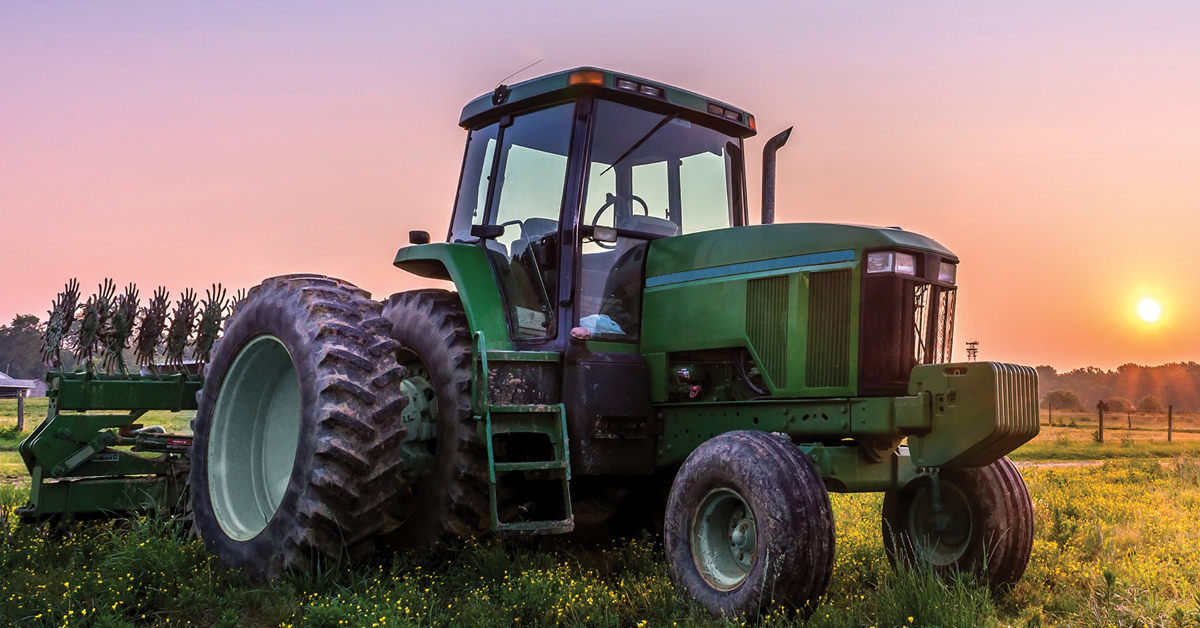
The problem in the combine parts can arise after some years of wear and tear.
Any machine part needs some assistance after a few years of work.
Due to this reason, you should never purchase combine parts from a company or supplier which is far from your home or agricultural land.