


A news media monitoring platform allows you to monitor news sites, news feeds, social media, and other sources for news and reviews about your brand and then aggregates all this information to give you valuable insights. Through news and social engagement it allows you to see how people really feel about your brand through sentiment analysis and mapping.
A powerful media research platform for news sentiment analysis not only lets you manage and maintain your brand’s reputation but also shows you where you can improve. Some would think that using lexical search to find the information they need or using a tool that applies lexical search to aggregate data is enough. But the problem is that while lexical search can be useful, it presents serious limitations because it doesn’t give you any reasoning behind the findings. This is only possible with sentiment analysis.
With that in mind, in this article, you will understand why semantic news media monitoring is more effective than lexical news analysis and how we do it at Repustate.
What Is News Media Monitoring?
The first step in understanding why semantic news media monitoring is better than lexical search is knowing what news media monitoring actually is. News media monitoring, similar to social media listening, allows you to listen to news media for mentions about your brand, your industry, or any other keyword or topic that’s important for your business.
In this way, you gain valuable insights into your marketing campaigns and initiatives, your competitors, and your industry which allows you to keep a close eye on your business reputation and compare it to industry benchmarks. News media monitoring does not only allow you to see how your brand is portrayed in the media but also allows you to manage it and improve it where necessary.
Media monitoring through a news media monitoring platform is efficient and accurate when it is done using a machine learning algorithm that automates the whole process. Whether you are a government organization, healthcare provider, clothing manufacturer, e-commerce company, or any other industry, news monitoring can be valuable to your business.
What Is the Importance of Semantics in News Media Monitoring?
Let’s look and why it’s so important in news media monitoring to apply semantics. A semantic algorithm –
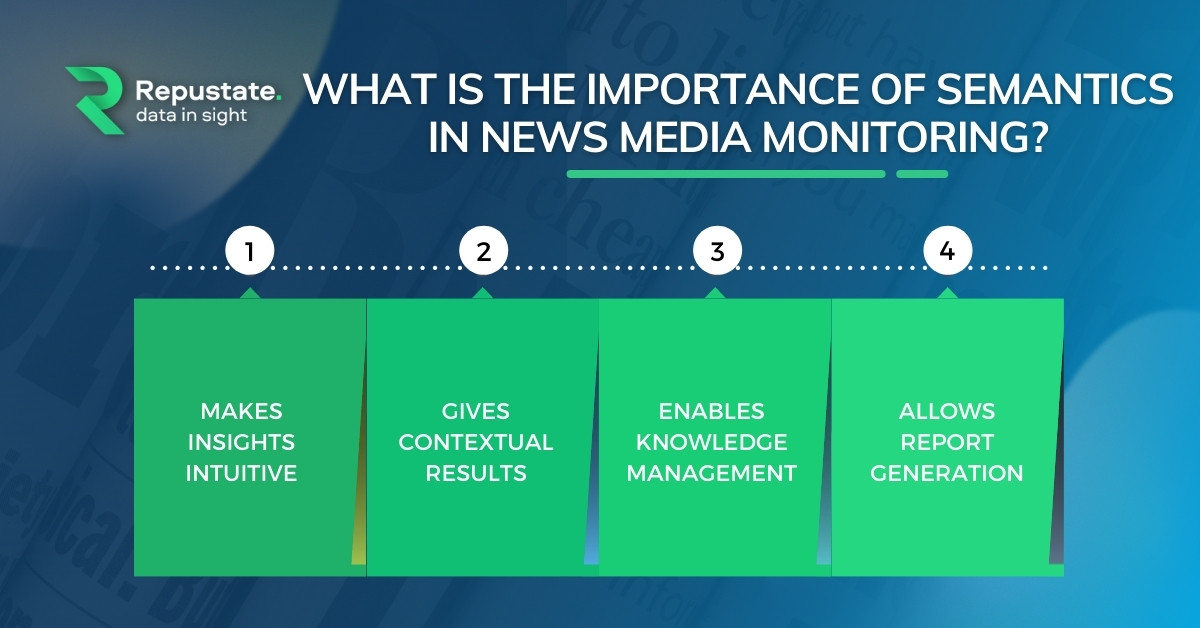
1. Makes Insights Intuitive
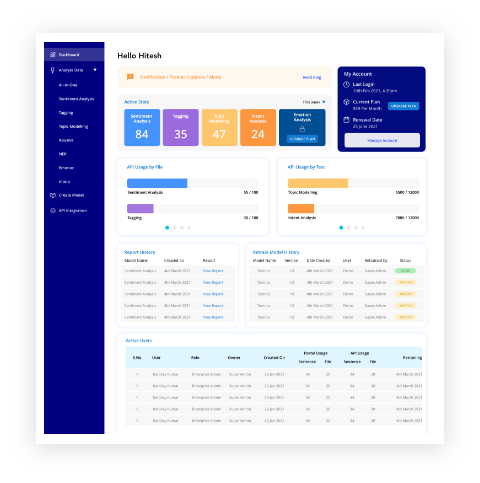
With semantic search, you can input a search query without actually knowing the specific keyword or exact terms relating to what you’re looking for. Irrespective of your query, you’ll then be able to retrieve the information you’re looking for. It’s able to do this because semantic search tools analyze, recognize, and organize unstructured data through text and video content analysis. An efficient platform will enable you to see all the findings on a sentiment analysis dashboard.
2. Gives Contextual Results
A news media monitoring platform that incorporates intelligent search will attempt to deduce what a specific search is about even if the search does not relate to previous searches. It does this by attaching a contextual connection between the search query and your search history, locations, commonly used words, and phrases.
3. Enables Knowledge Management
With the right news media monitoring platform that incorporates semantic search, you will be able to improve your knowledge management that, in turn, allows you to find relevant and actionable content quicker and get better insights faster. It does this by organizing all of your data and content and making it instantly searchable. A custom, intelligent search engine based on your specific requirements is then used to ensure that all information is immediately available for search and retrieval. For example, Repustate helped the David Allen Company in the knowledge management of its content which includes 9 terabytes of data and 100,000 documents.
4. Conversational & Allows Report Generation
An intelligent search solution understands queries in conversational language and retrieves information and responds in the same way. It’s able to do this by implementing natural language processing (NLP) algorithms that are able to make sense of what you’re searching for and provide you with the most relevant, personalized answer.