

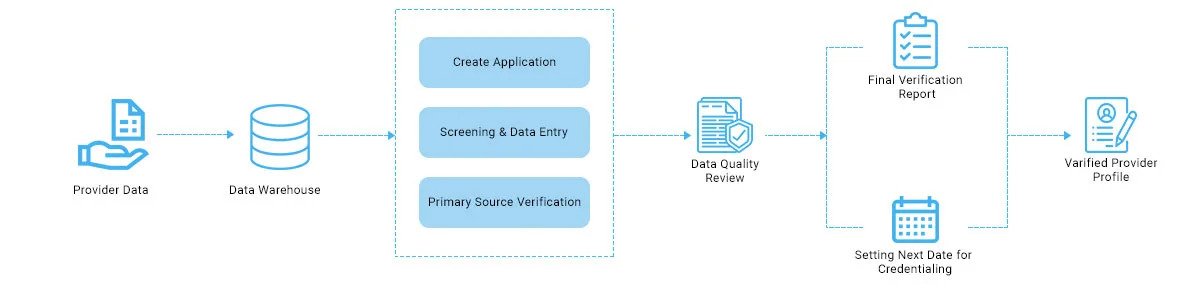
The process of medical credentialing helps verify the proper training and certifications of doctors and nurses. It also ensures that the staff has the required personal experience to offer a great level of healthcare services to the patients. Providers are nowadays looking to automate the process of medical credentialing to offer good services to patients. This also helps in ensuring that high safety standards are met in every aspect.
Medical credentialing also plays an important role in authenticating the work done for obtaining reimbursement or medical claims from insurance companies. If a provider is not using medical credentialing, it might face difficulties operating or taking help from another healthcare software solution.
Processes need to be fragmented to implement medical credentialing in the right manner. Along with this, the automation should be looked forward to with the help of PEER review, CME credit scoring, and CA QH preview. The workflow must be centralized and organized before the implementation takes place, and the data and workflow efficiency are also critical.
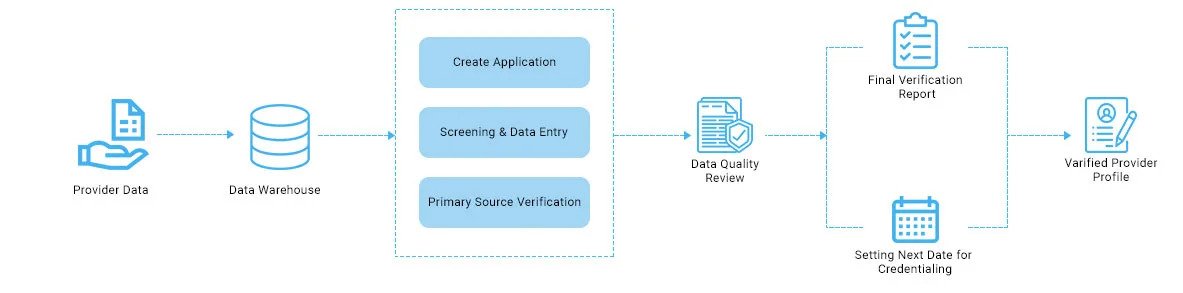
Data verification is a tedious task for many providers. The implementation of credentialing should focus on task and data errors while offering better accuracy during data verification. This involves an accurate collection of data from physicians. The strategy of medical credentialing should always validate data and manage provider profiles. It should also help providers follow up with payers. A good way to do this is by automating the inbound processes. These include:
- Data verification
- Provider data monitoring
- OIG monitoring
- Task managing
- Documentation expire alert
- Data analysis
- Real-time data correction
- Intuitive user interface
- Redundancy elimination
- Data retrieval and management
Training staff is also a major operation in the whole process of implementing medical credentialing. Many providers in the industry adapt to a complicated model without having the right staff or human resources to deal with complicated digital systems. This should be avoided at any cost. You should talk to your credentialing medical providers and create relentless training programs to have the employees and the staff who know the system inside out. The training program should address aspects such as :
- Credentialing roadmap
- Steps to better use of software
- Adaption to new software
- Regular updates familiarization
- Input of data
- Data retrieval process
- Quick allocation of data
- Data communication
- Software maintenance and repair
- Software features training
The next step to immaculate integration is the awareness of medical credentialing. When you realize that it brings tons of importance, a provider needs to help others realize it. Hoardings can do this, LED signs, or displays in the hospital. Streamlining the process of making everyone aware of your medical credentialing can help familiarize the new strategy. The key players who will regulate the medical credentialing solution should teach others its use and importance in the industry. If possible, providers can also make the insurance companies and payers aware of the process. It will give them a feel of genuineness and certification that they are working with a reputed organization.
Lastly, it is important to digitize the process from the core, and having a new implementation is merely a joke without proper technological tools. This means that medical credentialing should be a part of the provider's core systems, and it should be used by the internal server so that everyone can operate it. Also, various automation features can be added, making things lightfast and improving accuracy.
If you are still thinking about the ideal way to implement medical or healthcare credentialing, you should start acting. Other players in the market may be much ahead of you, improvising the process to offer better care to patients. You should not wait anymore and get down to action as soon as possible. Since healthcare is all about innovation, you should always look forward to keeping up with the latest and modest tactics that can help increase revenue and the quality of care you will provide.