

History of lace fabric
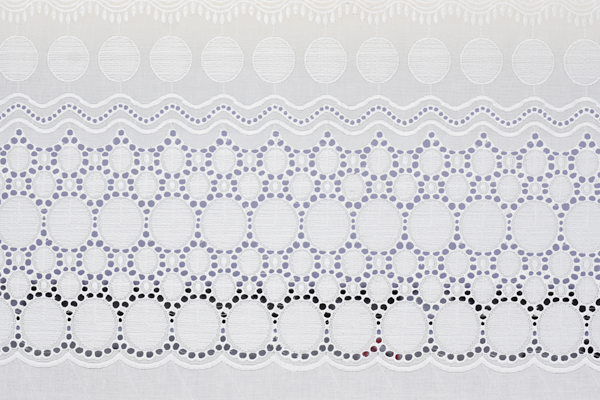
Lace has traditionally been a prized decorative component of clothing, particularly bridal clothing. Lace has been used as a decoration since the 15th century and is prized for its fine craftsmanship and light designs. This article examines the origins, varieties, and application of lace in wedding attire.
There is still debate as to who actually invented needle lace in the 15th century—Italy or Flanders. Although it is unknown if one country invented bobbin lace first, it is known that the method was created at roughly the same time in Italy and Flanders. No real lace was produced before the late 15th century. Despite the undeniable simplicity and effectiveness of creating lace by machine, handcrafted lace was nevertheless utilised often up to the early 20th century. By the middle of the 20th century, lace-making had spread to many different countries, expanding the breadth of what had previously been a purely European textile legacy.
How is it Made and Where?
Needle lace: A single needle and a single thread are used to create needle lace. The final fabric is made up of really tiny stitches. One of the most popular and straightforward types of lace is this.
Bobbin lace: To make bobbin lace, spools of thread are wound on a variety of bobbins, and the various lace threads are then fed around pins in a pattern. One of the top locations for bobbin lace is Belgium.
Torchon lace: This is a pillow lace that has a few twists and simple patterns and is slightly rough in texture. Torchon lace is now produced mechanically, despite the fact that it was once created on a pillow.
Chantilly lace: Named after the location where it first appeared, Chantilly lace is a style of bobbin lace that dates back to the seventeenth century in France. It might be black or white lacing.
Guipure lace: A style of bobbin lace joins lace patterns together with threads and twists rather than a gridlike arrangement. Guipure, a French word that means tape, is the reason it is also known as tape lace.
https://medium.com/@spiritoftextile/what-is-lace-fabric-properties-how-it-is-made-and-where-9f87c5af33d6