


Education and Artificial Intelligence:
Over 45% CAGR growth is predicted for the global market for AI in education between 2022 and 2030. According to 86% of educators, technology—including AI—must be an essential part of education. In the next three years, 47% of learning management applications will be powered by AI, according to sources. India's AI market:
By 2025, the AI market in India is anticipated to develop at a compound yearly growth rate of 20.2% and reach US$7.8 billion (CAGR). (Sources)
At a CAGR of 18.1%, the AI software market in India would reach US$6.4 billion in 2025. (Sources)
According to the facts above, all industries may gain from the advancement and innovation that artificial intelligence (AI) brings.
The employment of artificial intelligence in the educational system is also a hot topic worldwide when it comes to this subject.
Every year, a tonne of incredible edtech tools are released. Additionally, artificial intelligence (AI) algorithms and systems are being applied in educational settings more and more.
As education improves, researchers throughout the world use cutting-edge AI technologies, such as deep learning, data mining, etc., to deal with difficult learning issues and customise instruction to the needs of particular students.
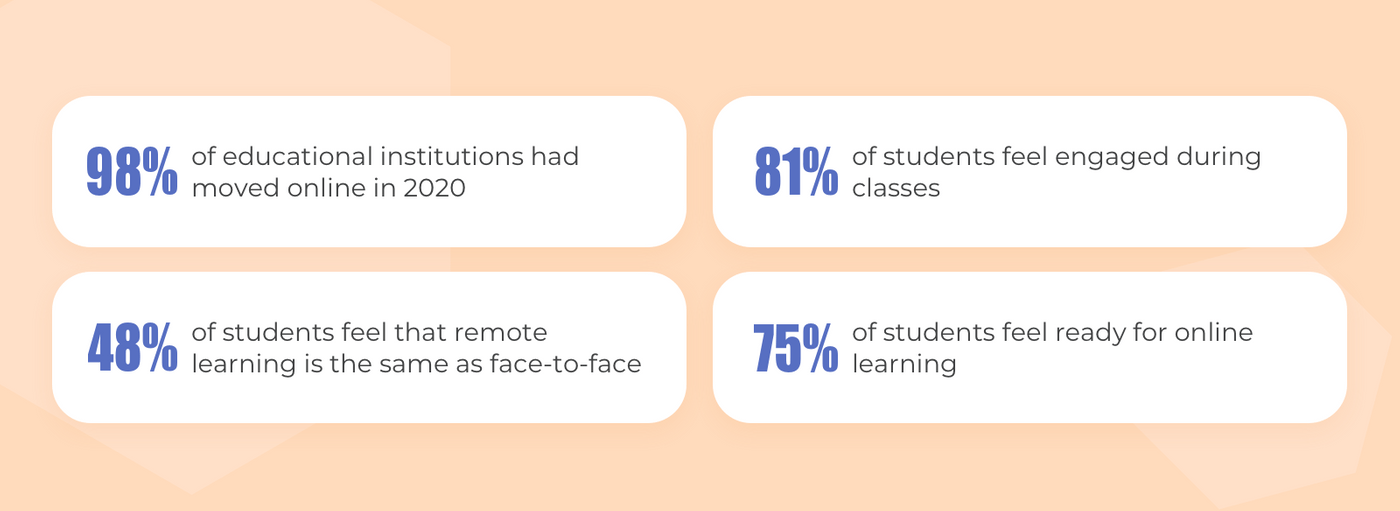
Additionally, COVID-19 accelerated the process overall. Most colleges and universities have embraced or will employ AI-based solutions to help with anything from online lectures and seminars to examinations.

In other words, it's frequently challenging to comprehend how or why an AI system produces a particular outcome.
The crucial problem of AI accountability is raised by this obstacle, which also has a bearing on liability.
For instance, if an AI tool incorrectly instructs a learner or incorrectly predicts their learning outcomes, the question of who or what is responsible and accountable arises.
And the choices are the AI algorithm, the teacher, or the person who created the AI technology. Therefore, we are unable to select one.
According to studies:
1. Trusting an unfamiliar system can be difficult, especially when it makes nonsensical predictions (for example, a dropout risk for a student whom a human observer would not expect to drop out).
AimStrategiesImplementation of national policy for technology adoption and planning to provide high-quality education and create a long-term digital education systemTo help students at all levels acquire critical abilities, and build curriculum and methodology that teach new disciplines like AI and Design Thinking. Prepare professionals with knowledge of cutting-edge technology, such as AI. Provide doctoral and postdoctoral programmes in AI/machine learning. Offer focused training in low-expertise jobs that support the AI value chain, such as speech transcription, picture classification, and data annotating. Translation of textbooks into all Indian languages using natural language processing Create the National Research Foundation (NRF) to advance AI research
National Digital Education Architecture 2021 (Ministry of Education, 2021a)
AimStrategiesA collection of guidelines and methods for creating digital tools and services that satisfy the needs of students, educators, and school administrators in India’s education ecosystem and digital ecosystem in order to achieve the objectives of the National Education Policy 2020Using AI/machine learning techniques, provide individualised learning Using AI techniques, enable data collecting in schools Use of AI and machine learning with a focus on voice identification and analysis services for language learning Utilize AI/machine learning to focus on solutions for individualised learning assistants that will allow students to learn at their own speed. Create a collection of reusable AI services, open-source libraries, open-source models, and open-source datasets that can be incorporated into other building blocks and used in the education sector.
Responsible AI. Approach document for India. Part 1 – Principles for Responsible AI (NITI Aayog, 2021a)
AimStrategyIndia’s relevant stakeholder’s managing AI systems responsiblySecurity and reliability Equality Integrity and absence of bias Security and privacy Transparency Accountability The preservation and promotion of good human values
Responsible AI. Approach document for India. Part 2 – Operationalizing Principles for Responsible AI (NITI Aayog, 2021b)
AimStrategyIdentifying several methods for putting the seven “Responsible AI” concepts into practiceCreate a multidisciplinary advisory council to design AI policy and serve as a think tank for the creation of high-calibre research outputs relevant to AI. One example of such a body is the Council for Ethics and Technology. The private sector will guarantee reasonably priced adherence to AI standards The government should promote capacity building, accessibility, and regulatory measures, as well as encourage ethical AI procurement practices.
Recommendations To Overcome The Challenges Of Policies for Artificial Intelligence In Education
- The importance of artificial intelligence ethics in education should be given top consideration.
- Quickly develop a comprehensive regulatory framework for Artificial Intelligence in education.
- Establish successful public-private collaborations.
- Make sure that all instructors and students have access to the most recent technologies.
- Boost AI literacy initiatives.
- Make an effort to address algorithmic biases and the prejudice they cause.
- Boost confidence in AI among the population.
- Ask the business sector to include educators and students more fully in developing AI products.
- Give the students control of the data.
- Take use of artificial intelligence’s adaptability in educational systems.
for more: Edmonger
Educational website development makes the learning process fun thanks to innovations like Augmented Reality and Artificial Intelligence.
Online education is boosting now.
It’s in demand by users and companies, therefore this market is promising.

Artificial intelligence in education offers opportunities for student engagement that can't be found in usually out-dated textbooks or within the mounted setting of the standard four-walled room.
This blog post maps some effective ways in which the education system can harness artificial intelligence services to enhance learning and boost student success.
As an enterprise-grade Chatbot development company, Oodles AI builds effective virtual assistants and chatbots for streamlining learning and making education accessible to all.Learn more: Artificial Intelligence in Education