When it comes to precision in humidity measurement, few instruments match the accuracy and reliability of a chilled mirror hygrometer. Used in a variety of critical industries—from meteorology and pharmaceuticals to semiconductor manufacturing—this advanced tool is revered as the primary standard for measuring moisture in the air.
This article explores what a chilled mirror hygrometer is, how it works, its key benefits, applications, and why it remains the preferred choice for scientific and industrial professionals around the world.
What Is a Chilled Mirror Hygrometer?
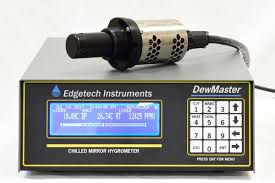
A chilled mirror hygrometer is a high-precision instrument used to measure the dew point of a gas. It does this by detecting the exact temperature at which condensation forms on a polished mirror surface when the mirror is cooled. This dew point measurement is then used to calculate the humidity of the air or gas.
Unlike conventional humidity sensors that rely on changes in electrical resistance or capacitance, chilled mirror hygrometers provide direct and fundamental measurements. This is why they are often used as calibration standards for other humidity sensors.
Key Features and Advantages
High Accuracy
Chilled mirror hygrometers can achieve accuracy within ±0.2°C or better. Their direct measurement approach eliminates many uncertainties in other humidity sensors.
Long-Term Stability
Since the measurement is based on physical condensation, these devices are less prone to drift over time compared to capacitive or resistive sensors.
Calibration Standards
Due to their reliability, chilled mirror hygrometers are often used to calibrate other humidity sensors and instruments in laboratories and manufacturing environments.
Multiple Measurement Modes
Besides dew point, many models can also measure frost point, relative humidity, and absolute humidity, offering versatility in data analysis.
Fast Response Time
Modern chilled mirror systems can deliver near real-time measurements, crucial in dynamic testing environments or continuous monitoring systems.
Applications of Chilled Mirror Hygrometers
Chilled mirror hygrometers are essential in many industries where precise humidity control is critical. Key applications include:
Meteorology and Climate Science
Weather stations and climate researchers use chilled mirror hygrometers for accurate atmospheric profiling. Their ability to work in low humidity makes them ideal for scientific studies.
Pharmaceutical Manufacturing
Humidity control is vital in pharmaceutical environments to maintain drug stability and sterility. Chilled mirror hygrometers are often integrated into cleanrooms and stability chambers.
Semiconductor and Electronics
Moisture can ruin sensitive electronic components during production. These hygrometers ensure ultra-low humidity levels are maintained in semiconductor fabrication plants.
Aerospace and Defence
In aerospace testing, chilled mirror hygrometers help in environmental simulation chambers replicating extreme altitudes and climates.
Calibration Labs
They are extensively used in national metrology institutes and testing labs as the reference standard to verify the accuracy of other instruments.
Challenges and Considerations
While chilled mirror hygrometers are highly accurate, they come with some challenges:
Cost
These instruments are more expensive than standard humidity sensors due to their sophisticated design and optical systems.
Maintenance
The mirror surface needs regular cleaning to avoid measurement errors. Dust, oil, or contaminants can affect reflectivity and condensation detection.
Power Consumption
Thermoelectric cooling systems and optics require more power, making portable or battery-operated versions more complex.
Response in Dirty Environments
In industrial or polluted environments, airborne particles can foul the mirror. Using sample gas conditioning or mirror shields is often necessary.
Despite these drawbacks, the benefits usually outweigh the limitations in critical applications requiring uncompromising accuracy.
Latest Innovations in Chilled Mirror Technology
Advancements in sensor technology have improved the usability and performance of chilled mirror hygrometers:
Conclusion
The chilled mirror hygrometer remains the gold standard in humidity measurement due to its unmatched accuracy, long-term stability, and versatility. While it may require higher investment and upkeep, its performance justifies its use in sensitive environments where precise control of moisture is not just desirable—but critical.