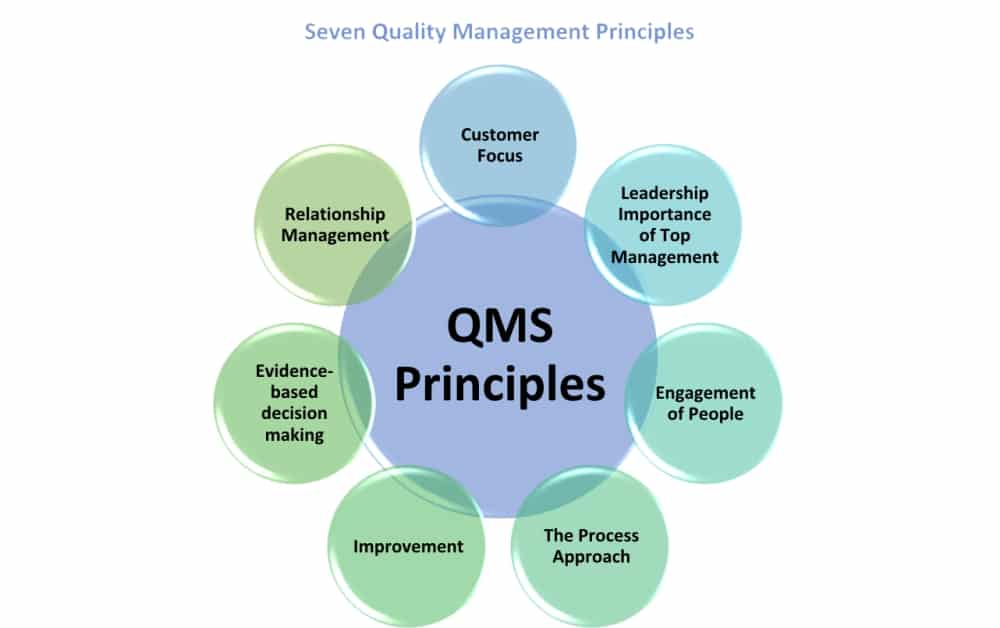



ISO 9001, the globally recognized Quality Management System standard, is founded on a set of key principles that guide organizations in their pursuit of excellence. These principles form the bedrock of ISO 9001's effectiveness and are crucial to creating a culture of quality and continuous improvement.
Customer Focus:
The principle of customer focus places customers at the heart of an organization's operations. Understanding and fulfilling customer needs, expectations, and requirements are central to ISO 9001. A progressive organization recognizes the significance of satisfied customers in building loyalty and advocacy, leading to increased market share and sustained growth.
Leadership:
Strong and visionary leadership is vital for an organization to achieve its strategic objectives. ISO 9001 emphasizes the involvement and commitment of top management in establishing and maintaining the Quality Management System. Leaders set the tone for a culture of quality, providing direction and resources for continuous improvement initiatives.
Engagement of People:
ISO 9001 encourages employee engagement, empowerment, and participation in decision-making processes. A progressive organization recognizes the potential of its workforce and fosters a collaborative environment that sparks innovation and drives productivity.
Process Approach:
The process approach is a fundamental concept in ISO 9001, advocating for the understanding, management, and optimization of interrelated processes as a system. By adopting a process-oriented mindset, organizations can identify areas for improvement, minimize inefficiencies, and enhance overall performance.
Improvement:
Continuous improvement is the lifeblood of a progressive organization. ISO 9001 places great emphasis on the pursuit of excellence through ongoing enhancements to products, processes, and the Quality Management System itself. A commitment to improvement ensures that the organization remains adaptable and resilient in the face of challenges.
Evidence-based Decision Making:
ISO 9001 promotes the use of data and evidence to drive decision-making processes. Objective data analysis helps organizations make informed choices, identify trends, and address areas requiring attention. In a progressive organization, data-driven decisions lead to greater efficiency and effectiveness in achieving strategic goals.
Relevance in a Progressive Organization:
The principles of ISO 9001 are inherently aligned with the values and goals of a progressive organization. By adopting and adhering to these principles, a forward-thinking company can:
- Cultivate a customer-centric approach, fostering loyalty and trust among customers and clients.
- Inspire and motivate its workforce, unlocking their full potential and driving innovation.
- Create a framework for efficient and effective processes, reducing waste and enhancing productivity.
- Foster a culture of continuous improvement, embracing change and adaptation for sustained growth.
- Facilitate data-driven decision-making, promoting informed choices that lead to better outcomes.
- Strengthen relationships with stakeholders, contributing to a more resilient and collaborative business ecosystem.
ISO 9001's key principles form the cornerstones of a Quality Management System that empower progressive organizations to thrive in a competitive landscape.