

Understanding BFS
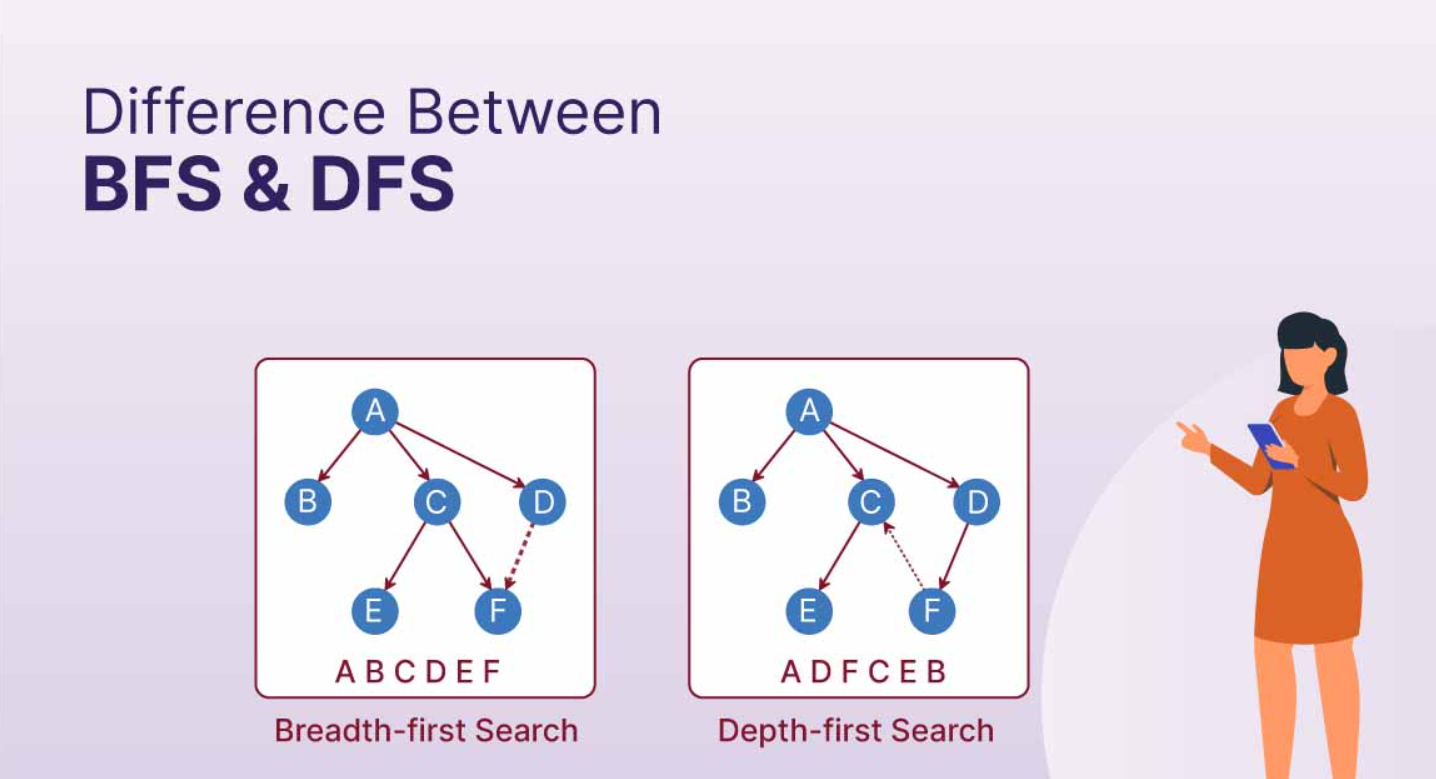
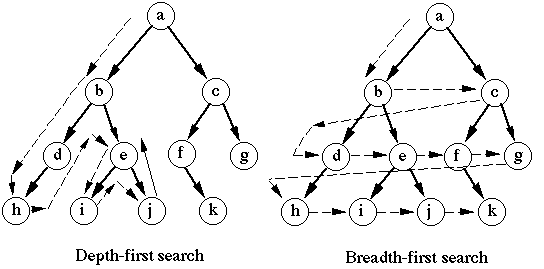
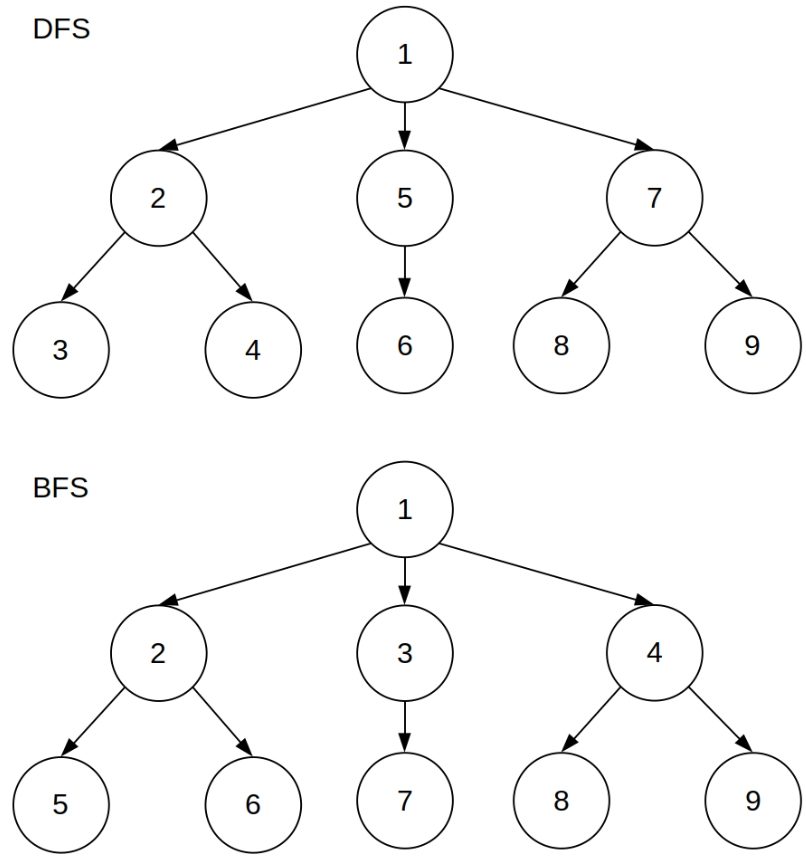
Breadth-First Search (BFS) operates by exploring all the neighbor nodes at the current depth before moving on to nodes at the next level. This method ensures that the algorithm systematically covers each level of the graph, making it ideal for scenarios where a broad exploration is essential.
The Basics of Breadth-First Search
In BFS, the exploration starts at the root node, gradually expanding into its neighbors before progressing to deeper levels. This systematic approach guarantees that the algorithm visits all nodes at the current depth before moving on.
Applications in Graph Theory
BFS finds its applications in various fields, such as network analysis, shortest path determination, and social network connectivity assessment. Its ability to systematically traverse through nodes makes it indispensable in scenarios requiring a comprehensive exploration.
Pros and Cons of BFS
While BFS excels in ensuring the shortest path and completeness, it may struggle with memory utilization in large graphs. Understanding these pros and cons is vital for effective algorithm selection.
Diving into DFS
Depth-First Search (DFS), on the other hand, focuses on exploring as far as possible along a branch before backtracking. This method provides a different perspective, often proving advantageous in certain scenarios.
Grasping the Fundamentals of Depth-First Search
DFS starts at the root node and explores as far as possible along each branch before backtracking. This approach often proves efficient in scenarios where depth takes precedence over breadth.
Real-world Implementations
DFS finds applications in maze-solving, game simulations, and topological sorting. Its ability to explore deeply before backtracking makes it suitable for scenarios where depth-first exploration is crucial.
Pros and Cons of DFS
While DFS excels in memory efficiency and suitability for certain problems, it may lack completeness in certain scenarios. Evaluating its pros and cons is crucial for informed algorithm selection.
Comparative Analysis
Efficiency in Different Scenarios
In scenarios where the shortest path is essential, BFS takes the lead due to its systematic approach. However, in scenarios emphasizing exploration depth, DFS proves advantageous.
Memory Utilization Contrasts
BFS may struggle with memory efficiency in large graphs, while DFS excels in this aspect, making it suitable for scenarios with limited memory resources.
Use Cases for BFS and DFS
Choosing between BFS and DFS depends on the specific requirements of the problem at hand. Understanding their applications is vital for making an informed decision.
Optimizing BFS
Strategies for Improving Breadth-First Search
Optimizing BFS involves addressing challenges such as memory consumption. Efficient queue management and prioritizing node exploration can enhance the algorithm's performance.
Addressing Common Challenges
BFS may face challenges in scenarios with extensive graphs. Optimizing data structures and employing efficient algorithms can mitigate these challenges.
Optimizing DFS
Techniques for Enhancing Depth-First Search
Optimizing DFS requires addressing potential issues like infinite loops. Implementing effective backtracking mechanisms and optimizing recursive calls contribute to enhanced performance.
Mitigating Potential Issues
DFS may encounter challenges in scenarios with deep recursion. Implementing measures to handle backtracking efficiently ensures the algorithm's reliability.
Coding Considerations
Implementing BFS and DFS in Code
Coding these traversal algorithms requires adherence to best practices and coding standards. Maintaining clarity in code, optimizing loops, and utilizing efficient data structures contribute to robust implementations.
Best Practices and Coding Standards
Follow established coding practices to ensure the readability and maintainability of the code. Employing comments and adhering to naming conventions contribute to the code's clarity.
Difference Between BFS and DFS: in Applications
Real-world Scenarios
Understanding the applications of BFS and DFS in real-world scenarios is crucial for selecting the appropriate algorithm. From network analysis to game simulations, their impact is profound.
Impact on Algorithmic Problem Solving
The choice between BFS and DFS significantly influences algorithmic problem-solving approaches. Recognizing their impact is essential for efficient and effective solutions.
Addressing Common Misconceptions
Debunking Myths Surrounding BFS and DFS
Clarifying misconceptions surrounding these traversal algorithms is imperative for informed decision-making. From their limitations to their applicability, dispelling myths contributes to a clearer understanding.
Clarifying Common Errors
Identifying and rectifying common errors in understanding BFS and DFS ensures accurate algorithmic implementations. Clarity on their nuances is key to effective usage.
Navigating Challenges
Overcoming Hurdles in Algorithm Design
Algorithmic problem-solving often presents challenges. Strategies for efficient problem-solving, such as choosing the right traversal algorithm, contribute to successful outcomes.
Strategies for Efficient Problem-Solving
Navigating algorithmic challenges involves choosing the right tool for the job. Understanding when to apply BFS or DFS is fundamental for overcoming hurdles.
Future Trends
Evolving Landscape of Traversal Algorithms
As technology advances, the landscape of traversal algorithms is evolving. Keeping an eye on emerging technologies ensures staying abreast of the latest developments in BFS and DFS.
Emerging Technologies in BFS and DFS
Incorporating advancements in BFS and DFS is vital for staying competitive in algorithmic problem-solving. Adapting to emerging technologies ensures relevance in the dynamic field of computer science.
Difference Between BFS and DFS: - A Closer Look
Deep Dive into Key Disparities
Examining the subtle yet impactful differences between BFS and DFS provides insights into their unique strengths. From traversal strategies to their impact on graph analysis, a closer look unveils the nuances.
Impact on Graph Analysis
The choice between BFS and DFS significantly influences the outcome of graph analysis. Understanding their distinct effects contributes to more accurate interpretations.
VISIT ALSO: Difference Between BFS and DFS: Unraveling the Maze of Graph Traversal
FAQs - Clarifying Doubts
1. When should I choose BFS over DFS?
Understanding the nature of the problem is crucial. Choose BFS for scenarios where a systematic exploration is essential, such as finding the shortest path or network connectivity assessment.
2. In what situations is DFS preferable?
DFS is preferable in scenarios where depth takes precedence, such as maze-solving or game simulations. Its ability to explore deeply before backtracking makes it suitable for specific problem domains.
3. Can BFS be memory-intensive?
Yes, BFS may face challenges with memory utilization, especially in large graphs. Optimizing data structures and queue management can alleviate this concern.
4. Does DFS guarantee completeness in exploration?
DFS may not guarantee completeness in certain scenarios, as it focuses on depth-first exploration. Evaluating the problem requirements is vital for choosing the appropriate algorithm.
5. How do I optimize BFS for better performance?
Optimizing BFS involves efficient queue management and addressing challenges in memory consumption. Prioritizing node exploration based on specific criteria can enhance performance.
6. What measures can be taken to prevent infinite loops in DFS?
Preventing infinite loops in DFS requires implementing effective backtracking mechanisms and optimizing recursive calls. Thorough testing and validation are essential to ensure reliability.
VISIT ALSO: Lippan Art Kit: Your Creative Gateway
Conclusion
In the labyrinth of graph theory, the Difference Between BFS and DFS is the compass guiding algorithmic exploration. Whether choosing the systematic breadth of BFS or the profound depth of DFS, understanding their nuances is paramount. As technology propels us into the future, staying abreast of emerging trends ensures continued relevance in the dynamic landscape of traversal algorithms