


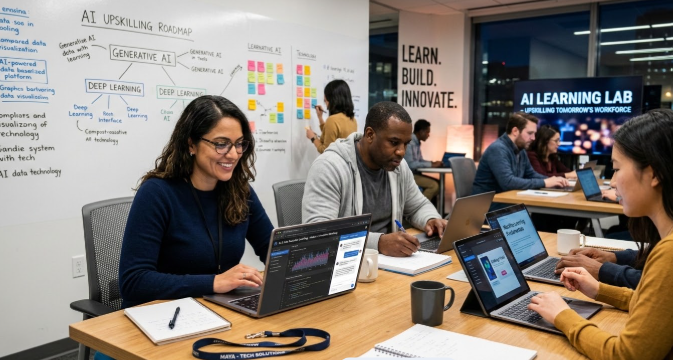
In the rapidly evolving landscape of the modern workplace, staying competitive and adaptable is essential for both individuals and organizations. Two terms that have gained prominence in this context are "upskilling" and "reskilling." In this article, we will explore the definitions of these concepts and delve into the myriad benefits they offer in the ever-changing world of work.
Upskilling and Reskilling Defined:
Upskilling:
Upskilling refers to the process of acquiring new skills or enhancing existing ones to meet the evolving demands of one's current job or to prepare for a potential advancement in the same field. It involves staying abreast of industry trends, technological advancements, and the changing nature of job roles.
Reskilling:
Reskilling, on the other hand, involves a more significant shift in focus. It refers to the acquisition of entirely new skills to transition into a different role or industry. Reskilling becomes crucial when the demand for certain skills decreases, or when emerging technologies disrupt traditional job functions.
Benefits of Upskilling and Reskilling:
- Future-Proofing Careers:Embracing upskilling and reskilling ensures that individuals are equipped with the skills needed in the future job market. This proactive approach helps professionals stay relevant and adaptable in the face of technological advancements and industry changes.
- Increased Employability:Continuous learning and skill development make individuals more attractive to employers. Upskilling and reskilling demonstrate a commitment to personal and professional growth, making individuals more versatile and valuable assets to any organization.
- Addressing Skill Gaps:In a rapidly changing world, skill gaps can emerge in various industries. Upskilling and reskilling initiatives allow organizations to bridge these gaps, ensuring that their workforce is equipped with the skills necessary to tackle current and future challenges.
- Boosting Job Satisfaction:Offering opportunities for upskilling and reskilling can enhance employee satisfaction. It signals to employees that their development is a priority, fostering a positive work environment and potentially reducing turnover.
- Adapting to Industry Changes:Industries are constantly evolving, driven by technological advancements and market trends. Upskilling and reskilling enable both individuals and organizations to adapt swiftly to these changes, staying ahead of the curve.
Conclusion:
In the era of rapid technological advancements and unpredictable economic landscapes, upskilling and reskilling have become integral strategies for personal and professional growth. These initiatives not only benefit individuals by future-proofing their careers and increasing employability but also empower organizations to build a workforce that is agile, innovative, and well-equipped to navigate the challenges of the ever-evolving global economy. Embracing upskilling and reskilling is not just a choice; it's a strategic imperative for success in the dynamic world of work.


Progress has always carried an unusual sense of irony. Every remarkable invention promises relief from familiar burdens, yet each one quietly introduces fresh responsibilities that no previous gene
Quick learning and re-skilling remain the core factors in the IT industry.
If you want to look for a better career opportunity, upgrading skills is the key.
Improvising skills also offer a character to your CV and boost your confidence.Learn more about courses here!