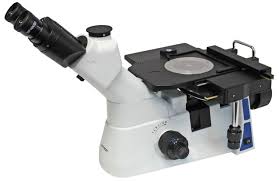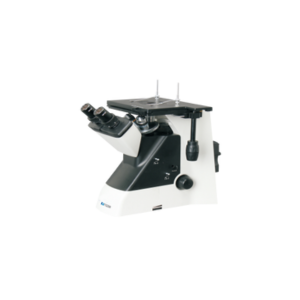
Metallurgical Microscope
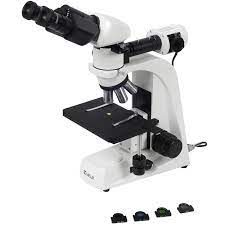
Fison metallurgical microscope, with its triple nosepiece, finite optical system, and compact construction, provides high-resolution metal observation. It comes with a sliding binocular head inverted microscope, 12V/20W halogen lamp, brightness adjustable lamp, and stage clips to stabilize specimens. Adjustable stage plate inserts with circular and teardrop holes are available. It guarantees excellent performance and user-friendliness in industrial and scientific applications with its green, yellow, and daylight filters.
Introduction
A metallurgical microscope is a specialized optical instrument designed to examine the microstructure of metals and other solid materials. These microscopes are crucial in various fields, including metallurgy, materials science, quality control, and failure analysis. They allow for the detailed observation of the internal structure of materials, helping to identify their properties, defects, and performance characteristics. This extensive description will cover the key features, types, applications, and advancements in metallurgical microscopes.
Key Features
Optical System
Metallurgical microscopes typically feature a finite optical system, which is essential for producing clear, high-resolution images. This system involves a series of lenses that magnify the specimen, allowing users to observe minute details.
Illumination
These microscopes use reflected light illumination, which is ideal for observing opaque specimens like metals. A halogen or LED light source is directed onto the specimen's surface, and the reflected light is captured to form an image. The 12V/20W halogen lamp is a common choice, providing bright and adjustable illumination.
Objective Lenses
The objective lenses are critical components that determine the magnification and resolution of the microscope. A triple nosepiece allows for quick switching between different objective lenses, typically ranging from 5x to 100x magnification.
Stage
The stage of a metallurgical microscope is designed to hold the specimen securely while allowing precise movement. Features like teardrop and circular hole stage plate inserts ensure flexible adjustments. Stage clips or a mechanical stage are often used to hold the specimen in place.
Focusing Mechanism
Coaxial coarse and fine focusing adjustments enable precise focusing on the specimen. This mechanism allows users to quickly bring the specimen into rough focus and then make fine adjustments for a clear image.
Viewing Head
An inverted microscope configuration with a sliding binocular viewing head is common in metallurgical microscopes. This design is compact and user-friendly, making it easier to view and analyze specimens.
Filters
Metallurgical microscopes are often supplied with various filters, such as green, yellow, and daylight filters. These filters enhance image contrast and clarity, allowing for better observation of different material properties.
Types of Metallurgical Microscopes
Upright Metallurgical Microscopes
Upright microscopes have the objective lenses positioned above the stage, pointing downward. These are suitable for examining flat, polished surfaces of metal samples. They are widely used in laboratories for routine metallurgical analysis.
Inverted Metallurgical Microscopes
Inverted microscopes have the objective lenses located below the stage, pointing upward. This design is ideal for observing larger or heavier samples that cannot be easily placed on an upright microscope. They are often used in industrial settings for examining bulky specimens.
Polarizing Metallurgical Microscopes
Polarizing microscopes are equipped with polarizing filters to analyze birefringent materials. They are essential for studying the crystalline structure and stress distribution in metals and other materials.
Digital Metallurgical Microscopes
Digital microscopes integrate a digital camera with the optical system, allowing for real-time image capture and analysis on a computer. They offer advanced features like image stitching, measurement tools, and documentation capabilities.
Applications
Metallurgical Analysis
Metallurgical microscopes are primarily used for analyzing the microstructure of metals. This analysis includes examining grain size, phase distribution, and identifying defects such as inclusions, voids, and cracks. Understanding the microstructure helps in assessing the material's mechanical properties and performance.
Quality Control
In manufacturing industries, metallurgical microscopes play a vital role in quality control. They are used to inspect raw materials, monitor production processes, and evaluate finished products. Ensuring the microstructural integrity of materials helps maintain product quality and reliability.
Failure Analysis
When a material or component fails, metallurgical microscopes are used to investigate the root cause of the failure. By examining the fracture surface and internal structure, engineers can identify the factors that led to the failure, such as fatigue, corrosion, or manufacturing defects.
Research and Development
In research and development, metallurgical microscopes are essential for developing new materials and improving existing ones. Researchers use these microscopes to study the effects of different processing techniques, heat treatments, and alloying elements on the microstructure and properties of materials.
Educational Purposes
Metallurgical microscopes are also used in educational institutions for teaching materials science and engineering. They provide students with hands-on experience in observing and analyzing the microstructure of various materials.
Advancements in Metallurgical Microscopes
Automated Metallurgical Microscopes
Recent advancements have led to the development of automated metallurgical microscopes. These microscopes feature motorized stages, autofocus, and image analysis software. Automation enhances the efficiency and accuracy of metallurgical analysis, allowing for high-throughput examination of samples.
3D Imaging
Some modern metallurgical microscopes are equipped with 3D imaging capabilities. By capturing multiple images at different focal planes, these microscopes can reconstruct a three-dimensional model of the specimen. This technique provides a more comprehensive understanding of the material's structure.
Enhanced Digital Integration
The integration of digital technology has significantly improved the functionality of metallurgical microscopes. Advanced software offers features like image enhancement, measurement tools, and automated reporting. Digital microscopes can also be connected to networks, enabling remote access and collaboration.
Environmental Control
To study materials under specific conditions, some metallurgical microscopes are equipped with environmental chambers. These chambers allow for the control of temperature, humidity, and other environmental factors, enabling in-situ observations of material behavior.
High-Resolution Imaging
Advances in optical design and imaging technology have led to higher resolution capabilities in metallurgical microscopes. Techniques like differential interference contrast (DIC) and confocal microscopy provide detailed images with enhanced contrast and depth of field.
Practical Considerations
Sample Preparation
Proper sample preparation is crucial for obtaining accurate and reliable results from a metallurgical microscope. Samples need to be polished to a mirror-like finish to reveal their microstructure. Techniques like grinding, polishing, and etching are commonly used in sample preparation.
Maintenance
Regular maintenance is essential to keep metallurgical microscopes in optimal condition. This includes cleaning the lenses, calibrating the optical system, and checking the illumination source. Proper maintenance ensures consistent performance and longevity of the instrument.
User Training
To effectively use a metallurgical microscope, proper training is required. Users need to be familiar with the microscope's features, operation, and maintenance. Training programs and user manuals are often provided by manufacturers to help users get the most out of their microscopes.
Conclusion
Metallurgical microscopes are indispensable tools in the field of materials science and engineering. They provide detailed insights into the microstructure of metals and other materials, aiding in quality control, failure analysis, research, and education. With continuous advancements in technology, metallurgical microscopes are becoming more sophisticated, offering enhanced capabilities and user-friendly features. Proper understanding and utilization of these microscopes can significantly contribute to the development and improvement of materials and products.
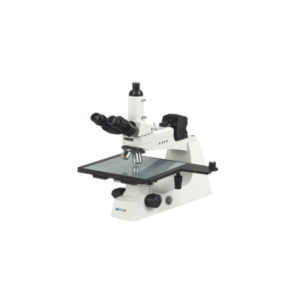

COVID-19 Impact Analysis on Metallurgical Microscopes Market report published by Value Market Research provides a detailed market analysis comprising market size, share, value, growth and trends for the period 2020-2027.
Moreover, this market report also covers regional and country markets in detail.The research report also covers the comprehensive profiles of the key players in the market and an in-depth view of the competitive landscape worldwide.
This section consists of a holistic view of the competitive landscape that includes various strategic developments such as key mergers & acquisitions, future capacities, partnerships, financial overviews, collaborations, new product developments, new product launches, and other developments.Get more information on "Global Metallurgical Microscopes Market Research Report" by requesting FREE Sample Copy at https://www.valuemarketresearch.com/contact/metallurgical-microscopes-market/download-sampleMarket DynamicsThe market is mainly driven by growth in the automotive industry, aviation industry, and others is demanding more research and development, automotive and aviation industry is demanding the highly durable and lesser in weight components which can get through the usage of mixed materials, which is creating scope for more research centers.
Furthermore, industries focus on quality maintenance to analyze the material to use for the right purpose metallurgical microscopes are used; owing to the mentioned above reasons, the market for the metallurgical microscope is foreseen to grow.
Further, the rising implementation of R in industries will increase the sales of metallurgical microscopes.
However, the high cost of the metallurgical microscope may restrict the growth of the market to some extent.The research report covers Porter’s Five Forces Model, Market Attractiveness Analysis, and Value Chain analysis.