

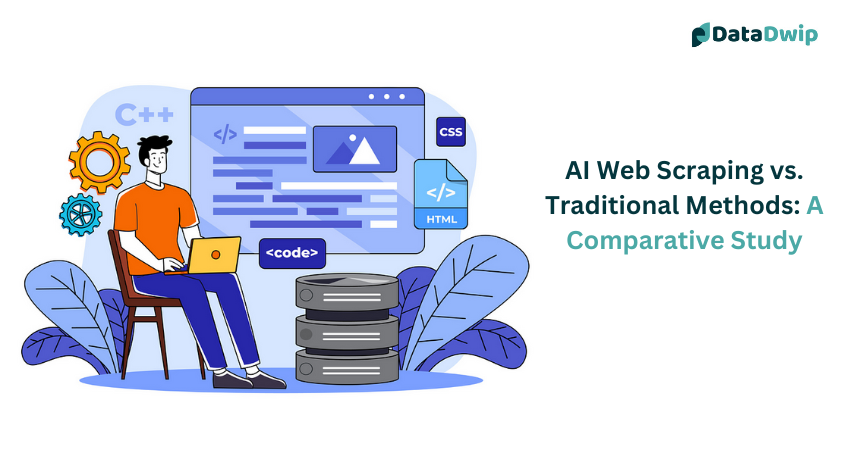
In the ever-evolving digital landscape, data has become a valuable asset for businesses, researchers, and analysts alike. Collecting and analyzing data efficiently is crucial for gaining insights and making informed decisions. Two popular methods for gathering data are AI web scraping and traditional web scraping techniques. In this blog post, we’ll compare these methods, exploring their strengths and weaknesses to help you choose the best approach for your needs.
Web scraping is the process of extracting data from websites, and it has become a fundamental tool in various industries. Traditional web scraping methods involve using pre-written scripts or tools to collect data from web pages. However, with the rise of artificial intelligence (AI), a new approach has emerged: AI web scraping. This method leverages machine learning algorithms and AI technologies to enhance data extraction processes. But how does AI web scraping compare to its traditional counterpart? Let's dive into the details.
Traditional web scraping often relies on straightforward techniques like parsing HTML, utilizing regular expressions, or employing simple scraping tools. These methods are relatively easy to implement and can be effective for extracting data from static websites with a predictable structure. However, they come with limitations. For instance, traditional methods may struggle with dynamic content, JavaScript-heavy sites, or complex page layouts. Additionally, maintaining and updating these scripts can be time-consuming, especially when website structures change frequently.
On the other hand, AI web scraping utilizes advanced algorithms to handle more complex and dynamic data extraction tasks. By incorporating machine learning models, AI web scraping can analyze and understand the content of web pages in a way that traditional methods cannot. This approach is particularly advantageous for dealing with dynamic websites, varying page structures, and large volumes of data. AI web scraping systems can adapt to changes in website layouts, identify patterns, and extract relevant information with higher accuracy.
Furthermore, AI web scraping can be integrated with other AI-based pricing services, enhancing its capabilities. For example, businesses can use AI-driven pricing tools to analyze competitor pricing strategies, market trends, and customer behavior. By combining AI web scraping with these services, organizations can gain a more comprehensive view of the market, optimize their pricing strategies, and make data-driven decisions.
In contrast, traditional web scraping methods may fall short when it comes to integrating with advanced analytics or pricing services. While they can provide basic data extraction, they lack the adaptability and intelligence of AI-driven approaches. This can limit their effectiveness in competitive and rapidly changing markets.
Conclusion
In summary, while traditional web scraping methods have served their purpose for many years, AI web scraping offers significant advantages, particularly for handling complex and dynamic data. AI web scraping's ability to adapt, learn, and integrate with other AI-based pricing services makes it a powerful tool for modern data extraction needs. For businesses looking to stay ahead of the curve and leverage data effectively, investing in AI web scraping can provide a competitive edge.
If you're interested in exploring AI web scraping and its benefits for your organization, consider leveraging the expertise of DataDWiP. Their advanced solutions can help you harness the power of AI for efficient and effective data extraction. Contact DataDWiP today to learn more about how AI web scraping can transform your data collection strategies.
By choosing the right data extraction method, you can unlock new opportunities and drive success in an increasingly data-driven world.
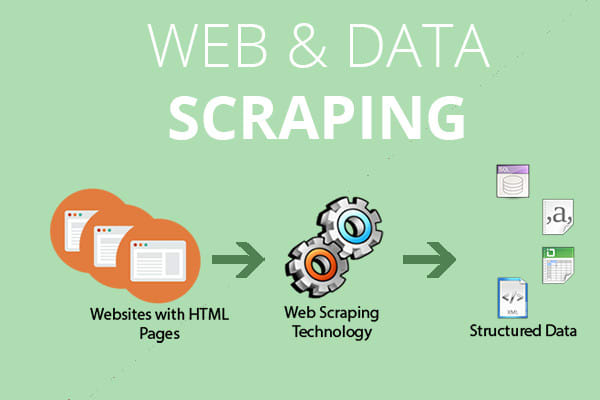
Well, the common factor is that they all derive their strategies from DATA!
Data is the one of the most important things that that every industry needs today.
In this regard, data scraping helps a lot!Data scraping isn’t just useful for a particular industry but it is relevant for different industries too.
Here’s the blog which can help you in knowing the different areas where data scraping service can help us!Recruitment: The recruitment companies are dependent on the job boards so as to hire the candidates for filling the organization’s need.
These job boards are entirely full of the job posts that are fetched from the job portals and sites.
The data scraping services are utilized by the job boards for crawling through the different websites so as to scrape the relevant information regarding job postings, company profiles, job descriptions, and much more.Banking: The banking analysts are dependent on the financial statements so as to determine the organization’s health.