



Asset-intensive companies use OEE (Overall Equipment Effectiveness) as a valuable tool to assess and gauge their overall production. Lean manufacturing organisations frequently utilise it to measure productivity and compare it to the industry average OEE in manufacturing. What is your actual OEE potential, and how can you raise it to reach your objective? Here are some practical suggestions for increasing your production productivity and overall equipment effectiveness (OEE).
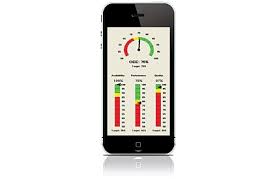
Tip 1: Use OEE to enhance teamwork Based on projected production time and production line performance, overall equipment effectiveness is a great way to gauge your actual productivity. It will also provide you with information about the efficiency of the actual production count. Three measurable components make up the performance of a manufacturing process or asset in an OEE calculation:
Performance
Quality and
Availability
Tip 2: Establish reasonable OEE goals To help you set goals, identify the APM difficulties you face and determine your ambitions. Based on the asset condition, design, and current performance, determine and assess your genuine OEE potential. Although it will be challenging to reach the ideal of an 85% OEE if your present OEE is closer to 50%, you may wish to go to this benchmark. Setting a more modest objective and advancing step by step to get closer to the world-class standard would be more doable and realistic.
Tip 3: Make the most of the data In an ideal world, all of your IT/OT systems' production data would be gathered and accessible in a single dashboard or KPI overview, allowing for uniform data usage across the board. The positions that are often in charge of this, like asset managers or maintenance managers, rapidly come to understand how big of a task this is. Measure the effects of any changes before putting them into action. If there is something that needs to be altered, attempt to find out what else needs to be changed before implementing the new change. By doing this, you can cut down on needless rework and delays.
Tip 4: Focus and set priorities Which resources are essential for consistent performance and high standards of quality? What would happen if there was an unforeseen outage on one of these? Twenty to thirty percent of your assets should be prioritised because high performance and production are dependent on them. Prioritising your assets according to production performance dependency can be done using a variety of valuable methods. Please pay attention to these assets, especially the important ones, and begin to maximise both their upkeep and performance.
Tip 5: Focus more on preventive maintenance It goes without saying that you must prevent the failure of your assets, particularly your vital ones. An asset's lifespan and availability are extended by a maintenance programme, which raises the asset's performance rate. Additionally, it lowers the possibility of process flaws and equipment breakdowns. Keep an eye on how well the maintenance programme identifies and addresses areas for improvement, especially those that have an impact on the productivity of the manufacturing process and operations.
Conclusion When you evaluate the OEE results of your work, you'll see that investing in PM improvement is genuinely worthwhile. But remember the broader picture. It's critical to improve your OEE systems, tools, and maintenance consistently. Finally, keep in mind that in order to improve OEE potential, you will need to make an initial financial, time, and effort investment.



OEE Definitions: OEE (Overall Equipment Effectiveness) is the gold standard for measuring manufacturing productivity.
Simply put – it identifies the percentage of manufacturing time that is truly productive.
An OEE score of 100% means you are manufacturing only Good Parts, as fast as possible, with no Stop Time.
In the language of OEE that means 100% Quality (only Good Parts), 100% Performance (as fast as possible), and 100% Availability (no Stop Time).

It includes the size, share, growth, trends, key players, segments and regional analysis in detail during the study year 2020-2027.The research report also covers the comprehensive profiles of the key players in the market and an in-depth view of the competitive landscape worldwide.
The major players in the oee software market include UpKeep Technologies, Rockwell Automation, Scout Systems, Lighthouse Systems, Evocon, Schneider Electric, OEEsystems, Eschbach GmbH, ABB Enterprise Software, Flex Link Systems, 5ME, Symbrium, Machine Metrics.
This section consists of a holistic view of the competitive landscape that includes various strategic developments such as key mergers & acquisitions, future capacities, partnerships, financial overviews, collaborations, new product developments, new product launches, and other developments.Get more information on "Global OEE Software Market Research Report" by requesting FREE Sample Copy at https://www.valuemarketresearch.com/contact/oee-software-market/download-sampleMarket DynamicsThe market is mainly driven by offering many benefits of installing the OEE and rising demand from many manufacturing sectors.
The giant companies are investing a massive amount in machinery to get a return on investment.
OEE plays the primary role in getting maximum productivity, and the OEE return in investment is high is driving the growth of the market.
In addition to this, the cost associated with the faulty products is considered as the biggest loss generating an economic loss, thereby deploying OEE software, the companies get to detect the cause of low quality and rectify it, resulting in high demand of OEE software.